South Korean studio net contract to design Qatar World Cup stadium
South Korean architecture studio Heerim Architects and Planners are reportedly in line to design Qatar’s 40,000-capacity Fifth Precinct Stadium, which will host matches up to the quarter-final stage at the 2022 FIFA World Cup.
According to Reuters, the practice said in a stock exchange statement on Tuesday (25 April) that it has agreed a US$16.2m (€14.8m, £12.6m) design and engineering services contract for the project.
A joint venture of Qatar’s AlJaber Engineering (JEC) and Turkish construction firm Tekfen Construction was appointed to manage the project by Qatar’s Supreme Committee for Delivery & Legacy in February. It has contracted Heerim, who will work alongside local design firm the Arab Engineering Bureau.
The Korean architects have previously designed the Baku Olympic Stadium, the Incheon 2014 Asian Games Main Stadium, the Pyeongchang 2018 Winter Olympic Gangneung Ice Arena and the forthcoming Uzbekistan Tashkent Multifunctional Ice Rink Complex.
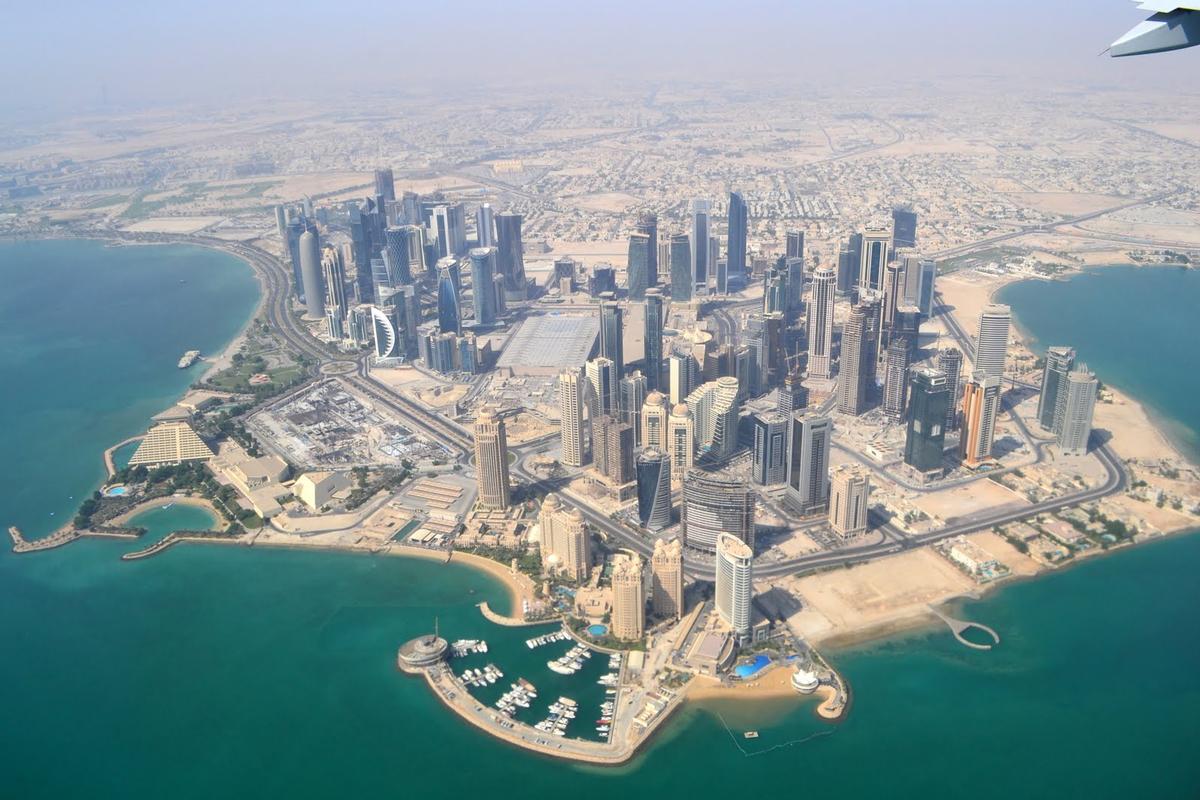
The US$342.5m (€314.4m, £266.8m) Fifth Precinct Stadium stadium is being built in Doha’s Al Thumama district. It is scheduled for completion by 2020.
After the World Cup has ended, temporary seating will be removed to create a reduced capacity of 20,000, making the ground more sustainable as part of Qatar’s modular stadium legacy plans. The development will remain an important sporting hub, with four outdoor training pitches and the offices of the football association’s technical committee located alongside the stadium.
Other World Cup stadiums in the main construction stage include the Al Rayyan Stadium, the Qatar Foundation Stadium, the Lusail Stadium, the Al Bayt Stadium, the Al Wakrah Stadium and the Khalifa International Stadium.
The latter is nearing completion, with the 7,800sq m (83,900sq ft) pitch installed earlier this month in a “world record” time of 13 and a half hours by a team of 40 specialists on site.
In January, Qatar’s finance minister revealed the emirate is spending as much as US$500m (€459m, £389.5m) a week on infrastructure ahead of the World Cup.
A main contractor will be appointed in the second quarter of 2017 to build the tournament's final announced venue, the Ras Abu Aboud Stadium designed by Populous.
??A new world record in returfing Khalifa International Stadium pic.twitter.com/aSZCxZdrxk
— Road to 2022 (@roadto2022) April 17, 2017
Stadium seats made from palm tree waste proposed for Qatar World Cup innovation challenge
Construction team appointed to build Qatar's seventh World Cup stadium
Qatar reveals US$500m per week spending for 2022 World Cup infrastructure
Qatar World Cup stadium reaches construction milestone
Work set to start on Qatar's diamond-shaped World Cup stadium
Construction moves forward on Ramboll and Pattern's Qatar 2022 World Cup venue
FIFA to monitor conditions for Qatar 2022 construction workers
Qatar 2022 organiser hires third party firm to audit workers’ welfare
Qatar 2022 workers subject to human rights abuses, alleges Amnesty International
Qatar looks to tents for World Cup 2022 accommodation
Populous lined up to design Qatar 2022 stadium
Khalifa Stadium set to become first Qatar World Cup venue to be completed
AI firm Midjourney enters wellness with spa, fitness and body scanning concept
Hot spring wellness community Ameyalli sells residences and breaks ground on resort and spa
OMA completes New Museum transformation with landmark expansion and Oberon restaurant
OMA has completed a major transformation of New York's New Museum, creating a larger cultural campus that combines expanded exhibition spaces with learning, performance, hospitality and public programming. The latest addition, Oberon, extends the visitor experience beyond the gallery, reflecting a growing trend for museums to become all-day destinations.
The New Museum in New York has entered a new chapter with the completion of a major
David Rockwell creates immersive magic destination, The Hand and The Eye
Montana Heritage Center by Cushing Terrell opens after US$107 million investment
Universal launches new theme park model with Kids Resort
'Minor wellness hotels' recorded the strongest growth across top KPIs in 2025, finds RLA Global
Great Barrier Reef attraction set for AU$180 million reinvention
Fairmont Cheshire, The Mere, has architecture by Leach Rhodes Walker and interiors by Bergman Design House.
Marriott International partners with Fitwel for wellness solutions across its residential portfolio
Preidlhof Luxury DolceVita Resort to unveil new spa in February 2027
Places Leisure is working with Roberts Limbrick to build £60m wellness flagship in Basingstoke
Hoshino Resorts opens Kai Kusatsu as it expands the Kai onsen ryokan brand
Qiddiya and Populous share details of Saudi Arabia’s National Tennis Centre
Disney confirms US$30 billion investment programme as it highlights its economic impact
Until combines multiple disciplines at new Canary Wharf club
Sea Lanes opens following a partnership between The Eden Project and Canary Wharf Group
Bas Smets brings water and wilderness to Vitra
Expo 2030 Riyadh will create a permanent global destination
Luxury resort coming to Hunter Valley will have longevity spa
'Data chocolate', dreams made real and artworks shaped by visitors’ emotions: Refik Anadol’s AI art museum launches in Los Angeles
London Museum reveals 2026 opening date for new Smithfield home
BIG unveils Eve Music Hall as Croatia venue nears completion
Bob Rogers hands BRC to long-serving leadership team
Palazzo di Varignana launches family wellbeing and longevity retreat in Emilia Romagna
Anasa Wellness and Spa debuts at Patmos Aktis as it joins Marriott
Design-led Koru Health Club combines high-performance training with recovery
Wellness care hospital opens in Vilnius with innovative spa and hospitality concept
Universal and Puy du Fou projects point to rise of Oxford–Cambridge corridor
A proposed Puy du Fou development near Bicester and Universal Destinations and Experiences’ planned resort in Bedford are emerging as part of a wider transformation of the Oxford–Cambridge Growth Corridor into a major centre for UK leisure and tourism investment.
For years, the corridor has been associated primarily with science, technology, housing and university-led economic growth. However, the clustering of large-scale visitor attraction projects along the