King of Bhutan unveils masterplan for Mindfulness City, designed by BIG, Arup and Cistri



– Bjarke Ingels
The King of Bhutan has announced plans for a new economic hub immersed in nature and designed by architecture firms Bjarke Ingels Group (BIG), Arup, and Cistri.
Referred to as the Mindfulness City, the masterplan for the future Gelephu Special Administration Region (SAR) is informed by Bhutanese culture and its strong spiritual heritage, as well as the country's Gross National Happiness (GNH)* index.
The goal is for the SAR to lay the foundation for the country’s future growth and create economic opportunities for its citizens through investments in green technology, education and infrastructure.
While presenting the vision during the country's 116th National Day address, King Wangchuck described the future city as an "economic corridor connecting South Asia with Southeast Asia via India’s northeastern States".
Realised by BIG’s Landscape and Urban Design Team, the masterplan includes a Vajrayana spiritual center, an international airport, railway connections, a hydroelectric dam, public spaces and a language for local building typologies, based on the nine domains of GNH*.
“The Gelephu masterplan gives form to His Majesty’s vision to create a city that becomes a cradle for growth and innovation while remaining founded on Bhutanese nature and culture,” said Bjarke Ingels, BIG’s founder and creative director.
Nature first
Nestled between mountains, forests and rivers, Bhutan has been labelled as one of the last biodiversity hotspots in the world, with 70 per cent of the country covered in forest.
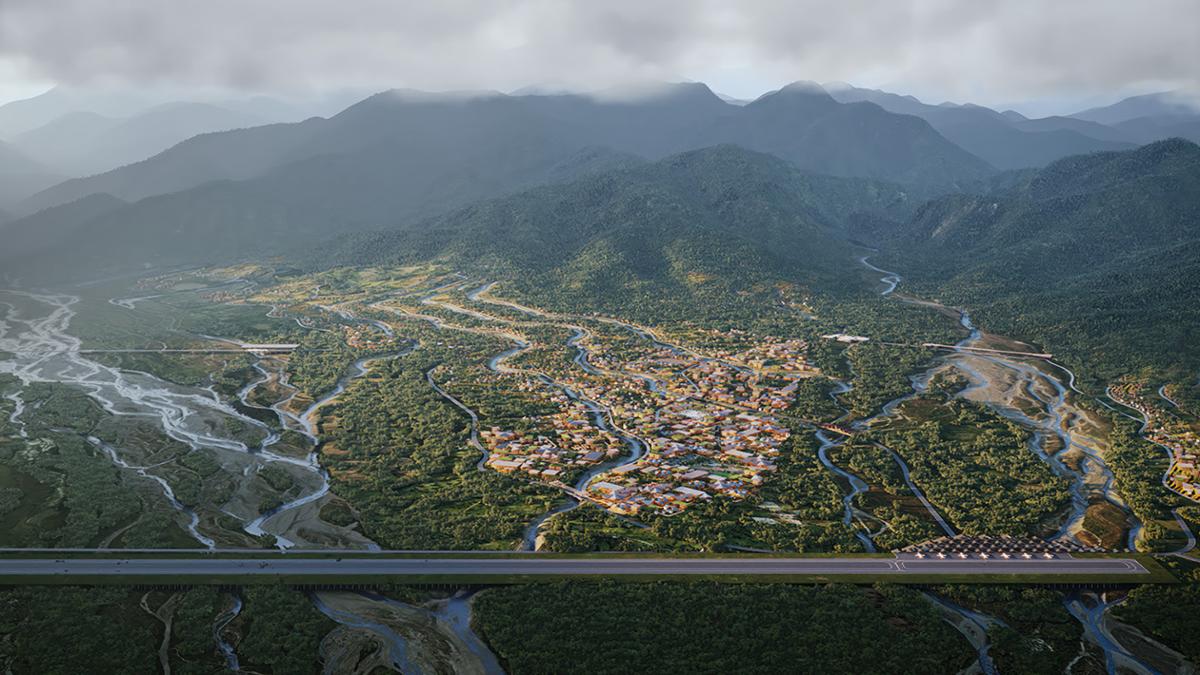
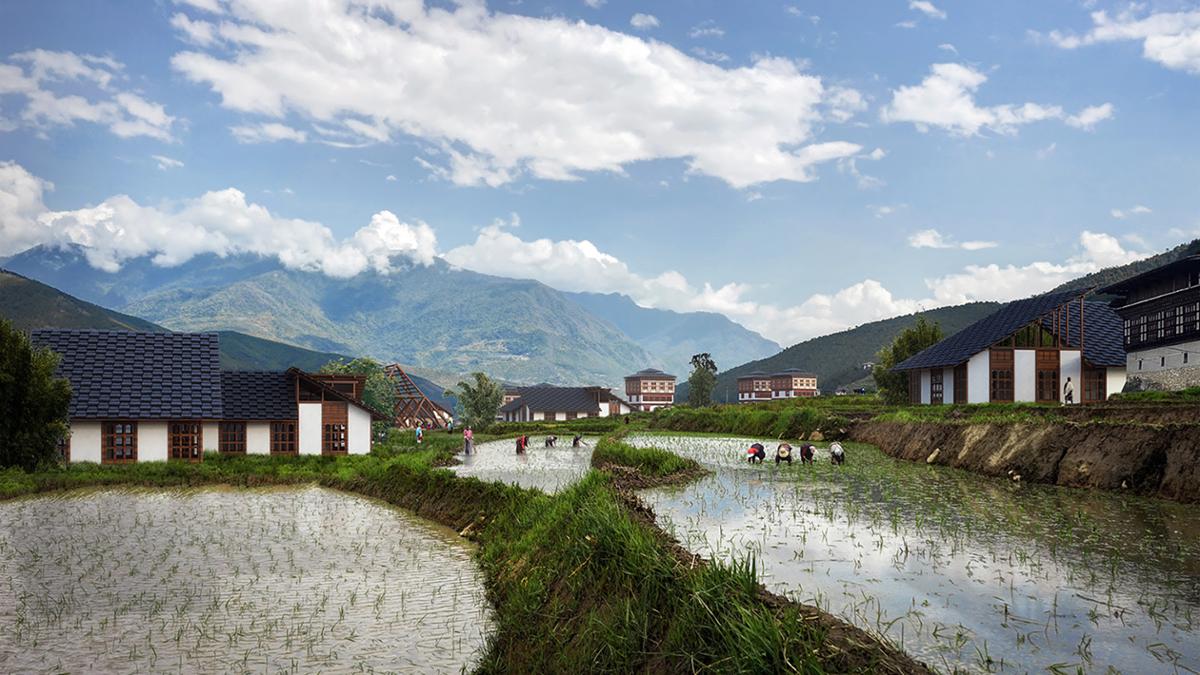
Plans for the Mindfulness City aim to amplify the country’s biodiversity by emerging as a tapestry of interconnected ecosystems and neighbourhoods shaped by the flow of the 35 local rivers and streams.
The resulting ribbonlike neighbourhoods will resemble paddy fields, forming urban terraces that cascade down from the hills to the valley.
The city will increase in density from the rural and recreational highlands to the urban and dense lowlands.
“We imagine the Mindfulness City as a place that could be nowhere else,” Ingles added, “where nature is enhanced, agriculture is integrated and tradition is alive and breathing, not only preserved but also evolved.
“Shaped by waterways, Gelephu becomes a land of bridges, connecting nature and people, past and future, local and global.”
Ingles says the natural elements and the existing infrastructure, agriculture and utilities of Gelephu naturally create 11 distinct neighbourhoods across the area.
Each has been designed based on the principles of the Mandala: defined by a series of repeating typologies organised symmetrically around a central public space, a gradual transition in density is created, from small buildings dispersed in the landscape in the north to larger footprints within an urban environment in the south.
To protect existing and future development against flooding in the monsoon season, paddy fields will be established along the site’s rivers and tributaries, running from north to south. These will further function as biodiversity corridors for local flora and fauna, leaving the migratory routes of elephants and other wildlife undisturbed.
Giulia Frittoli, partner in charge, BIG Landscape, added: “Inspired by the Bhutanese culture of respect and compassion for others and nature, the Mindfulness City is designed to enhance ecological systems, through an urban development that connects flora and fauna, as well as people and ideas.
“It becomes a testament of humanity's inseparable bond with nature and a global example of how to build a sustainable human presence on Earth.”
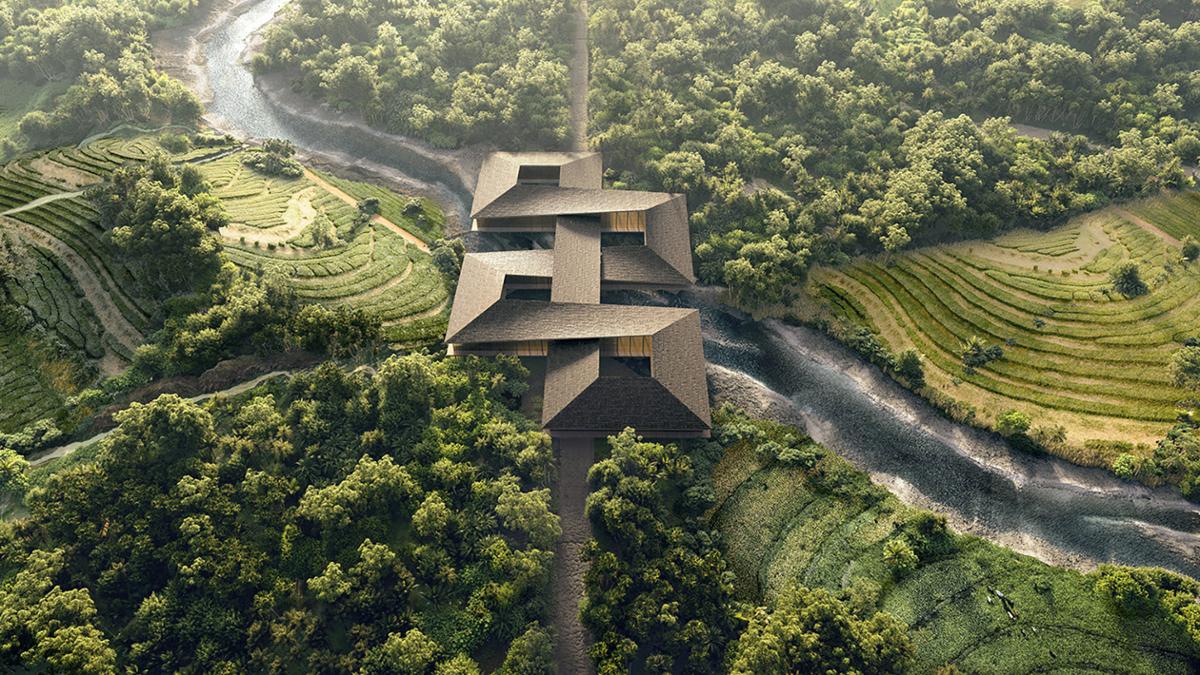
Bridging the gapThe neighbourhoods within the city, divided by rivers, will be tied together by three main mobility connections.
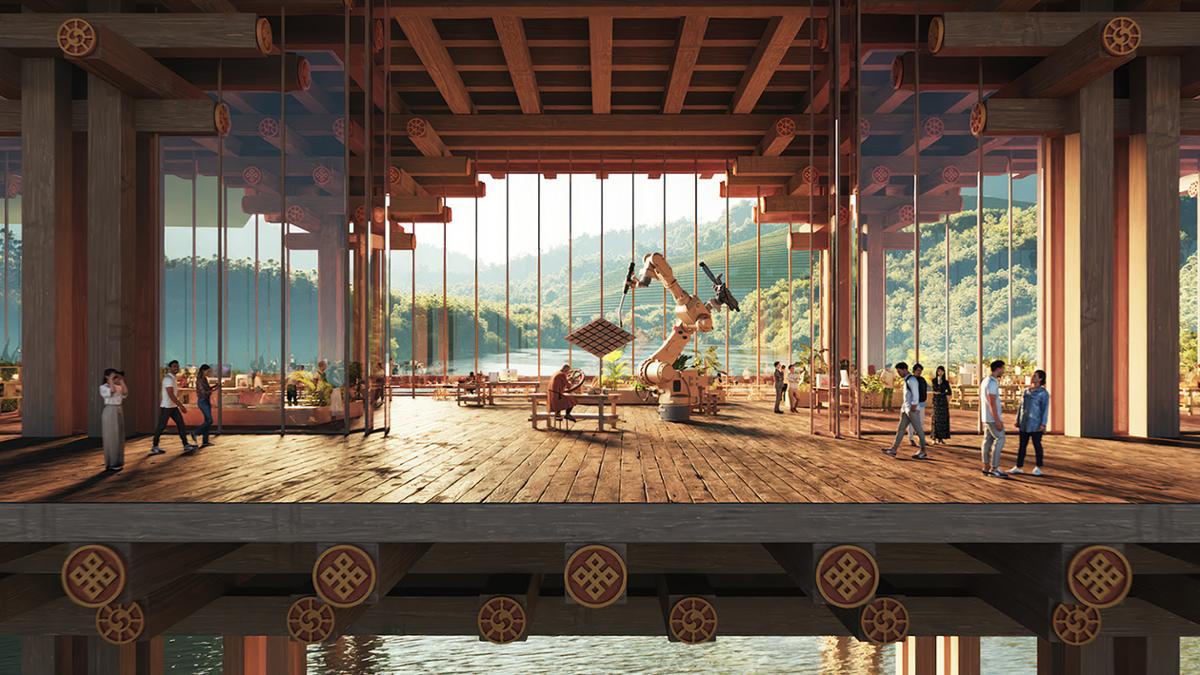
Occasionally, these will double as transportation infrastructure combined with civic and cultural facilities, creating a series of ‘inhabitable bridges’ which are tailored to the nine NGH* domains.
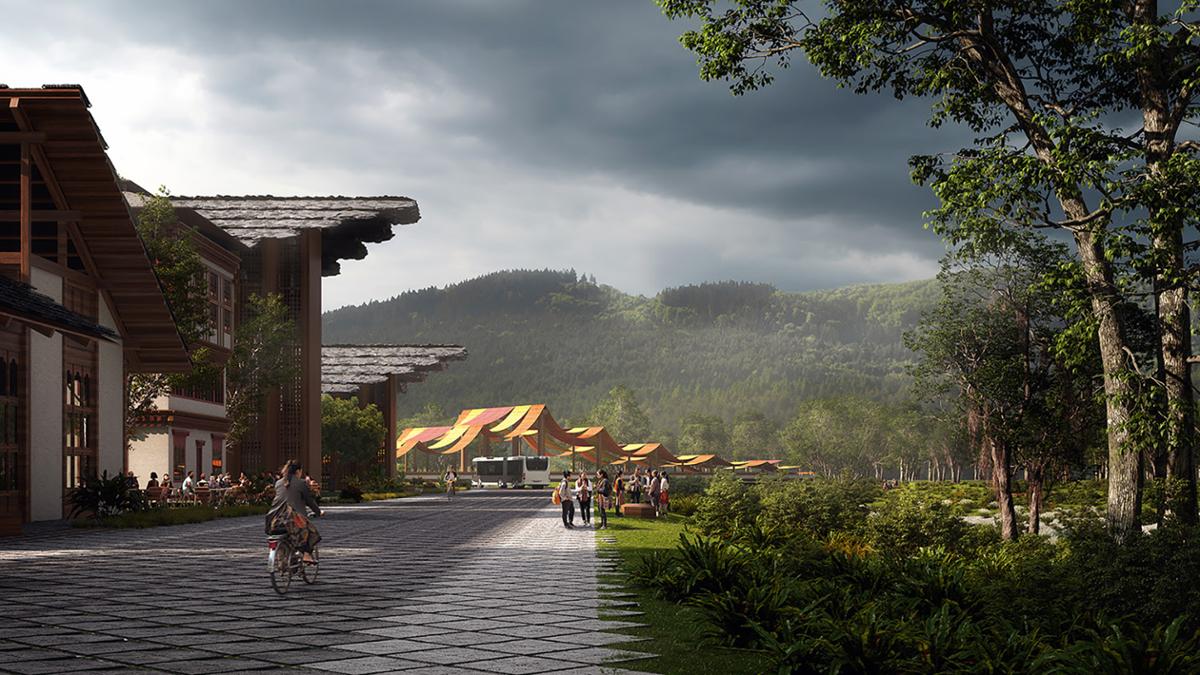
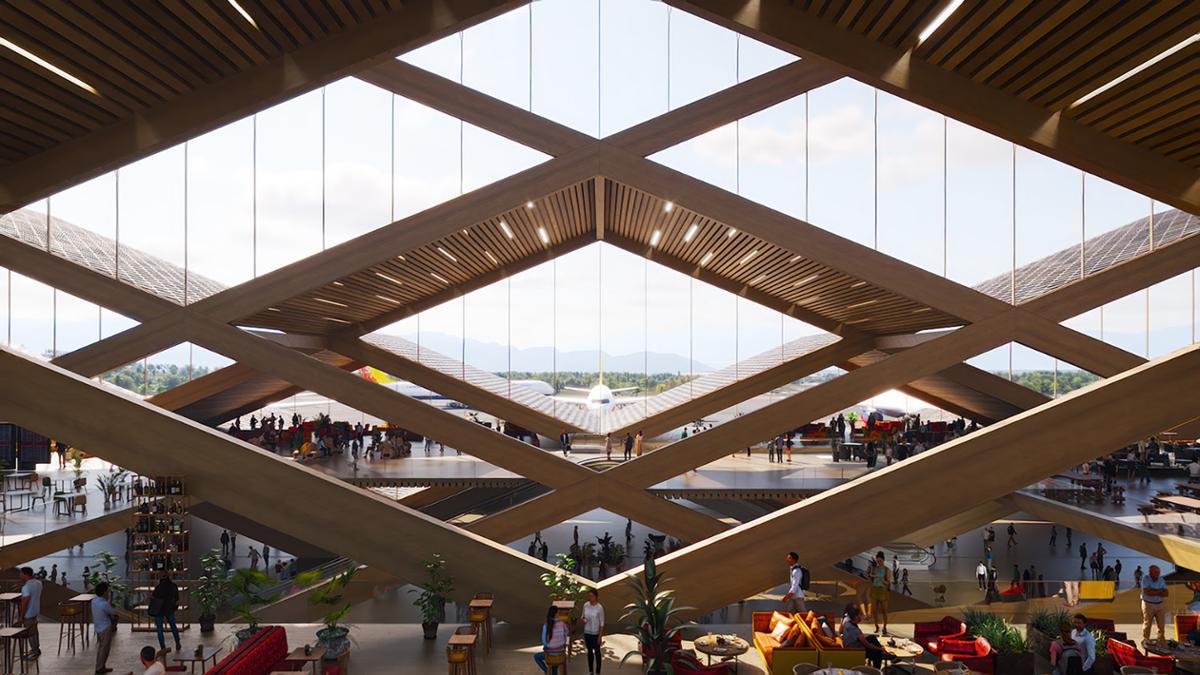
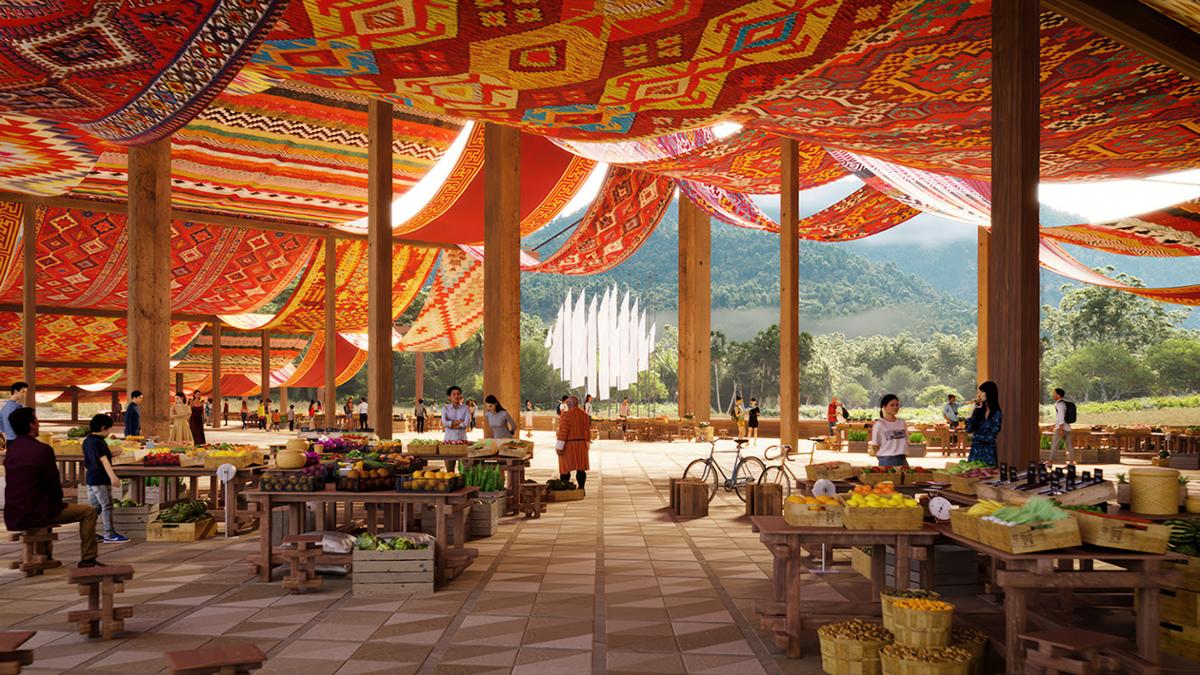
Each of the bridges will house key destinations within the city: the new airport, a spiritual center which will allow glimpses into monks’ daily practices; a healthcare center as a meeting between Eastern and Western medicine; a university; a hydroponic and aquaponic greenhouse; a cultural center to immerse and educate visitors about Bhutanese culture; and a market adorned with Bhutanese textiles.
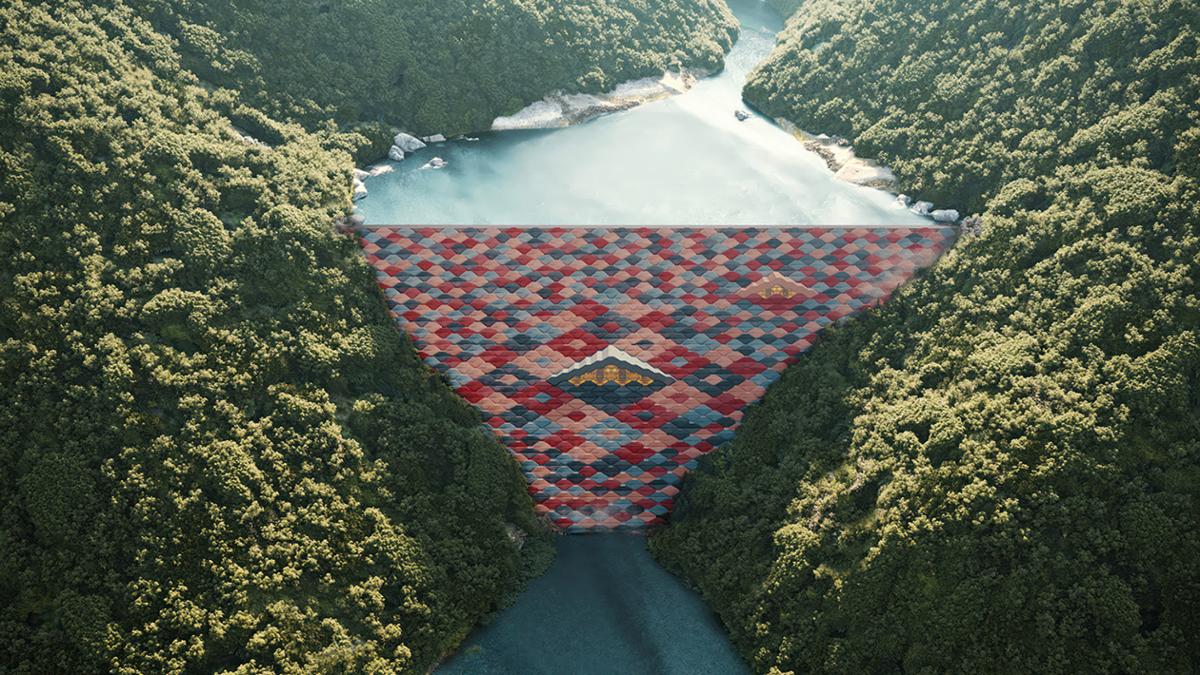
The final bridge, a hydroelectric dam, will be constructed on the city’s western border with a step-well retaining wall that offers viewpoints, staircases for meditative walks, and a temple.
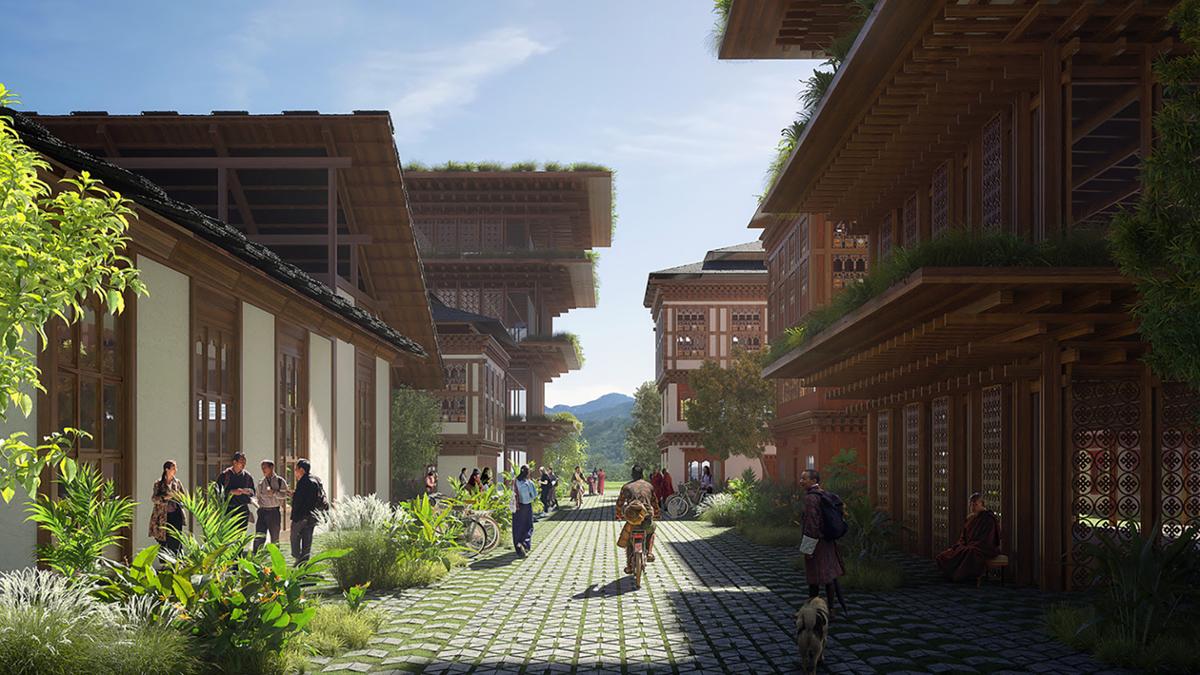
Intimate streets, paved with permeable pavers provide resilience by allowing stormwater to seep into the ground rather than the sewage system.
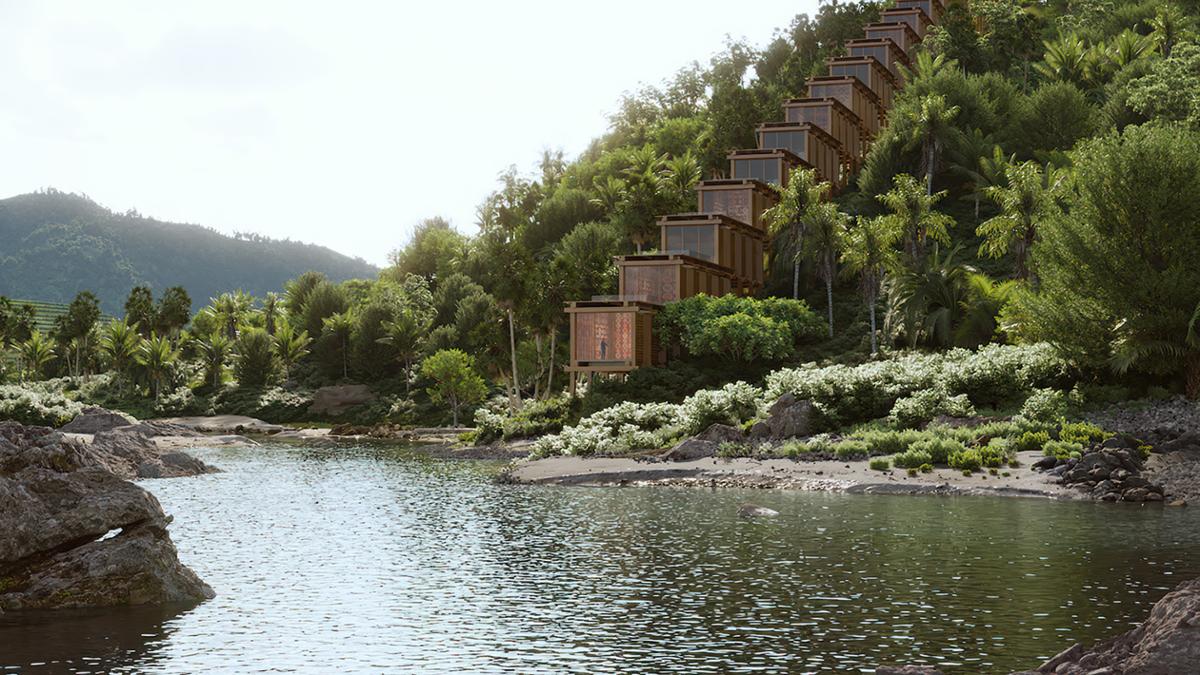
Local materials – wood, stone, and bamboo – will be used in the new buildings, inspired by vernacular motifs such as rabsel, cornices, ornaments, and roofscapes.
*Bhutan’s GNH – The Buddhist country uses the GNH – focusing on the wellness of its people – as its main measure of development in addition to GDP. The GNH is based on nine areas; Psychological Wellbeing, Health, Education, Living Standards, Time-Use, Ecological Diversity and Resilience, Good Governance, Cultural Diversity and Resilience, and Community Vitality
Mindfulness City Bjarke Ingels Group Bhutan BIG Arup Cistri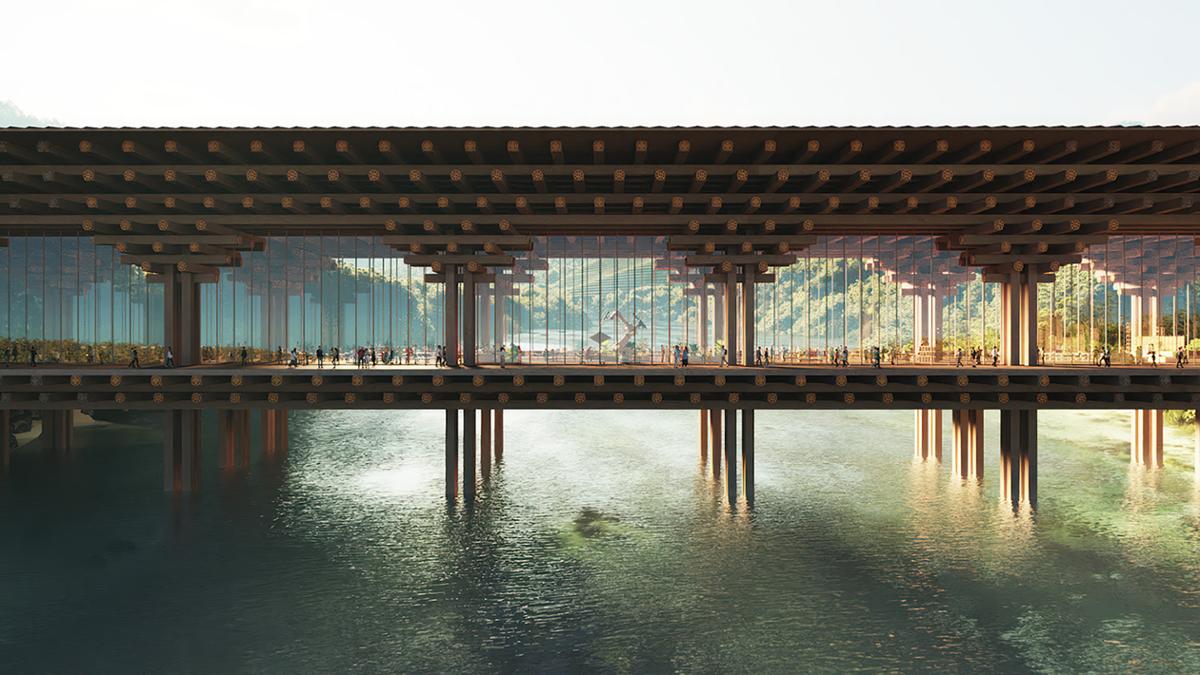
Bjarke Ingels among finalists chosen in design competition for National Museum of the United States Navy
Bjarke Ingels creates meandering eco distillery attraction for Blue Run Kentucky
All change at Six Senses New York
BIG and HOK's timber concept wins Zurich Airport competition
BIG's designs Prague concert hall to be vibrant centre of life
AI firm Midjourney enters wellness with spa, fitness and body scanning concept
Hot spring wellness community Ameyalli sells residences and breaks ground on resort and spa

OMA completes New Museum transformation with landmark expansion and Oberon restaurant
OMA has completed a major transformation of New York's New Museum, creating a larger cultural campus that combines expanded exhibition spaces with learning, performance, hospitality and public programming. The latest addition, Oberon, extends the visitor experience beyond the gallery, reflecting a growing trend for museums to become all-day destinations.
The New Museum in New York has entered a new chapter with the completion of a major
David Rockwell creates immersive magic destination, The Hand and The Eye
Montana Heritage Center by Cushing Terrell opens after US$107 million investment
Universal launches new theme park model with Kids Resort
'Minor wellness hotels' recorded the strongest growth across top KPIs in 2025, finds RLA Global
Great Barrier Reef attraction set for AU$180 million reinvention
Fairmont Cheshire, The Mere, has architecture by Leach Rhodes Walker and interiors by Bergman Design House.
Marriott International partners with Fitwel for wellness solutions across its residential portfolio
Preidlhof Luxury DolceVita Resort to unveil new spa in February 2027
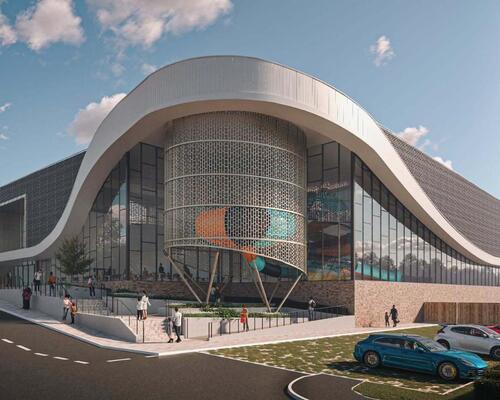
Places Leisure is working with Roberts Limbrick to build £60m wellness flagship in Basingstoke
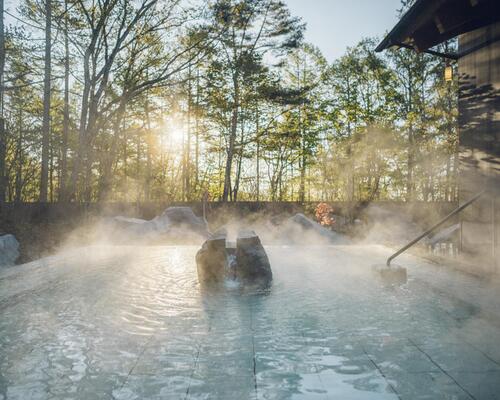
Hoshino Resorts opens Kai Kusatsu as it expands the Kai onsen ryokan brand
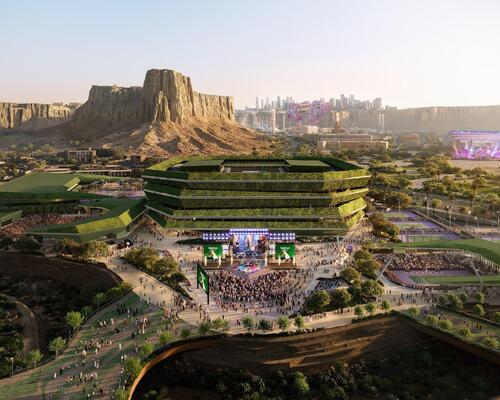
Qiddiya and Populous share details of Saudi Arabia’s National Tennis Centre
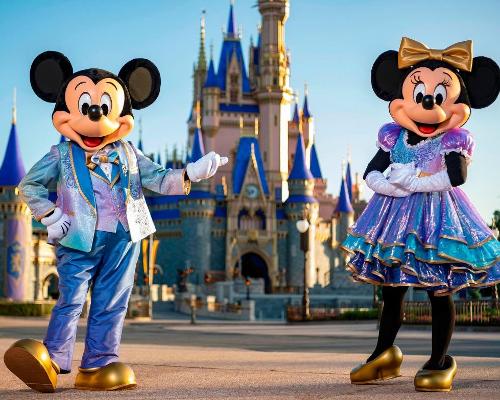
Disney confirms US$30 billion investment programme as it highlights its economic impact
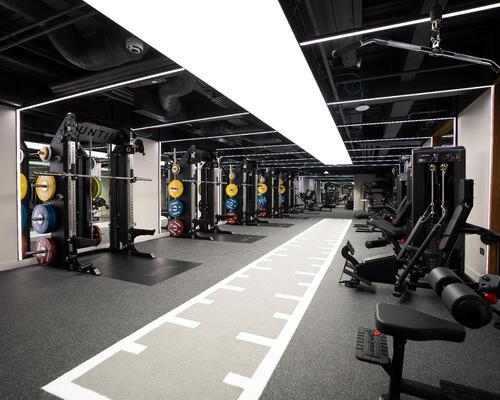
Until combines multiple disciplines at new Canary Wharf club
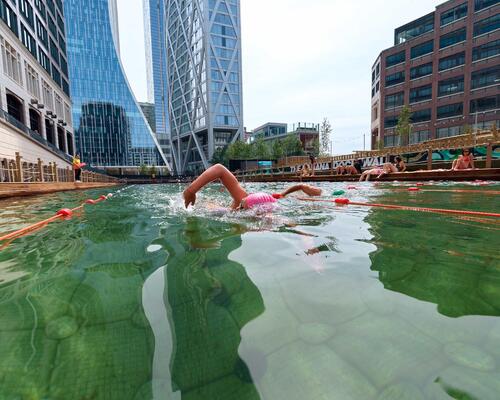
Sea Lanes opens following a partnership between The Eden Project and Canary Wharf Group
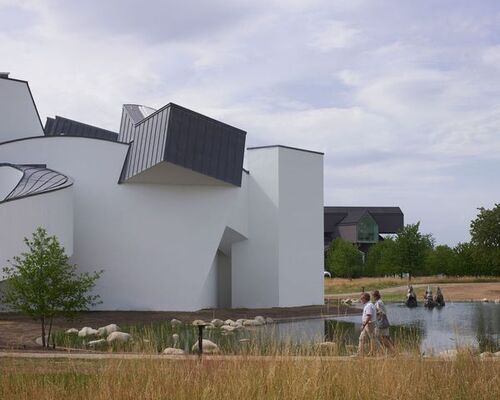
Bas Smets brings water and wilderness to Vitra
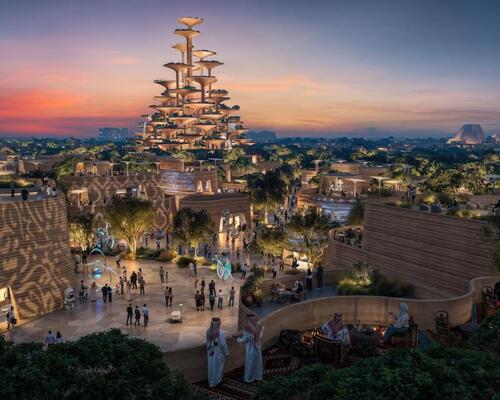
Expo 2030 Riyadh will create a permanent global destination
Luxury resort coming to Hunter Valley will have longevity spa
'Data chocolate', dreams made real and artworks shaped by visitors’ emotions: Refik Anadol’s AI art museum launches in Los Angeles
London Museum reveals 2026 opening date for new Smithfield home
BIG unveils Eve Music Hall as Croatia venue nears completion
Bob Rogers hands BRC to long-serving leadership team
Palazzo di Varignana launches family wellbeing and longevity retreat in Emilia Romagna
Anasa Wellness and Spa debuts at Patmos Aktis as it joins Marriott
Design-led Koru Health Club combines high-performance training with recovery

Wellness care hospital opens in Vilnius with innovative spa and hospitality concept

Universal and Puy du Fou projects point to rise of Oxford–Cambridge corridor
A proposed Puy du Fou development near Bicester and Universal Destinations and Experiences’ planned resort in Bedford are emerging as part of a wider transformation of the Oxford–Cambridge Growth Corridor into a major centre for UK leisure and tourism investment.
For years, the corridor has been associated primarily with science, technology, housing and university-led economic growth. However, the clustering of large-scale visitor attraction projects along the
All-inclusive eco-wellness development Auko to open near Vietnam’s Son Doong caves