The only way is up: Why building above rail lines could be the future of city building


– Ian Washbrook, Entuitive
Elevating new buildings above existing transport infrastructure is an increasingly viable way of unlocking commercial value from previously undevelopable properties, a leading engineering consultant has told CLAD.
Ian Washbrook, associate at Entuitive, believes that innovative new technologies and engineering solutions can ensure downtown areas continue to develop even as available sites become more scarce.
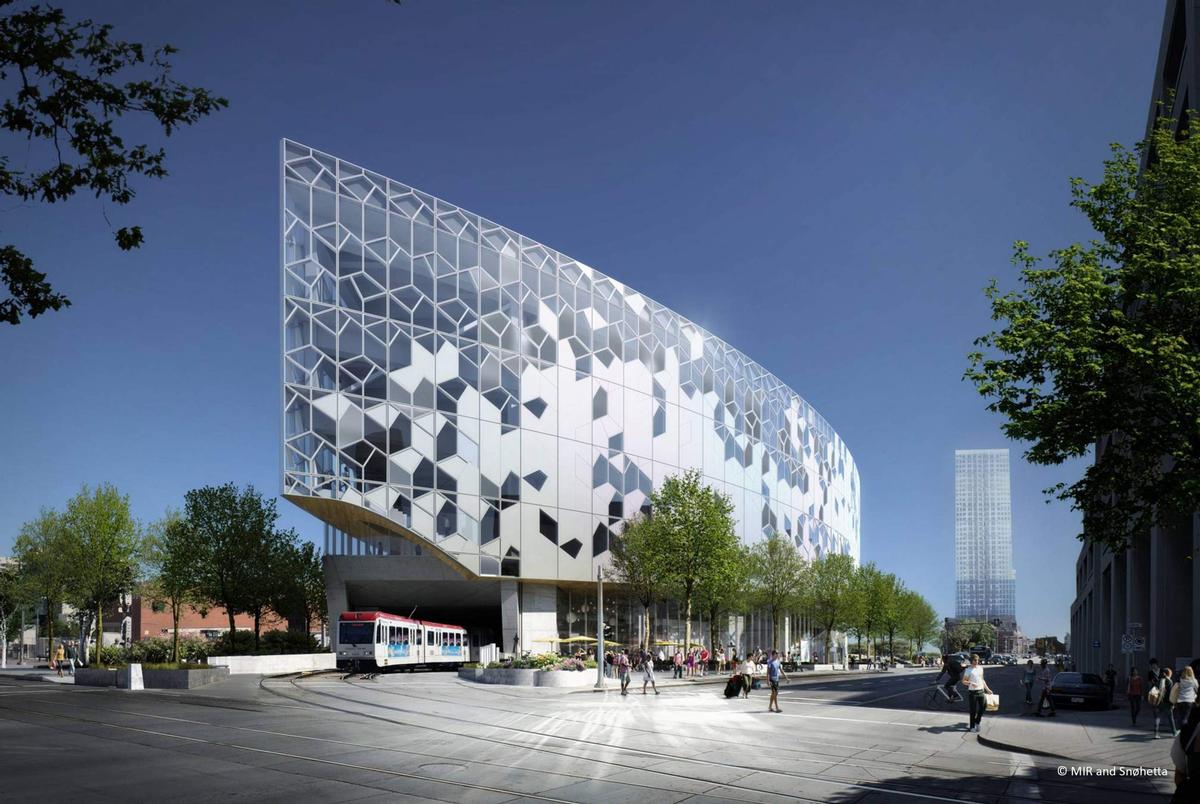
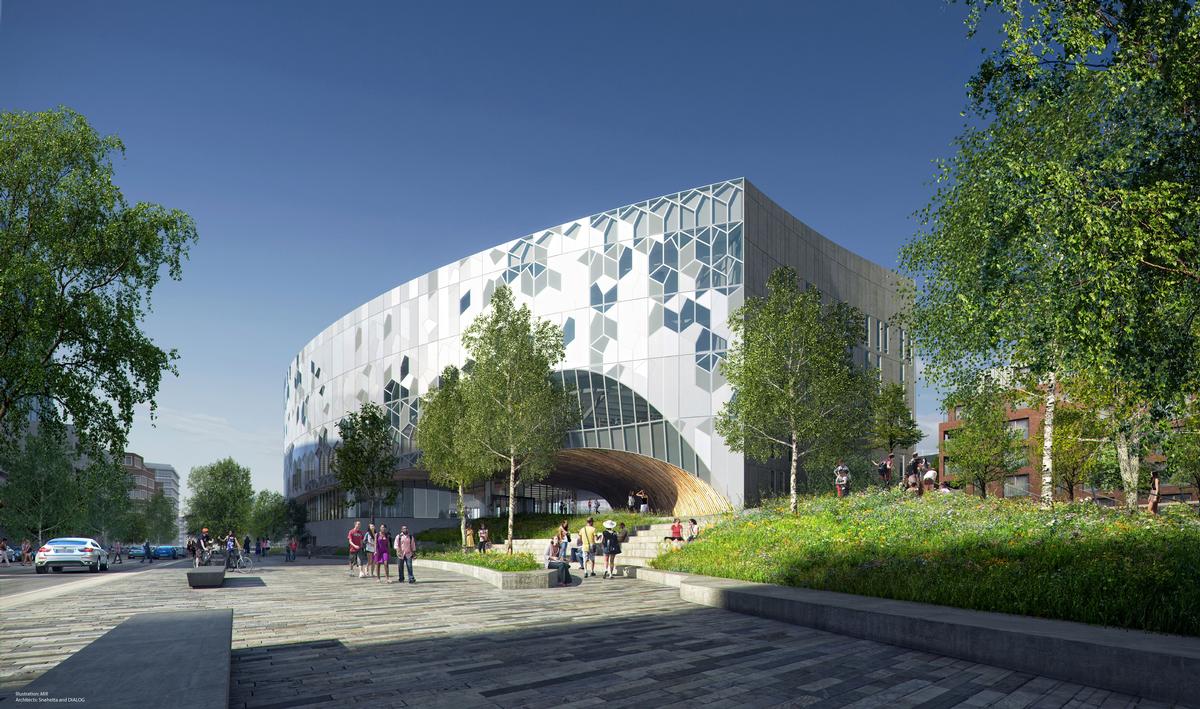
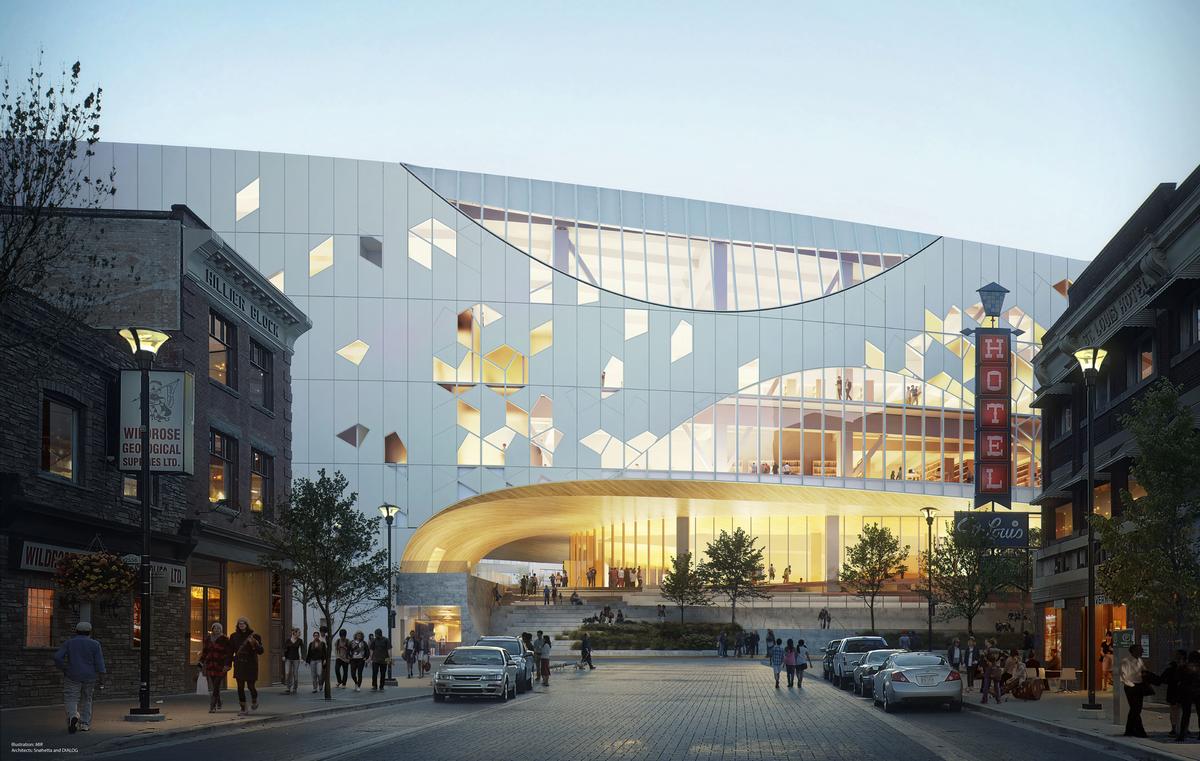
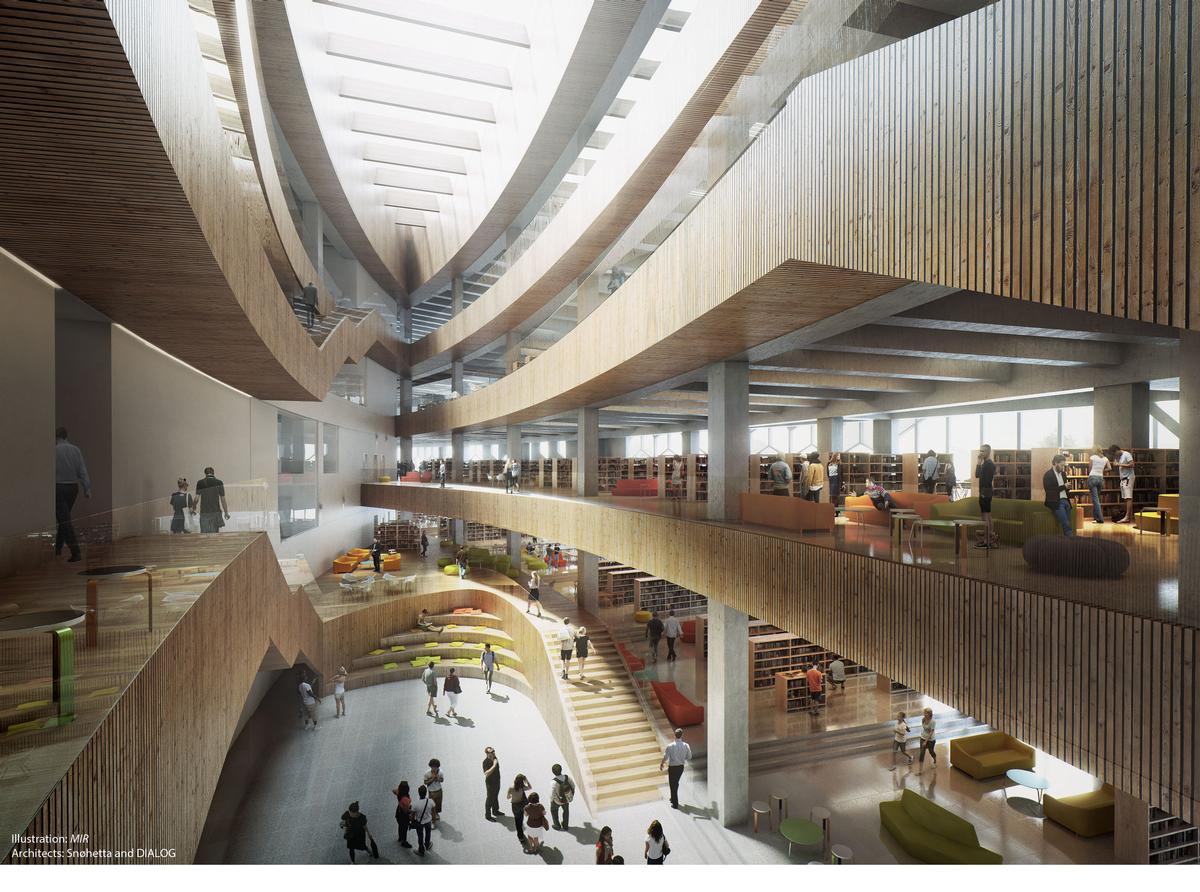
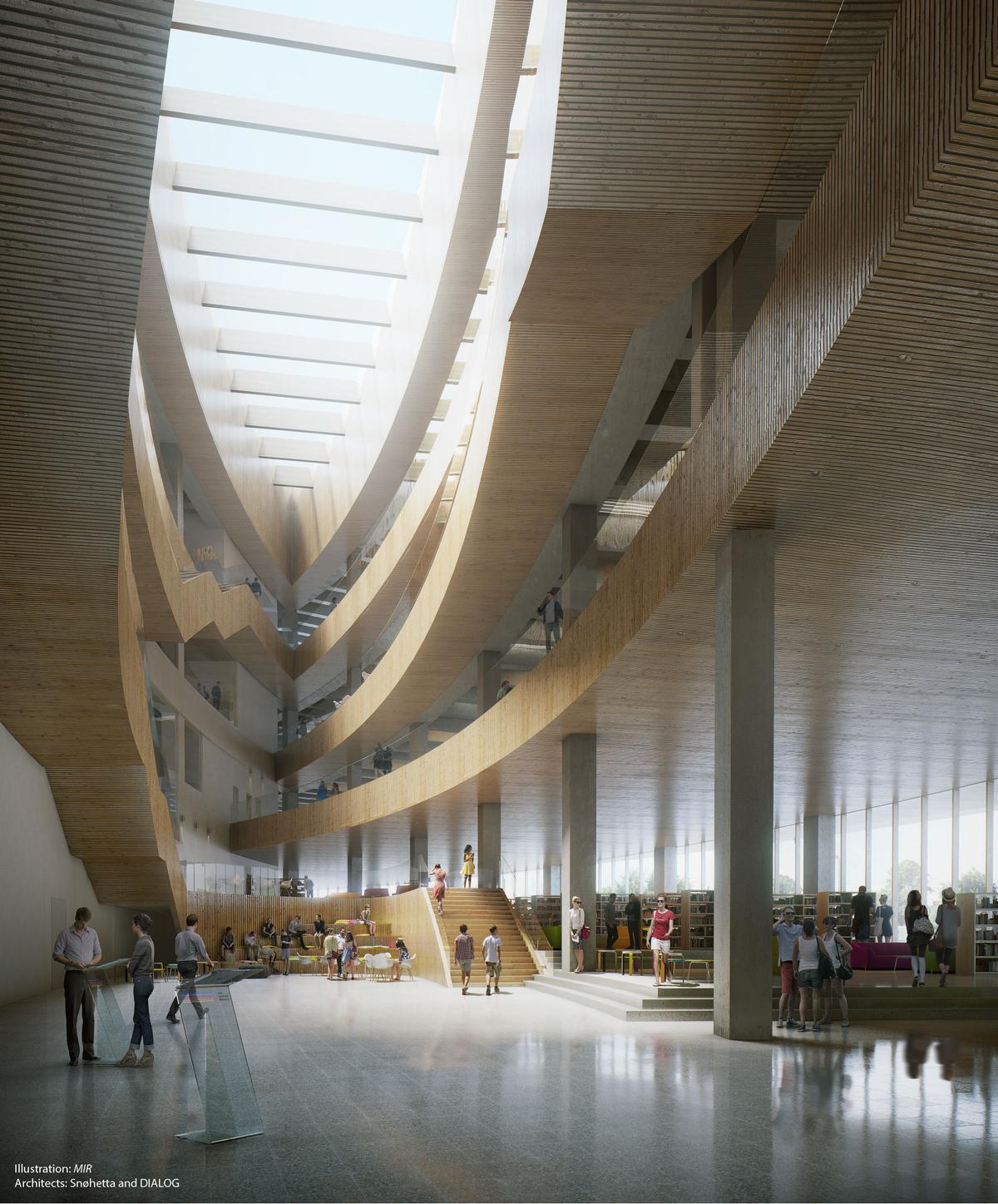
The firm’s Canadian office, which Washbrook leads, is currently building Calgary’s New Central Library above the city’s LRT rail line. The half-moon shaped structure, just east of City Hall in East Village, has been designed by architecture studios Snøhetta and Dialog to resemble a modern yet graceful ship “sailing into the future.”
Work is being completed in phases so as to minimise disruption to the rail network, which will run below the new structure.
“At grade transportation corridors, such as rail or rapid bus lines, slice cities in half,” said Washbrook. “Having the opportunity to build above these helps connect neighbourhoods and build vibrant communities.
“Calgary Municipal Land Corporation (CMLC) recognised the library would be a fantastic addition to the city’s East Village, and had the vision to see this underutilised land transformed into one larger, more valuable property.
“Working with Calgary Transit on design scenarios for a tunnel extension constructed with a building above, it became clear this was a feasible approach from operations, safety, and budget perspectives. The tunnel extension comprises close to 40 per cent of the overall footprint of the New Central Library.”
Washbrook told CLAD that retail developments are among the most feasible projects to span across tracks, as noise disruptions are less problematic for shops than with other types of building, but added that “hotels, museums and theatres are also physically possible, as long as base isolation is studied by an acoustic consultant so that airborne and structure-borne vibrations are kept at a tolerable level.”
In addition to the Calgary project, Entuitive are also building a platform over New York’s Penn Station in Manhattan West – reclaiming a hectare of land and spanning 240ft over the busiest rail corridor in North America, including 15 active train lines. The site will feature a public plaza, three high-rise commercial towers and a hotel.
Meanwhile, urban planners in Toronto are considering a proposal to build a 21-acre deck park over one of the busiest sections of the city’s rail corridor.
Why was the decision made to build Calgary New Central Library above the rail line?
The library had long outgrown their existing space, and began looking for a new home with the functional spaces required by a modern day library.
The building is now under construction on a parcel of land above Calgary Transit’s Red Line rail corridor, which exits and enters a tunnel extending from Stampede Station to 9th Avenue. The tunnel was constructed in the early 1980’s to enable the LRT infrastructure to cross the CP Rail east-west rail corridor. For many years, the land surrounding the rail corridor served as underutilised surface parking lots. Two small oddly shaped wedges of property on either side of the tracks were not overly appealing for commercial or residential developers given limited size and inefficient configuration.
Entuitive performed an initial study for CMLC leveraging our experience unlocking land use opportunities above and next to transit. Entuitive’s precedent project was the Manhattan West Platform in New York City, which created an additional 2.6 acres of functional space, enabling the developer to construct a 5.4 million sq ft office development in west Manhattan.
What is innovative about this approach?
Constructing a building over an active LRT line had never been done before in Calgary and several innovative engineering solutions were employed.
We had to fast-track the encapsulation design and construction before the final design of the New Central Library building was complete. The completed encapsulation also served as a temporary construction barrier protecting the trains from construction activity above.
To speed up the process and eliminate shutdowns, we fabricated precast wall panels off-site, which enabled a one-sided form which acted as a guide for the placement of permanent encapsulation wall reinforcement. The wall panels served as safety barriers between the busy rail corridor and the construction workers.
A roof system was selected that was quick to install during a weekend shutdown. Again, precasting the roof framing double tees system saved valuable time. They were also the most cost effective precast section, and the lightest section to install. Once the encapsulation walls were cast and ready to accept the roof framing precast double tees, the installation of approximately 150 meters of roof panels only took approximately 30 hours and was scheduled over a long weekend shutdown.
Having to work within strict time restraints meant that optioneering of the library building had to be performed as the construction of the encapsulation took place. Load assumptions were made for the foundations of the encapsulation to support the load of the library building above.
We worked with the curve of the LRT tracks to inform the shape of the building. Large steel trusses were designed to span across the encapsulation, allowing for a column free main entrance which allows for the building to cantilever at the north tip, directly above of the tracks.
What were the biggest challenges?
The design and construction sequencing was intricately planned to maximize the revenue hours of the LRT line, and to minimise the number of shutdowns. Calgary Transit trains operate from roughly 5:00 AM till 1:00 AM. With approximately 1.5 hrs needed to power up and power down the system, construction workers had only a 1-2 hour window to work within the clearance envelope around the traction power overhead (OLS) line system. The innovative design allowed for most of the construction to take place outside of the highly electrified zone.
Existing soil conditions consist of 3m of fill on top of 5m of native gravel on a bedrock comprised of silt stone. Shallow spread footings would have required extensive excavation, and the risk of undermining the rail corridor. Large 4’-6’ foot diameter piles were augured into the bedrock. To achieve the adequate foundation resistance, many of the piles had to be advanced 18m into the rock.
How will the library adapt to the noise of the railway?
We were fortunate enough to work with a tenant that currently has their main branch adjacent to the LRT rail corridor. They are used to the rumble of the trains. The library was not designed to be fully acoustically isolated. Only certain quiet spaces such as reading rooms and meeting rooms were sound-proofed. The cost to isolate the entire building would have been cost prohibitive. To isolate the tracks was a non-starter given that the tracks would have had to be pulled out and new base isolators installed, which would have resulted in too much down time for an extremely busy rail corridor.
BIG unveils Eve Music Hall as Croatia venue nears completion
Bob Rogers hands BRC to long-serving leadership team

Wellness care hospital opens in Vilnius with innovative spa and hospitality concept

Universal and Puy du Fou projects point to rise of Oxford–Cambridge corridor
A proposed Puy du Fou development near Bicester and Universal Destinations and Experiences’ planned resort in Bedford are emerging as part of a wider transformation of the Oxford–Cambridge Growth Corridor into a major centre for UK leisure and tourism investment.
For years, the corridor has been associated primarily with science, technology, housing and university-led economic growth. However, the clustering of large-scale visitor attraction projects along the
All-inclusive eco-wellness development Auko to open near Vietnam’s Son Doong caves
Shedd Aquarium upgrades its visitor experience with new Immersion Theater
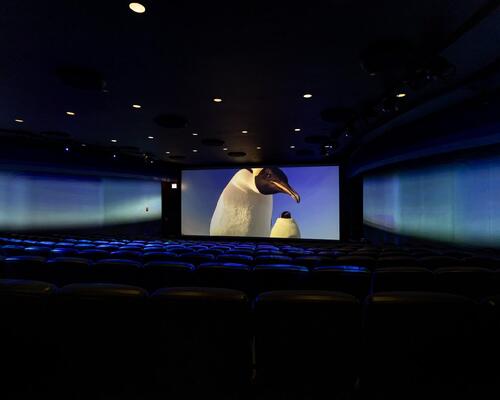
Shedd Aquarium has opened the Immersion Theater developed in partnership with SimEx-Iwerks, as part of a wider strategy to enhance the guest experience and create additional revenue opportunities.
The attraction has transformed the aquarium’s Phelps Auditorium into a multi-sensory venue combining panoramic projection, environmental effects and interactive technology.
A new pre-show area allows visitors to engage with augmented reality marine animals before entering the
Mandarin Oriental announces standalone Mansions-branded residences for Abu Dhabi
MCR is planning a luxury hotel for London's BT Tower
Joy as a radical act: Yinka Ilori launches solo exhibition celebrating the rebellious power of spreading happiness

Work gets underway on Madrid's €800 million leisure complex
Work is underway in Madrid on one of Europe’s most significant multi-functional complexes, combining sport, entertainment, culture and education.
The €800 million initiative to regenerate the former Olympic Aquatic Centre in the north-east of the city, next to the Riyadh Air Metropolitano stadium, is being led by Barsento – a joint venture between Live Nation Entertainment, Oak View Group and Atlético de Madrid. The project will
Therme Manchester reveals 90:90 strategy – 90 per cent of the UK population within a 90-minute drive of a Therme

Four Seasons’ Naples Beach Club opens 2,800sq m Sanctuary spa inspired by indigenous Calusa people
Orient Express Corinthian to host Ocean Rebirth wellness retreat in collaboration with Guerlain
Famed London nightclub, Tramp, launches Tramp Health
First look: Miraval opens on the Red Sea in Saudi Arabia

Hainan Science Museum by Ma Yansong, opens in China
A new science museum has opened to the public in Haikou after attracting more than 350,000 visitors during a four-month soft opening period.
Designed by Ma Yansong and his practice MAD Architects, the Hainan Science Museum is located on the edge of Wuyuan River National Wetland Park and has already recorded peak attendance of more than 5,800 visitors in a single day.
Commissioned by
Zannier Île De Bendor launches with design by Hardel Le Bihan Architectes
Sæl Spa readies for launch in London: “a modern British sanctuary”
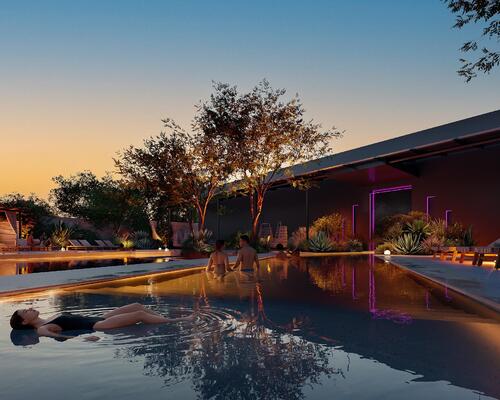
Immersive art bathhouse Submersive announces debut location in Austin

Construction begins on regenerative wellness destination The Shenandoah Nature Resort

Royal Caribbean reveals record-breaking cruise ship
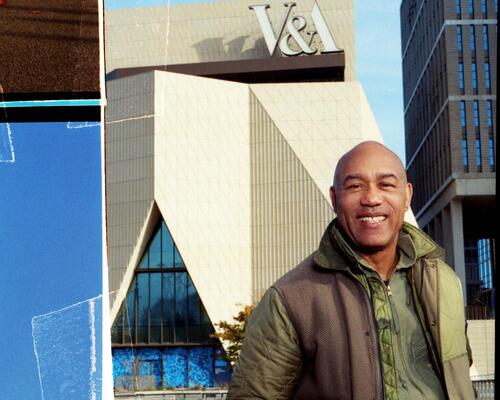
V&A East opens in London
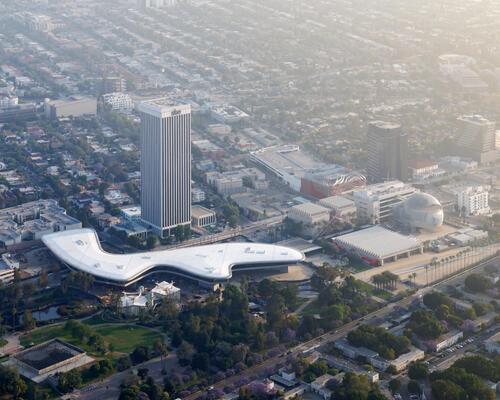
David Geffen galleries open at LACMA

New venue The Lands by Capella includes a longevity centre to complement sister hotel Capella Sydney

World of Frozen launches at Disneyland Paris
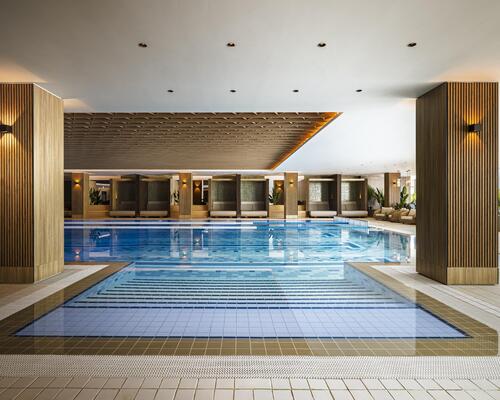
Pical Resort by Valamar reveals first Croatian spa under the ESPA brand

Mandarin Oriental creates end-to-end Egyptian journey with two new hotels and first-ever luxury river cruise

Designers Mendil + Meyer launch new division called Lām Concepts for strategic wellness projects
Wilderness Bisate in Rwanda reveals brand’s second Sanctuary spa
4a Architekten shares details of wellness extension at Salinarium Bad Dürkheim Thermal Spa