New GWI study unveils global wellness market leaders: US, China and Germany



The US, China, Germany, Japan and the UK have been identified as the world’s five largest wellness markets in new research released today by the Global Wellness Institute (GWI).
Called The Global Wellness Economy: Country Rankings, the new study provides market size, rankings, analysis and per capita wellness spending for 145 nations.
Findings show the US remains the undisputed goliath in wellness spending, with an annual market worth US$1.8 trillion, and ranking first in nine of the 11 wellness sectors measured by the GWI.
Almost all the top 25 wellness markets have seen strong growth since the pandemic, with the UK, the Netherlands, the US, Mexico, Canada and Australia as standouts, surpassing their pre-pandemic market sizes by 120 per cent or more.
Globally, the wellness economy drives 5.6 per cent of total GDP, which, according to the GWI, means one in every 20 “dollars” spent by consumers worldwide is on wellness.
To put this wellness spending in context, the research finds that annual, global per capita spending on wellness (US$706) is on par with consumer out-of-pocket spending on healthcare (US$711).
At the regional level, per capita wellness spending is higher than consumer out-of-pocket spending on healthcare across every region except North America. And wellness spending per capita is higher than spending on clothing/shoes (US$289) and hotels/restaurants (US$475) all across the world (Euromonitor data).
In countries like Switzerland, Iceland and the US, people spend far more: on average, over US$5,300 a year on wellness.
“For countries interested in growing their wellness economy, it’s crucial to know where they stand in this massive global industry,” said Ophelia Yeung and Katherine Johnston, GWI senior research fellows.
“It’s also important to see how different countries’ wellness markets have responded to the impacts of the pandemic.”
The report is a sister publication to GWI’s recent 2023 Global Wellness Economy Monitor, a complete global update on all 11 wellness sectors.
Top 25 national wellness markets
Numbers refer to market size and annual growth rate 2020-2022:
1) US – US$1.8 trillion – 14 per cent
2) China – US$790 billion – 8.9 per cent3) Germany – US$269 billion – 16.8 per cent
4) Japan – US$241 billion – minus 3.9 per cent5) UK – US$224 billion – 19.4 per cent
6) France – US$172 billion – 11.6 per cent7) India – US$132.5 billion – 16.5 per cent
8) Canada – US$128 billion – 13.5 per cent9) S. Korea – US$113 billion – 9.4 per cent
10) Italy – US$112 billion – 7.9 per cent11) Australia – US$110 billion – 12.9 per cent
12) Brazil – US$96 billion – 18.2 per cent13) Russia – US$94.5 billion – 13.2 per cent
14) Spain – US$83 billion – 12.4 per cent15) Mexico – US$74 billion – 25.2 per cent
16) Netherlands – US$50 billion – 12.1 per cent17) Switzerland – US$50 billion – 14.5 per cent
18) Indonesia – US$49 billion – 5.9 per cent19) Turkey – US$45 billion – 14 per cent
20) Taiwan – US$43 billion – 5.1 per cent21) Austria – US$42 billion – 13.9 per cent
22) Philippines – US$41 billion – 8.9 per cent23) Poland – US$39 billion – 11.1 per cent
24) Thailand – US$35 billion – 8.5 per cent25) Sweden – US$30 billion – 7.5 per cent
The top 10 largest markets represent 70 per cent of the global wellness economy, while the top 25 represent 86 per cent.
The GWI found that the vast majority of the 25 largest wellness markets have seen robust recent growth. Comparing market sizes in 2019 vs. 2022, 22 of 25 countries (except Thailand, Japan and Brazil) are now larger than pre-pandemic, as measured in US dollars.
But the GWI says it’s important to note that currency depreciation impacts data for countries like Japan, Brazil and some eurozone countries like Germany, France and Italy. For instance, the Japanese yen fell by 19.8 per cent against the US dollar in 2022, so if it looks like its wellness market shrank by 3.9 per cent annually from 2020 to 2022 in dollars, it actually grew 6.6 per cent each year when measured in yen.
Wellness spending per capita: top 12 countries
1) Seychelles – US$8,097
2) Switzerland – US$5,7373) Iceland – US$5,523
4) Aruba – US$5,3615) US – US$5,321
6) Austria – US$4,6837) Australia – US$4,218
8) Norway – US$4,1979) Denmark – US$3,846
10) New Zealand – US$3,68911) UK – US$3,342
12)Canada – US$3,287
The GWI discovered that spending on wellness is highest in wealthy countries that also rank in the top 25 for GDP per capita, including Switzerland, Iceland, the US, Austria and Australia.
Those countries have seen significant recent growth in wellness spending (per capita): in the US that spend has risen US$1,636 – and in Switzerland US$1,365 – between 2020 and 2022.
While it may be surprising to see small countries like the Seychelles and Aruba so high on this list (the Maldives and the Bahamas also rank in the top 25), the GWI says it’s because these islands are major high-end wellness tourism destinations, with a large portion (50-90 per cent) of their wellness spending coming from inbound wellness tourists rather than locals.
The GWI describes the impact of the wellness market – heavily dominated by inbound wellness tourism – on these countries’ economies as “staggering”. In the Seychelles, the wellness market accounts for 42 per cent of the total economy, while in the Maldives that number is 22.6 per cent.
The ratio of how much the wellness economy contributes to GDP is highest in North America (6.9 per cent) and Europe (5.8 per cent) – and lowest in the Middle East-North Africa region, at 3.3 per cent.
North America and Europe’s wellness markets have been growing faster than the overall economy. Among the top 25 wellness markets, some of the countries where wellness makes up a bigger percentage of GDP are the Philippines (10.1 per cent), Austria (9 per cent), the UK (7.3 per cent), the US (7 per cent) and South Korea (6.8 per cent).
GWI Ophelia Yeung Katherine Johnston The Global Wellness Economy: Country Rankings Global Wellness Economy MonitorGlobal wellness economy reaches record-breaking $5.6trn – predicted to hit $8.5trn by 2027
Japan named world’s third biggest wellness economy, worth US$303 billion
FEATURE: Event report – Global Wellness Summit 2023: a time of transformation
FEATURE: News report – Peak performance


Wellness care hospital opens in Vilnius with innovative spa and hospitality concept

Universal and Puy du Fou projects point to rise of Oxford–Cambridge corridor
A proposed Puy du Fou development near Bicester and Universal Destinations and Experiences’ planned resort in Bedford are emerging as part of a wider transformation of the Oxford–Cambridge Growth Corridor into a major centre for UK leisure and tourism investment.
For years, the corridor has been associated primarily with science, technology, housing and university-led economic growth. However, the clustering of large-scale visitor attraction projects along the

All-inclusive eco-wellness development Auko to open near Vietnam’s Son Doong caves
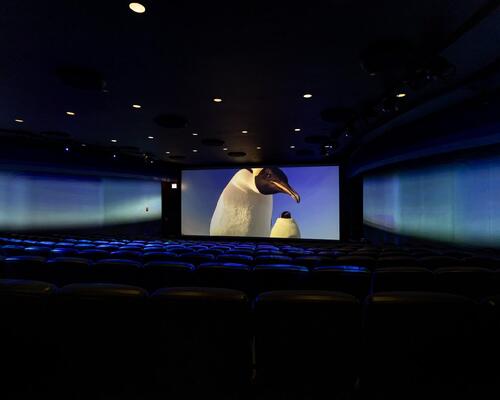
Shedd Aquarium upgrades its visitor experience with new Immersion Theater
Shedd Aquarium has opened the Immersion Theater developed in partnership with SimEx-Iwerks, as part of a wider strategy to enhance the guest experience and create additional revenue opportunities.
The attraction has transformed the aquarium’s Phelps Auditorium into a multi-sensory venue combining panoramic projection, environmental effects and interactive technology.
A new pre-show area allows visitors to engage with augmented reality marine animals before entering the
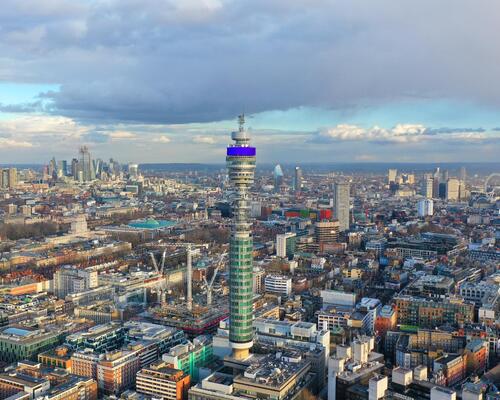
MCR is planning a luxury hotel for London's BT Tower
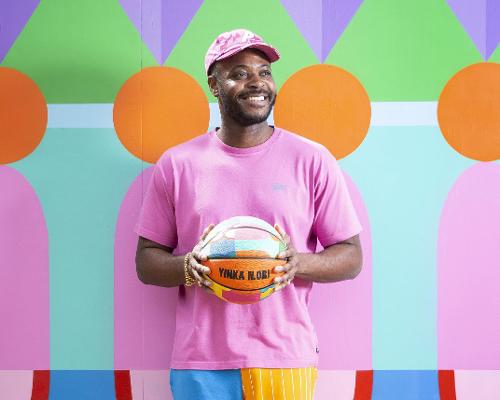
Joy as a radical act: Yinka Ilori launches solo exhibition celebrating the rebellious power of spreading happiness

Work gets underway on Madrid's €800 million leisure complex
Work is underway in Madrid on one of Europe’s most significant multi-functional complexes, combining sport, entertainment, culture and education.
The €800 million initiative to regenerate the former Olympic Aquatic Centre in the north-east of the city, next to the Riyadh Air Metropolitano stadium, is being led by Barsento – a joint venture between Live Nation Entertainment, Oak View Group and Atlético de Madrid. The project will
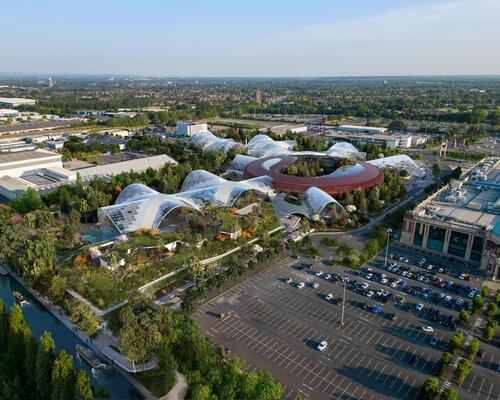
Therme Manchester reveals 90:90 strategy – 90 per cent of the UK population within a 90-minute drive of a Therme

Four Seasons’ Naples Beach Club opens 2,800sq m Sanctuary spa inspired by indigenous Calusa people
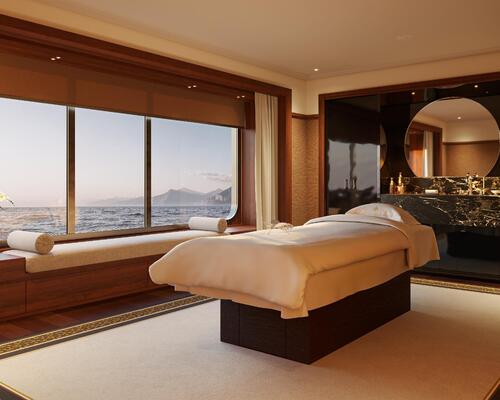
Orient Express Corinthian to host Ocean Rebirth wellness retreat in collaboration with Guerlain
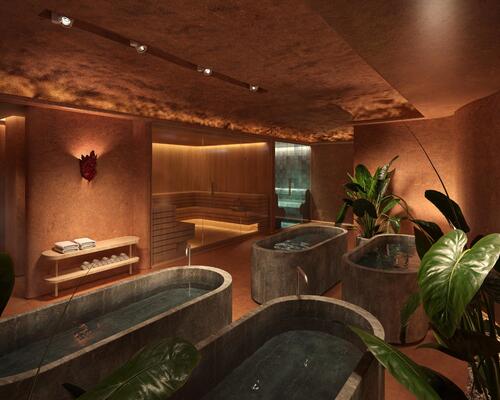
Famed London nightclub, Tramp, launches Tramp Health
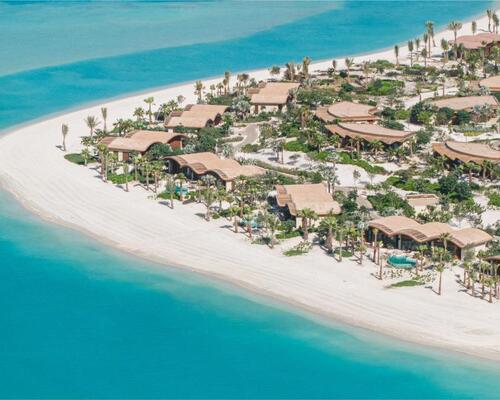
First look: Miraval opens on the Red Sea in Saudi Arabia

Hainan Science Museum by Ma Yansong, opens in China
A new science museum has opened to the public in Haikou after attracting more than 350,000 visitors during a four-month soft opening period.
Designed by Ma Yansong and his practice MAD Architects, the Hainan Science Museum is located on the edge of Wuyuan River National Wetland Park and has already recorded peak attendance of more than 5,800 visitors in a single day.
Commissioned by
Zannier Île De Bendor launches with design by Hardel Le Bihan Architectes
Sæl Spa readies for launch in London: “a modern British sanctuary”
Immersive art bathhouse Submersive announces debut location in Austin

Construction begins on regenerative wellness destination The Shenandoah Nature Resort

Royal Caribbean reveals record-breaking cruise ship

V&A East opens in London

David Geffen galleries open at LACMA

New venue The Lands by Capella includes a longevity centre to complement sister hotel Capella Sydney

World of Frozen launches at Disneyland Paris
Pical Resort by Valamar reveals first Croatian spa under the ESPA brand

Mandarin Oriental creates end-to-end Egyptian journey with two new hotels and first-ever luxury river cruise

Designers Mendil + Meyer launch new division called Lām Concepts for strategic wellness projects
Wilderness Bisate in Rwanda reveals brand’s second Sanctuary spa
4a Architekten shares details of wellness extension at Salinarium Bad Dürkheim Thermal Spa
BodyHoliday plans 10-15 locations in the next 15 years
Floating wellbeing destination planned for London’s Royal Docks
Aman Group to open second Janu in Dubai with inaugural Janu Club