Global wellness economy reaches record-breaking $5.6trn – predicted to hit $8.5trn by 2027
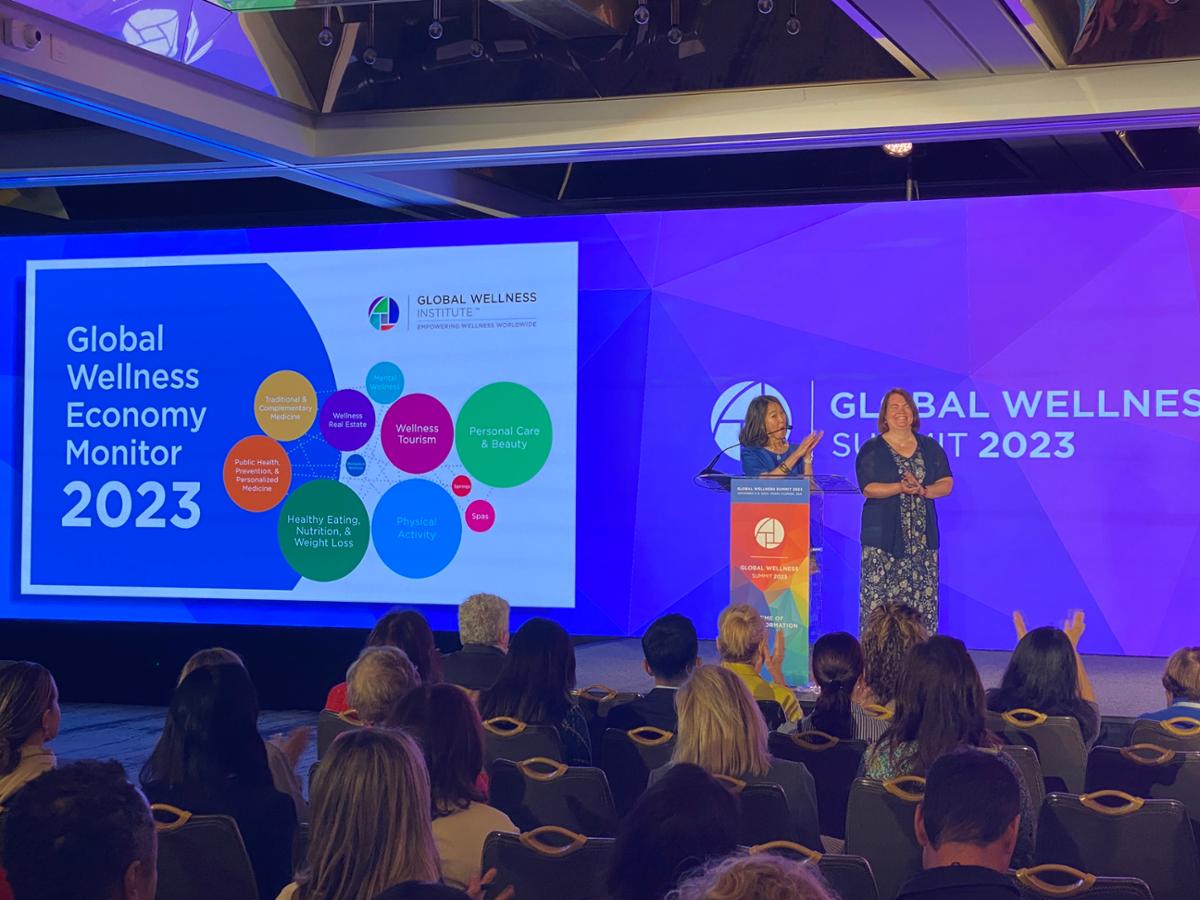

– Ophelia Yeung
The global wellness economy will be worth US$8.5 trillion by 2027, according to new research unveiled by the Global Wellness Institute (GWI).
Called The Global Wellness Economy 2023, the report was unveiled today on the first day of the 17th annual Global Wellness Summit (GWS), hosted in Miami, Florida.
It is the 10th edition of its kind and illustrates how the market has fared since the massive economic shocks of the pandemic.
It provides numbers and analysis for all 11 wellness sectors, regional data and the top 20 national markets for each wellness sector while exploring the major shifts and trends that will impact each wellness market in the future.
The journey so far
Between 2019 and 2020, the wellness market shrank from US$4.9 trillion to US$4.4 trillion (11 per cent).
It has since grown 27 per cent to reach a record-breaking US$5.6 trillion in 2022, where seven of the 11 wellness sectors now surpass their 2019, pre-pandemic values.
The GWI’s 2022 figures for the 11 sectors are as follows (in ascending order):
• Personal Care and Beauty – US$1.089 trillion (+102 per cent on 2019)
• Healthy Eating, Nutrition and Weight Loss – US$1.079 trillion (+118 per cent on 2019)
• Physical Activity – US$976 billion (+111 per cent on 2019)
• Wellness Tourism – US$651 billion (+90 per cent on 2019)
• Public Health, Prevention and Personalised Medicine – US$611 billion (+171 per cent on 2019)
• Traditional and Complementary Medicine – US$519 billion (+107 per cent on 2019)
• Wellness Real Estate – US$398 billion (+177 per cent on 2019)
• Mental Wellness – US$181 billion (+139 per cent on 2019)
• Spas – US$105 billion (+92 per cent on 2019)
• Workplace Wellness – US$51 billion (+97 per cent on 2019)
• Thermal / Mineral Springs – US$46 billion (+71 per cent on 2019)
“We’re surprised by the resiliency of the global wellness economy, and how quickly it has bounced back from the pandemic,” said Katherine Johnston, GWI senior research fellow and co-author of the report.
“If the pandemic disrupted industry momentum in the short term, it has simultaneously created a dramatic shift in the long-term opportunities and trajectory for wellness.”
The GWI predicts that full recovery for the slightly lagging sectors of Wellness Tourism, Spas and Thermal / Mineral Springs will be swift given pent-up demand, anticipating that the first two categories will surpass their 2019 value by year-end 2023 and the latter by 2024.
Maintaining momentumThe GWI forecasts that the wellness economy will only expand its share of consumer spending and the global economy over the next five years – growing at an annual rate of 8.6 per cent, higher than the projected global GDP growth of 5.1 per cent (IMF forecasts).
The market is slated to reach US$6.3 trillion by the end of 2023 and US$7.4 trillion in 2025, on its march toward US$8.5 trillion in 2027, when it will represent 6.6 per cent of global GDP (vs. 5.6 per cent in 2022).
The biggest projected wellness growth leaders through 2027 are:
• Wellness Real Estate (17.4 per cent annually) • Wellness Tourism (16.6 per cent annually)
• Thermal/Mineral Springs (14.3 per cent annually) • Mental Wellness (12.8 per cent annually)
The unusually high future growth rates for Wellness Tourism and Thermal / Mineral Springs reflect a period of continued recovery from 2023-2025.
Regional analysis
Wellness markets in all global regions have fully recovered from the pandemic, but North America (123 per cent of 2019), Middle East-North Africa (119 per cent of 2019) and Europe (114 per cent of 2019) have shown the most powerful growth rates.
In 2022, as countries in Asia suffered prolonged disruptions and lockdowns, the North American market (US$1.9 trillion) surpassed Asia-Pacific (US$1.7 trillion) as the largest regional wellness economy.
These two regions, along with Europe (US$1.5 trillion market), now make up 90 per cent of the entire wellness market.
The report also states that per capita spending on wellness is highest in North America (US$5,108) and Europe (US$1,596).
What’s next for the 11 sectors?Four wellness sectors – Personal Care & Beauty, Healthy Eating, Nutrition and Weight Loss, Physical Activity, and Wellness Tourism – will exceed US$1 trillion in market size by 2024.
Three sectors are expected to surpass half a trillion dollars in 2024: Wellness Real Estate, Traditional & Complementary Medicine, and Public Health, Prevention and Personalized Medicine.
Healthy Eating, Nutrition and Weight Loss is also expected to leapfrog Personal Care & Beauty to become the largest wellness market by 2025.
Meanwhile, Wellness Real Estate will enter the top five sectors in 2025, and explode from a US$398 billion market in 2022 to US$887.5 billion in 2027.
“The global wellness economy has a strong current under its wings, based on global trends that are only accelerating: an ageing population, rising chronic diseases and mental unwellness, and a shift in consumer values,” said Ophelia Yeung, GWI senior research fellow and paper co-author.
“But it’s also facing some challenging macro conditions like widening wealth gaps, consumer confidence in uncertain economic conditions and rapidly changing geopolitics that will affect the flow of people, capital, technology and ideas. How the wellness economy will do will depend on the interplay of all of these factors.”
To read the full version of the report, click here.
Going forward, the GWI will release a Global Wellness Economy Report at each annual GWS.
The institute will also release Its Country Rankings Report companion research providing market size, rankings, analysis, and per capita wellness spending for 150 nations, on 30 January 2024.
Global Wellness Institute GWI Global Wellness Summit Ophelia Yeung Katherine Johnston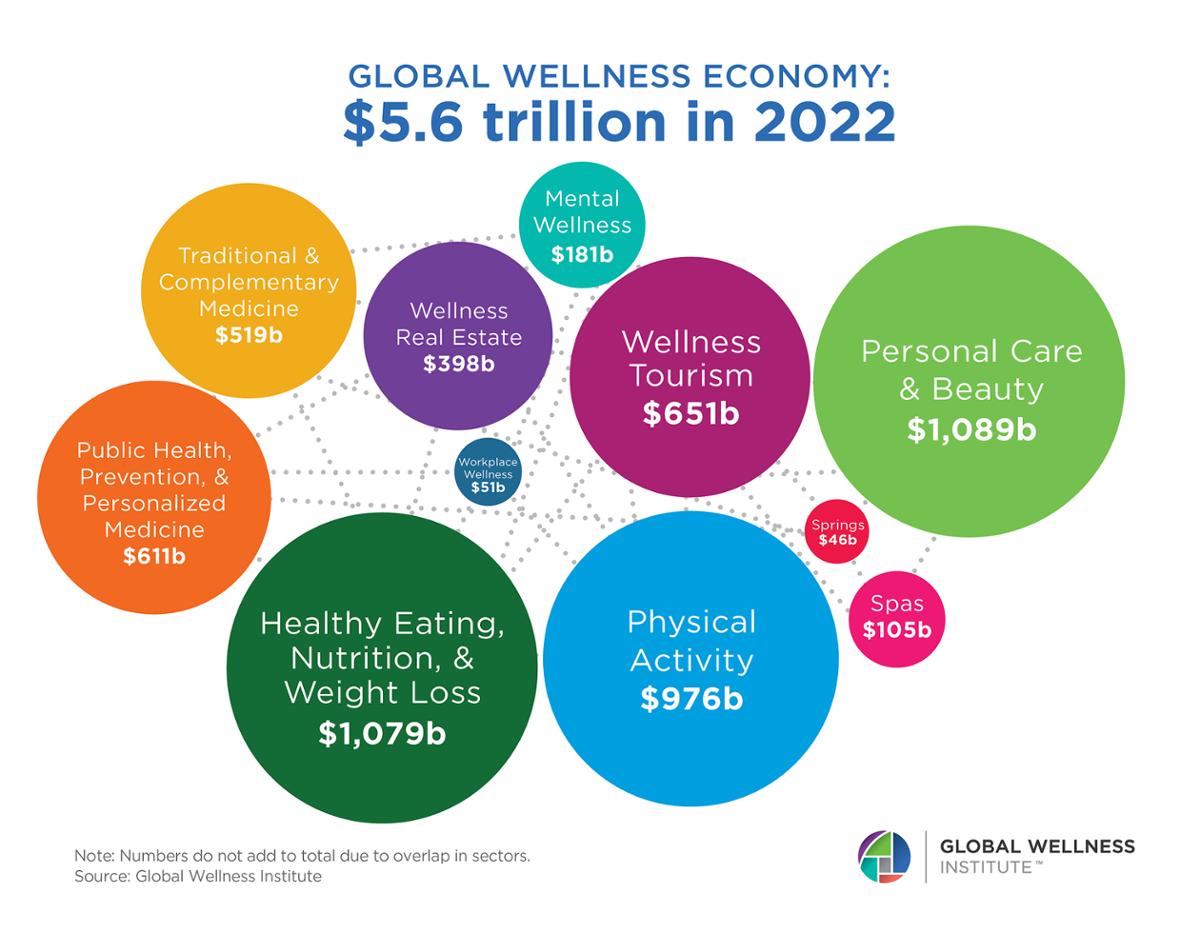

US is world’s top wellness economy – worth $1.2trn, reports GWI
New Global Wellness Summit report forecasts top 12 wellness trends for 2023
FEATURE: Spa People: 20th anniversary issue – Susie Ellis
AI firm Midjourney enters wellness with spa, fitness and body scanning concept


Hot spring wellness community Ameyalli sells residences and breaks ground on resort and spa

OMA completes New Museum transformation with landmark expansion and Oberon restaurant
OMA has completed a major transformation of New York's New Museum, creating a larger cultural campus that combines expanded exhibition spaces with learning, performance, hospitality and public programming. The latest addition, Oberon, extends the visitor experience beyond the gallery, reflecting a growing trend for museums to become all-day destinations.
The New Museum in New York has entered a new chapter with the completion of a major
David Rockwell creates immersive magic destination, The Hand and The Eye

Montana Heritage Center by Cushing Terrell opens after US$107 million investment

Universal launches new theme park model with Kids Resort
'Minor wellness hotels' recorded the strongest growth across top KPIs in 2025, finds RLA Global
Great Barrier Reef attraction set for AU$180 million reinvention
Fairmont Cheshire, The Mere, has architecture by Leach Rhodes Walker and interiors by Bergman Design House.
Marriott International partners with Fitwel for wellness solutions across its residential portfolio
Preidlhof Luxury DolceVita Resort to unveil new spa in February 2027
Places Leisure is working with Roberts Limbrick to build £60m wellness flagship in Basingstoke
Hoshino Resorts opens Kai Kusatsu as it expands the Kai onsen ryokan brand
Qiddiya and Populous share details of Saudi Arabia’s National Tennis Centre

Disney confirms US$30 billion investment programme as it highlights its economic impact
Until combines multiple disciplines at new Canary Wharf club

Sea Lanes opens following a partnership between The Eden Project and Canary Wharf Group
Bas Smets brings water and wilderness to Vitra
Expo 2030 Riyadh will create a permanent global destination
Luxury resort coming to Hunter Valley will have longevity spa
'Data chocolate', dreams made real and artworks shaped by visitors’ emotions: Refik Anadol’s AI art museum launches in Los Angeles
London Museum reveals 2026 opening date for new Smithfield home

BIG unveils Eve Music Hall as Croatia venue nears completion
Bob Rogers hands BRC to long-serving leadership team
Palazzo di Varignana launches family wellbeing and longevity retreat in Emilia Romagna
Anasa Wellness and Spa debuts at Patmos Aktis as it joins Marriott

Design-led Koru Health Club combines high-performance training with recovery

Wellness care hospital opens in Vilnius with innovative spa and hospitality concept

Universal and Puy du Fou projects point to rise of Oxford–Cambridge corridor
A proposed Puy du Fou development near Bicester and Universal Destinations and Experiences’ planned resort in Bedford are emerging as part of a wider transformation of the Oxford–Cambridge Growth Corridor into a major centre for UK leisure and tourism investment.
For years, the corridor has been associated primarily with science, technology, housing and university-led economic growth. However, the clustering of large-scale visitor attraction projects along the

All-inclusive eco-wellness development Auko to open near Vietnam’s Son Doong caves















Designed to restore neglected land and renew the identity of Iraq’s capital city, Baghdad Sustainable Forests promises a new way of living surrounded by nature. Gensler’s Ian Mulcahay tells us why he thinks the project could become a model for the repair and enhancement of urban centres