GSWS 2014 releases Global Wellness Economy Monitor report
The global spa industry has grown by 58 per cent since 2007 and is now valued at US$94bn (€73bn, £57bn), according to research released at last week’s Global Spa & Wellness Summit (GSWS) in Marrakech, Morocco.
What’s more, the number of spa facilities worldwide has increased by 47 per cent – from 71,762 facilities in 2007 to 105,591 facilities in 2013.
These figures form part of the Global Wellness Economy Monitor, a new study conducted by GSWS’s independent research partner, SRI International. The spa industry data was an update of SRI’s 2008 Global Wellness Economy Report which was based on 2007 figures (see Spa Business, issue 4, 2008, p40).
When the global spa industry is combined with three other segments – wellness tourism, thermal/ mineral springs and wellness lifestyle products and services – SRI puts the global spa and wellness market at US$3.4tn (€2.6tn, £2tn).
Wellness tourism had an increased value of US$494bn (€384bn, £301bn) in revenues in 2013 – a 12.5 per cent rise from 2012. This growth significantly outpaces SRI’s original forecast of 9 per cent as predicted in its 2013 Global Wellness Tourism Economy research (see Spa Business, issue 4, 2013, p80).
The new Global Wellness Economy Monitor study includes the first-ever analysis of the worldwide thermal/ mineral springs market, which is worth US$50bn (€39bn, £31bn), spanning 26,847 properties across 103 nations.
The study also indicates that there’s been a boom in wellness lifestyle products and services as consumers adopt proactive approaches to health and wellness. This cluster grew by 62 per cent from 2010-2013 and represents a US$2.8tn (€2tn, £1.7tn) market – contributing the lion’s share of the spa and wellness market’s US$3.4tn (€2.6tn, £2tn) value.
The US$94bn Global Spa Industry
Revenues from spa facilities, which amounted to US$74bn (€57bn, £45bn) in 2013, form the biggest part of the global spa industry. But the overall US$94bn (€73bn, £57bn) figure also includes businesses that enable and support the sector. Spa investment capital amounts to US$19bn (€15bn, £12bn), spa education equals US$800m (€621m, £488m), spa media/ education/ events generate US$200m (€155m, £122m) and spa consulting is worth US$100m (€78m, £61m).
Europe still has the world’s largest spa market, generating US$29.8bn (€23bn, £18bn) in revenues. However, Asia-Pacific has overtaken North America to become the second largest market, but it’s a close call between the two – spa revenues in Asia-Pacific sit at US$18.8bn (€15bn, £11bn), compared to US$18.3bn (€14bn, £11bn) in North America.
Asia-Pacific also holds the distinction of having the most locations: 32,400 spas and counting.
The US$494bn Wellness Tourism Industry
SRI’s 2013 The Global Wellness Tourism Economy research was the first to highlight the wellness-focused travel segment, finding that wellness travel is growing nearly 50 per cent faster than global tourism overall. The figures were updated in the 2014 Global Wellness Economy Monitor study and show that as a US$494bn (€384bn, £301bn) industry, wellness tourism represents more than one in seven – 14.6 per cent – of all travel dollars spent worldwide.
Wellness-focused trips jumped from 524m to 586.5m from 2012-2013 and wellness tourists remain big spenders. International wellness travellers spend 59 per cent more than the average tourist, while domestic tourists spend 159 per cent more.
The US$50bn Thermal/ Mineral Springs Industry
The 2014 Global Wellness Economy Monitor study includes the first-ever benchmarking of the thermal/ mineral springs market.
While hundreds of thousands of springs occur naturally worldwide, SRI’s report only included revenue-earning springs – for example with built facilities. It segmented the industry into thermal/ mineral spring facilities that offer bathing with spa services and those without.
It was revealed that thermal/ mineral springs without spa services are far more prevalent – they account for 20,343 establishments against 6,504 that have spa facilities. However, those springs with spa services earn more than twice the revenue as the springs without spa services: US$32bn (€25bn, £20bn) against US$18bn (€14bn, £11bn) annually.
Ten countries account for 85 per cent of revenues and China and Japan comprise a staggering 51 per cent of the market, driven by the massive, ongoing investment in resorts in China and the thousands of onsens in Japan. China’s hot spring market is worth US$14.1bn (€11bn, £9bn) and Japan follows closely with a value of US$11.7bn (€9bn, £7bn). National markets in Europe make up the remaining top 10 countries.
Hot Spring/ Mineral Markets Globally:
Asia-Pacific: US$26.7bn (€21bn, £16bn)Europe: US$21.7bn (€17bn, £13bn)
Latin America: US$900m (€699m, £549m)North America: US$200m (€155m, £122m)
Middle East/ North Africa: US$200m (€155m, £122m)Sub-Saharan Africa: US$5m (€4m, £3m)
The US$2.8tn Wellness Lifestyle Products and Services Industry
Industries that help consumers to take a proactive approach to integrate wellness into their daily life were also taken into account in the Global Wellness Economy Monitor study. Collectively, these sectors represent a US$2.8tn (€2tn, £1.7tn) market share (see below).
Wellness Lifestyle Industry Values:
Beauty & anti-ageing: US$1tn (€0.8tn, £0.6tn)Healthy eating/ nutrition: US$574bn (€446bn, £350bn)
Fitness & mind-body: US$446bn (€346bn, £272bn)Preventative/ personalised health: US$433bn (€336bn, £264bn)
Complementary and alternative medicine: US$187bn (€145bn, £114bn)Wellness lifestyle real estate: US$100bn (€78bn, £61bn)
Workplace wellness: US$41bn (€32bn, £25bn)
SRI predicts that these wellness lifestyle industries will grow faster than the global spa economy, as consumers take charge of their preventative healthcare.
GSWS 2014 predicts ten future factors to affect the spa industry
APSWC plans Japanese onsen study tour for 2015
Global Spa and Wellness Summit: Day one report
Mentors for spa management training scheme revealed at GSWS
NZ$18.5m hot spring development planned by Wyndham Hotel Group
Spa leaders gather in Morocco for the start of GSWS
Michelle Gamble named vice president of business development for GSWS
Action-packed GSWS daily agenda revealed
Susie Ellis says human spa staff won't be replaced by robots
Sponsored Knowledge Workshops precede the Global Spa & Wellness Summit
What to expect at next month's Global Spa and Wellness Summit in Marrakech
Franz Linser appointed to GSWS board of directors
Spa mentorship programme and career resources to be unveiled at GSWS
Romania's former health minister says national natural healing resources need protection
Mayor of hot spring city Rotorua in New Zealand invited to GSWS
Spafinder's Susie Ellis advises national tourism bodies to categorise their wellness activities
Revitalize Wellness Center launches in Nairobi, Kenya
GSWS releases information on wellness expert speeches for 2014 conference
GSWS report to include first ever research on the global hot springs market
GSWS invites spa stakeholders to complete vital industry survey
FEATURE: Industry insights – Forums For Change
AI firm Midjourney enters wellness with spa, fitness and body scanning concept


Hot spring wellness community Ameyalli sells residences and breaks ground on resort and spa

OMA completes New Museum transformation with landmark expansion and Oberon restaurant
OMA has completed a major transformation of New York's New Museum, creating a larger cultural campus that combines expanded exhibition spaces with learning, performance, hospitality and public programming. The latest addition, Oberon, extends the visitor experience beyond the gallery, reflecting a growing trend for museums to become all-day destinations.
The New Museum in New York has entered a new chapter with the completion of a major
David Rockwell creates immersive magic destination, The Hand and The Eye
Montana Heritage Center by Cushing Terrell opens after US$107 million investment

Universal launches new theme park model with Kids Resort
'Minor wellness hotels' recorded the strongest growth across top KPIs in 2025, finds RLA Global
Great Barrier Reef attraction set for AU$180 million reinvention
Fairmont Cheshire, The Mere, has architecture by Leach Rhodes Walker and interiors by Bergman Design House.
Marriott International partners with Fitwel for wellness solutions across its residential portfolio
Preidlhof Luxury DolceVita Resort to unveil new spa in February 2027
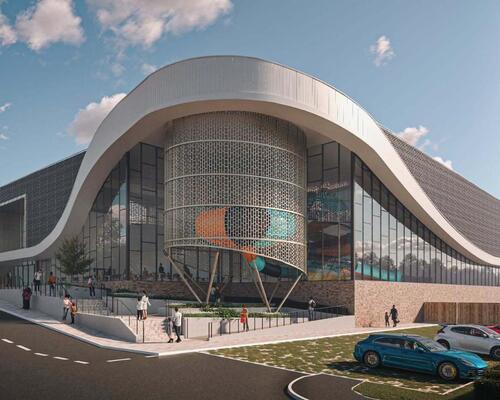
Places Leisure is working with Roberts Limbrick to build £60m wellness flagship in Basingstoke
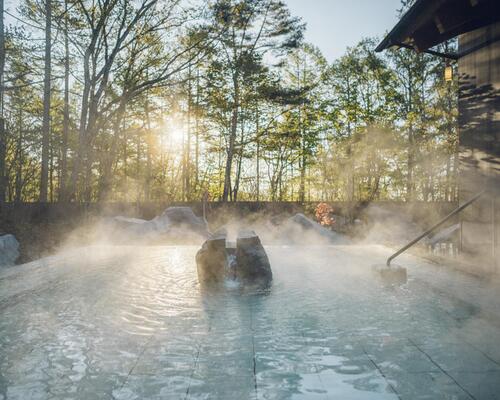
Hoshino Resorts opens Kai Kusatsu as it expands the Kai onsen ryokan brand
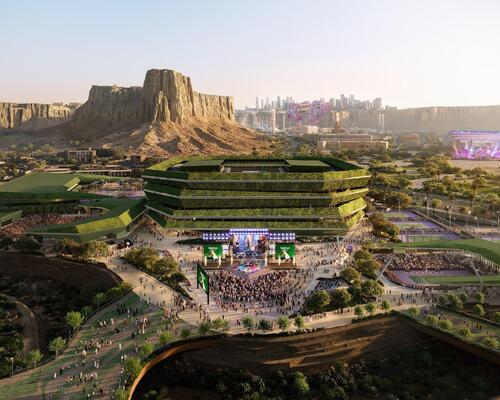
Qiddiya and Populous share details of Saudi Arabia’s National Tennis Centre
Disney confirms US$30 billion investment programme as it highlights its economic impact
Until combines multiple disciplines at new Canary Wharf club
Sea Lanes opens following a partnership between The Eden Project and Canary Wharf Group
Bas Smets brings water and wilderness to Vitra
Expo 2030 Riyadh will create a permanent global destination
Luxury resort coming to Hunter Valley will have longevity spa
'Data chocolate', dreams made real and artworks shaped by visitors’ emotions: Refik Anadol’s AI art museum launches in Los Angeles
London Museum reveals 2026 opening date for new Smithfield home
BIG unveils Eve Music Hall as Croatia venue nears completion
Bob Rogers hands BRC to long-serving leadership team
Palazzo di Varignana launches family wellbeing and longevity retreat in Emilia Romagna
Anasa Wellness and Spa debuts at Patmos Aktis as it joins Marriott
Design-led Koru Health Club combines high-performance training with recovery

Wellness care hospital opens in Vilnius with innovative spa and hospitality concept

Universal and Puy du Fou projects point to rise of Oxford–Cambridge corridor
A proposed Puy du Fou development near Bicester and Universal Destinations and Experiences’ planned resort in Bedford are emerging as part of a wider transformation of the Oxford–Cambridge Growth Corridor into a major centre for UK leisure and tourism investment.
For years, the corridor has been associated primarily with science, technology, housing and university-led economic growth. However, the clustering of large-scale visitor attraction projects along the
All-inclusive eco-wellness development Auko to open near Vietnam’s Son Doong caves








Designed to restore neglected land and renew the identity of Iraq’s capital city, Baghdad Sustainable Forests promises a new way of living surrounded by nature. Gensler’s Ian Mulcahay tells us why he thinks the project could become a model for the repair and enhancement of urban centres