Daniel Libeskind unveils secret seven-year design plans for Kurdistan Museum


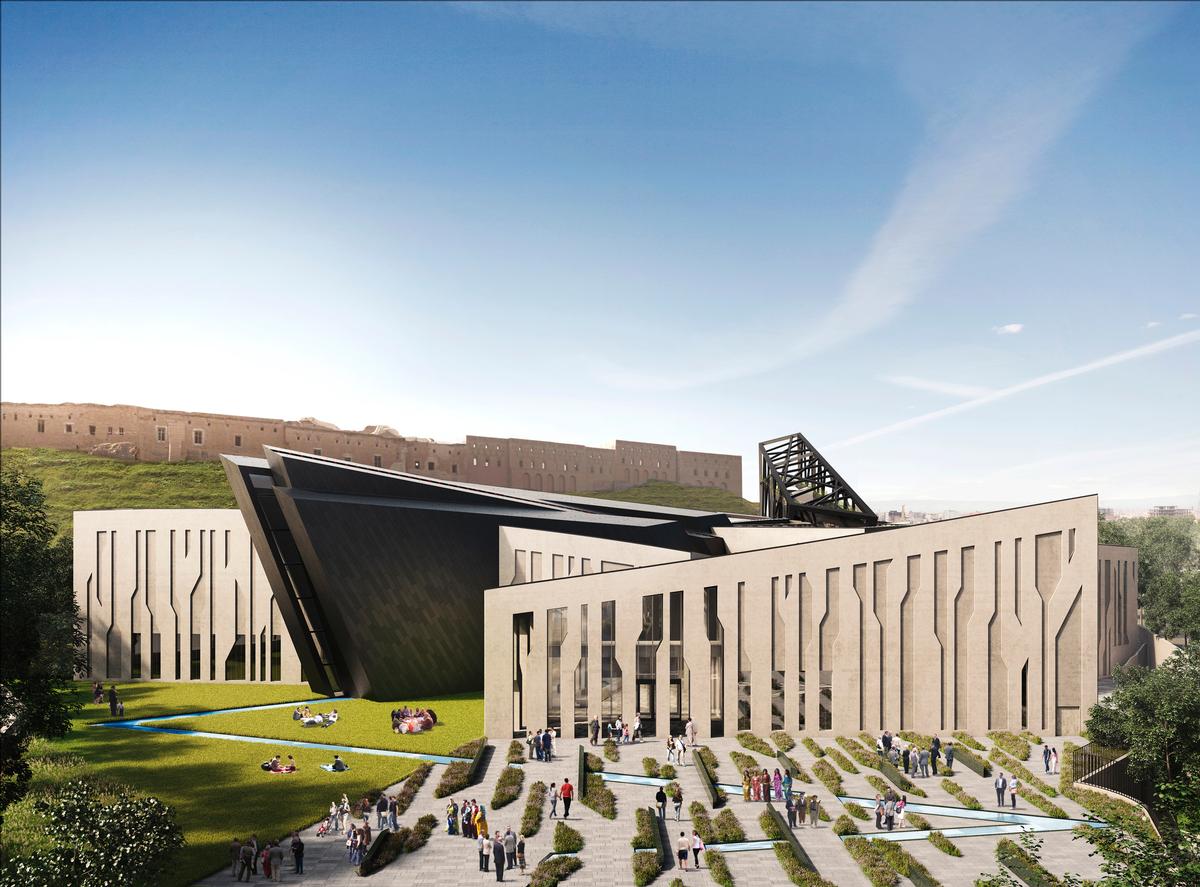
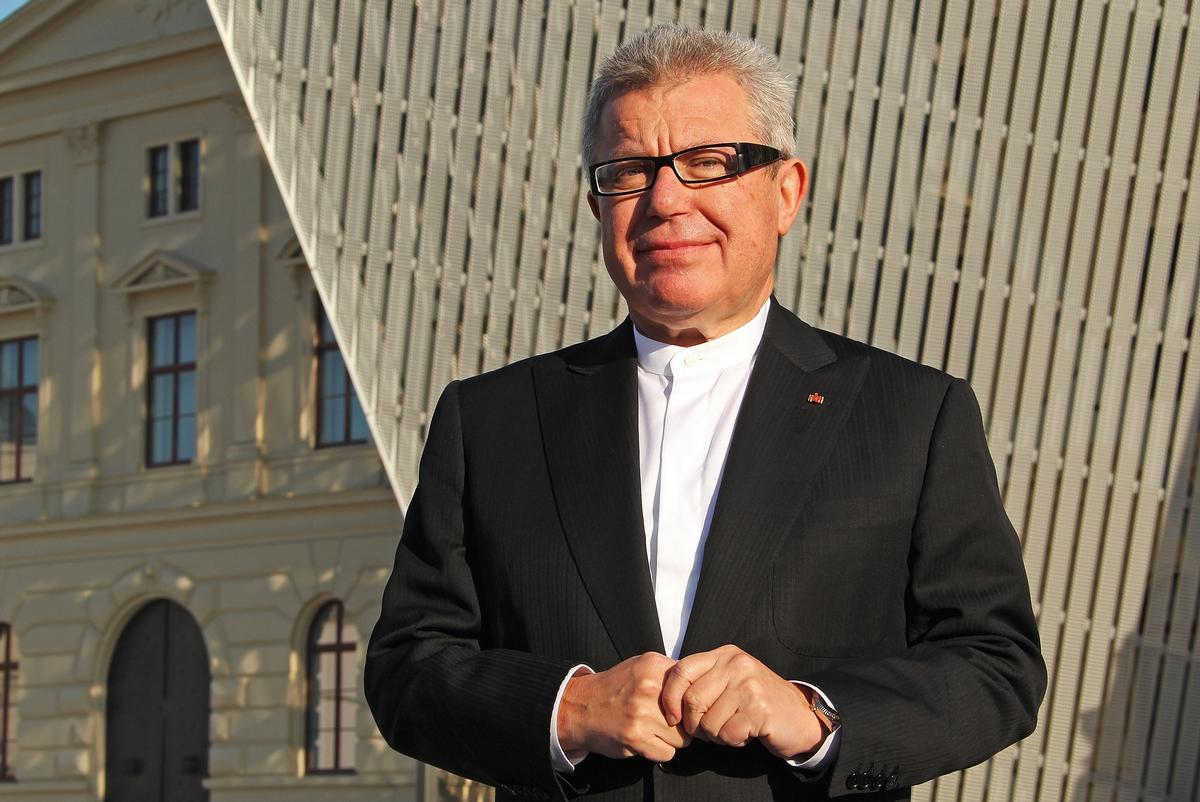
Daniel Libeskind yesterday (11 April) publicly revealed for the first time that he has been developing a Kurdistan Museum in Erbil, the capital of the autonomous Iraqi Kurdistan region.
The Polish American architect spoke out about the secretive, long-gestating project during an appearance at Bloomberg Design Week in San Francisco.
The project was commissioned by the prime minister of Iraqi Kurdistan, Nechirvan Barzani – who approached Libeskind seven years ago through an intermediary – to tell the story of the Kurds and Kurdish culture. The project is a collaboration between the Kurdistan Regional Government (the KRG) and client representative RWF World.
If built, the museum will confront the horrors of Saddam Hussein’s genocidal attack on the ethnic group in the 1980s, along with other acts of oppression experienced by the Kurds over hundreds of years.
“The museum aims to convey the spirit of the Kurdish people, their rich culture and the future of Kurdistan,” said Libeskind. “The design had to navigate between two extreme emotions: sadness and tragedy, through the weight of history, and of joy and hope, as the nation looks to the future.”
Due to the political and religious sensitivities surrounding the project, Libeskind agreed to keep it secret for many years, and only shared details of the commission and his design with senior members of staff.
Explaining his decision to announce the project now, Libeskind told Bloomberg that the project is a response to continuing violence in the region and the rise of Islamic State, who have occupied Mosul, 30 miles west of Erbil, since 2014 and destroyed many heritage sites.
He said: “In a time of destruction, especially a time of cultural destruction, you have a desire to build,” adding that while a new museum can never compensate for such loss, it can tell people’s stories, preserve artefacts and change the narrative of conflict. “We watch helplessly as Palmyra [in Syria] is destroyed piece by piece,” he added. “We watch the destruction of world heritage. I thought, ‘You know, this is even more urgent now.’
“Architecture is not a military art, it’s not a political art. It’s planting a garden. It’s making a building. The power of architecture is the power to do something good.”
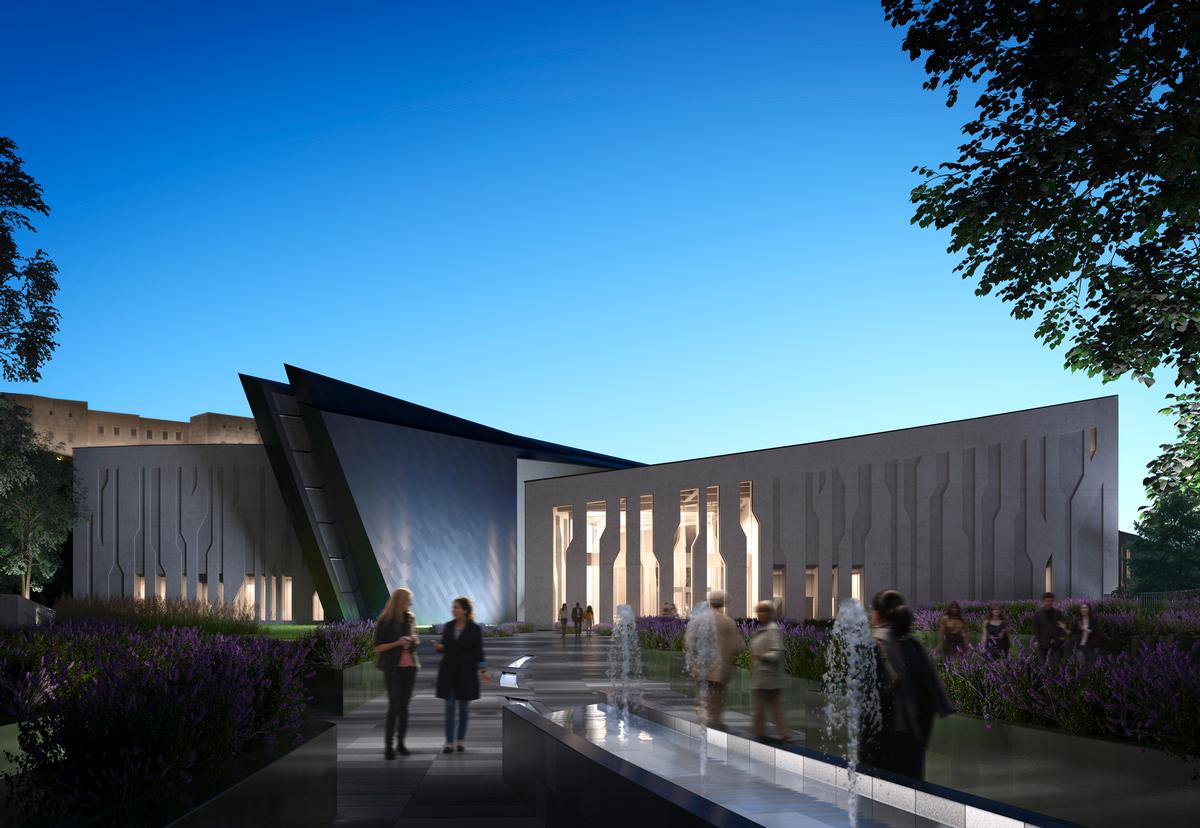
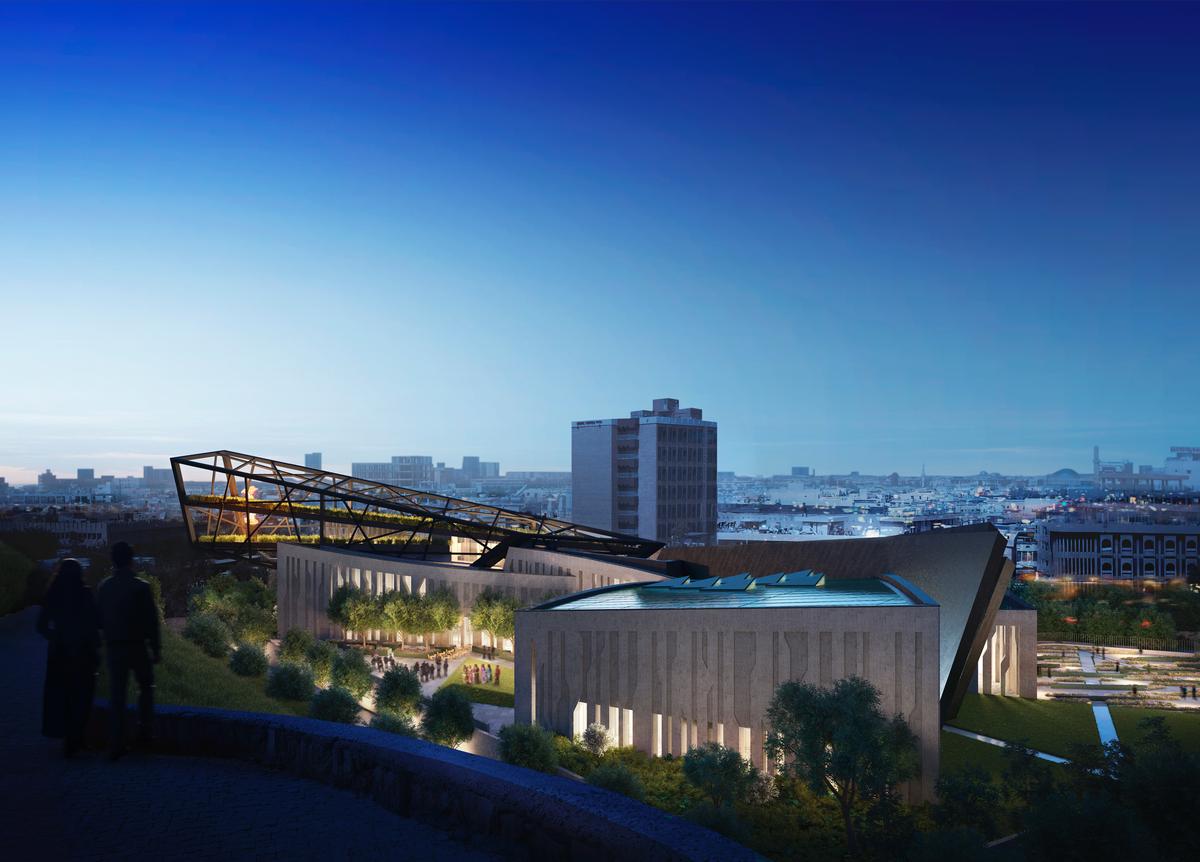
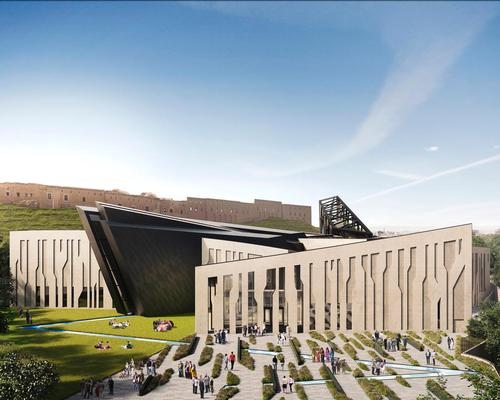
The museum has been envisioned as a 150,000sq ft (14,000sq m) structure surrounded by gardens at the foot of Erbil’s Citadel; a UNESCO World Heritage site. The design is composed of four irregular parts corresponding to the four countries where most Kurds live – Turkey, Iraq, Iran and Syria – taking inspiration from topographical maps and population densities. The roof will be an artistic composition designed to be looked at from the Citadel above.
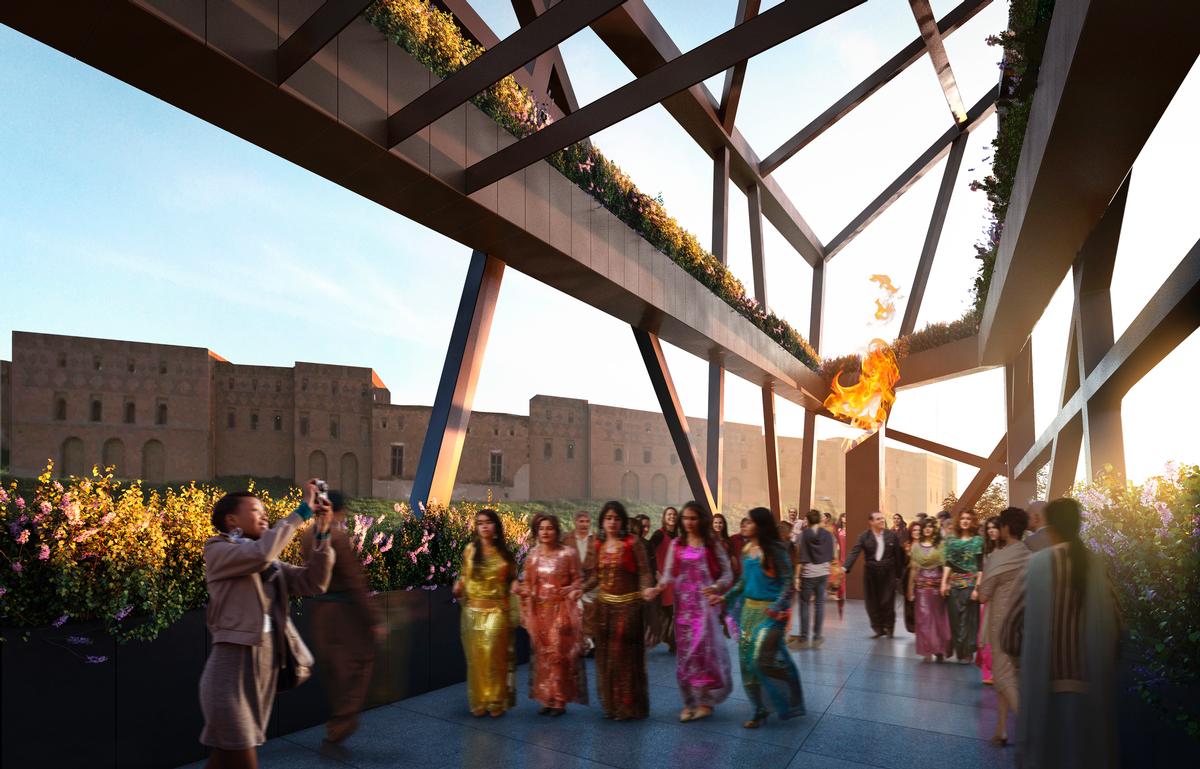
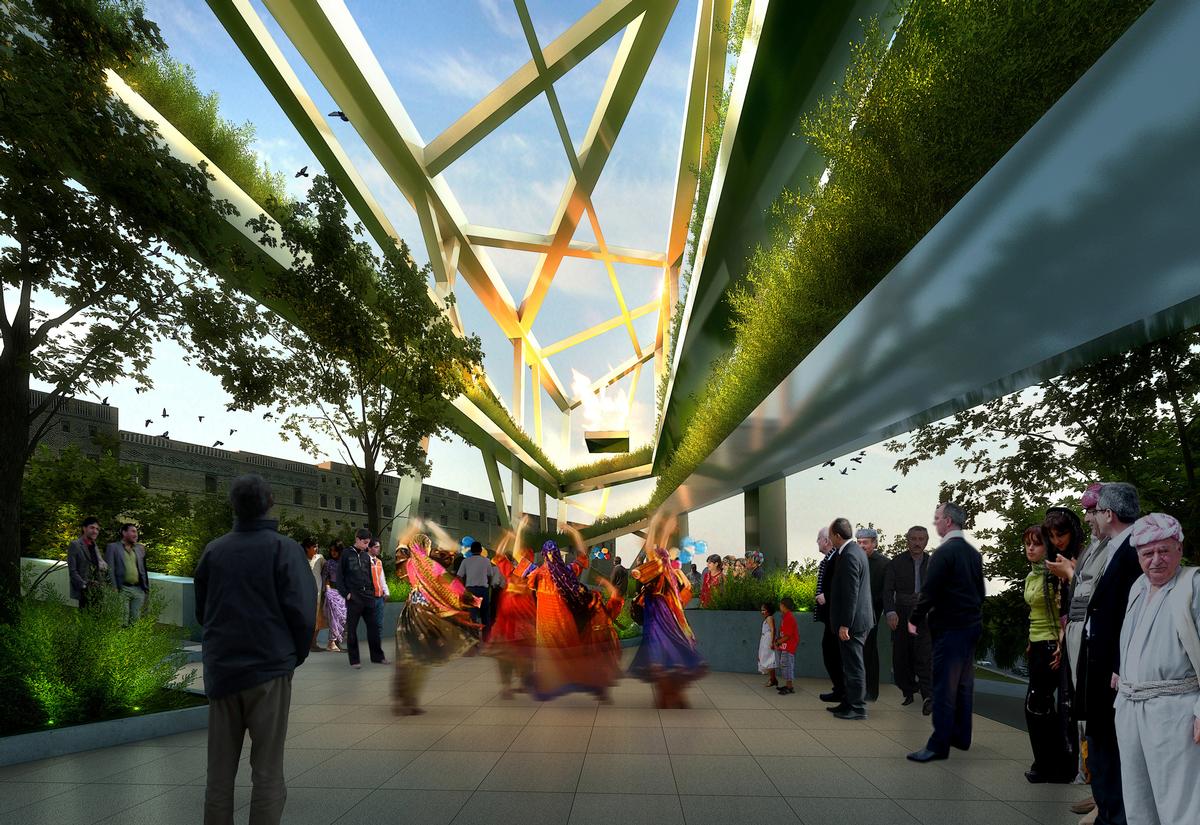
The volumes are intersected by a line that is broken into two angular fragments, representing the past and future of Kurdistan. In a statement, Libeskind said: "The two fragments create an emotive duality: a heavy and opaque mass, the Anfal Line, which symbolises the genocide under Saddam Hussein; and the Liberty Line, a lattice structure filled with greenery that ascends towards the sky and culminates with an eternal flame – a powerful symbol in Kurdish culture."
The museum will feature exhibition spaces for both permanent and temporary exhibitions, a lecture theatre, multimedia educational resources, an extensive digital archive of Kurdish historical assets, a community centre and landscaped outdoor spaces for public use.
Gwynne Roberts, a journalist and filmmaker, will work with RWF World to create multimedia content for the museum based on oral histories from Kurds testifying to the violence they experienced. Other exhibits will showcase Kurdish textiles, pottery and music.
Outside, a courtyard is conceived as "a tranquil and meditative space at the heart of the museum", while a water feature will extend from the landscape through the museum, "bringing to mind the rivers and fertile valleys of Kurdistan."
The projected cost of the museum is reportedly $250m (€218.5m, £175m), although government funding is currently concentrated on the ongoing conflict and there is no timeframe for when the museum may be constructed. The KRG is inviting outside financial support for the project, which will only go ahead when the region is more stable.
Other members of the design team include British exhibition design firm Haley Sharpe Design, structural engineer Expedition, environmental engineers Atelier Ten, and the UK's Royal Botanic Gardens at Kew, who will consult on landscape and botany.
Daniel Libeskind Kurds Iraqi Kurdistan Nechirvan Barzani Erbil architecture design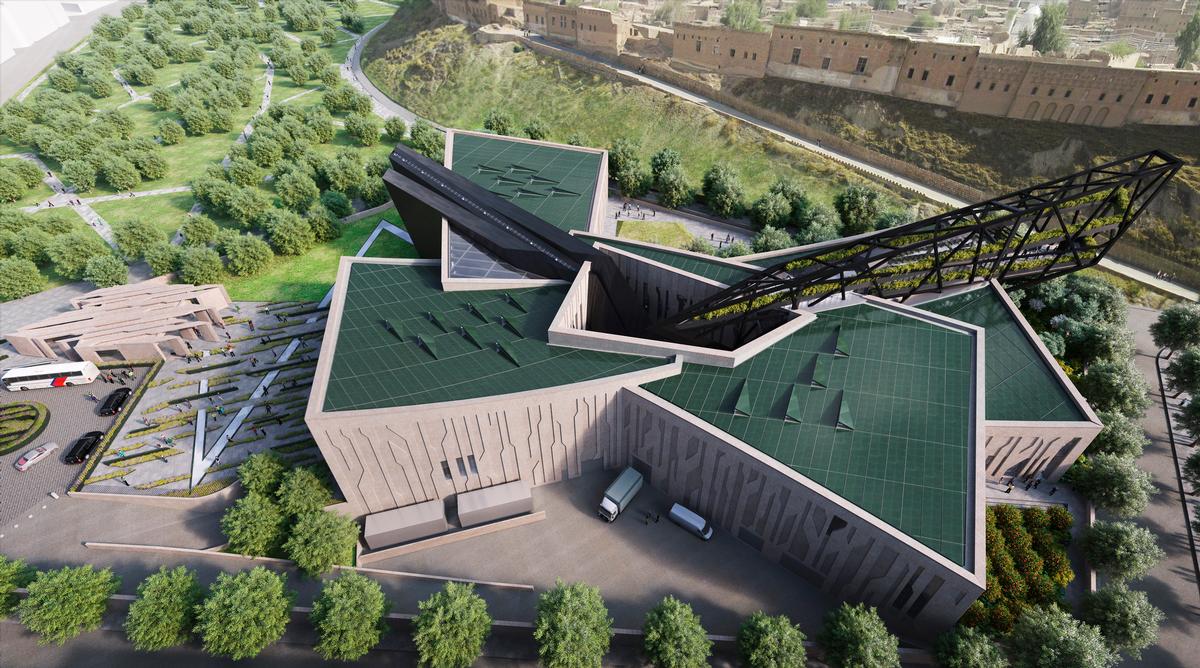

Daniel Libeskind unveils vision for angular art museum in Lithuania
Daniel Libeskind creates iconic pyramid tower for the heart of Jerusalem
Jewish Museum Berlin unveils latest extension
Dresden's new-look military museum opens
Berlin's Jewish Museum to be extended
Libeskind chosen for World Trade Centre
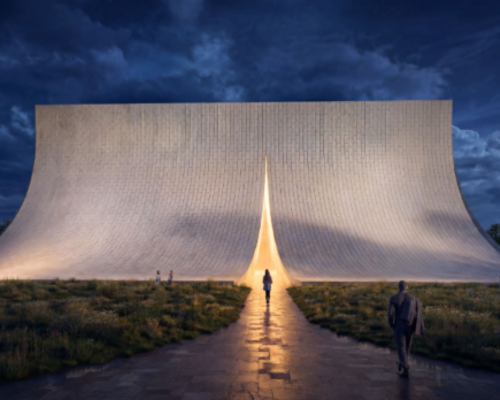
BIG unveils Eve Music Hall as Croatia venue nears completion
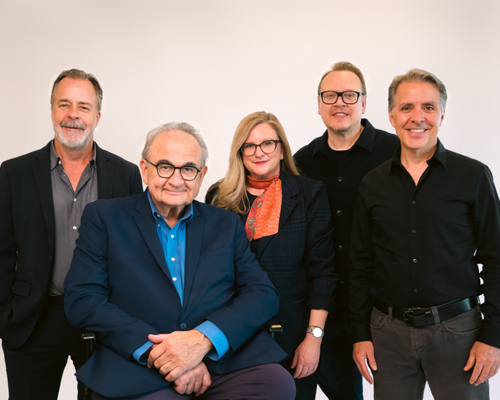
Bob Rogers hands BRC to long-serving leadership team

Wellness care hospital opens in Vilnius with innovative spa and hospitality concept
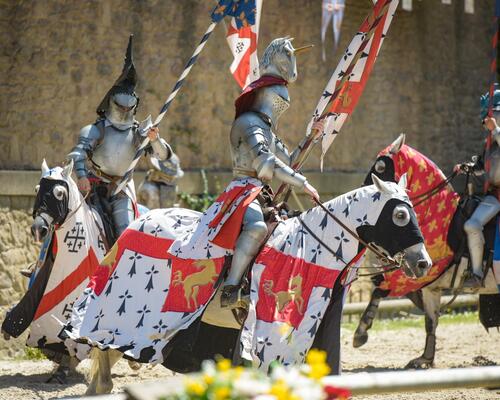
Universal and Puy du Fou projects point to rise of Oxford–Cambridge corridor
A proposed Puy du Fou development near Bicester and Universal Destinations and Experiences’ planned resort in Bedford are emerging as part of a wider transformation of the Oxford–Cambridge Growth Corridor into a major centre for UK leisure and tourism investment.
For years, the corridor has been associated primarily with science, technology, housing and university-led economic growth. However, the clustering of large-scale visitor attraction projects along the
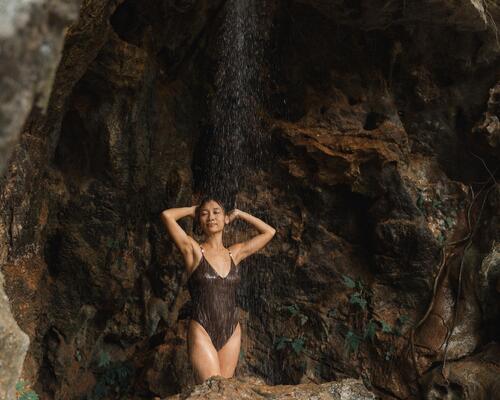
All-inclusive eco-wellness development Auko to open near Vietnam’s Son Doong caves
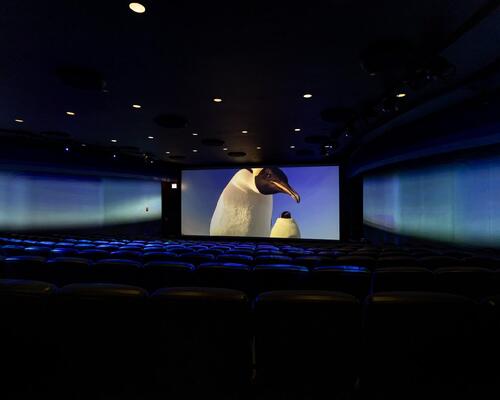
Shedd Aquarium upgrades its visitor experience with new Immersion Theater
Shedd Aquarium has opened the Immersion Theater developed in partnership with SimEx-Iwerks, as part of a wider strategy to enhance the guest experience and create additional revenue opportunities.
The attraction has transformed the aquarium’s Phelps Auditorium into a multi-sensory venue combining panoramic projection, environmental effects and interactive technology.
A new pre-show area allows visitors to engage with augmented reality marine animals before entering the
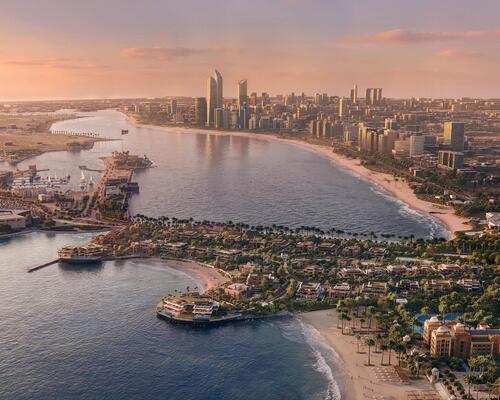
Mandarin Oriental announces standalone Mansions-branded residences for Abu Dhabi
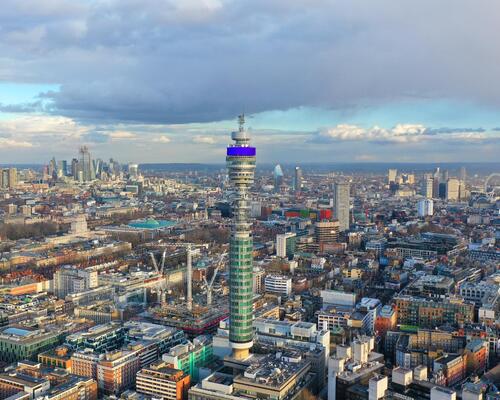
MCR is planning a luxury hotel for London's BT Tower
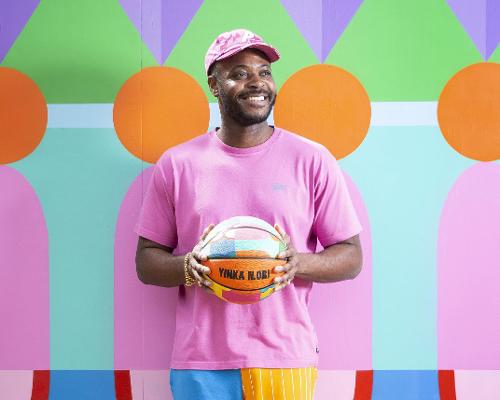
Joy as a radical act: Yinka Ilori launches solo exhibition celebrating the rebellious power of spreading happiness

Work gets underway on Madrid's €800 million leisure complex
Work is underway in Madrid on one of Europe’s most significant multi-functional complexes, combining sport, entertainment, culture and education.
The €800 million initiative to regenerate the former Olympic Aquatic Centre in the north-east of the city, next to the Riyadh Air Metropolitano stadium, is being led by Barsento – a joint venture between Live Nation Entertainment, Oak View Group and Atlético de Madrid. The project will
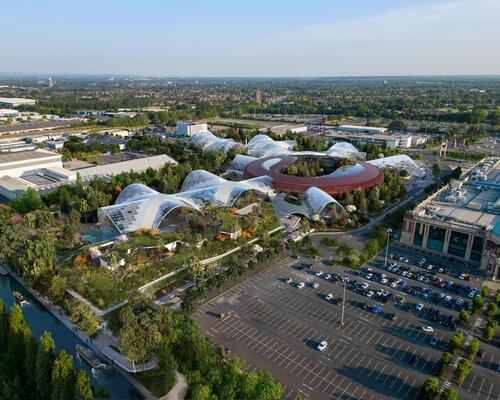
Therme Manchester reveals 90:90 strategy – 90 per cent of the UK population within a 90-minute drive of a Therme

Four Seasons’ Naples Beach Club opens 2,800sq m Sanctuary spa inspired by indigenous Calusa people
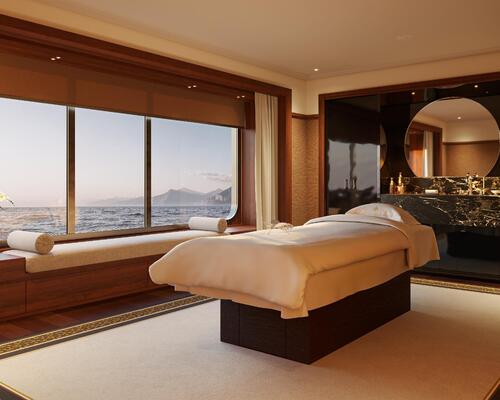
Orient Express Corinthian to host Ocean Rebirth wellness retreat in collaboration with Guerlain
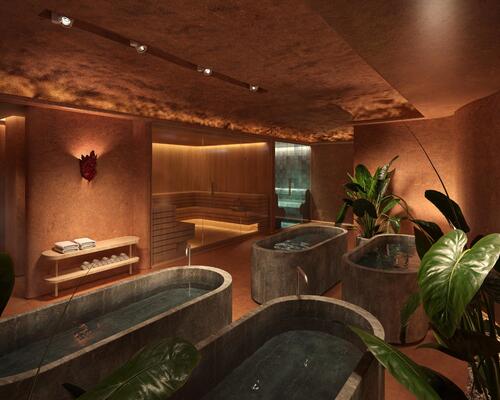
Famed London nightclub, Tramp, launches Tramp Health
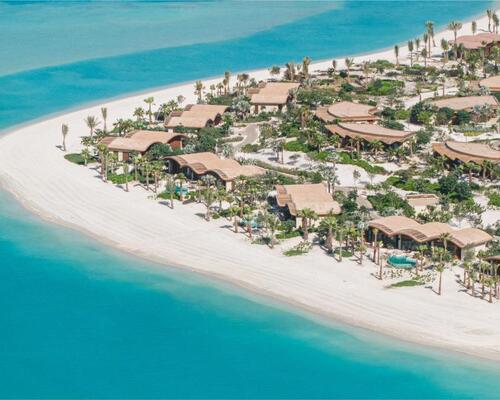
First look: Miraval opens on the Red Sea in Saudi Arabia

Hainan Science Museum by Ma Yansong, opens in China
A new science museum has opened to the public in Haikou after attracting more than 350,000 visitors during a four-month soft opening period.
Designed by Ma Yansong and his practice MAD Architects, the Hainan Science Museum is located on the edge of Wuyuan River National Wetland Park and has already recorded peak attendance of more than 5,800 visitors in a single day.
Commissioned by
Zannier Île De Bendor launches with design by Hardel Le Bihan Architectes
Sæl Spa readies for launch in London: “a modern British sanctuary”
Immersive art bathhouse Submersive announces debut location in Austin

Construction begins on regenerative wellness destination The Shenandoah Nature Resort

Royal Caribbean reveals record-breaking cruise ship
V&A East opens in London
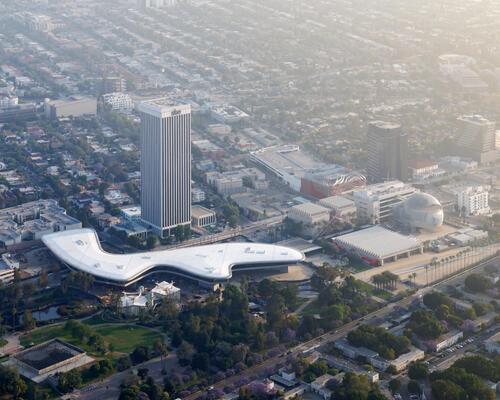
David Geffen galleries open at LACMA

New venue The Lands by Capella includes a longevity centre to complement sister hotel Capella Sydney
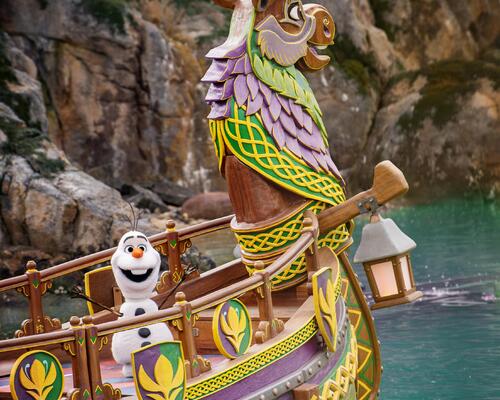
World of Frozen launches at Disneyland Paris
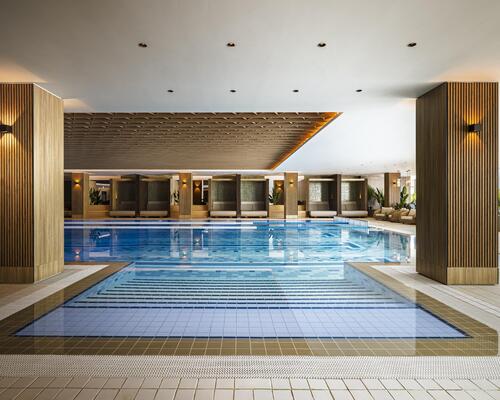
Pical Resort by Valamar reveals first Croatian spa under the ESPA brand

Mandarin Oriental creates end-to-end Egyptian journey with two new hotels and first-ever luxury river cruise

Designers Mendil + Meyer launch new division called Lām Concepts for strategic wellness projects
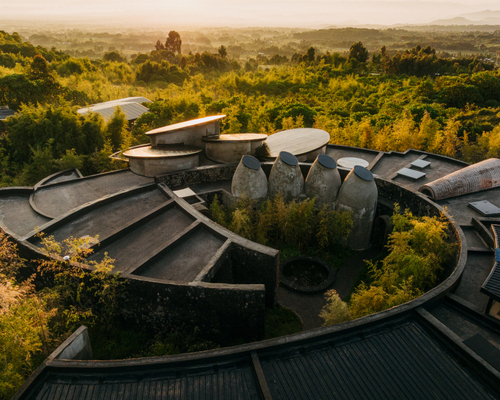
Wilderness Bisate in Rwanda reveals brand’s second Sanctuary spa
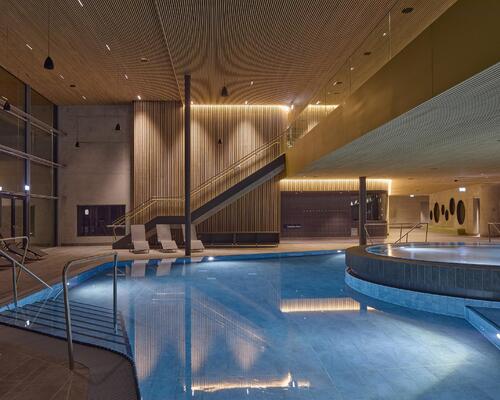
4a Architekten shares details of wellness extension at Salinarium Bad Dürkheim Thermal Spa





Designed to restore neglected land and renew the identity of Iraq’s capital city, Baghdad Sustainable Forests promises a new way of living surrounded by nature. Gensler’s Ian Mulcahay tells us why he thinks the project could become a model for the repair and enhancement of urban centres