French Tennis Federation celebrates 'victory for justice and reason' as court backs Roland Garros revamp


– French Tennis Federation
The contentious redevelopment of Roland Garros, the home of French tennis, will go ahead after the Administrative Court of Paris threw out a legal challenge brought by critics of the project.
The ruling brings an end to a tumultuous saga, which has seen the Council of State and Paris Crown Court rule in favour of the project going ahead, only for a different court – the Tribunal de Grande Instance – to reverse the decision and suspend construction.
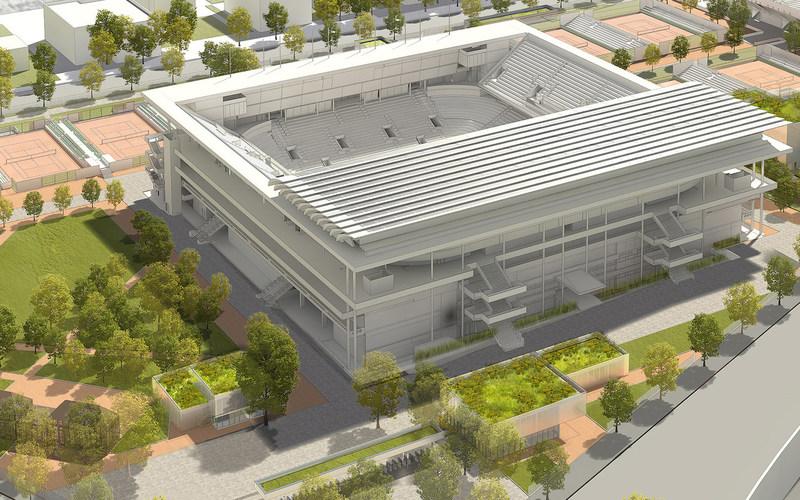
The French Tennis Federation (FFT) plans to build a new stadium within the Roland Garros complex and rebuild the famous Philippe Chatrier Court, but some environmental groups claim this work will endanger the nearby Serres d'Auteuil botanical garden. Their arguments, which included over 50 points of alleged illegality, were not enough to sway the administrative court.
In a strongly-worded statement, the FFT called the decision “a victory for justice and reason” that “has extinguished the final jurisdictional flame held by protesters”. It had argued the previous suspension was imposed following a "possible manipulation of the facts" and claimed to have "strong reservations about the validity” of that decision.
The governing body has pledged to begin development work again imminently and a completion date for the renovation work has been tentatively scheduled for 2020.
When finished, Roland Garros will have upgraded infrastructure, added entertainment facilities and a new village providing additional space for players, spectators, coaches and media partners. Eighteen clay courts, several of them newly built, will be spread across the site. The complex will occupy over 11 hectares when in its tournament configuration, in contrast with its current footprint of 8.6 hectares.
Plans for the revamped Philippe Chatrier Court – the complex’s primary venue – include a retractable roof in order to ensure games can continue in bad weather and after nightfall. Now that the US Open has added a roof to its Arthur Ashe stadium, the French Open remains the only major tennis tournament without one. Architecture firms ACD Girardet and Associates and Daniel Vaniche and Associates have designed the renovation.
The new 5,000-capacity stadium, designed by French architect Marc Mimram to replace the current Court No.1, will be built below ground level and surrounded by greenhouses on all four sides containing flora from four different continents. It will be connected to the park grounds via a new tree-lined pathway.
The FFT said the “full splendour of the new grounds will highlight the history, heritage and elegance of this legendary tournament and stadium which are admired throughout the world.”
It has previously claimed that the redevelopment of Roland Garros, and the new infrastructural projects it will inspire, could help Paris to win its bid for the 2024 Olympic Games.
The cost of the project has been estimated at €350m (US$374.3m, £298m).
Videos showcasing the two main stadium projects can be viewed below.
Roland Garros French Tennis Federation French Open architecture designUPDATE: French Tennis Federation 'outraged' following fresh Roland Garros development suspension

AI firm Midjourney enters wellness with spa, fitness and body scanning concept
Hot spring wellness community Ameyalli sells residences and breaks ground on resort and spa

OMA completes New Museum transformation with landmark expansion and Oberon restaurant
OMA has completed a major transformation of New York's New Museum, creating a larger cultural campus that combines expanded exhibition spaces with learning, performance, hospitality and public programming. The latest addition, Oberon, extends the visitor experience beyond the gallery, reflecting a growing trend for museums to become all-day destinations.
The New Museum in New York has entered a new chapter with the completion of a major
David Rockwell creates immersive magic destination, The Hand and The Eye
Montana Heritage Center by Cushing Terrell opens after US$107 million investment

Universal launches new theme park model with Kids Resort
'Minor wellness hotels' recorded the strongest growth across top KPIs in 2025, finds RLA Global
Great Barrier Reef attraction set for AU$180 million reinvention
Fairmont Cheshire, The Mere, has architecture by Leach Rhodes Walker and interiors by Bergman Design House.
Marriott International partners with Fitwel for wellness solutions across its residential portfolio
Preidlhof Luxury DolceVita Resort to unveil new spa in February 2027
Places Leisure is working with Roberts Limbrick to build £60m wellness flagship in Basingstoke
Hoshino Resorts opens Kai Kusatsu as it expands the Kai onsen ryokan brand
Qiddiya and Populous share details of Saudi Arabia’s National Tennis Centre
Disney confirms US$30 billion investment programme as it highlights its economic impact
Until combines multiple disciplines at new Canary Wharf club
Sea Lanes opens following a partnership between The Eden Project and Canary Wharf Group
Bas Smets brings water and wilderness to Vitra
Expo 2030 Riyadh will create a permanent global destination
Luxury resort coming to Hunter Valley will have longevity spa
'Data chocolate', dreams made real and artworks shaped by visitors’ emotions: Refik Anadol’s AI art museum launches in Los Angeles
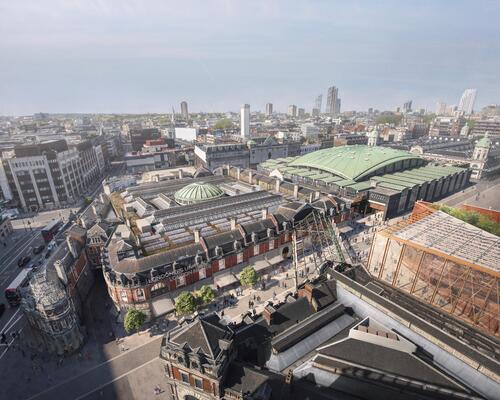
London Museum reveals 2026 opening date for new Smithfield home
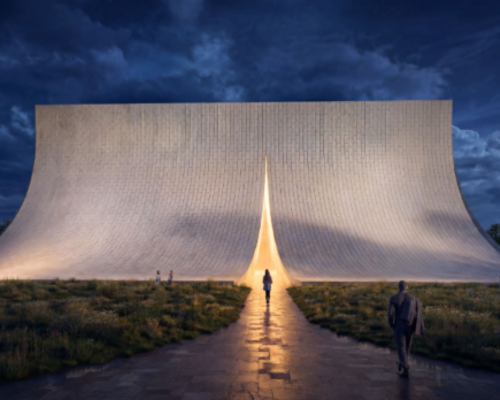
BIG unveils Eve Music Hall as Croatia venue nears completion
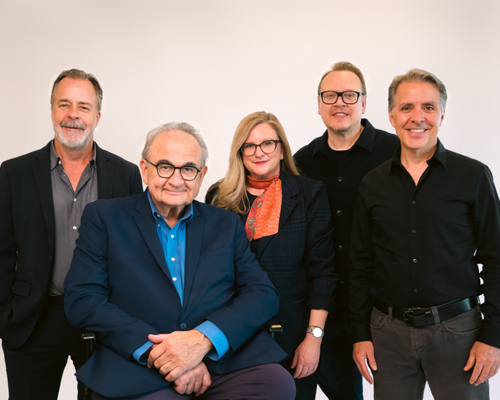
Bob Rogers hands BRC to long-serving leadership team

Palazzo di Varignana launches family wellbeing and longevity retreat in Emilia Romagna
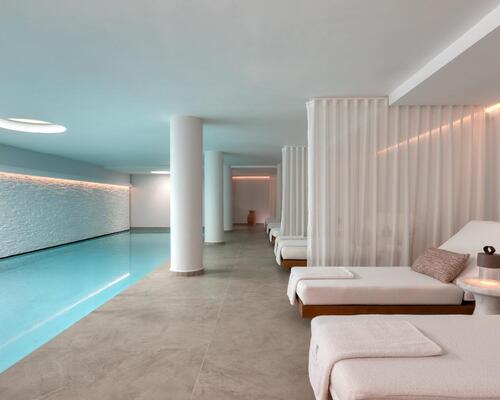
Anasa Wellness and Spa debuts at Patmos Aktis as it joins Marriott

Design-led Koru Health Club combines high-performance training with recovery

Wellness care hospital opens in Vilnius with innovative spa and hospitality concept

Universal and Puy du Fou projects point to rise of Oxford–Cambridge corridor
A proposed Puy du Fou development near Bicester and Universal Destinations and Experiences’ planned resort in Bedford are emerging as part of a wider transformation of the Oxford–Cambridge Growth Corridor into a major centre for UK leisure and tourism investment.
For years, the corridor has been associated primarily with science, technology, housing and university-led economic growth. However, the clustering of large-scale visitor attraction projects along the

All-inclusive eco-wellness development Auko to open near Vietnam’s Son Doong caves