Global Wellness Institute outlines how wellness real estate is delivering business and wellbeing benefits


The Global Wellness Institute (GWI) says wellness is becoming a mainstream priority for real estate developers and prospective residents are factoring wellbeing features into their decision-making.
The GWI’s new report, Build Well to Live Well: Case Studies, Volume 1, outlines thirteen case studies across the US and the UK that demonstrate the wide range of real estate projects with wellness at their core.
The authors hope the different models will inspire more diverse, creative and inclusive projects in the future.
It is a companion report to the second edition of the GWI’s Build Well To Live Well: The Future report, which was published earlier this year.
The first edition of the report, led by Mia Kyricos, was published in 2018.
Key takeaways
Wellness real estate is no longer a niche proposition. Healthy building concepts have been identified by the GWI’s researchers in structures that range from residential, mixed-use, commercial, educational, healthcare and hospitality developments.
Design features that focus on physical wellness are the norm now, with more attention being paid to mental, social and environmental dimensions of a project’s design and programming. This means healthy indoor air, thermal comfort, opportunities for exercise and biophilic design are a given.
Green and healthy building certifications are increasingly overlapping, with many projects seeking multiple accreditations for human and planetary health. These projects include:
• The Daphne Steele Building – a six-floor research building at the UK’s University of Huddersfield’s National Health Innovation Campus (WELL and BREEAM certification),
• The Pearl – an urban multi-family mixed-use community with links to public transport (Fitwel and LEED accreditation)• Urbanest Battersea Student Accommodation – purpose-built student housing with mixed-use commercial and retail space (WELL, Passivhaus and BREEAM certification)
Adoption of healthy building features is being applied to projects that vary in scale. Some are very small, such as the three-floor detached townhouse, The Picket Fence Concept Home in Pittsburgh, US. Some have thousands of residents, including the Rancho Mission Viejo, a suburban master-planned mixed-use community in Los Angeles, US, with up to 14,000 residences and 5 million sq ft for retail and commercial space.
Wellness can be applied to all kinds of real estate projects by using situational design and operations for specific occupant needs. The American Cancer Society Hope Lodge in Houston, US, tries to maximise views of nature, but does not allow plants inside due to patient sensitivities. Pro-social design can also mean making ground-level units available for shops or community activities, or having a communal kitchen as a social hub.
Wellness benefits for residents are being assessed by operators. The Picket Fence Concept Home was built as a “living lab” and has been able to measure the improvement of indoor air quality for residents by using its two units as control and experimental cases. Additionally, residents at The Pearl say health and wellness features are a factor in their decision to choose the building or extend their lease.
As wellness has become more mainstream, developers are adopting more proactive communications and marketing strategies – advertising the different healthy features on offer at their projects. These messages, some of which can be found on-site on the walls or in newsletters for residents, are nudging people in these communities to engage in healthier behaviours.
All the case studies profiled in the report have achieved positive returns for developers/ owners, including strong buyer demand, rapid sale rates, very high occupancy rates, high lease renewal rates and high levels of occupant/ tenant satisfaction. For some projects, units have been pre-sold with long waiting lists.
Mental wellness is being addressed by a reduction in daily frictions, such as a coherent set of colour schemes at the Daphne Steele Building for enhanced signage and wayfinding throughout the property. The Pearl offers residents the opportunity to rent appliances such as vacuum cleaners from a vending machine, to reduce the need to own these items.
Rather than creating an exclusive set of wellness facilities, these projects have embraced the need for community and social connections by building outdoor public spaces that connect to local shops and public transport.
The financial concerns of the end users of wellness real estate projects are being taken into consideration. In New York City, US, two affordable housing units include Rockaway Village, with 1,700 residential units, and Spring Creek Towers, which has 5,881 units. They each have on-site social services. Public transit-friendly and connected communities also reduce the financial burden of car ownership.
For more on wellness and leisure architecture, head over to CLADmag and the CLAD ezine. You can read the magazine and newsfeed here and sign up here.
Real estate GWI
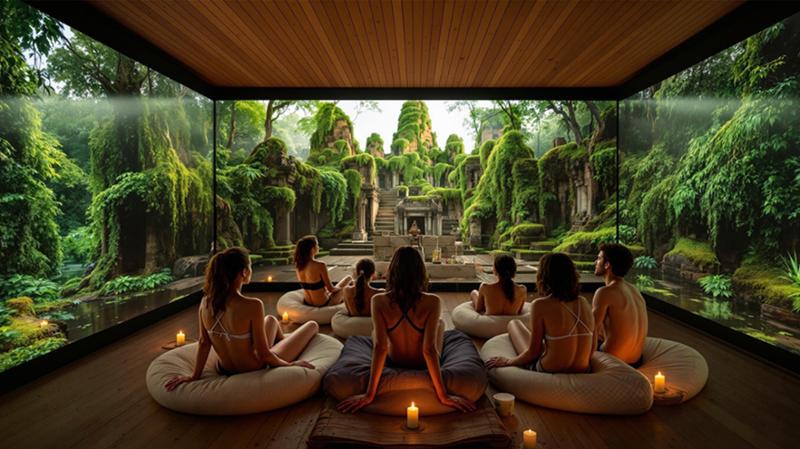
AI firm Midjourney enters wellness with spa, fitness and body scanning concept
Hot spring wellness community Ameyalli sells residences and breaks ground on resort and spa

OMA completes New Museum transformation with landmark expansion and Oberon restaurant
OMA has completed a major transformation of New York's New Museum, creating a larger cultural campus that combines expanded exhibition spaces with learning, performance, hospitality and public programming. The latest addition, Oberon, extends the visitor experience beyond the gallery, reflecting a growing trend for museums to become all-day destinations.
The New Museum in New York has entered a new chapter with the completion of a major
David Rockwell creates immersive magic destination, The Hand and The Eye
Montana Heritage Center by Cushing Terrell opens after US$107 million investment

Universal launches new theme park model with Kids Resort
'Minor wellness hotels' recorded the strongest growth across top KPIs in 2025, finds RLA Global
Great Barrier Reef attraction set for AU$180 million reinvention
Fairmont Cheshire, The Mere, has architecture by Leach Rhodes Walker and interiors by Bergman Design House.
Marriott International partners with Fitwel for wellness solutions across its residential portfolio
Preidlhof Luxury DolceVita Resort to unveil new spa in February 2027
Places Leisure is working with Roberts Limbrick to build £60m wellness flagship in Basingstoke
Hoshino Resorts opens Kai Kusatsu as it expands the Kai onsen ryokan brand
Qiddiya and Populous share details of Saudi Arabia’s National Tennis Centre
Disney confirms US$30 billion investment programme as it highlights its economic impact
Until combines multiple disciplines at new Canary Wharf club
Sea Lanes opens following a partnership between The Eden Project and Canary Wharf Group
Bas Smets brings water and wilderness to Vitra
Expo 2030 Riyadh will create a permanent global destination
Luxury resort coming to Hunter Valley will have longevity spa
'Data chocolate', dreams made real and artworks shaped by visitors’ emotions: Refik Anadol’s AI art museum launches in Los Angeles
London Museum reveals 2026 opening date for new Smithfield home
BIG unveils Eve Music Hall as Croatia venue nears completion
Bob Rogers hands BRC to long-serving leadership team
Palazzo di Varignana launches family wellbeing and longevity retreat in Emilia Romagna
Anasa Wellness and Spa debuts at Patmos Aktis as it joins Marriott
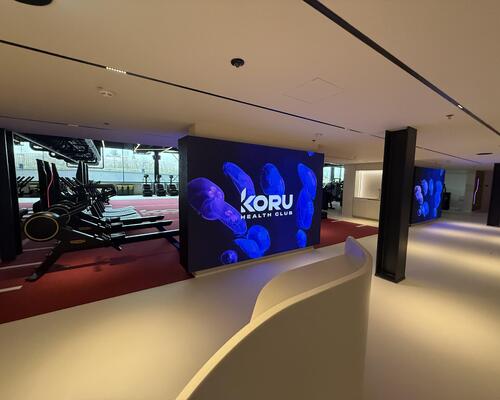
Design-led Koru Health Club combines high-performance training with recovery

Wellness care hospital opens in Vilnius with innovative spa and hospitality concept

Universal and Puy du Fou projects point to rise of Oxford–Cambridge corridor
A proposed Puy du Fou development near Bicester and Universal Destinations and Experiences’ planned resort in Bedford are emerging as part of a wider transformation of the Oxford–Cambridge Growth Corridor into a major centre for UK leisure and tourism investment.
For years, the corridor has been associated primarily with science, technology, housing and university-led economic growth. However, the clustering of large-scale visitor attraction projects along the

All-inclusive eco-wellness development Auko to open near Vietnam’s Son Doong caves









Designed to restore neglected land and renew the identity of Iraq’s capital city, Baghdad Sustainable Forests promises a new way of living surrounded by nature. Gensler’s Ian Mulcahay tells us why he thinks the project could become a model for the repair and enhancement of urban centres