How can you 3D print an entire functioning building? MIT group claims to have found the answer


Researchers from the Massachusetts Institute of Technology (MIT) have announced a new breakthrough in the architectural applications of 3D printing, with the design of a system that can produce the basic structure of an entire building.
MIT’s Mediated Matter Group – which focuses on “nature-inspired design and design-inspired nature” – claim the machine they have invented will eventually produce buildings faster and less expensively than traditional construction methods allow.
What’s more, a structure could be completely customised to the needs of a particular site and the desires of its maker, with different materials and material densities incorporated as the process goes along to provide optimum combinations of strength and insulation.
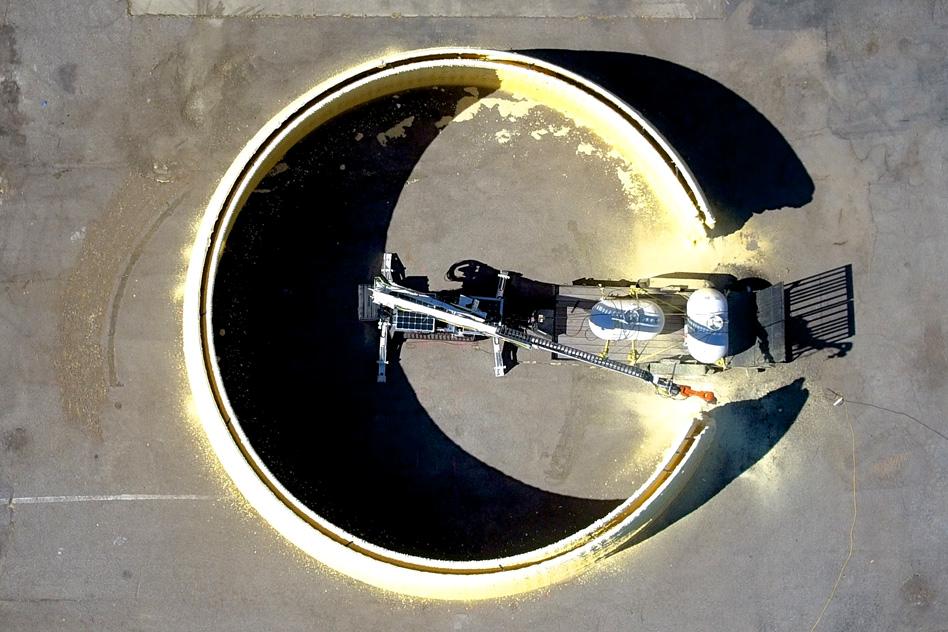
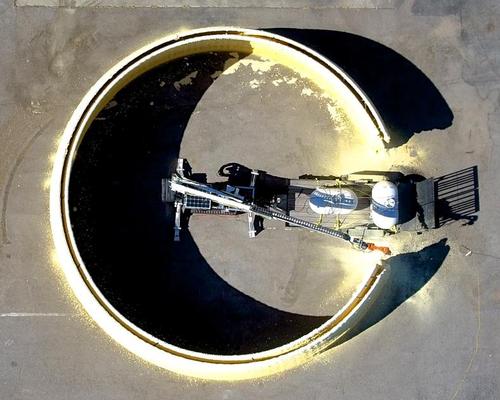
The system, which the researchers call a Digital Construction Platform (DCP), consists of a tracked vehicle that carries a large, industrial robotic arm, which has a smaller, precision-motion robotic arm at its end. This can be used to direct any conventional or unconventional construction nozzle, such as those used for pouring concrete or spraying insulation material, as well as additional digital fabrication end effectors.
Unlike typical 3D printing systems, most of which use some kind of an enclosed, fixed structure to support their nozzles and are limited to building objects that can fit within their overall enclosure, this free-moving system can construct an object of any size.
To prove the concept, the researchers used a prototype to build the basic structure of the walls of a 50ft diameter, 12ft high dome. The structure was completed in less than 14 hours of printing time.
The system fabricated the foam-insulation framework used to form a finished concrete structure – similar to traditional commercial techniques. It was able to create complex shapes and overhangs, including a wide, built-in bench..
The research was inspired by the fact that 3D printing has grown to include not just plastics, but also metal, glass, and even food, and that a machine that can offer material flexibility can have a huge impact on the design and construction industries.
The Mediated Matter group’s overall vision is for a machine that can, in a single system, create structure and skin and beams and windows in a single production process, adapting multiple design and construction processes as it is being built. Even wiring and plumbing can be inserted into the mold before the concrete is poured, providing a finished wall structure all at once.
Built-in sensors for temperature, light, and other parameters would allow the machine to make adjustments to the structure as it is built.
This adaptability means a building produced in a matter of hours and days “could have thicker, more insulated walls on its north side in cold climates, or walls that taper from bottom to top as their load-bearing requirements decrease, or curves that help the structure withstand winds.”
“The construction industry is still mostly doing things the way it has for hundreds of years,” said system development leader Steven Keating. “Those buildings are rectilinear, mostly built from single materials, put together with saws and nails. But what if every building could be individualised and designed using on-site environmental data?
“With this new process, we can replace one of the key parts of making a building, right now. It could be integrated into a building site tomorrow.”
Keating added that the whole system could be operated electrically, even powered by solar panels. The idea is that it could be deployed to remote regions, or to areas for disaster relief after a major storm or earthquake, to provide durable shelter rapidly.
“The ultimate vision is in the future, to have something totally autonomous, that you could send to the moon or Mars or Antarctica, and it would just go out and make these buildings for years,” he said. “We also wanted to show that we could build something tomorrow that could be used right away.”
The robotic system is described in detail in the journal Science Robotics. Keating has worked with Julian Leland and Levi Cai, both research assistants in the Mediated Matter grou, and Neri Oxman, group director and an MIT associate professor.
She said: “The ability to design and digitally fabricate multifunctional structures in a single build embodies a shift from the machine age to the biological age – from considering the building as a machine to live in, made of standardised parts, to the building as an organism, which is computationally grown, additively manufactured, and possibly biologically augmented.
“So to me it’s not merely a printer, but an entirely new way of thinking about making, that facilitates a paradigm shift in the area of digital fabrication, but also for architectural design.
“Our system points to a future vision of digital construction that enables new possibilities on our planet and beyond.”
3D printing architecture design MIT Mediated Matter GroupFoster + Partners ramp up research into metal-based 3D printing
Robots use recycled bricks to build sinuous and striking Shanghai art studio
Can 3D printers be used to create human skin?
'The fourth industrial revolution is underway': Achim Menges launches robot-built pavilion at V&A
Robots build sea urchin prefab pavilion using biomimicry
Game-changing, high-speed 3D printing system announced at TED
BIG unveils Eve Music Hall as Croatia venue nears completion
Bob Rogers hands BRC to long-serving leadership team

Wellness care hospital opens in Vilnius with innovative spa and hospitality concept

Universal and Puy du Fou projects point to rise of Oxford–Cambridge corridor
A proposed Puy du Fou development near Bicester and Universal Destinations and Experiences’ planned resort in Bedford are emerging as part of a wider transformation of the Oxford–Cambridge Growth Corridor into a major centre for UK leisure and tourism investment.
For years, the corridor has been associated primarily with science, technology, housing and university-led economic growth. However, the clustering of large-scale visitor attraction projects along the

All-inclusive eco-wellness development Auko to open near Vietnam’s Son Doong caves
Shedd Aquarium upgrades its visitor experience with new Immersion Theater
Shedd Aquarium has opened the Immersion Theater developed in partnership with SimEx-Iwerks, as part of a wider strategy to enhance the guest experience and create additional revenue opportunities.
The attraction has transformed the aquarium’s Phelps Auditorium into a multi-sensory venue combining panoramic projection, environmental effects and interactive technology.
A new pre-show area allows visitors to engage with augmented reality marine animals before entering the
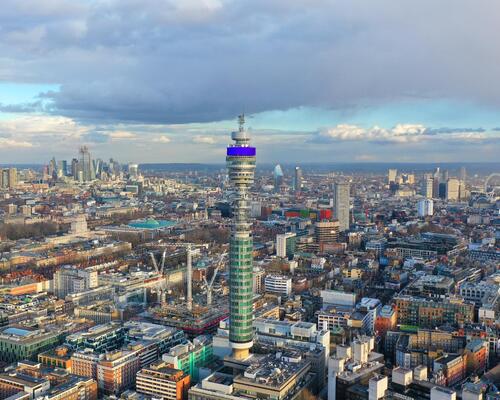
MCR is planning a luxury hotel for London's BT Tower
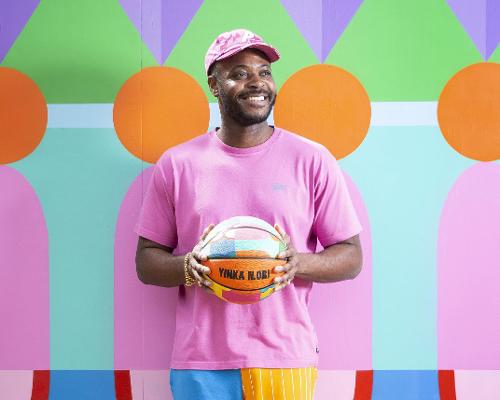
Joy as a radical act: Yinka Ilori launches solo exhibition celebrating the rebellious power of spreading happiness

Work gets underway on Madrid's €800 million leisure complex
Work is underway in Madrid on one of Europe’s most significant multi-functional complexes, combining sport, entertainment, culture and education.
The €800 million initiative to regenerate the former Olympic Aquatic Centre in the north-east of the city, next to the Riyadh Air Metropolitano stadium, is being led by Barsento – a joint venture between Live Nation Entertainment, Oak View Group and Atlético de Madrid. The project will
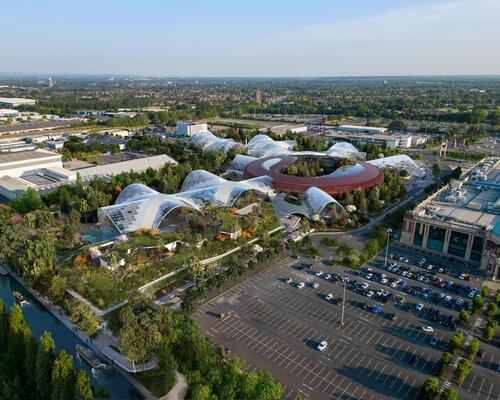
Therme Manchester reveals 90:90 strategy – 90 per cent of the UK population within a 90-minute drive of a Therme

Four Seasons’ Naples Beach Club opens 2,800sq m Sanctuary spa inspired by indigenous Calusa people
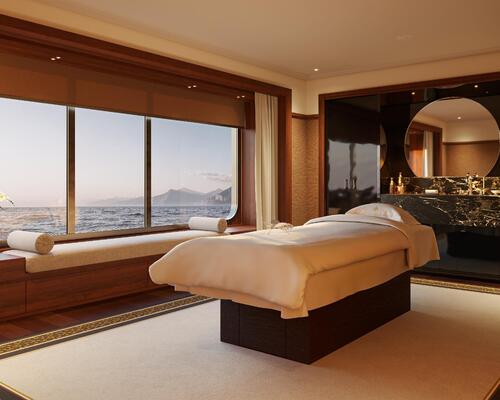
Orient Express Corinthian to host Ocean Rebirth wellness retreat in collaboration with Guerlain
Famed London nightclub, Tramp, launches Tramp Health
First look: Miraval opens on the Red Sea in Saudi Arabia

Hainan Science Museum by Ma Yansong, opens in China
A new science museum has opened to the public in Haikou after attracting more than 350,000 visitors during a four-month soft opening period.
Designed by Ma Yansong and his practice MAD Architects, the Hainan Science Museum is located on the edge of Wuyuan River National Wetland Park and has already recorded peak attendance of more than 5,800 visitors in a single day.
Commissioned by
Zannier Île De Bendor launches with design by Hardel Le Bihan Architectes
Sæl Spa readies for launch in London: “a modern British sanctuary”
Immersive art bathhouse Submersive announces debut location in Austin

Construction begins on regenerative wellness destination The Shenandoah Nature Resort

Royal Caribbean reveals record-breaking cruise ship
V&A East opens in London
David Geffen galleries open at LACMA

New venue The Lands by Capella includes a longevity centre to complement sister hotel Capella Sydney

World of Frozen launches at Disneyland Paris
Pical Resort by Valamar reveals first Croatian spa under the ESPA brand

Mandarin Oriental creates end-to-end Egyptian journey with two new hotels and first-ever luxury river cruise

Designers Mendil + Meyer launch new division called Lām Concepts for strategic wellness projects
Wilderness Bisate in Rwanda reveals brand’s second Sanctuary spa
4a Architekten shares details of wellness extension at Salinarium Bad Dürkheim Thermal Spa
BodyHoliday plans 10-15 locations in the next 15 years


Designed to restore neglected land and renew the identity of Iraq’s capital city, Baghdad Sustainable Forests promises a new way of living surrounded by nature. Gensler’s Ian Mulcahay tells us why he thinks the project could become a model for the repair and enhancement of urban centres