Theme Index: Disney dips as theme parks experience mixed year


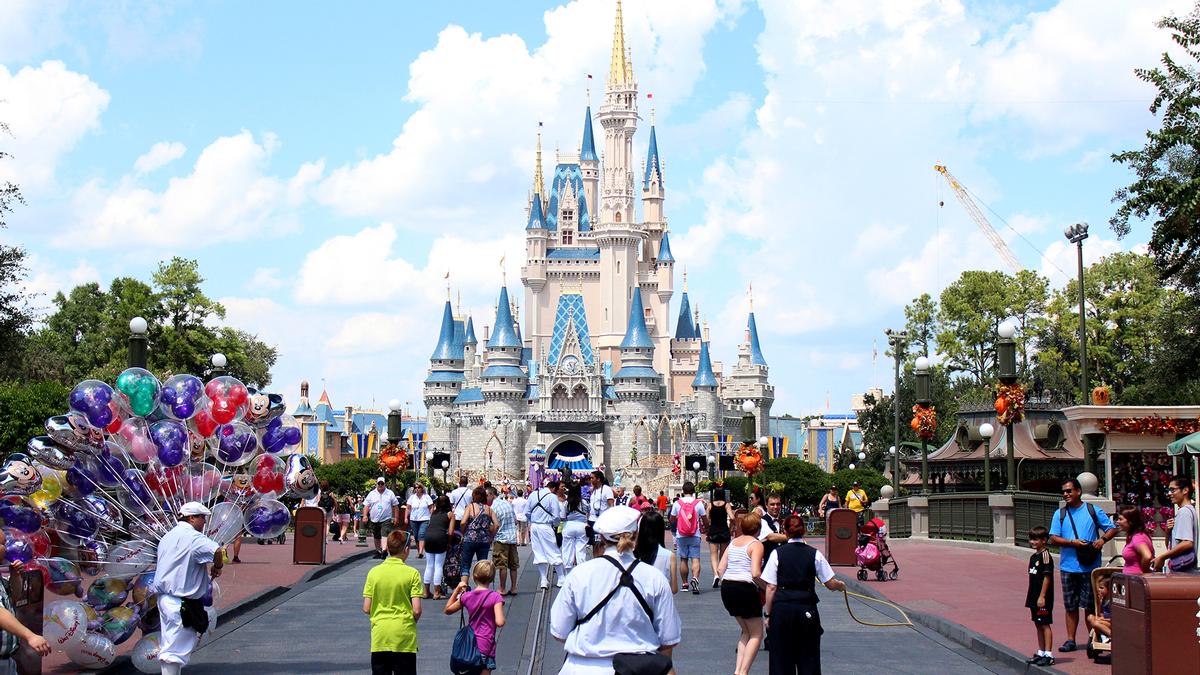
Following a period of growth in 2015, the world’s top theme parks have experienced a mixed year, according to the latest edition of the TEA/AECOM Theme Index.
For the world’s top 25 theme parks, attendance declined 1.1 per cent, down from 235.6 million visitors in 2015, to 233.1 million in 2016, with the top operator – Disney – telling a similar story.
According to the eleventh edition of the report, overall attendance at Disney attractions was actually up by 2.5 million, though this was largely in part to the launch of Shanghai Disneyland, which recorded visitor numbers of 5.6 million during its debut year.
Florida's Magic Kingdom remains the world’s most visited park, with Disneyland California and Tokyo Disneyland in second and third place respectively. All three parks suffered attendance declines however, with drops of 0.5 per cent, 1.8 per cent and 0.4 per cent respectively.
For the year Magic Kingdom welcomed 20.4 million visitors, while Disneyland California drew 17.9 million and Tokyo Disneyland 16.5 million. Disney’s other parks included in the index all recorded attendance declines, the largest being Hong Kong Disneyland, which suffered a 10.3 per cent drop of 700,000 visitors with 6.1 million visitors.
Other operators however have fared better, with Universal Studios recording attendance increases at all of its parks, buoyed by new attractions and IPs including the continued phenomenal success of its Harry Potter worlds.
Universal Studios Japan was ranked fourth for attendance overall, with visitor numbers increasing from 13.9 million in 2015 to 14.5 million in 2016 – a 4.3 per cent increase. Universal Studios in Orlando also saw its numbers surge by the same percentage, up from 9.6 million to 10 million. The neighbouring Island of Adventure park in Orlando increased numbers by 6.5 per cent from 8.8 million to 9.4 million during the period.
Universal Studios Hollywood launched its new Wizarding World of Harry Potter attraction in April 2016, with the boy wizard’s magic spell once again driving park attendance, which was up 13.9 per cent to 8.1 million from 7.1 million year-on-year.
“Disney resources have lately been concentrated in Asia, with Shanghai Disney Resort having opened in mid-2016,” said Brian Sands, vice president of economics, The Americas, for AECOM.
“Meanwhile, Universal’s Harry Potter attractions have been a powerful draw in both Hollywood and Orlando. But Disney has new IP magic of its own to deliver in its North American parks, most notably the Pandora land (Avatar) at Disney’s Animal Kingdom, as well as the redesigned and renamed Disney Springs retail-dining-entertainment area. For its part, Universal is also continuing to grow domestically, with its new second gate in Orlando – Volcano Bay – opening around the same time as Pandora.”
According to the report, in North America investment into IPs will continue to be critical for park and ride development in the foreseeable future, with IPs everywhere and operators on all scales using them.
“IP has proved its value in ways that are now calculable when we compare investment track records at parks over the years,” said Sands.
“Using historic information from the TEA/AECOM Theme Index, AECOM researchers have analysed the benefits of adding new lands and new rides – mostly IP branded – in terms of their impact on attendance over a three-year period after opening. In general, the median attendance impact of a new land over three years can be tremendously positive, and a new ride over the same period is also likely to have a strong positive attendance result.”
The highest-ranked park outside of Disney and Universal was Chimelong Ocean Kingdom, in 12th, which increased attendance by 13.2 per cent to 8.5 million visitors. Lotte World in South Korea ranked next in 14th, with an 11.5 per cent increase, while Everland, also in South Korea, was 16th.
For the world’s top 10 theme park groups, overall attendance was up 4.3 per cent, with numbers rising from 420.4 million in 2015 to 438.3 million in 2016.
Walt Disney Attractions hold a substantial lead over second-placed Merlin Entertainments, with 140.4 million visitors in 2016 for Disney’s parks, compared to 61.2 million for all of Merlin’s theme park operations worldwide. Universal Parks and Resorts places third with 47.35 million visitors.
In terms of attendance, Fantawild, which opened two theme parks in 2015, had the largest increase with a 37 per cent jump from 23.1 million in 2015 to 31.7 million in 2016. Out of the top 10, SeaWorld Parks & Entertainment and Parques Reunidos where the only two groups to record a decline, with drops of 2.1 per cent and 6 per cent respectively.
To read the full TEA/AECOM Theme Index click here.
Disney Universal SeaWorld FantaWild TEA AECOM 2016 Theme Index Report visitor attractions theme parks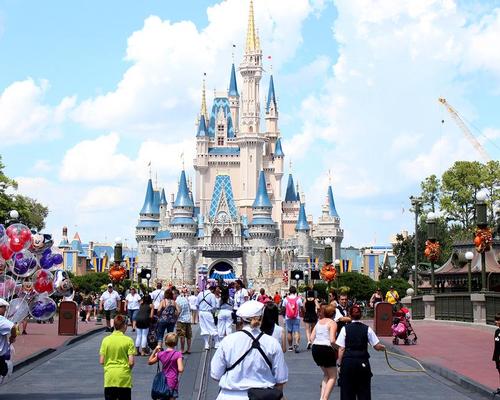

AI firm Midjourney enters wellness with spa, fitness and body scanning concept
Hot spring wellness community Ameyalli sells residences and breaks ground on resort and spa

OMA completes New Museum transformation with landmark expansion and Oberon restaurant
OMA has completed a major transformation of New York's New Museum, creating a larger cultural campus that combines expanded exhibition spaces with learning, performance, hospitality and public programming. The latest addition, Oberon, extends the visitor experience beyond the gallery, reflecting a growing trend for museums to become all-day destinations.
The New Museum in New York has entered a new chapter with the completion of a major
David Rockwell creates immersive magic destination, The Hand and The Eye
Montana Heritage Center by Cushing Terrell opens after US$107 million investment
Universal launches new theme park model with Kids Resort
'Minor wellness hotels' recorded the strongest growth across top KPIs in 2025, finds RLA Global
Great Barrier Reef attraction set for AU$180 million reinvention
Fairmont Cheshire, The Mere, has architecture by Leach Rhodes Walker and interiors by Bergman Design House.
Marriott International partners with Fitwel for wellness solutions across its residential portfolio
Preidlhof Luxury DolceVita Resort to unveil new spa in February 2027
Places Leisure is working with Roberts Limbrick to build £60m wellness flagship in Basingstoke
Hoshino Resorts opens Kai Kusatsu as it expands the Kai onsen ryokan brand
Qiddiya and Populous share details of Saudi Arabia’s National Tennis Centre
Disney confirms US$30 billion investment programme as it highlights its economic impact
Until combines multiple disciplines at new Canary Wharf club
Sea Lanes opens following a partnership between The Eden Project and Canary Wharf Group
Bas Smets brings water and wilderness to Vitra
Expo 2030 Riyadh will create a permanent global destination
Luxury resort coming to Hunter Valley will have longevity spa
'Data chocolate', dreams made real and artworks shaped by visitors’ emotions: Refik Anadol’s AI art museum launches in Los Angeles
London Museum reveals 2026 opening date for new Smithfield home
BIG unveils Eve Music Hall as Croatia venue nears completion
Bob Rogers hands BRC to long-serving leadership team
Palazzo di Varignana launches family wellbeing and longevity retreat in Emilia Romagna
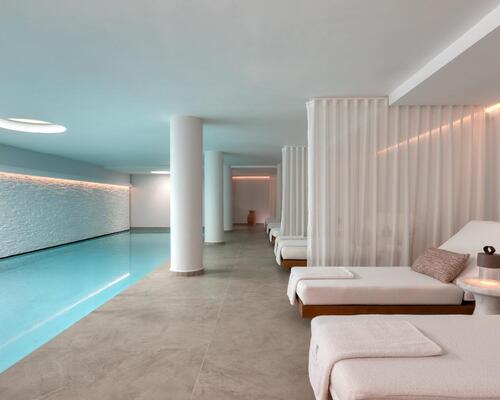
Anasa Wellness and Spa debuts at Patmos Aktis as it joins Marriott
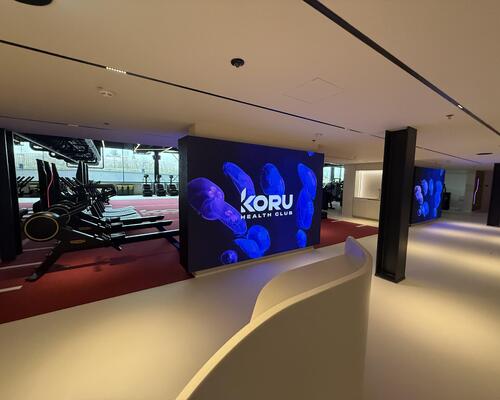
Design-led Koru Health Club combines high-performance training with recovery

Wellness care hospital opens in Vilnius with innovative spa and hospitality concept

Universal and Puy du Fou projects point to rise of Oxford–Cambridge corridor
A proposed Puy du Fou development near Bicester and Universal Destinations and Experiences’ planned resort in Bedford are emerging as part of a wider transformation of the Oxford–Cambridge Growth Corridor into a major centre for UK leisure and tourism investment.
For years, the corridor has been associated primarily with science, technology, housing and university-led economic growth. However, the clustering of large-scale visitor attraction projects along the

All-inclusive eco-wellness development Auko to open near Vietnam’s Son Doong caves
















Designed to restore neglected land and renew the identity of Iraq’s capital city, Baghdad Sustainable Forests promises a new way of living surrounded by nature. Gensler’s Ian Mulcahay tells us why he thinks the project could become a model for the repair and enhancement of urban centres