Wellness real estate market booming – forecast to reach $913bn by 2028, reports GWI



– Katherine Johnston
The Global Wellness Institute (GWI) has released promising new research on the wellness real estate market at its third-annual Wellness Real Estate & Communities Symposium in Manhattan.
The GWI defines wellness real estate as homes and buildings that are proactively designed, built and operated to support the holistic health of their residents.
Called Wellness Real Estate: Market Growth (2019-2023) and Future Developments, the paper reveals wellness real estate is by far the fastest-growing segment in the 11-sector wellness economy, surging from US$225 billion in 2019 to US$438 billion in 2023.
This represents an 18.1 per cent annual growth over the past four years, which is significantly higher than the 5.1 per cent annual growth rate for the overall global construction industry.
According to the GWI, the pandemic supercharged the market because it dramatically accelerated the understanding among consumers and the building industry about how much external environments impact our physical and mental health.
Now, the GWI forecasts that the sector will grow 15.8 per cent annually from 2023 to 2028 when it will approach the trillion-dollar mark (US$913 billion).
“As long-time industry researchers, we’re not at all surprised by this finding,” said Katherine Johnston and Ophelia Yeung, GWI’s senior research fellows.
“More than any other wellness sector, wellness real estate embodies the multidimensionality of wellness. When done right, it has the greatest potential within the wellness economy to improve our holistic wellbeing and that of entire communities.
“As more people realise that their biggest investment – their home – is the ‘next frontier of their health’, the demand for wellness real estate will only continue to grow.”
The report includes regional and country data and finds that the US (US$181 billion, 41 per cent of the global market), China (US$73 billion) and the UK (US$29 billion) remain the three biggest national markets. It also analyses the biggest drivers and opportunities – as well as the biggest challenges – for wellness real estate in the future.
Global wellness real estate market, 2017-2028
• 2017 – US$148.5 billion.• 2019 – US$225.2 billion.
• 2020 – US$274 billion.• 2021 – US$342 billion.
• 2022 – US$386.6 billion.• 2023 – US$438.2 billion.
• Projection for 2028 – US$912.6 billion.
Wellness real estate has been the growth leader in the wellness industry since the GWI started measuring it in 2017.
During the pandemic year (2019-2020), it was one of the few wellness sectors that continued to grow rapidly (21.6 per cent growth), even as overall construction output and global GDP shrank (-0.8 per cent and -2.6 per cent respectively).
Over the last couple of years, global construction growth has slowed considerably, from 16.7 per cent in 2020-21 to only 1.9 per cent in 2022-2023. But, between 2022 and 2023, wellness real estate grew an impressive 13.4 per cent.
The regional view(Numbers refer to market sizes for 2019 and 2023 and average annual growth rate 2019-2023)
• Latin America-Caribbean: US$550 million - US$1.2 billion (+ 22 per cent).
• Europe: US$46 billion - US$96 billion (+ 20 per cent).• Middle East-North Africa: US$710 million - US$1.4 billion (+ 19 per cent).
• North America: US$100 billion - US$194 billion (+ 18 per cent).• Asia-Pacific: US$77.5 billion - US$145 billion (+ 17 per cent).
• Sub-Saharan Africa: US$240 million - US$390 million (+ 13 per cent).
The GWI discovered that the market is heavily concentrated in North America (making up 44 per cent of the market in 2023), Asia-Pacific and Europe, which together account for 99 per cent of the global sector.
Latin America-Caribbean and Europe have been the fastest-growing regional markets from 2019 to 2023. The Middle East-North Africa also remained one of the fastest-expanding markets over the last four years, even with slower construction growth (including a significant construction downturn in 2022-2023).
North America has maintained powerful growth since 2017, but it tapered off in 2022-2023 alongside a slowdown in overall construction.
Meanwhile, Asia-Pacific is home to several very large, fast-growing countries for wellness real estate (e.g. Australia, Japan, China, India).
At the regional level, wellness real estate growth has outpaced overall construction growth across every region since 2019, by at least 3-4 times or more.
Top 10 markets(Numbers refer to market sizes for 2019 and 2023, and average annual growth rate 2019-2023)
• US: US$94 billion - US$181 billion (+ 17.6 per cent).
• China: US$$37 billion - US$73 billion (+ 18.4 per cent).• UK: US$11 billion - US$29 billion (+ 28 per cent).
• Australia: US$15.6 billion - US$26 billion (+ 13.3 per cent).• France: US$9.5 billion - US$21 billion (+ 21.3 per cent).
• Japan: US$7.6 billion - US$17 billion (+ 22.4 per cent).• Germany: US$8.7 billion - US$13.7 billion (+ 12.1 per cent).
• Canada: US$5.9 billion - US$13.3 billion (+ 22.7 per cent).• South Korea: US$5.7 billion - US$9.5 billion (+ 13.8 per cent).
• India: US$5 billion - US$9 billion (+ 16 per cent).
The report covers the top 20 national markets and illustrates how heavily concentrated the sector is in just a few countries.
The US (41 per cent of the market in 2023) and Canada, plus a few countries in Asia (China, Australia, Japan) and Europe (UK, France, Germany), account for 85 per cent of the global market.
GWI Katherine Johnston Ophelia Yeung wellness real estateUS named world’s largest wellness economy, reaching US$1.8 trillion valuation
GOCO and Fullerton Fund Management collaborate on wellness investment, reveals Ingo Schweder
Global wellness economy reaches record-breaking $5.6trn – predicted to hit $8.5trn by 2027
BIG unveils Eve Music Hall as Croatia venue nears completion
Bob Rogers hands BRC to long-serving leadership team

Wellness care hospital opens in Vilnius with innovative spa and hospitality concept

Universal and Puy du Fou projects point to rise of Oxford–Cambridge corridor
A proposed Puy du Fou development near Bicester and Universal Destinations and Experiences’ planned resort in Bedford are emerging as part of a wider transformation of the Oxford–Cambridge Growth Corridor into a major centre for UK leisure and tourism investment.
For years, the corridor has been associated primarily with science, technology, housing and university-led economic growth. However, the clustering of large-scale visitor attraction projects along the

All-inclusive eco-wellness development Auko to open near Vietnam’s Son Doong caves

Shedd Aquarium upgrades its visitor experience with new Immersion Theater
Shedd Aquarium has opened the Immersion Theater developed in partnership with SimEx-Iwerks, as part of a wider strategy to enhance the guest experience and create additional revenue opportunities.
The attraction has transformed the aquarium’s Phelps Auditorium into a multi-sensory venue combining panoramic projection, environmental effects and interactive technology.
A new pre-show area allows visitors to engage with augmented reality marine animals before entering the
Mandarin Oriental announces standalone Mansions-branded residences for Abu Dhabi
MCR is planning a luxury hotel for London's BT Tower
Joy as a radical act: Yinka Ilori launches solo exhibition celebrating the rebellious power of spreading happiness

Work gets underway on Madrid's €800 million leisure complex
Work is underway in Madrid on one of Europe’s most significant multi-functional complexes, combining sport, entertainment, culture and education.
The €800 million initiative to regenerate the former Olympic Aquatic Centre in the north-east of the city, next to the Riyadh Air Metropolitano stadium, is being led by Barsento – a joint venture between Live Nation Entertainment, Oak View Group and Atlético de Madrid. The project will
Therme Manchester reveals 90:90 strategy – 90 per cent of the UK population within a 90-minute drive of a Therme

Four Seasons’ Naples Beach Club opens 2,800sq m Sanctuary spa inspired by indigenous Calusa people
Orient Express Corinthian to host Ocean Rebirth wellness retreat in collaboration with Guerlain
Famed London nightclub, Tramp, launches Tramp Health
First look: Miraval opens on the Red Sea in Saudi Arabia

Hainan Science Museum by Ma Yansong, opens in China
A new science museum has opened to the public in Haikou after attracting more than 350,000 visitors during a four-month soft opening period.
Designed by Ma Yansong and his practice MAD Architects, the Hainan Science Museum is located on the edge of Wuyuan River National Wetland Park and has already recorded peak attendance of more than 5,800 visitors in a single day.
Commissioned by
Zannier Île De Bendor launches with design by Hardel Le Bihan Architectes
Sæl Spa readies for launch in London: “a modern British sanctuary”
Immersive art bathhouse Submersive announces debut location in Austin

Construction begins on regenerative wellness destination The Shenandoah Nature Resort

Royal Caribbean reveals record-breaking cruise ship
V&A East opens in London
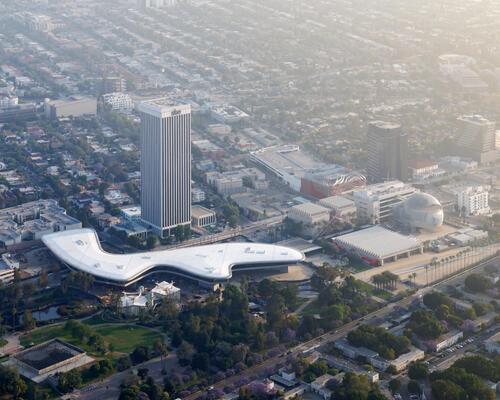
David Geffen galleries open at LACMA

New venue The Lands by Capella includes a longevity centre to complement sister hotel Capella Sydney

World of Frozen launches at Disneyland Paris
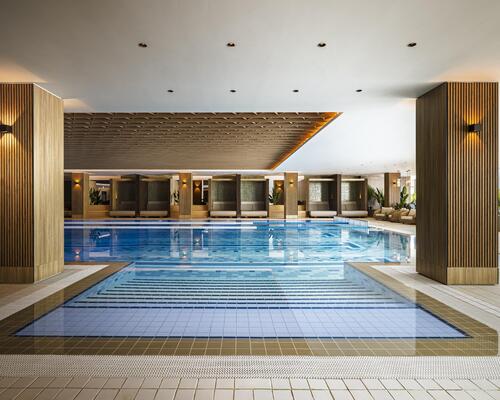
Pical Resort by Valamar reveals first Croatian spa under the ESPA brand

Mandarin Oriental creates end-to-end Egyptian journey with two new hotels and first-ever luxury river cruise

Designers Mendil + Meyer launch new division called Lām Concepts for strategic wellness projects
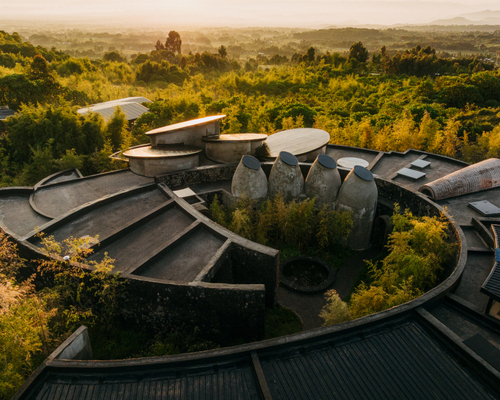
Wilderness Bisate in Rwanda reveals brand’s second Sanctuary spa
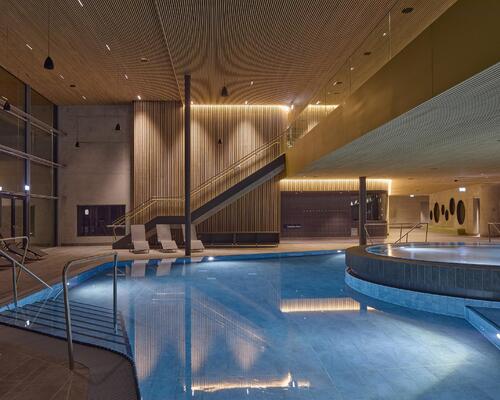
4a Architekten shares details of wellness extension at Salinarium Bad Dürkheim Thermal Spa









Designed to restore neglected land and renew the identity of Iraq’s capital city, Baghdad Sustainable Forests promises a new way of living surrounded by nature. Gensler’s Ian Mulcahay tells us why he thinks the project could become a model for the repair and enhancement of urban centres