Rural locations are the next frontier for expansion for the health club sector



With between 18 and 30 per cent of the populations of developed countries living in rural locations, this market will be the next frontier for expansion in the fitness industry, according to insight published in HCM magazine.
The challenge is creating the right business model.
Fit+ is a staffless and digitalised concept which founder Torsten Boorberg believes can work anywhere. A 390sq ft (36sq m) club in Bad Doberan, Germany, has 1,000 members in a town of 12,000 people, thanks to the efforts of the licensee, Karsten Luther.
In the UK, PureGym is also exploring the potential of rural development and speaking exclusively in HCMissue 10 2023, MD, Rebecca Passmore, says the company is currently working on alternatives to take its affordable concept into rural areas.
“We’ve been able to deliver an attractive return on capital at a 6,500sq ft (604sq m) site, compared to our average of 15,000sq ft (1,394 sq m),” she says. “And we’ve found a viable model with an addressable population of 30,000 to 40,000.
“It’s been challenging so far to make the affordable model work in rural areas, because it relies on high member densities and in some areas the population just isn’t large enough to sustain a commercial gym,” she said. “After five kilometres, penetration starts to reduce, no matter how well-priced or high-quality the facility, even if there isn’t another gym option nearby.”
A further challenge is that a club which is one-third of the size doesn’t have proportional cost savings, as there are some aspects of a fit-out that cost the same, no matter what size the club is.
In spite of these challenges, PureGym continues to experiment with alternatives and while it can’t yet make a health club work with 1,000 members, Passmore says the company is hopeful it can create a viable concept for 1,500 members which would give its property team new markets to target in underserved areas and as it pushes further into rural areas.
In the trust sector, with 260 leisure centres, GLL is also exploring other models in the countryside, including working with community groups to develop blended management models which combine GLL’s expertise with trained and committed local volunteers.
“Co-locating gyms and leisure facilities with health hubs and libraries keeps the costs down and makes travel easier,” says former CEO and strategic advisor, Mark Sesnan. “We’re also exploring further community use of school facilities, since most communities have a school.”
Wadebridge Leisure Centre in Cornwall was one of GLL’s rural sites which represented a challenge. It was at risk of closure when seven volunteers formed a community interest company, FOWLC, to run it on a not-for-profit basis.
Director, Emma Tudge, says one size doesn’t fit all with rural clubs: “It’s important to listen to what the community wants and needs from their leisure centre. If something doesn’t work, we look at why and tweak it.”
Tudge also says it’s vital to be agile and embedded in the local community: “To make a rural club work you need to listen and engage with the community and have a genuine passion for engaging with people.”
Director at Active Insight, Mike Hill, says the unique needs of communities need to be considered at the design stage. “This might mean adding a meeting room, a community centre or an indoor sports hall,” he says.
Hill points out that in the Netherlands, community health and activity centres have been run 'by the community for the community' successfully for years, serving as hubs for social interaction, mental rejuvenation and skill development, while also boosting social cohesion.
PureGym Rebecca Passmore GLL Mark Sesnan FOWLC Emma Tudge Active Insight Mike Hill Fit+ Toorsten Boorberg rural gyms
PureGym ramps up expansion after strong quarterly results
PureGym £805m refinancing ‘one of the largest deals of its kind in the sector’s history’
FEATURE: Insight – Country life
FEATURE: Life lessons – Mark Sesnan
FEATURE: Interview – Peter Bundey & Mark Sesnan

AI firm Midjourney enters wellness with spa, fitness and body scanning concept
Hot spring wellness community Ameyalli sells residences and breaks ground on resort and spa

OMA completes New Museum transformation with landmark expansion and Oberon restaurant
OMA has completed a major transformation of New York's New Museum, creating a larger cultural campus that combines expanded exhibition spaces with learning, performance, hospitality and public programming. The latest addition, Oberon, extends the visitor experience beyond the gallery, reflecting a growing trend for museums to become all-day destinations.
The New Museum in New York has entered a new chapter with the completion of a major
David Rockwell creates immersive magic destination, The Hand and The Eye

Montana Heritage Center by Cushing Terrell opens after US$107 million investment

Universal launches new theme park model with Kids Resort
'Minor wellness hotels' recorded the strongest growth across top KPIs in 2025, finds RLA Global
Great Barrier Reef attraction set for AU$180 million reinvention
Fairmont Cheshire, The Mere, has architecture by Leach Rhodes Walker and interiors by Bergman Design House.
Marriott International partners with Fitwel for wellness solutions across its residential portfolio
Preidlhof Luxury DolceVita Resort to unveil new spa in February 2027
Places Leisure is working with Roberts Limbrick to build £60m wellness flagship in Basingstoke
Hoshino Resorts opens Kai Kusatsu as it expands the Kai onsen ryokan brand
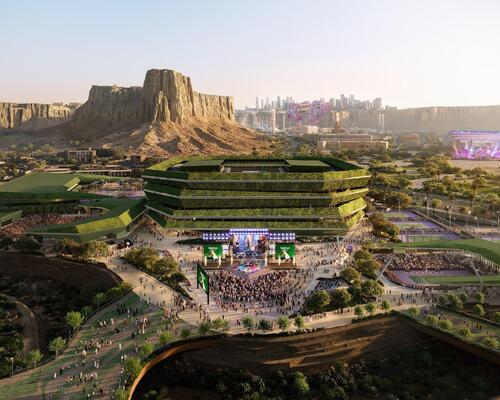
Qiddiya and Populous share details of Saudi Arabia’s National Tennis Centre

Disney confirms US$30 billion investment programme as it highlights its economic impact
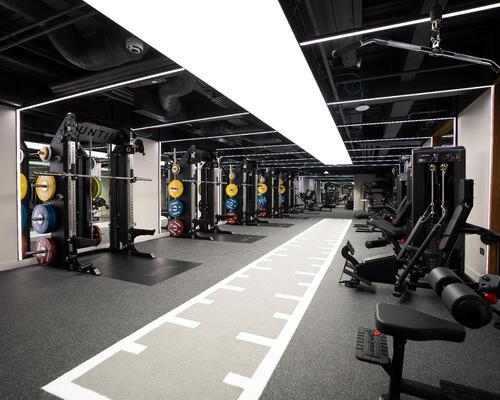
Until combines multiple disciplines at new Canary Wharf club

Sea Lanes opens following a partnership between The Eden Project and Canary Wharf Group
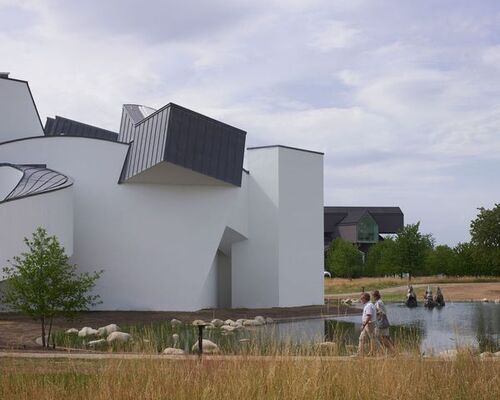
Bas Smets brings water and wilderness to Vitra
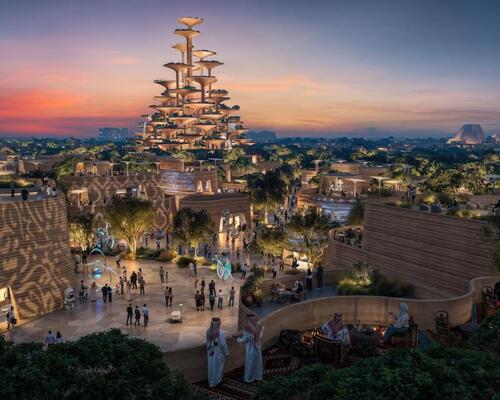
Expo 2030 Riyadh will create a permanent global destination
Luxury resort coming to Hunter Valley will have longevity spa
'Data chocolate', dreams made real and artworks shaped by visitors’ emotions: Refik Anadol’s AI art museum launches in Los Angeles
London Museum reveals 2026 opening date for new Smithfield home
BIG unveils Eve Music Hall as Croatia venue nears completion
Bob Rogers hands BRC to long-serving leadership team

Palazzo di Varignana launches family wellbeing and longevity retreat in Emilia Romagna
Anasa Wellness and Spa debuts at Patmos Aktis as it joins Marriott
Design-led Koru Health Club combines high-performance training with recovery

Wellness care hospital opens in Vilnius with innovative spa and hospitality concept

Universal and Puy du Fou projects point to rise of Oxford–Cambridge corridor
A proposed Puy du Fou development near Bicester and Universal Destinations and Experiences’ planned resort in Bedford are emerging as part of a wider transformation of the Oxford–Cambridge Growth Corridor into a major centre for UK leisure and tourism investment.
For years, the corridor has been associated primarily with science, technology, housing and university-led economic growth. However, the clustering of large-scale visitor attraction projects along the

All-inclusive eco-wellness development Auko to open near Vietnam’s Son Doong caves

















Designed to restore neglected land and renew the identity of Iraq’s capital city, Baghdad Sustainable Forests promises a new way of living surrounded by nature. Gensler’s Ian Mulcahay tells us why he thinks the project could become a model for the repair and enhancement of urban centres