FaulknerBrowns create twisting 'Tardis-like' sports campus in The Hague's historic Zuiderpark
– Russ Davenport, FaulknerBrowns
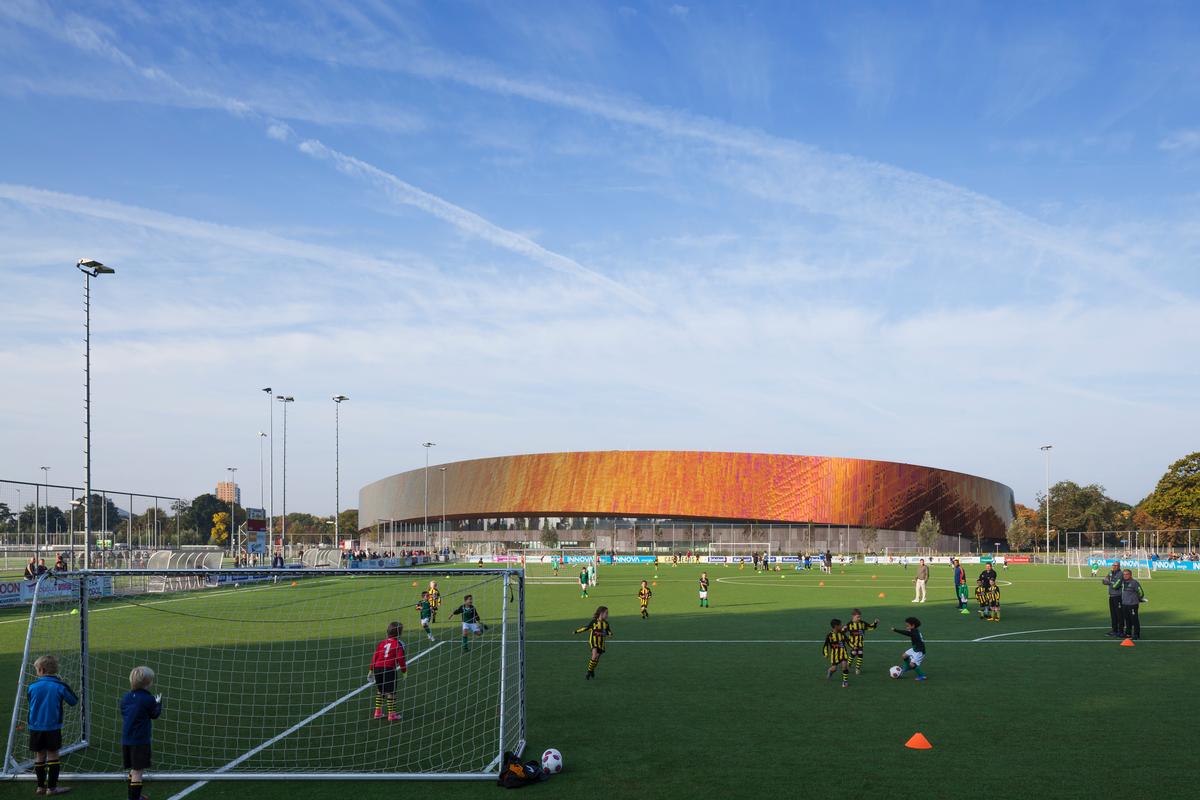
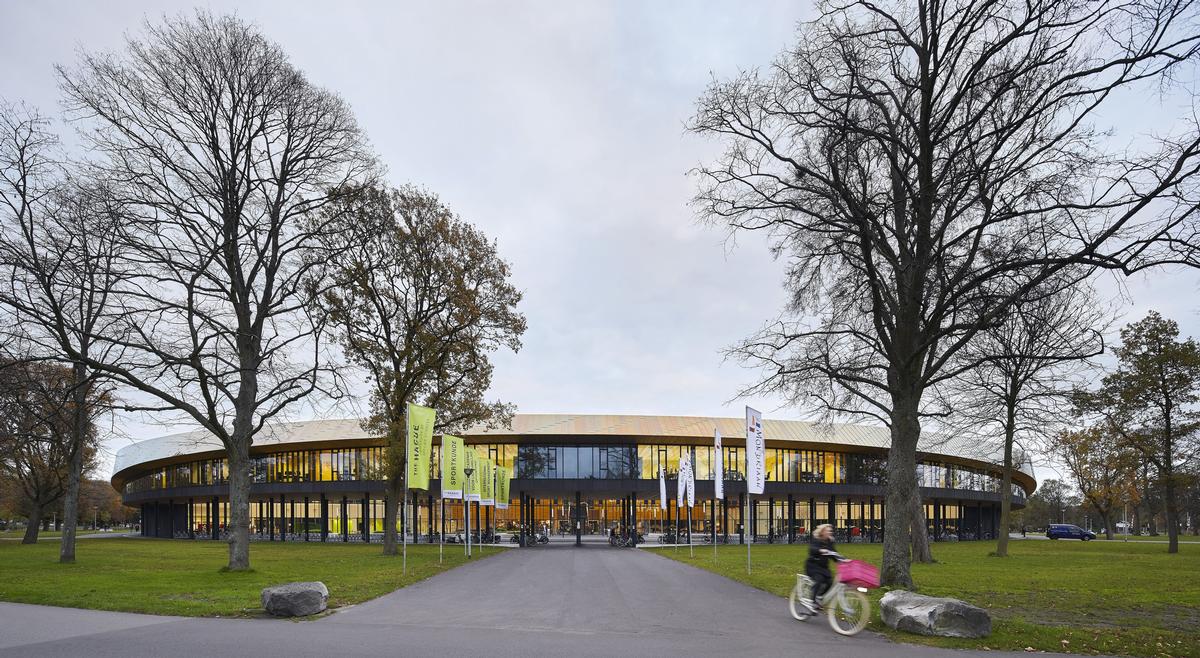
Architecture firm FaulknerBrowns have completed a dynamic €50m (US$61m, £44.4m) sports campus in The Hague’s historic Zuiderpark.
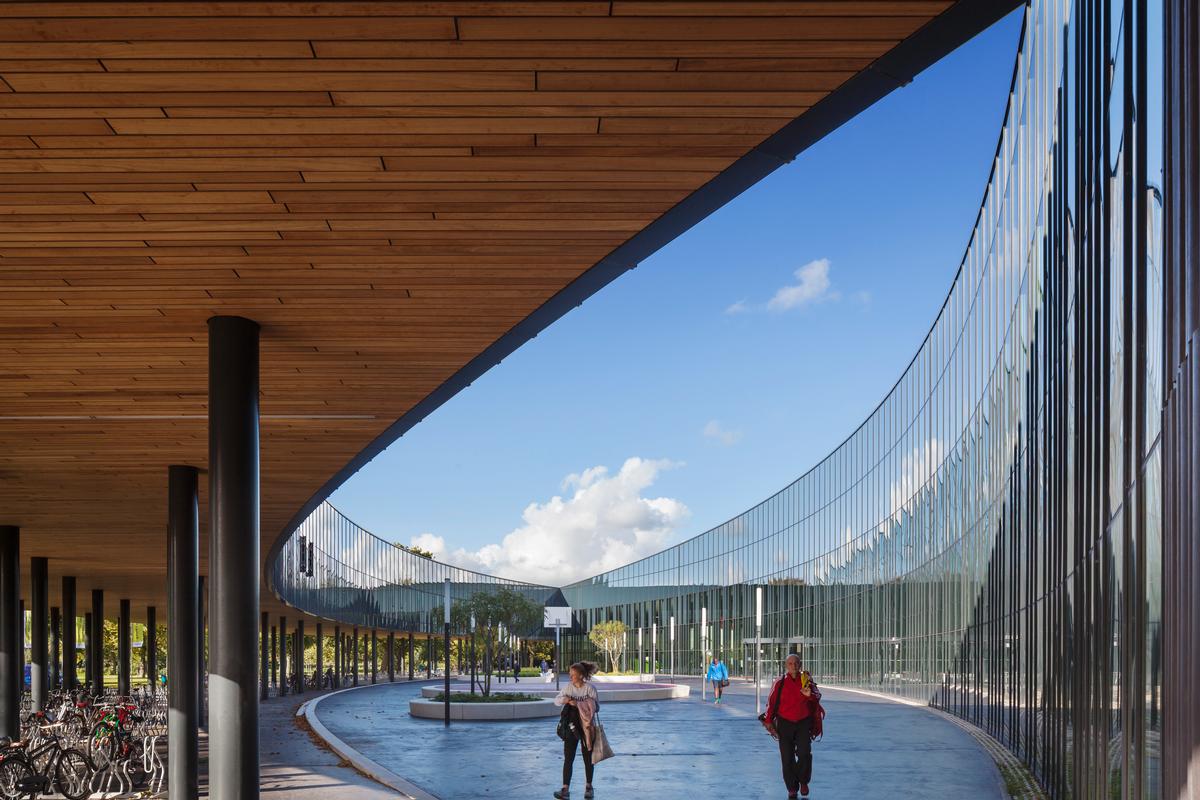
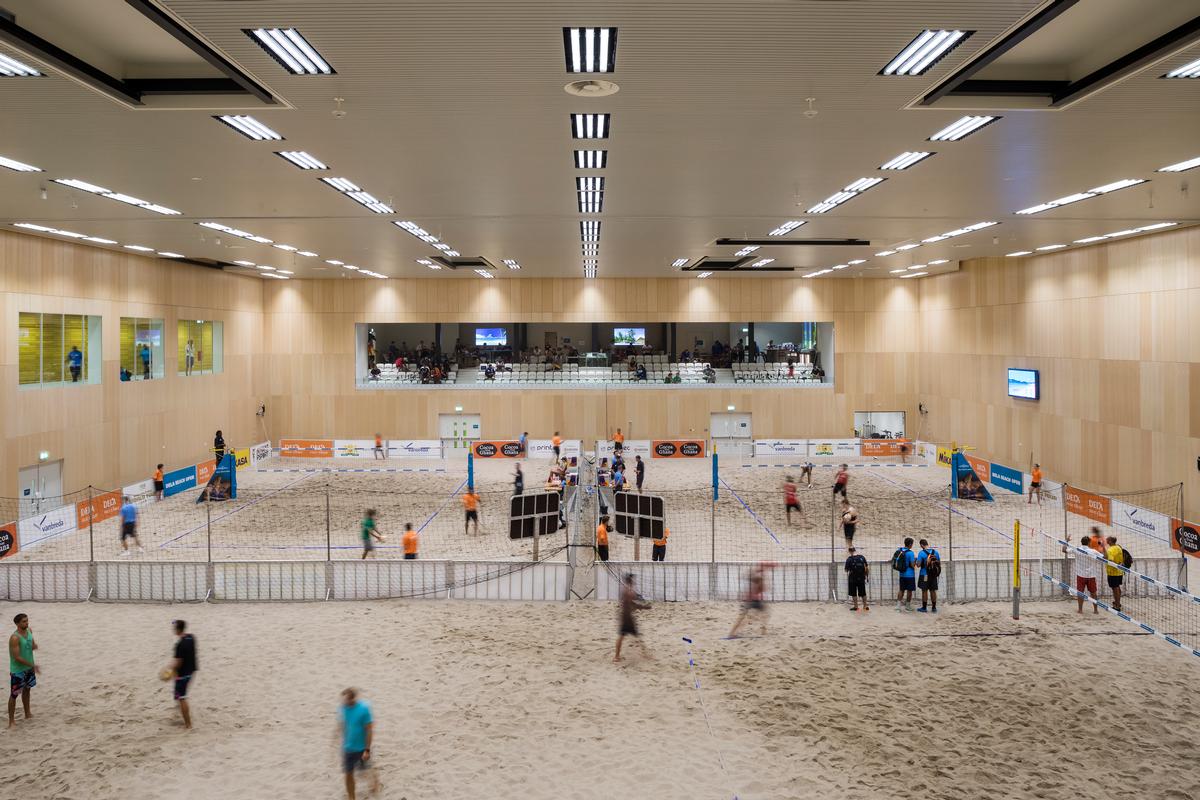
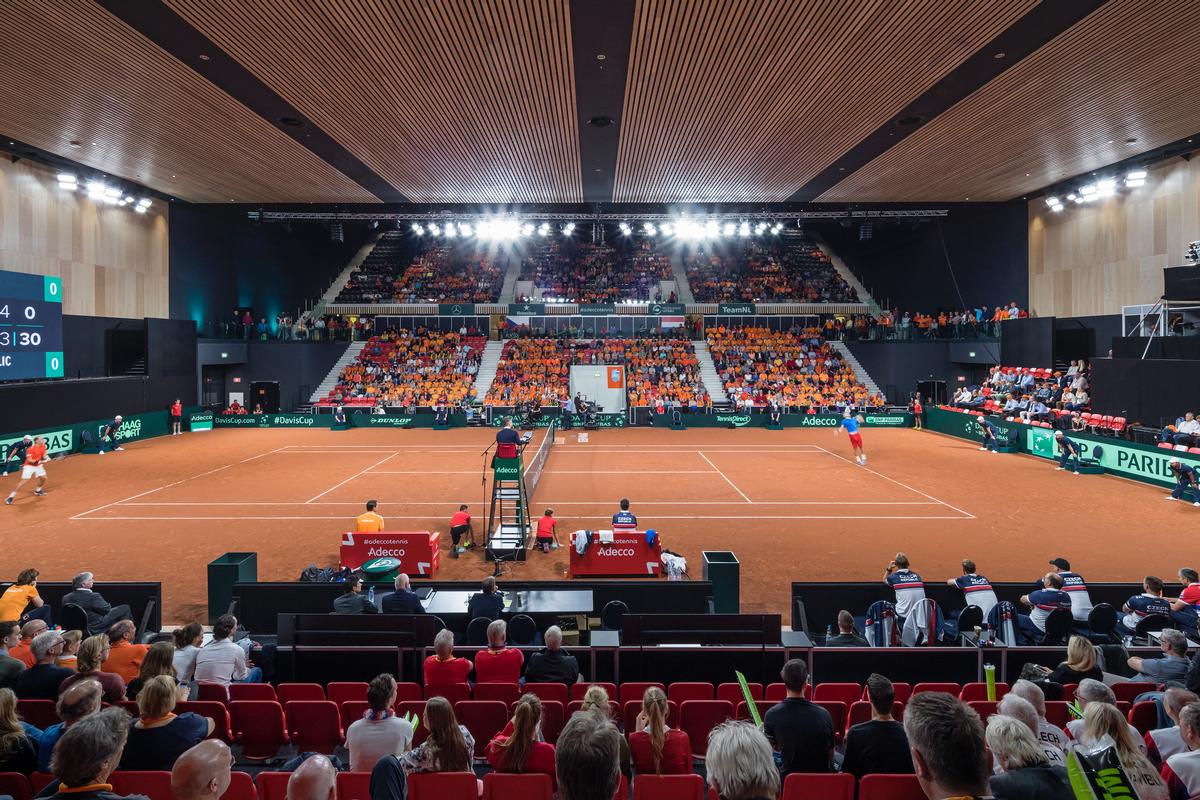
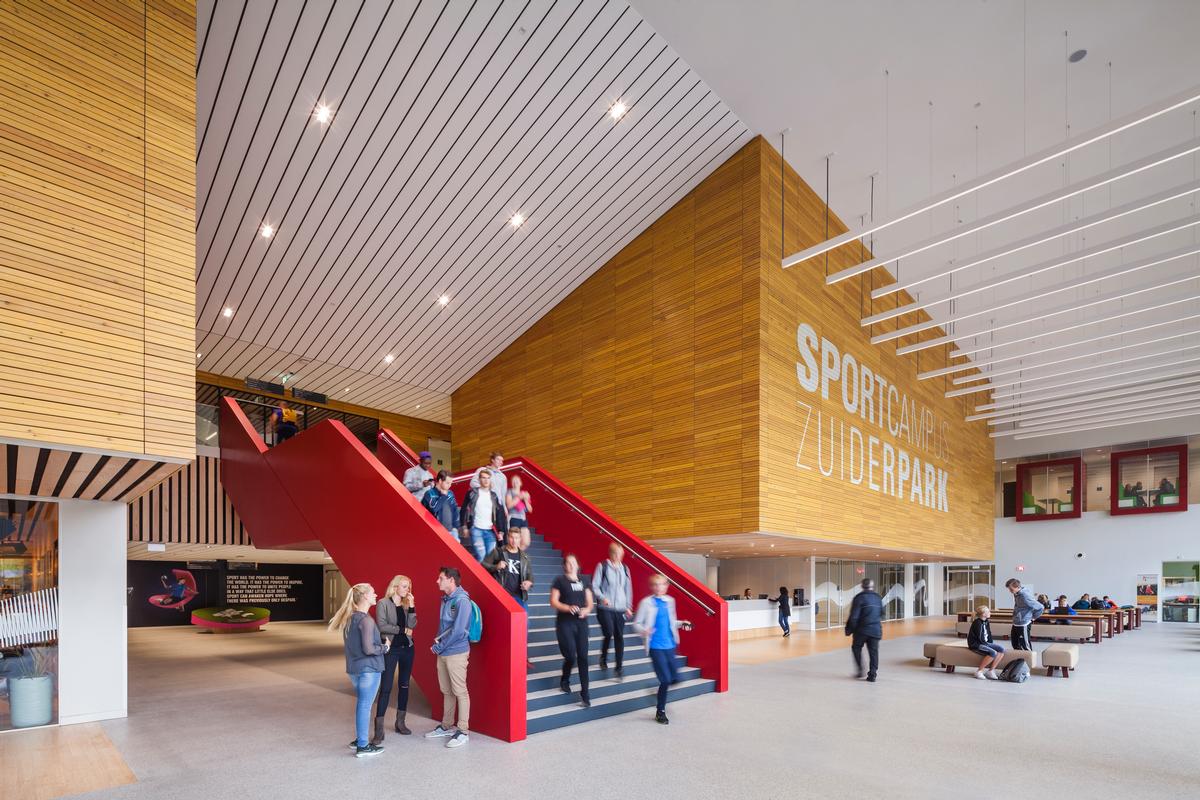
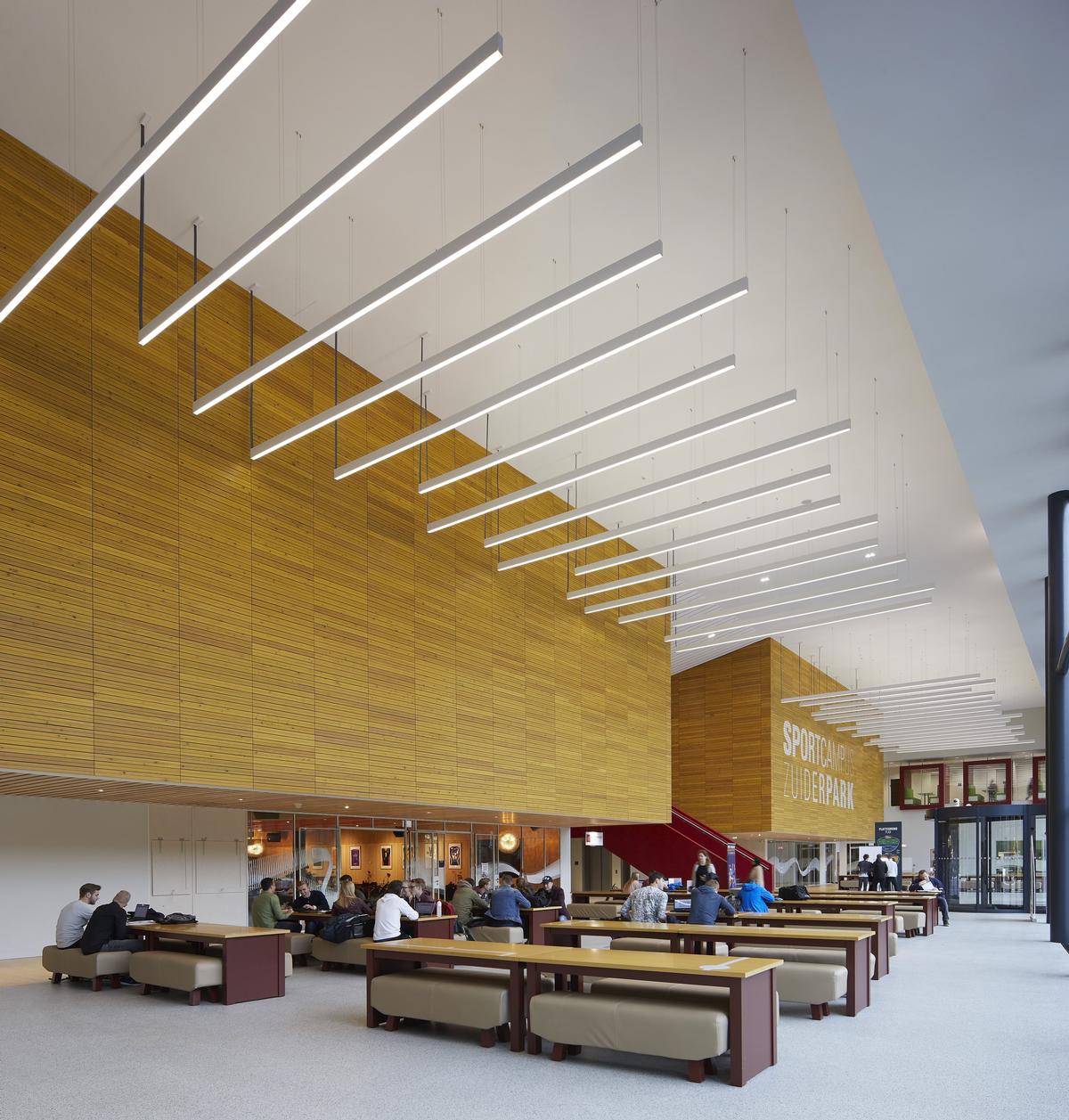
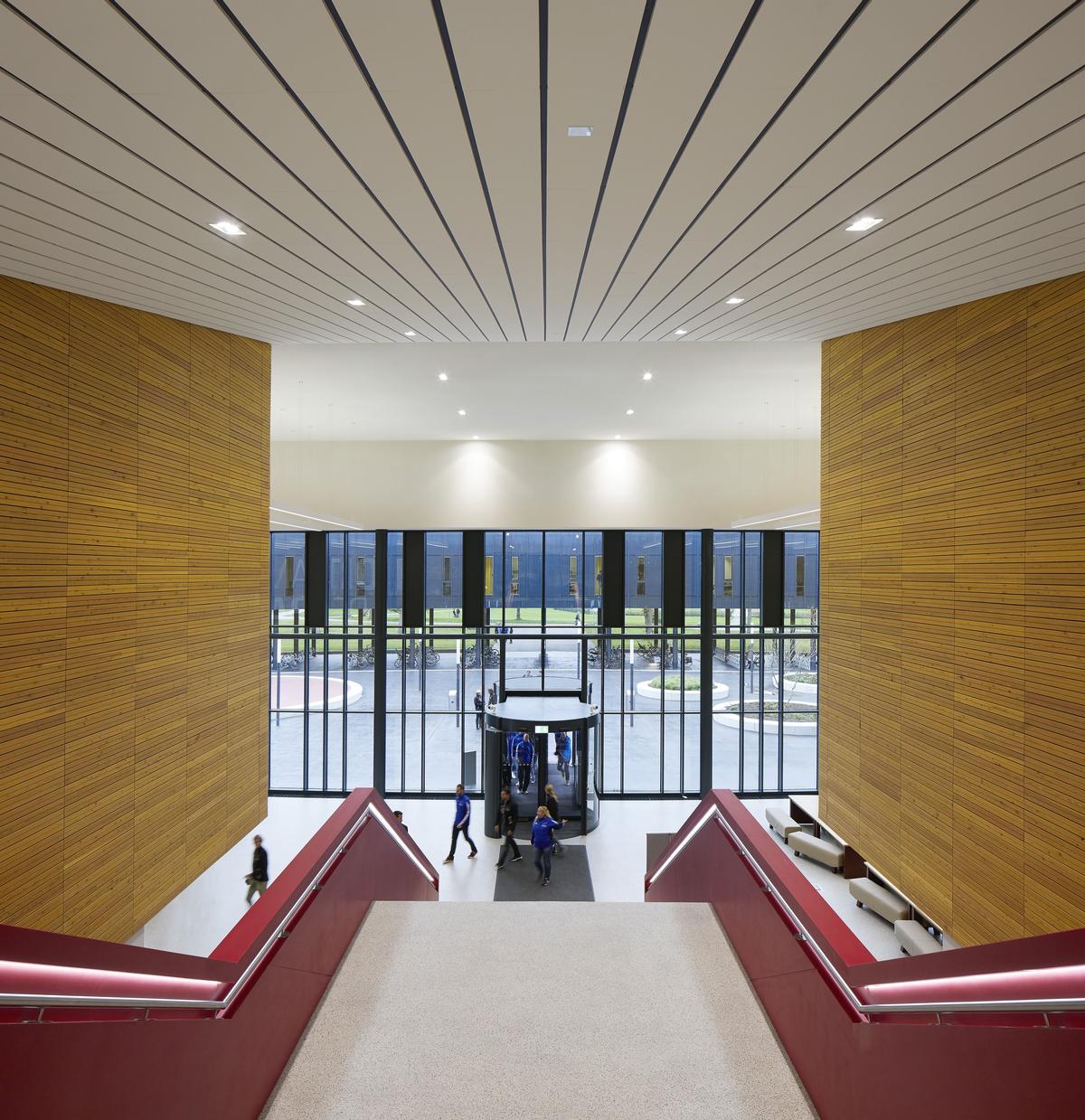
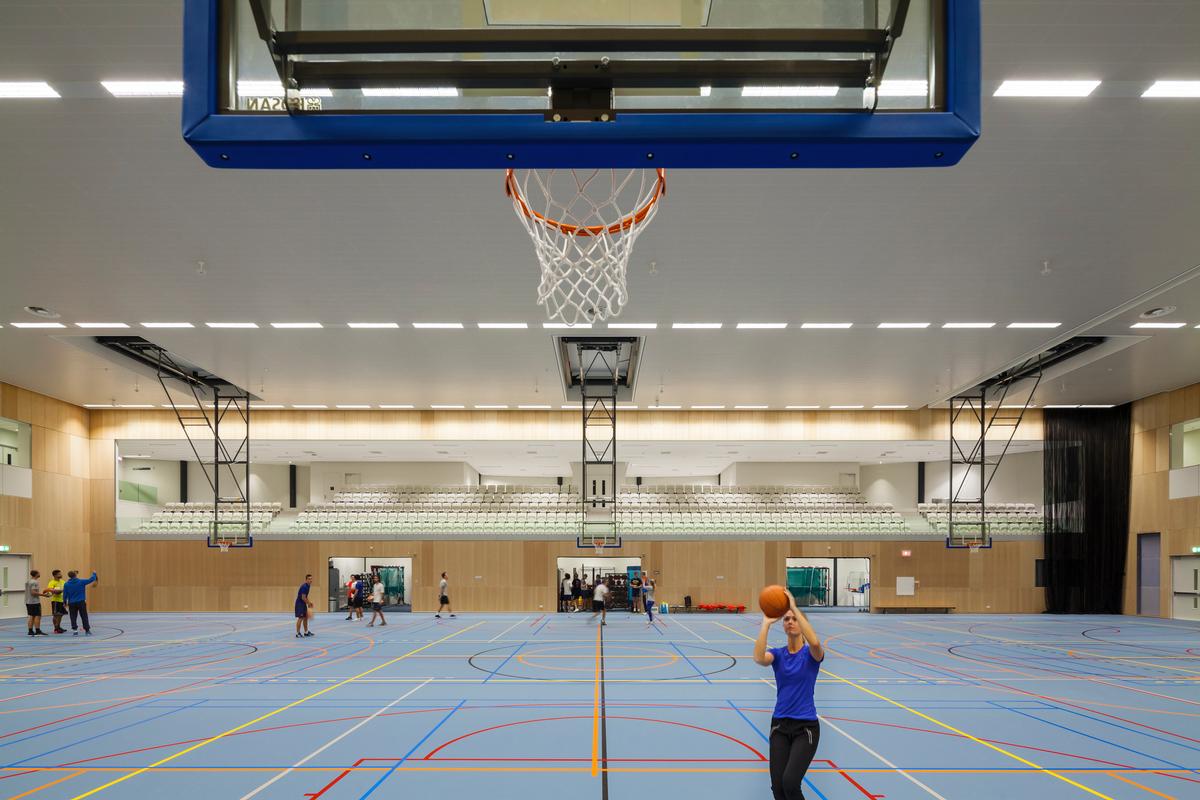
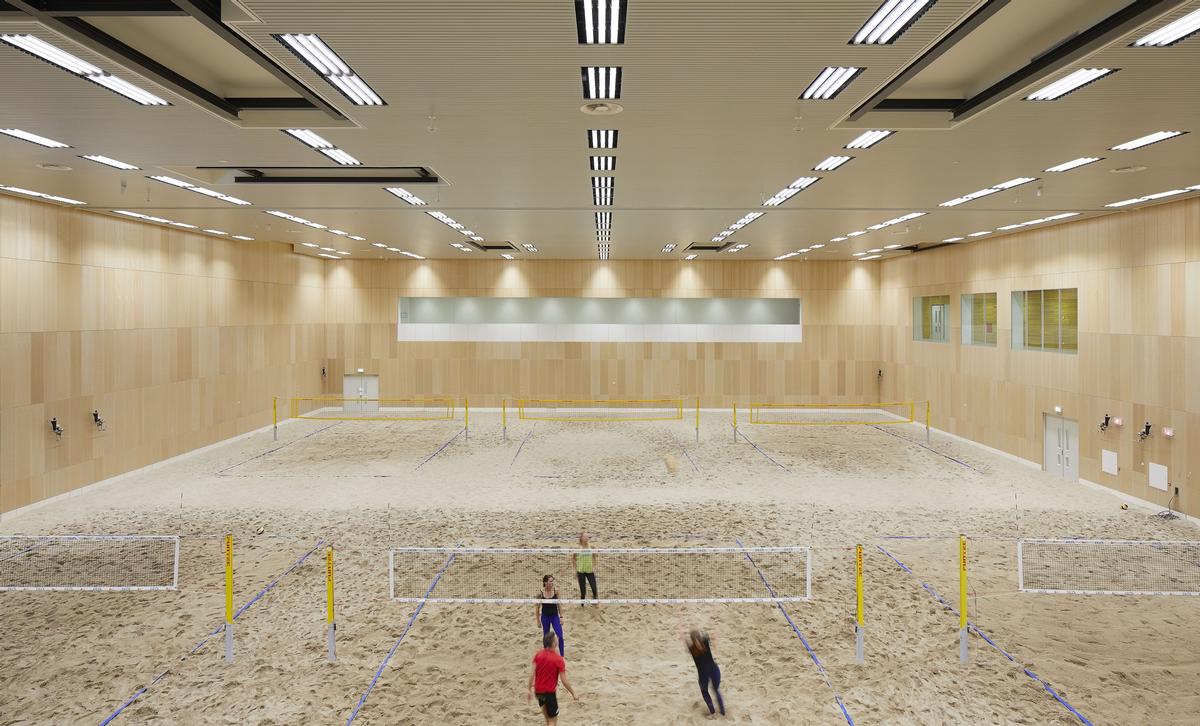
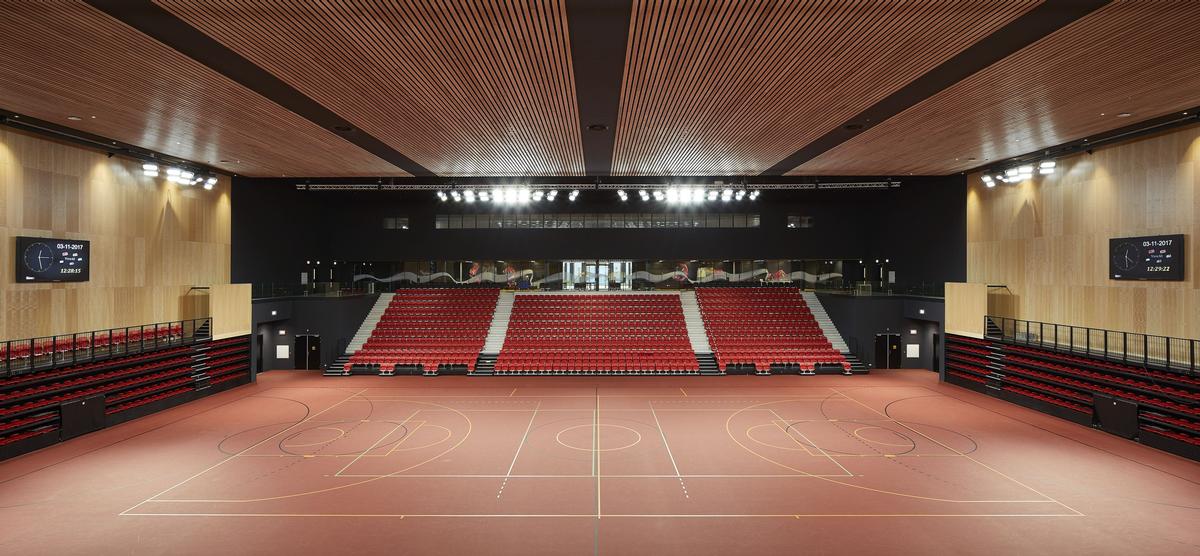
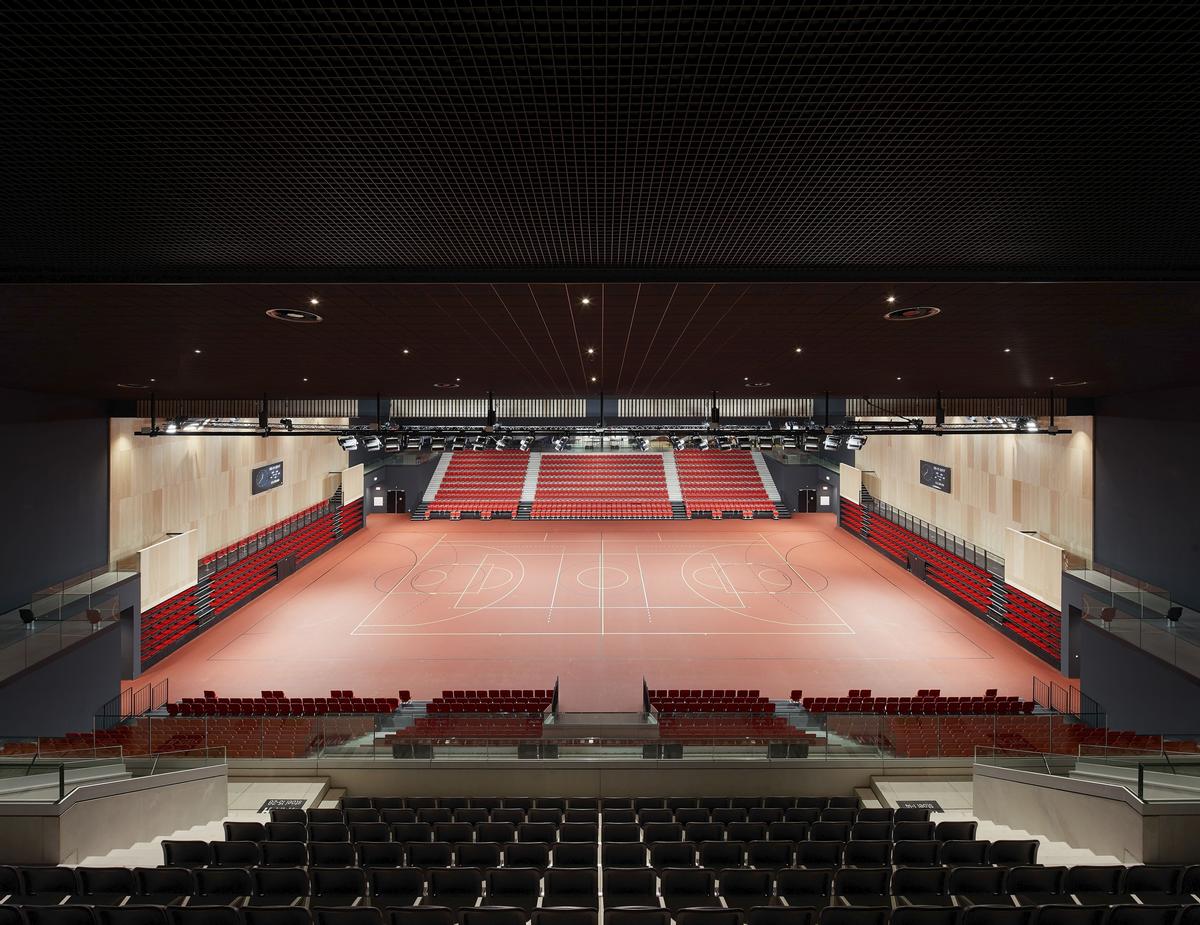
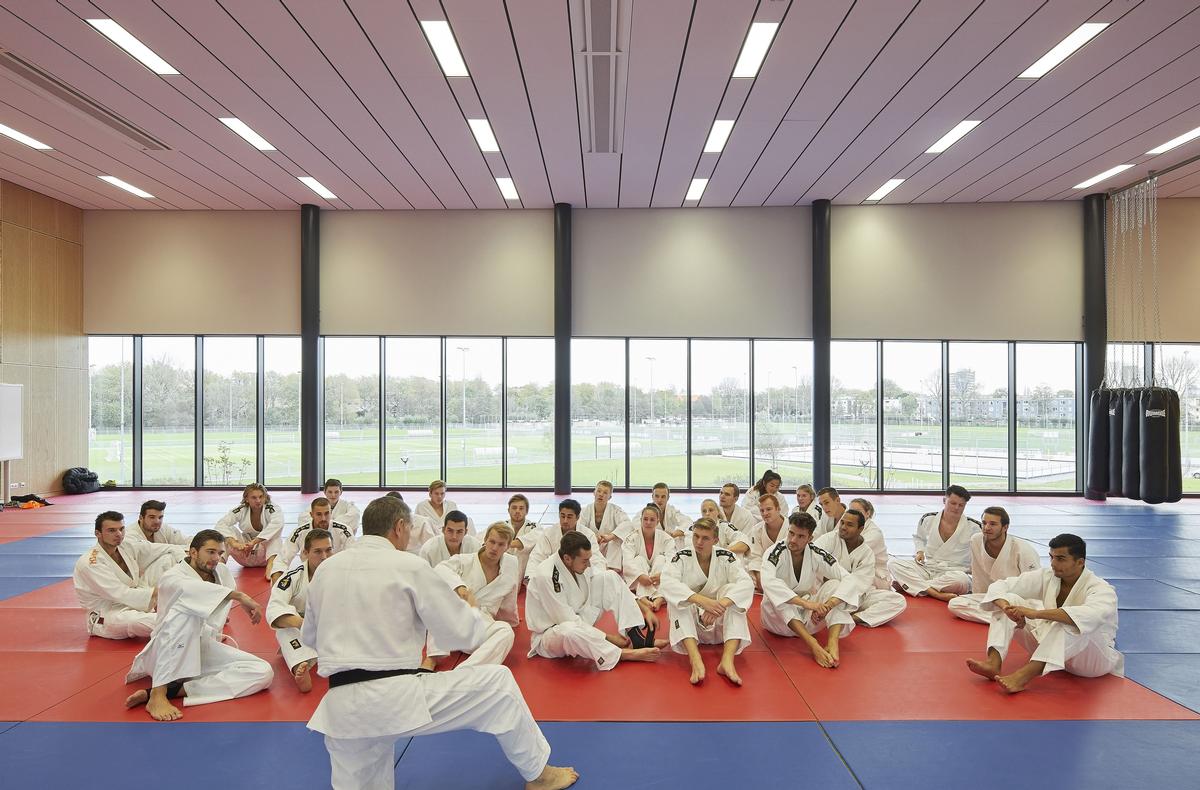
Open to amateur and elite athletes and community users, the 34,000sq m (366,000sq ft) facility includes a gymnastics hall, beach sports venue, 3,500 capacity arena and a multi-purpose sports hall, as well as a variety of sports science and education spaces, including a public library. Outside, there are a series of multi-use pitches, while an animated entrance courtyard acts as an extension to the park, which is listed as a national monument.
The building, called Sportcampus Zuiderpark, occupies a site that was once home to the stadium of Dutch football club Den Haag FC. That ground was demolished in 2007 when the team moved to the larger Kyocera Stadium, designed by Zwarts & Jansma Architects.
Backing for the new campus has come from the city municipality, the Hague University of Applied Sciences and the ROC Mondriaan vocational school – with the trio stating the need for the city to have a modern, well-equipped home to train and develop sporting talent.
FaulknerBrowns – who have designed large-scale facilities across the UK and Europe – overcame five other bids to win the project in an international design competition held in 2012.
“Back when we won the project, the Netherlands and the other Benelux countries were considering a bid for the 2028 Olympics and their plans were focused on health, wellbeing and youth,” FaulknerBrowns partner Russ Davenport told CLAD.
“The clients wanted to reflect that by building something much broader than just a facility for sport. They wanted to emphasise the importance of sport and exercise through learning and engagement. Our design had to support that kind of aspirational ethos.”
To achieve this, the team were tasked with capturing a sense of movement.
“Movement was a fundamental concept for the project, but it was a very difficult thing to create internally, because a lot of the volumes are square boxes,” said Davenport. “Externally, though, we felt that a curving form would fulfil that ambition.
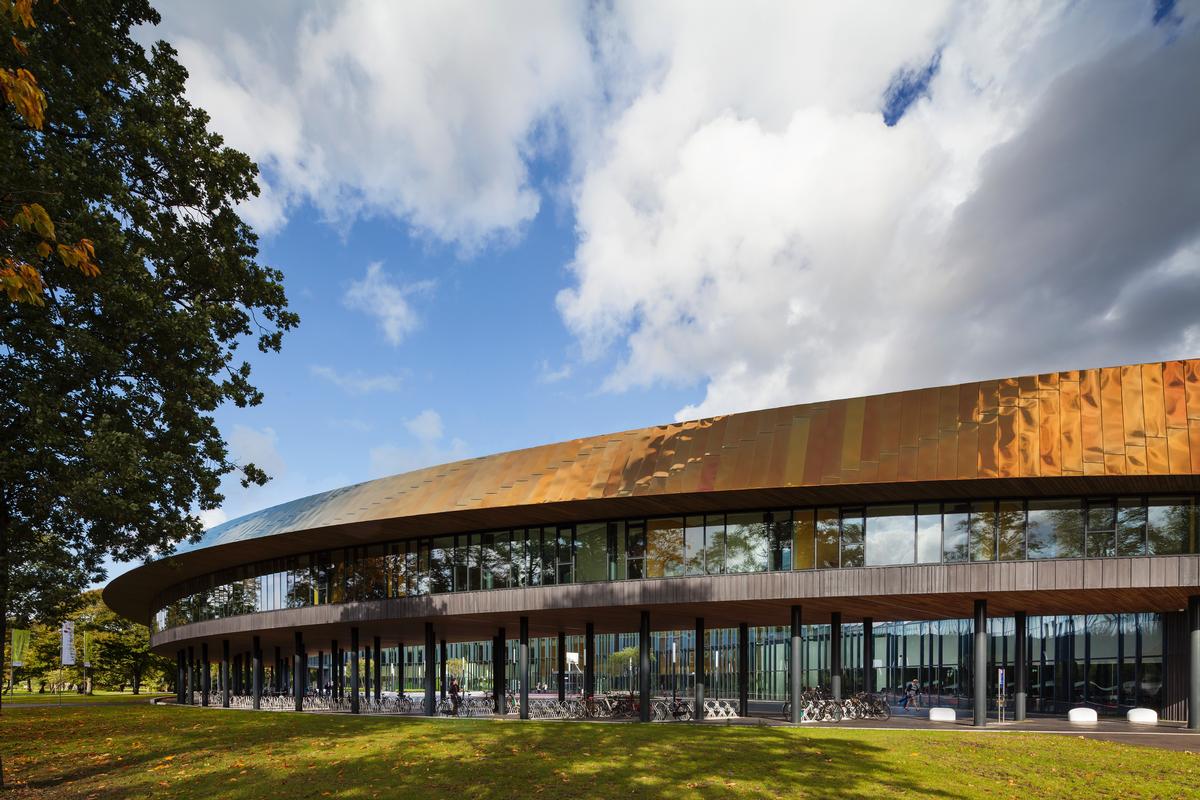
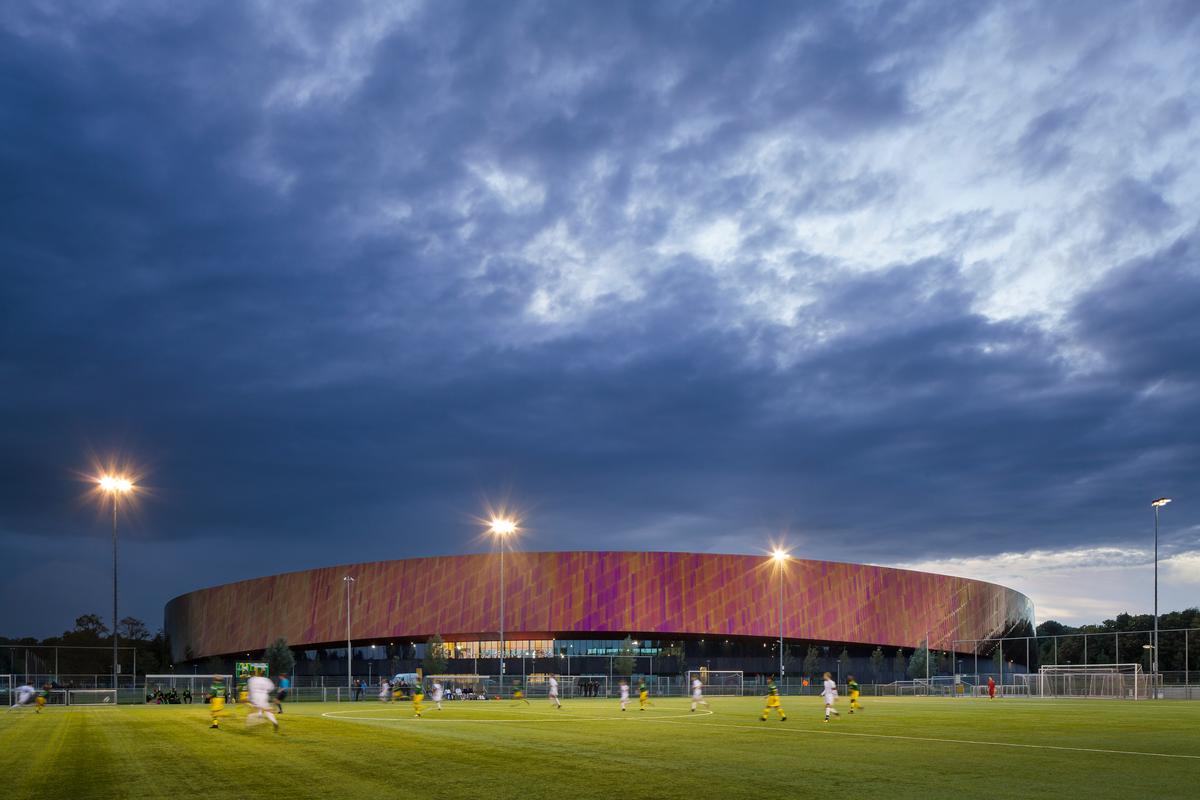
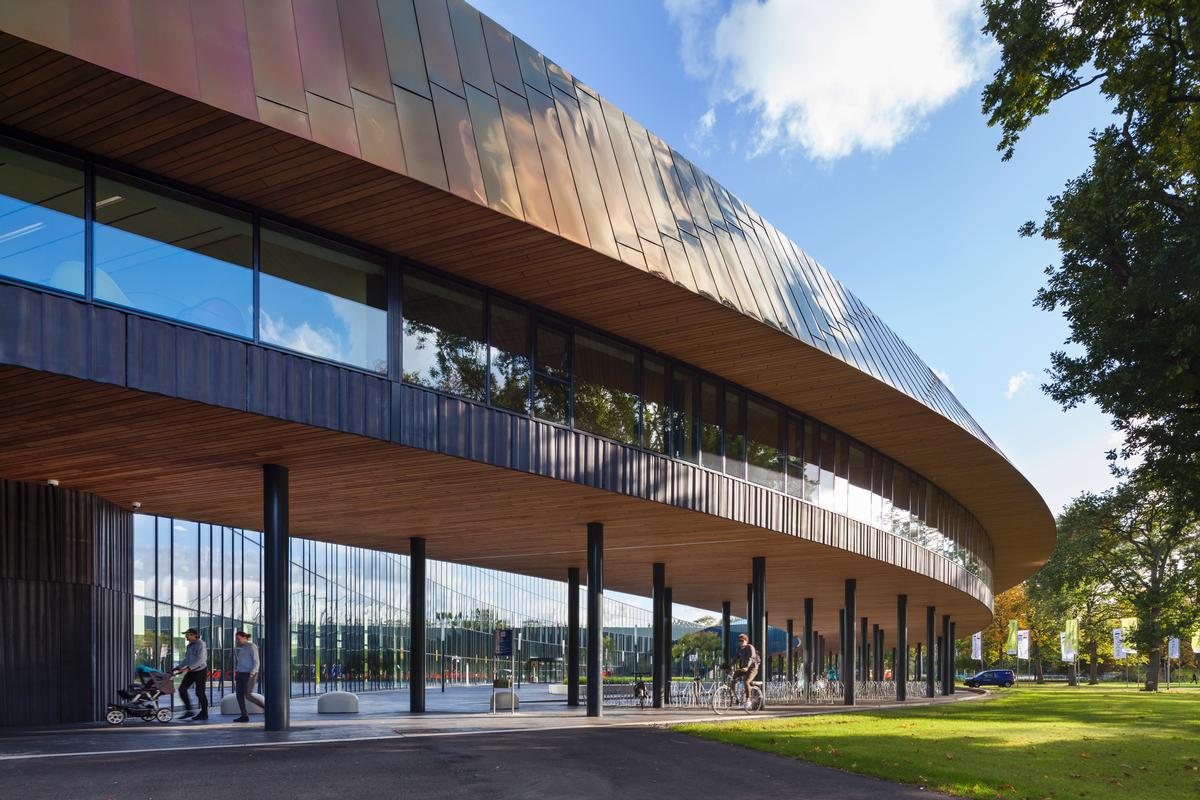
“Conceptually, we came up with this idea of having a cluster of boxes that are tied together by a ribbon that twists and changes in height. At the rear, the high-sided elevation responds to the urban element of the site, while the lower front elevation responds at a human scale to the public parkland.
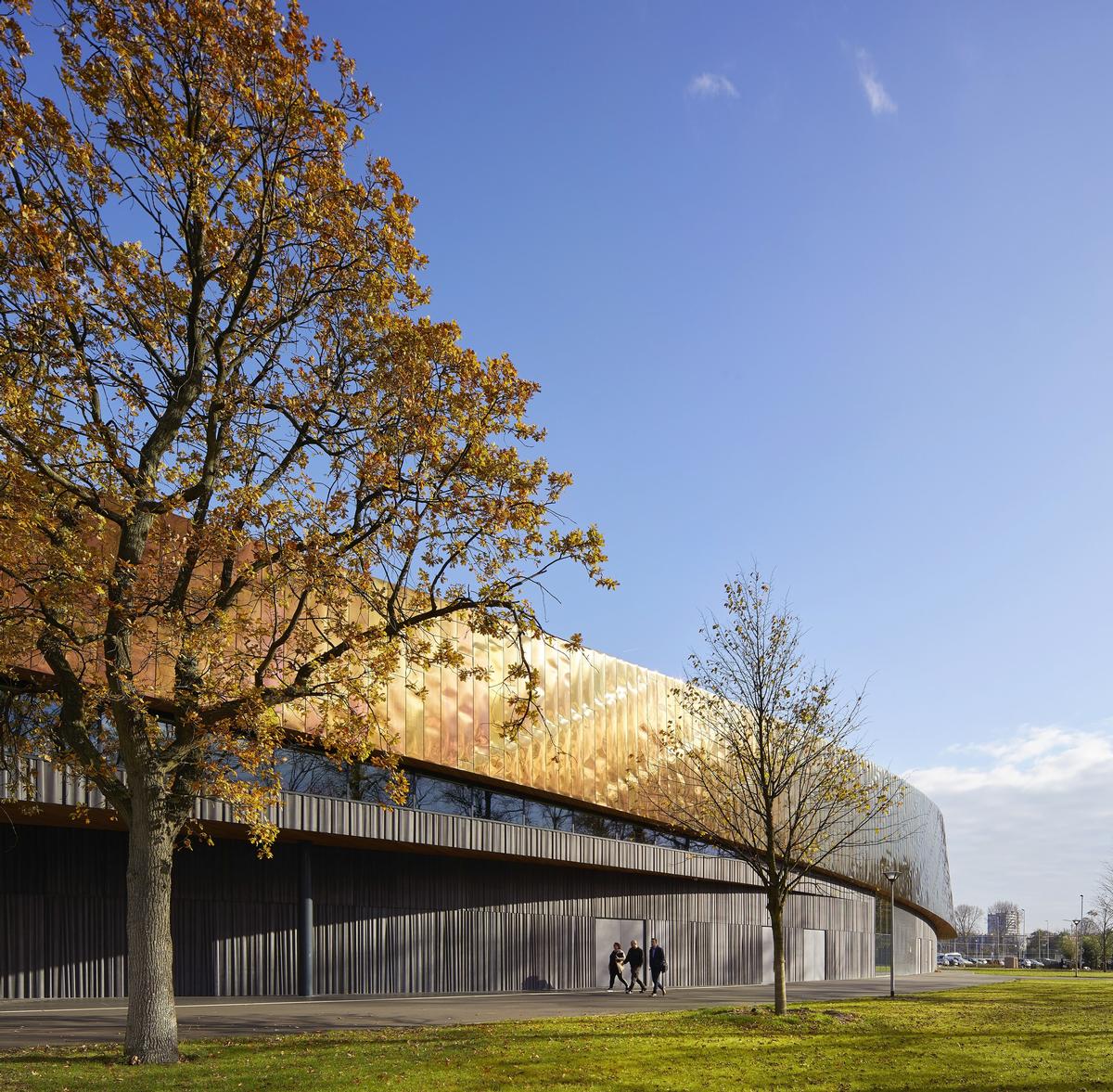
“We angled the façades in the vertical plane as well as the horizontal. It allows air in and out and provides sun shading to parts of the building, so it’s functional and not just decorative. It also has the effect of diminishing the size of the building in the park. Whenever you’re looking at it, the elevation is running away from you, so it never looks quite as big as it really is. It’s like the Tardis.”
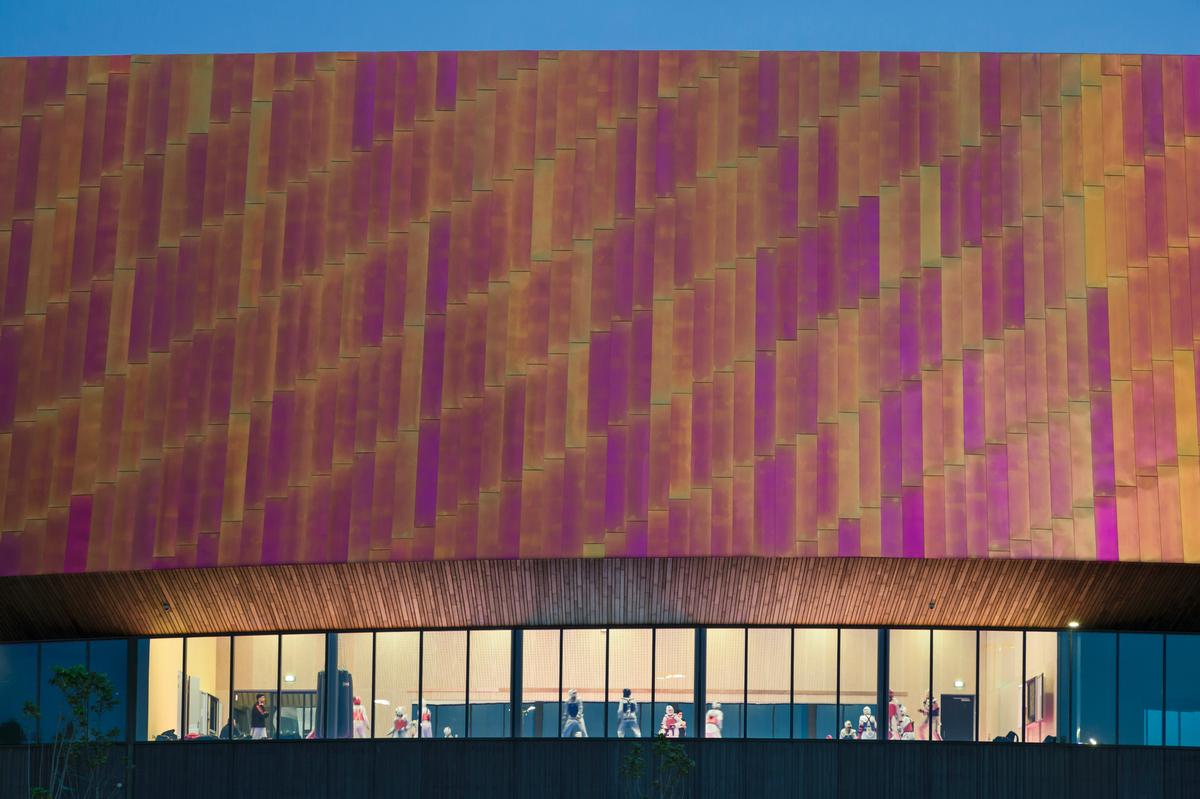
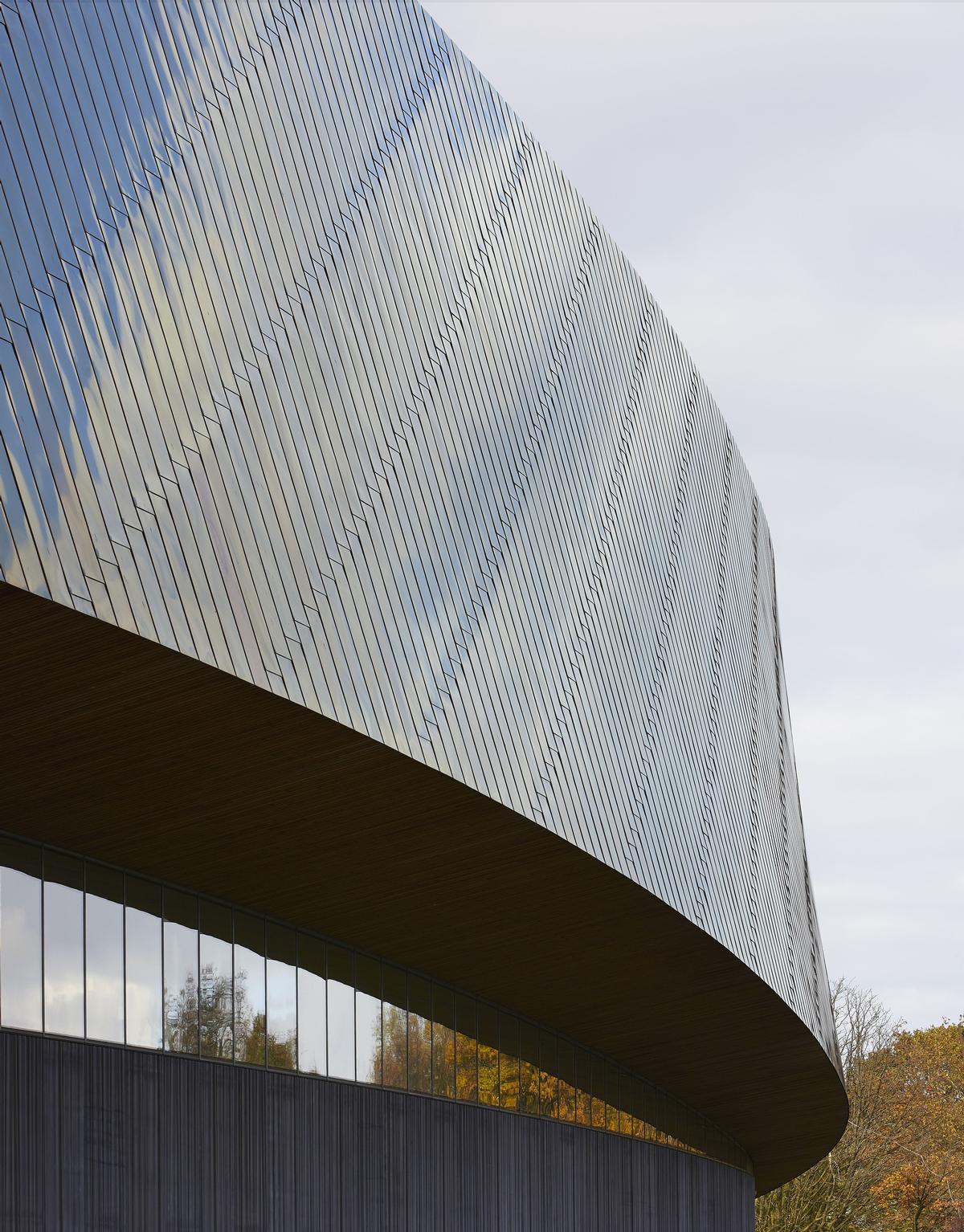
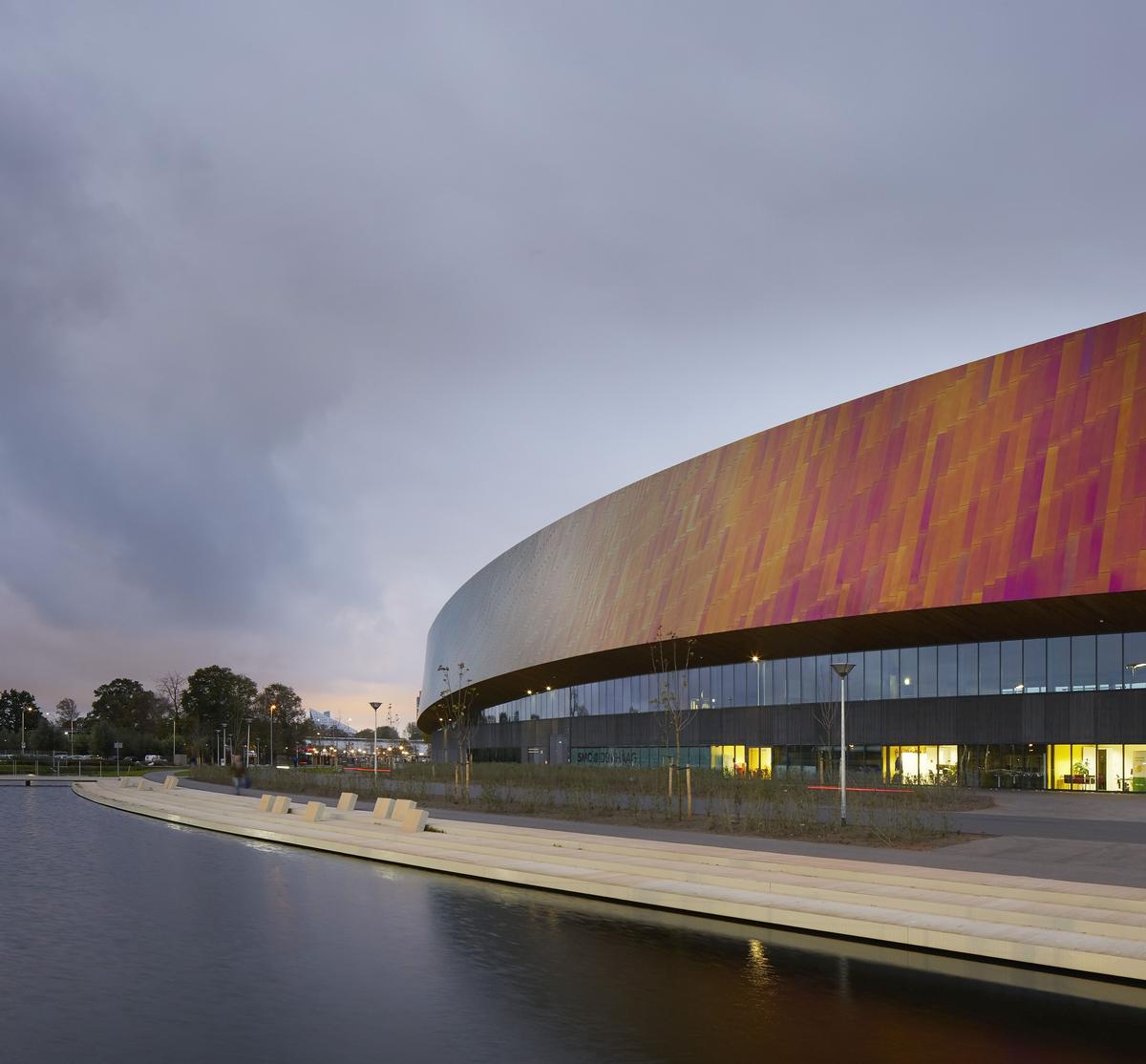
According to Davenport, the brightly polished stainless steel façade was selected to create a sense of materiality and dynamism.
“We were wowed by the material. As you walk around the building, the light constantly shifts, reflecting the sky and the trees. It changes as lighting conditions and cloud patterns alter throughout the day.
“I’ve heard a few nicknames for it already – the UFO and the Pebble – but we’ve been amazed by the positive response. Usually, buildings of this type get a split reaction and we’ve not had any bad press whatsoever. No one has come out and said they don’t think it’s the right building, and for me, that speaks volumes.
It was really important for us to get the right feel and image for this site,” concludes Davenport. “That was our biggest challenge.”
“The municipality of The Hague has the ambition to be climate neutral by 2040. This informed the client’s desire for a sustainable campus.
“The building is designed to be as compact as possible whilst providing the necessary space for the range of sport and education facilities. This, combined with a well-insulated shell, minimises energy loss. The 20,000sq m (215,200sq ft) roof is covered with over 15,000 (161,400sq ft) of heat-regulating green sedum, as well as photovoltaic solar panels to generate energy for the building, and solar collectors to produce hot water for the showers.
“The energy generated by the roof is supplemented by a groundwater heating and cooling system which utilises two wells excavated to different depths. In the summer when there is a demand for cooling, groundwater is pumped from the shallower ‘cold’ water well and fed through a heat exchanger to provide cooling for the building. Due to this energy transfer the water returns warmed and is fed back into the deeper ‘warm’ water well. In the winter the system is reversed to provide heating for the building.”

FaulknerBrowns-designed modular swimming complex given planning permission in Derby
Dramatic design unveiled for indoor Swindon ski centre inspired by railway heritage
FaulknerBrowns targets new standards for sustainability with Portsmouth sports complex
FaulknerBrowns reveal modular stacked design for Derby swimming complex
FaulknerBrowns to masterplan '21st century seaside destination' in Bangor
FEATURE: Sports – Sportcampus Zuiderpark
AI firm Midjourney enters wellness with spa, fitness and body scanning concept


Hot spring wellness community Ameyalli sells residences and breaks ground on resort and spa

OMA completes New Museum transformation with landmark expansion and Oberon restaurant
OMA has completed a major transformation of New York's New Museum, creating a larger cultural campus that combines expanded exhibition spaces with learning, performance, hospitality and public programming. The latest addition, Oberon, extends the visitor experience beyond the gallery, reflecting a growing trend for museums to become all-day destinations.
The New Museum in New York has entered a new chapter with the completion of a major
David Rockwell creates immersive magic destination, The Hand and The Eye
Montana Heritage Center by Cushing Terrell opens after US$107 million investment
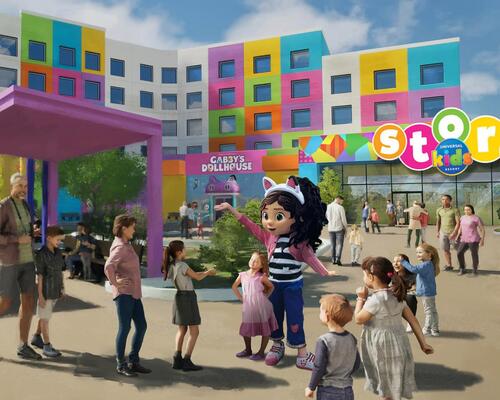
Universal launches new theme park model with Kids Resort
'Minor wellness hotels' recorded the strongest growth across top KPIs in 2025, finds RLA Global
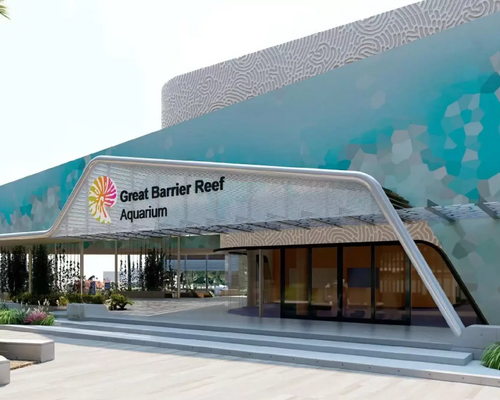
Great Barrier Reef attraction set for AU$180 million reinvention
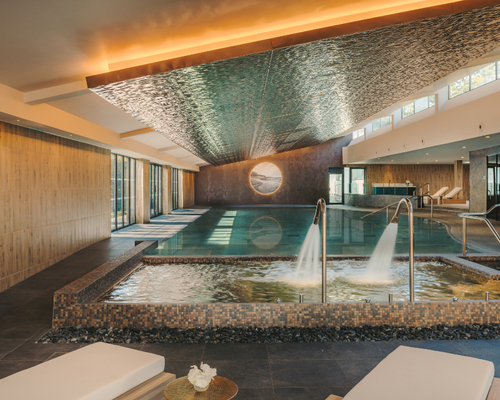
Fairmont Cheshire, The Mere, has architecture by Leach Rhodes Walker and interiors by Bergman Design House.
Marriott International partners with Fitwel for wellness solutions across its residential portfolio
Preidlhof Luxury DolceVita Resort to unveil new spa in February 2027
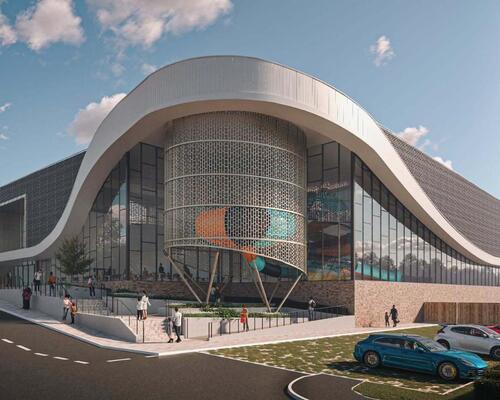
Places Leisure is working with Roberts Limbrick to build £60m wellness flagship in Basingstoke
Hoshino Resorts opens Kai Kusatsu as it expands the Kai onsen ryokan brand
Qiddiya and Populous share details of Saudi Arabia’s National Tennis Centre
Disney confirms US$30 billion investment programme as it highlights its economic impact
Until combines multiple disciplines at new Canary Wharf club
Sea Lanes opens following a partnership between The Eden Project and Canary Wharf Group
Bas Smets brings water and wilderness to Vitra
Expo 2030 Riyadh will create a permanent global destination
Luxury resort coming to Hunter Valley will have longevity spa
'Data chocolate', dreams made real and artworks shaped by visitors’ emotions: Refik Anadol’s AI art museum launches in Los Angeles
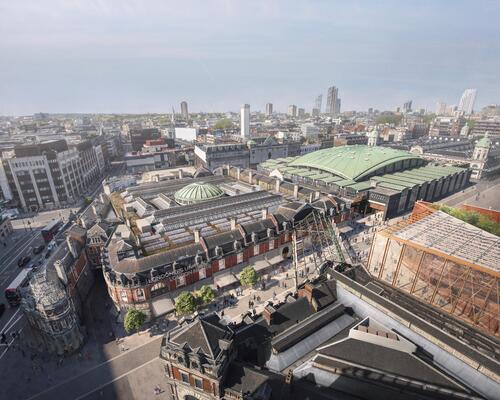
London Museum reveals 2026 opening date for new Smithfield home
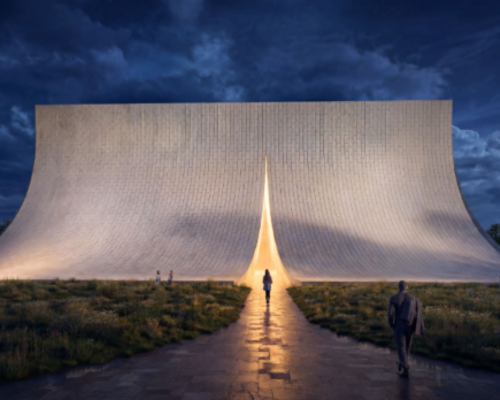
BIG unveils Eve Music Hall as Croatia venue nears completion
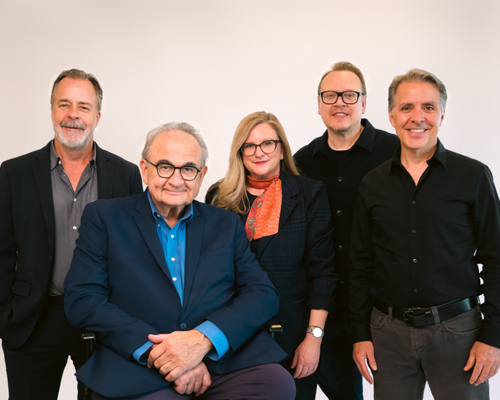
Bob Rogers hands BRC to long-serving leadership team

Palazzo di Varignana launches family wellbeing and longevity retreat in Emilia Romagna
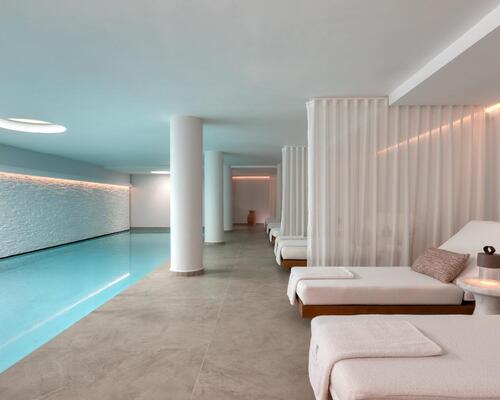
Anasa Wellness and Spa debuts at Patmos Aktis as it joins Marriott
Design-led Koru Health Club combines high-performance training with recovery

Wellness care hospital opens in Vilnius with innovative spa and hospitality concept
Universal and Puy du Fou projects point to rise of Oxford–Cambridge corridor
A proposed Puy du Fou development near Bicester and Universal Destinations and Experiences’ planned resort in Bedford are emerging as part of a wider transformation of the Oxford–Cambridge Growth Corridor into a major centre for UK leisure and tourism investment.
For years, the corridor has been associated primarily with science, technology, housing and university-led economic growth. However, the clustering of large-scale visitor attraction projects along the

All-inclusive eco-wellness development Auko to open near Vietnam’s Son Doong caves








Designed to restore neglected land and renew the identity of Iraq’s capital city, Baghdad Sustainable Forests promises a new way of living surrounded by nature. Gensler’s Ian Mulcahay tells us why he thinks the project could become a model for the repair and enhancement of urban centres