Tourism industry must lead and inspire, says Ken Robinson


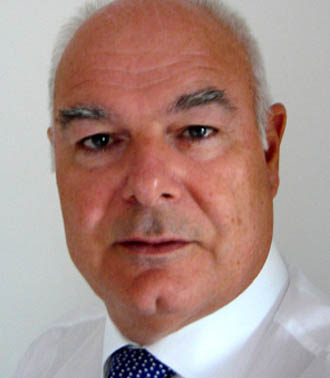
– Ken Robinson CBE
OPINION
TOURISM IN A POST-CORONAVIRUS WORLD
By Ken Robinson CBE, tourism expert.
Coronavirus is devastating for the tourism and leisure sectors globally.
For now, the focus is on business ‘discontinuity’, the impact of the pandemic on our employees and their families, whether and how companies will survive and when the viable resumption of activity will be possible.
In my view, we have every reason to be hopeful and confident for the future, because the inexorable growth of travel and tourism has shown that travel and tourism is aspirational – when people can travel they will.
Optimistic, braver and more farsighted individuals and organisations are already summoning up their bulldog spirit and looking to the future.
The media and politicians vie to predict how soon the lockdown will end and everyone is seeking to define our ‘exit strategy’.
But I sense that few appreciate how massively devastating the pandemic is likely to be, or how long it will be before recovery to post-pandemic levels is practical.
For us in the UK there is light at the end of the tunnel, but worldwide evidence shows lockdowns are effective in slowing infection rates, but they don’t lead to immunity beyond the minority who’ve been infected and recover. The lockdown shields the most vulnerable, but only as long as it lasts. The rules will be relaxed, a little and for a while, but have to be reintroduced if, as seems certain, infection rates climb again.
Time to rebuild
There is already a determination to rebuild, so what can be foreseen? Although international tourism will be decimated post-pandemic, there will be great economic and pressures to resume and for consumers who can afford to, there will be a strong pent-up demand for holidays at home and abroad.
But, the aspiration to travel has pre-requirements, the most relevant of which is that tourists only go to safe and healthy places. Until this can be assured – both en route and at the destination – tourism volumes will be minimal.
The developing worldWhile the pandemic is devastating communities and economic life in most developed countries and causing tragic loss to so many families, these impacts are as nothing compared to its likely effects on the populations and economies of countries in the developing world that in recent years have become some of the fastest-growing tourism destinations. Tourism revenues have become essential to the functioning and growth of their economies and social systems.
These destinations, with their densely populated cities and towns and sparsely populated rural areas, have very limited medical services – few doctors and resource-starved healthcare systems. Coronavirus, when it takes hold, is likely to kill an unimaginable number of people and remain infectious in the population for years.
Conditions for recovery
The key to the recovery of tourism will be immunity. If this is a reliable consequence of post-infection-recovery, and immunisation is available for all those who escape infection, I anticipate a requirement on individuals to prove their immunity before being allowed to travel – at least internationally.
Such proof will also be a requirement for everyone working in the travel and accommodation service chain – in other words at all stages of travel, and at all places and facilities visited.
This ‘proof’ could work like a visa, international driving license, or work permit. In the 1950s and 1960s immunisation had to be recorded in passports, and was required at many destinations. Fraudulent and forged certification will be a hazard, especially in less regulated economies.
Even once it’s officially permissible to travel, the most lucrative tourists – mature adults and seniors who have the most available time and can afford to travel – will be those at highest risk of infection and death and so will be slow to do so.
Limited ‘essential’ travel will be permitted, with social distancing and regulation, for an indeterminate period. However, freely-chosen leisure travel by the general public will be impeded for a very long time.
Airlines will be slow to resume frequent schedules, so there will be limited capacity. Levels of demand at resort-style destinations will be sparse and grow slowly, so businesses at formerly popular destinations will only be able to re-open when levels of demand reach their operational viability thresholds.
Domestic before internationalDomestic tourism will recover first, but slowly, with limitations and controls and at different rates for different types of activity. Conditions and rules may vary by location. The earliest resumption is likely where social distancing and family isolation is practical, such as self-catering accommodation.
Governments will more keenly appreciate the economic benefits and necessity of the tourism sector in supporting wellbeing and quality of life and will value and support the industry more.
Internationally, where adjacent countries have comparable rules and trust each other, limited land border travel will be possible.
Travel industry infrastructure
In the longer-term, assuming a state of healthy equilibrium can be assured, it will be necessary to repair and rebuild travel industry networks and contractual linkages.
For much of the industry, it will almost be like starting again and this will make communication and marketing, in a chaotically fragmented world, absolutely key.
Online dealings will have become more embedded, and physical transactions, materials, and content will be much less in use than in the past. However, tourism has always been a person to person business, and it will be in the future. Trusted, safe, close personal interaction is essential and will be greatly appreciated by people who have been isolated by the pandemic.
Plan to relaunchDuring this period of enforced closure, there is much the industry can do.
Tourism is an interconnected sector and although many businesses have evolved to be mutually competitive, links exist for communication and cooperation and there is great potential to make them more effective.
In the UK, we no longer have the structure of national and regional tourist boards and public-private partnerships between local authorities and industry. Prior to 2000 these two were contractually linked and organised around national policies and strategies. There’s no such functioning network now, just an underfunded VisitBritain and it's residual Visit England with loose communication links to the disparate plethora of so-called ‘Destination Management Organisations’.
We need a much more effective, mutually-cooperative network for recovery and to optimise the future economic, social and cultural benefits of tourism.
Given the weakness of the present arrangements between our national boards and industry, there’s surely the opportunity to speedily strengthen the links and create a trusted central hub for information, foresight, liaison, inspiration and in all ways position ourselves to be in the best possible condition to develop in the new world.
Until then, the biggest opportunities for tourist boards and destination organisations are around maintaining their networks of members and partners and preparing the most enjoyable, evocative, experiential materials possible for use online and via ‘push’ distribution.
Connecting with consumers
We need to keep our relationships and brands alive among audiences who have been starved of the joy and life-enhancing experiences that tourism brought to their lives.
We must also be inventive and use our assets and our networks of contacts with existing and potential customers to evolve new experiences with creative ideas such as quizzes, virtual treasure hunts, discovery series or compiling online photo books from contributions by visitors and tourists. The list of possibilities is endless.
Tourism businesses in collaborative partnerships should take a leadership role to inform and inspire this work – both as a service and to keep those relationships alive. Keeping up public awareness of destinations can also help strengthen and build national, regional and local pride and morale – not least within hard-hit tourism and travel businesses and among the professionals who work within them.
Future marketing will be very different, although how is currently unclear. Consumers are likely to have a different, more cautious approach to belief in the accuracy of information, the trustworthiness of travel providers, the safety of their payments, and provisions for reimbursement and compensation.
In summary, we need to regularly remind ourselves that travel and tourism is aspirational and that when people can travel they will. They need the available time, money and permission to travel, but even then most will only choose safe and healthy places.
There will be recovery – when, and at what pace, nobody knows. Meanwhile, we need to be realistic and accept unchangeable realities.
The whole world is in the same situation – our challenge is to be ready when the new opportunities emerge, to be ahead of the game, and be an inspiration to others.
We must all work for a future where the economic, social and cultural benefits of tourism are available to all.
Ken Robinson CBE 14 April [email protected]
Ken Robinson is an Adviser and Consultant on tourism; strategic planning, development and optimising the economic and social benefits of tourism. His specialism is the analysis, development planning, management and marketing of visitor attractions and related tourism facilities
Tourism Alliance Tourism Society Ken Robinson CBE Kurt Jansen COVID-19 recovery leadershipAttractions heads urged to review protocols following Manchester terrorist attack
TEA bringing SATE event to UK in 2017
10th Annual National Conference of Visitor Attractions is today
Simmonds to chair Tourism Alliance
Tourism Alliance unveils growth strategy
Government publishes new tourism strategy
Industry welcomes PM's support for tourism
FEATURE: Editor's letter – Advance ticketing
FEATURE: Attractions – Dan Snow
BIG unveils Eve Music Hall as Croatia venue nears completion
Bob Rogers hands BRC to long-serving leadership team

Wellness care hospital opens in Vilnius with innovative spa and hospitality concept

Universal and Puy du Fou projects point to rise of Oxford–Cambridge corridor
A proposed Puy du Fou development near Bicester and Universal Destinations and Experiences’ planned resort in Bedford are emerging as part of a wider transformation of the Oxford–Cambridge Growth Corridor into a major centre for UK leisure and tourism investment.
For years, the corridor has been associated primarily with science, technology, housing and university-led economic growth. However, the clustering of large-scale visitor attraction projects along the

All-inclusive eco-wellness development Auko to open near Vietnam’s Son Doong caves
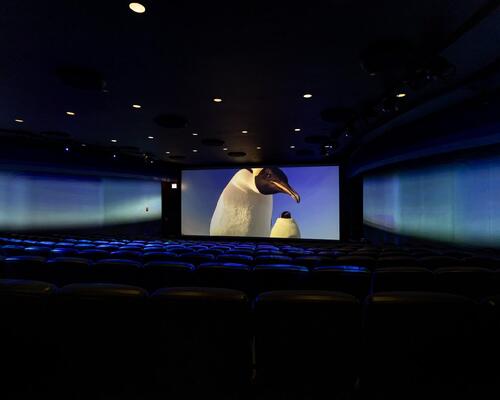
Shedd Aquarium upgrades its visitor experience with new Immersion Theater
Shedd Aquarium has opened the Immersion Theater developed in partnership with SimEx-Iwerks, as part of a wider strategy to enhance the guest experience and create additional revenue opportunities.
The attraction has transformed the aquarium’s Phelps Auditorium into a multi-sensory venue combining panoramic projection, environmental effects and interactive technology.
A new pre-show area allows visitors to engage with augmented reality marine animals before entering the
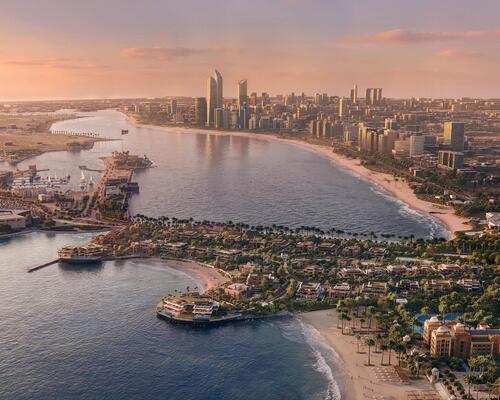
Mandarin Oriental announces standalone Mansions-branded residences for Abu Dhabi
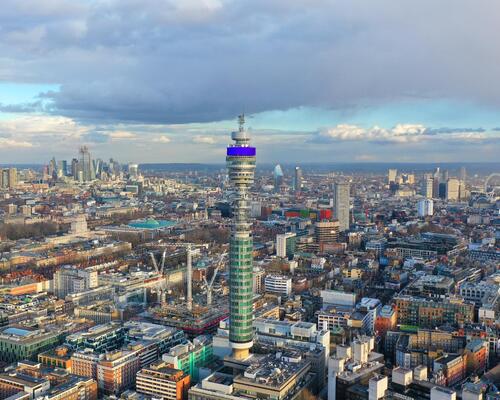
MCR is planning a luxury hotel for London's BT Tower
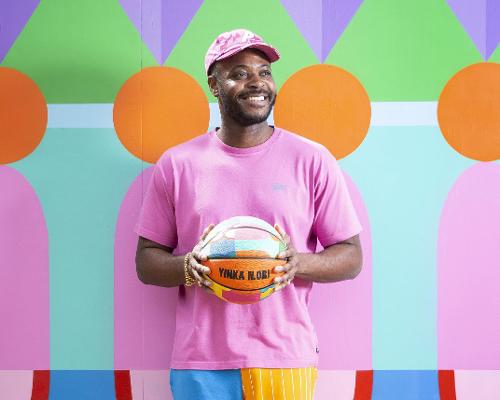
Joy as a radical act: Yinka Ilori launches solo exhibition celebrating the rebellious power of spreading happiness

Work gets underway on Madrid's €800 million leisure complex
Work is underway in Madrid on one of Europe’s most significant multi-functional complexes, combining sport, entertainment, culture and education.
The €800 million initiative to regenerate the former Olympic Aquatic Centre in the north-east of the city, next to the Riyadh Air Metropolitano stadium, is being led by Barsento – a joint venture between Live Nation Entertainment, Oak View Group and Atlético de Madrid. The project will
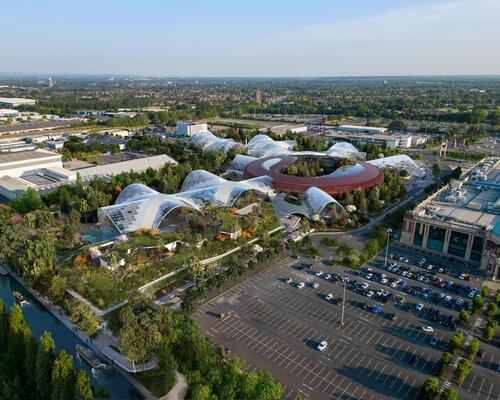
Therme Manchester reveals 90:90 strategy – 90 per cent of the UK population within a 90-minute drive of a Therme

Four Seasons’ Naples Beach Club opens 2,800sq m Sanctuary spa inspired by indigenous Calusa people
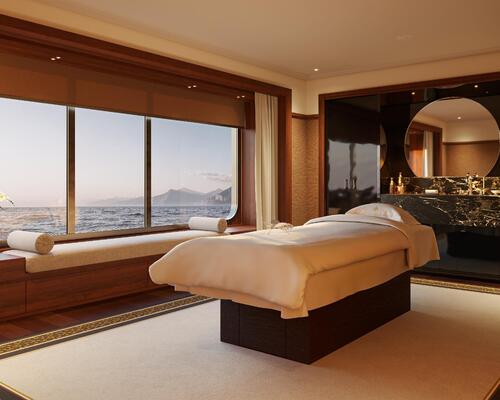
Orient Express Corinthian to host Ocean Rebirth wellness retreat in collaboration with Guerlain
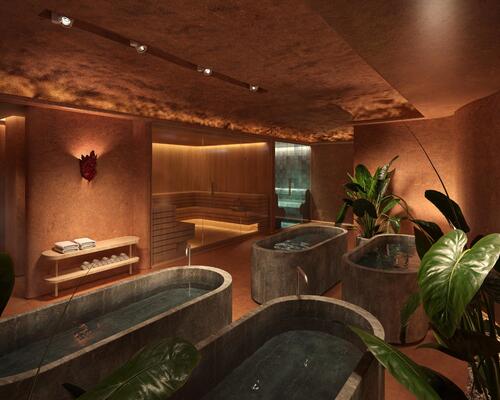
Famed London nightclub, Tramp, launches Tramp Health
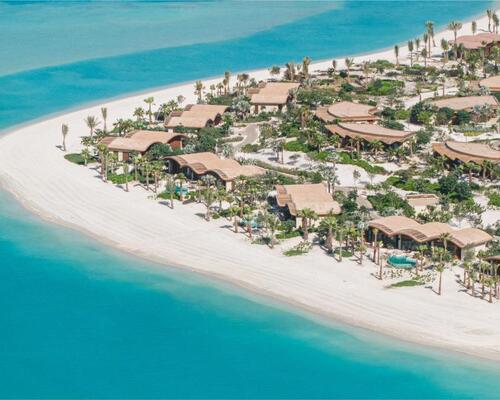
First look: Miraval opens on the Red Sea in Saudi Arabia

Hainan Science Museum by Ma Yansong, opens in China
A new science museum has opened to the public in Haikou after attracting more than 350,000 visitors during a four-month soft opening period.
Designed by Ma Yansong and his practice MAD Architects, the Hainan Science Museum is located on the edge of Wuyuan River National Wetland Park and has already recorded peak attendance of more than 5,800 visitors in a single day.
Commissioned by
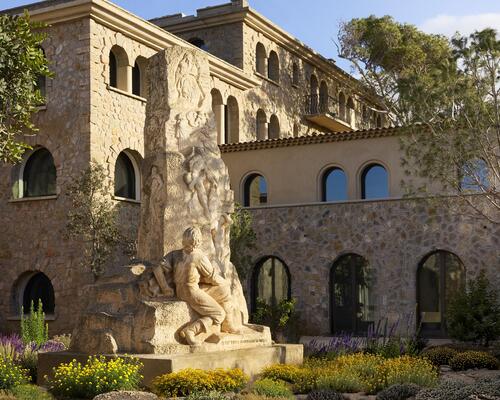
Zannier Île De Bendor launches with design by Hardel Le Bihan Architectes
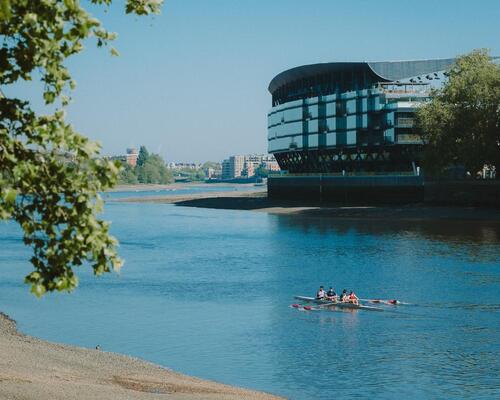
Sæl Spa readies for launch in London: “a modern British sanctuary”
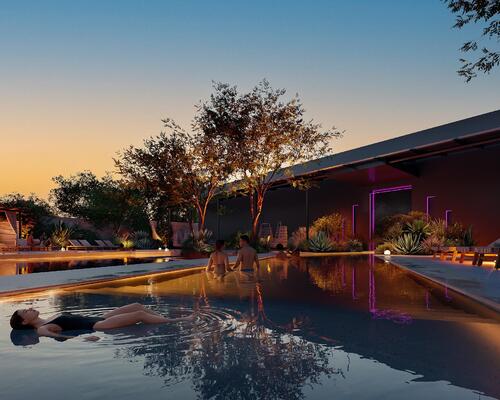
Immersive art bathhouse Submersive announces debut location in Austin

Construction begins on regenerative wellness destination The Shenandoah Nature Resort

Royal Caribbean reveals record-breaking cruise ship
V&A East opens in London
David Geffen galleries open at LACMA

New venue The Lands by Capella includes a longevity centre to complement sister hotel Capella Sydney
World of Frozen launches at Disneyland Paris
Pical Resort by Valamar reveals first Croatian spa under the ESPA brand

Mandarin Oriental creates end-to-end Egyptian journey with two new hotels and first-ever luxury river cruise

Designers Mendil + Meyer launch new division called Lām Concepts for strategic wellness projects
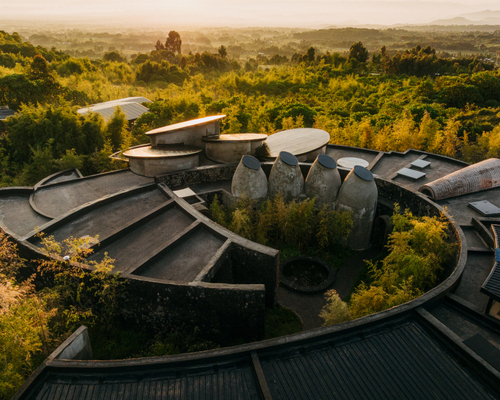
Wilderness Bisate in Rwanda reveals brand’s second Sanctuary spa
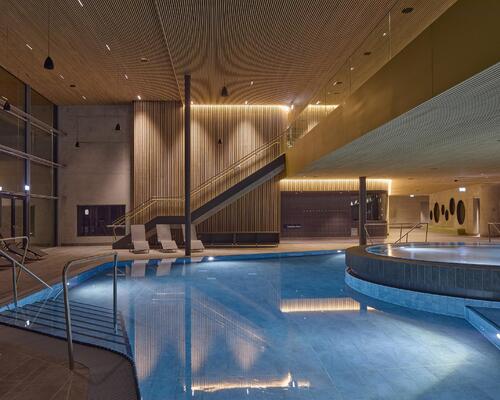
4a Architekten shares details of wellness extension at Salinarium Bad Dürkheim Thermal Spa






Designed to restore neglected land and renew the identity of Iraq’s capital city, Baghdad Sustainable Forests promises a new way of living surrounded by nature. Gensler’s Ian Mulcahay tells us why he thinks the project could become a model for the repair and enhancement of urban centres