Culture
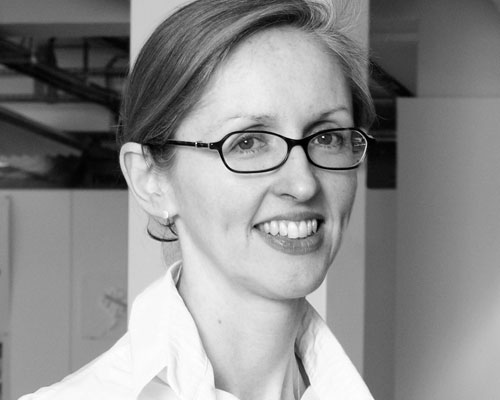
Róisín Heneghan
In 2003, a tiny Irish architectural practice beat off competition to build one of the world’s biggest museums. Following the long-awaited opening of the Grand Egyptian Museum, Magali Robathan speaks to its architect about the highly anticipated project



More than two decades ago, Róisín Heneghan got a call that would change her life. When she was told that Heneghan Peng Architects had won the largest architectural competition in history, she initially thought someone was playing a prank.
Once she confirmed that the small three-person architectural practice she ran with her architect husband Shi Fu Peng really had won the competition to design the Grand Egyptian Museum, the celebrations began.
Now, after 22 years and a host of setbacks that have included the 2011 Arab Spring, the COVID-19 pandemic, and a series of financial crises and regional wars, the $1bn Grand Egyptian Museum is finally complete.
A public holiday was declared in honour of its opening on 1 November 2025, and officials and royals from around the world flew in to attend a lavish opening ceremony.
Designed by Heneghan Peng with engineering by Arup and Buro Happold, the museum is set across a 500,000sq m site, and houses more than 100,000 pharaonic antiquities. It covers 5,000 years of Egyptian history, from pre-dynastic times to the Greco-Roman era.
We were just two people when we entered this competition. It’s been a whirlwind
The huge museum features two galleries dedicated to King Tutankhamun, with more than 5,000 objects from the young king’s tomb together for the first time since its discovery in 1922. Other highlights include a colossal 3,200-year-old statue of Ramesses II, the 16m-tall Hanging Obelisk of Ramesses II and the 4,600-year-old Khufu funerary boat.
A grand, six storey staircase leads visitors to the various galleries, with the permanent exhibitions at the top of the building. The building has been designed to provide a dramatic, framed view of the Giza pyramids from the large windows at the top of the staircase.
The museum was designed to be aligned with the Giza pyramids through a visual axis, fan-shaped walls, and triangular elements that create a dialogue between the ancient and modern structures.
Here Róisín Heneghan talks us through the design, and what the project has meant to her:
What does the Grand Egyptian Museum project mean to you?
This will always be a really special project to us. We were just two people when we entered this competition, Shih-Fu and I. To go from being a three-person operation to winning the largest architectural competition for a built project in the world was a whirlwind – it elevated us to a global level, so it will always be such an important part of our history as a firm. It was also a unique project, a museum of this scale in close proximity to such a significant historic site. It was a once-in-a-lifetime project and we feel incredibly lucky to have helped bring it to life.
How would you sum up the design?
Our design works in dialogue with the scale and mathematical precision of the pyramids, creating a connection that aims to complement rather than compete with their stature. It’s incredibly special for so many artefacts to be shown together for the first time, and even more special that they’re being shown in the exact region that they were created in centuries ago. We wanted to strengthen that connection to place, so we developed a design that works in direct relation to the positioning of the pyramids to create an experience that you could never find elsewhere.
Do you have a personal favourite part of the museum?
The standout feature of the design, for me, is the view of the pyramids from the top of the staircase.
It’s only once visitors have ascended the staircase that they’re able to see the view, so the idea is that they get an overview of the history of Pharaonic Egypt as they climb the stairs, which culminates in the incredible view of the pyramids.
The standout feature of the design is the view of the pyramids from the top of the staircase
This provides a moment for reflection and contemplation, giving visitors space to process the incredible breadth of ancient Egypt’s history, and also making the pyramids feel as though they’re actually a part of the museum. Visitors can then explore the various galleries having had this historical overview.
The museum took a very long time to be completed. Was this a frustrating experience?
The project was passed over to local teams after we delivered the design (which is standard practice in the region), so our involvement was mainly in the initial design phase rather than over the entire life cycle of the project. We’re thrilled that it’s finally complete.
Would you have done anything differently if you were to design the museum now?
We’re proud of the design we delivered. Although some of that was changed during the later phases of the project as other teams became involved, our concept and vision centered around the connection to place has remained intact.
Why was that particular site chosen, and why was it so important to consider the location and orientation of the museum?
The site was a part of the original competition brief, and its proximity to the pyramids was entirely responsible for the direction of our design. Aside from the more conceptual connection to place, the actual geometry of the space was decided by the positioning of the pyramids as well. The walls themselves radiate outward to meet each of the three pyramids, and the roof also slopes upwards at an angle to meet the highest point of the pyramids.
What can you share about the use of light in the museum?
Most museums need a very controlled lighting setup due to the fragility of the historical artefacts, but the fact that many pieces in this collection are stone opened up the possibility to introduce natural light in a really compelling way. It was yet another thing that made the project feel so unique and exciting to work on.
What were the biggest challenges of this project?
The scale of the museum was one of the most exciting parts of the project, but it was also a challenge to think about how to design for such a massive collection, while allowing visitors the space to process the incredible breadth of Egyptian history. This ties back to our thought process around how visitors should move through the museum, and the idea of using the view at the top of the staircase as a place for reflection.
It’s the largest museum dedicated to a single civilisation, so it was an honour to be the ones bringing that to life
And what excited you the most about it?
Again, the fact that this museum was just so one-of-a-kind – it’s the largest museum dedicated to a single civilization, so it was an honour to be the ones bringing that to life.
What are you working on now?
We are working on the Kaiser Wilhelm Memorial Church in Berlin, Germany. It’s a hugely significant building that stands as a symbol of Berlin’s complex history and a site of reconciliation.
We’re also working on a children’s museum in Waterford, Ireland, and have just completed work at Storm King Art Center in upstate New York – our first American project.
Architect: Heneghan Peng Architects / Raafat Miller Consulting (Cairo)
Structural / Civil / Traffic: Arup / ACE (Cairo)
Building Services: Buro Happold / Shaker Engineering (Cairo)
Landscape: West 8 / Sites International Egypt (Cairo)
Facade Engineering: Arup
Specialist Lighting: Bartenbach Lichlabor
Exhibition masterplanning: Metaphor
Museology: Cultural Innovations