Technology
Revolutionary thinking
As Zaha Hadid Architects alumnus Tim Fu reveals the ‘world’s first fully AI-driven architecture project,’ he shares his thoughts on the creative potential of machine intelligence



Architect Tim Fu has revealed plans for a collection of wellness-focused luxury villas on the shore of Slovenia’s Lake Bled, which he claims is the world’s first architecture project to use AI at all stages of the design process.
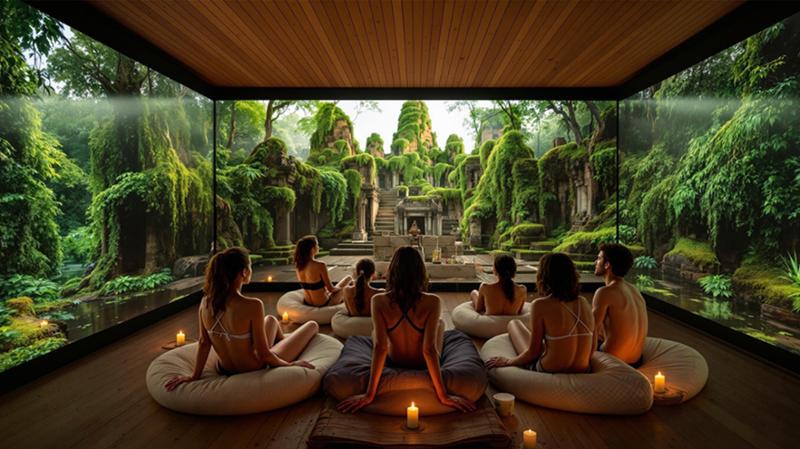
Commissioned by an unnamed Slovenian philanthropist, the 22,000sq m development consists of six new villas, as well as the restoration of Vila Epos, a protected cultural monument designed in 1909 by Slovenian modernist architect Jože Plečnik. The brief was to design the development according to biophilic principles, harnessing the power of nature to promote wellbeing. The villas sit around a central communal park, and feature glass-walled atriums designed to flood the space with natural light and frame the views of the Julian Alps and Lake Bled.
Using AI to analyse traditional Slovenian building typologies revealed recurring architectural elements, such as the timber rizalit – vertical partial enclosures extending from the main facade – which have been reinterpreted through the lens of biophilic design.
Here Tim Fu talks CLADmag through the process of using AI technology for this project, as well as his wider thoughts on the future of architecture and machine intelligence.
How would you sum up your philosophy when it comes to architecture?
I see architecture as the deliberate marriage between art and technology. One speaking to the soul and the other to the system. True design emerges when both are in harmony.
Technology is ever-evolving and from its embrace we can propose new methods of practice, unlock previously inaccessible forms, and expand the architect’s role beyond traditional boundaries. Tools such as AI are not just instruments of efficiency – they’re catalysts for imagination. When used thoughtfully, they allow us to ask better questions, to explore deeper layers of meaning and to design with greater agility and intention.
At its core, architecture remains a human act, using a spatial language that’s shaped by empathy, curiosity and care. No matter how advanced our tools become, the pursuit of meaningful experience must always lead the way at all times.
What did you learn from your time working at Zaha Hadid Architects?
During my time with the computational research team at Zaha Hadid Architects, I had the opportunity to dive into the process of turning complex geometries into something tangible – real buildings. That experience taught me a vital lesson and one that I carry with me in my practice today: technological innovation, particularly in architecture, must always be rooted in the practical realities of materiality and construction. This is how we approach generative AI technologies in architecture: every output is tested against the realities of materiality, engineering and constructibility – ensuring it can be realised in built form.
What’s the aim of Studio Tim Fu?
Studio Tim Fu was founded upon recognising the immense creative potential of generative AI. While the architectural field has been hesitant when it comes to embracing AI, our commitment stems from its ability to explore, refine and innovate design in ways never before possible. Early challenges included developing workflows that allow for precise control over AI outputs, while embedding the values and vision of human architects. By navigating these challenges, we’ve established a methodology where AI complements and enhances human creativity, rather than replacing it.
Unlike practices that limit AI to conceptual phases, we integrate AI across the entire design workflow – from rapid exploration and development to refinement and optimisation. Traditional architectural considerations such as programming, context, and materiality remain central to our work. However, AI accelerates and enhances these processes, enabling iterative and exploratory workflows that improve outcomes across all stages.
When and why did you decide to focus on researching how AI can be applied to architecture?
I’ve been closely following the development of AI for some time, but it wasn’t until the rise of diffusion AI models in 2022 that I truly recognised its creative potential for my work.
Witnessing machines not just manipulate data, but generate entirely new visuals and ideas, was a defining moment for me. It became clear that AI had evolved beyond a mere tool of automation – it was now a powerful force of disruption within the creative industry. From that moment, I dedicated myself to researching how AI can be applied to architecture.
What excites you most about the use of AI in architecture?
Its potential to expand the creative process rather than constrain it. It’s not about automating design – it’s about augmenting intuition. AI opens up entirely new ways of thinking spatially, allowing us to explore complex geometries, generate rapid iterations, and respond to context with far more nuance and depth.
It also challenges the role of the architect. We become curators of possibility, editors of a vast design space and that allows for a kind of collaborative creativity between human and machine, where ideas evolve in real-time and design becomes more fluid, adaptive, and imaginative. Ultimately, it’s a tool that helps us design not just faster, but smarter and to access higher levels of creativity.
What was the brief with the Lake Bled Estate project? Can you explain how you used AI as part of the design process?
This project presented two exciting and meaningful challenges, influenced by the Lake Bled location. First, we were tasked with bringing the client’s vision to life – to create a new benchmark for elevated luxury and innovative design in Slovenia. At the same time, it was vital that the legacy of Jože Plečnik was respected and honoured, carefully navigating the strict heritage regulations that governed the materials and preservation of the rizalit roof structure set by the conservation agency.
By training our AI models on databases of local heritage architecture and contemporary design language, we synthesised traditional and modern influences into new combinatorial solutions. AI enriched decision-making by proposing a vast array of ideas and opportunities, shifting our workflow from prescriptive to exploratory. This led to more diverse and nuanced design outcomes than traditional methods could achieve.
Instead of simply replicating traditional Slovenian architecture, we focused on reimagining its essential design characteristics, blending Slovenia’s reverence for tradition and deep-rooted heritage with innovation, technology and progress.
How did you combine the use of AI and human creativity with this project?
Studio Tim Fu was built from the ground up as an AI-first firm with the goal of pioneering the use of AI in the AEC industry. We’ve developed a range of methodologies that blend human creativity with machine intelligence. One example is our diffusion visualisation workflow, where we can plan architectural programming while AI generates design options in real time. We’ve also integrated optimisation algorithms that enable machine intelligence to maximise key parameters, such as daylighting and room efficiency. By approaching architectural challenges with AI, we immediately see a boost in our own creative thinking.
How can AI enhance human creativity in architecture? What are the main advantages of using AI as part of the design process?
In the paradigm of AI-aided design, the act of curation is key. We architects and designers are needed to uphold our human values – we dictate the direction of AI exploration, we curate the plethora of creative results and we refine in the direction necessary to address technical requirements within any scenario.
While AI can provide a high quantity of creative inputs, humans should always decide which values to pursue. This decision is based on our collective understanding of culture, society and values that we want to proliferate into our built environment.
Are there dangers of relying too heavily on the use of AI in architecture?
Absolutely. I believe there’s a real danger in the irresponsible use of AI – it can lead to a kind of creative atrophy. Like any tool, there’s a passive way to use it and an intentional way.
Take the camera, for example. Anyone can point and shoot and get a photograph, but it takes an artist to transform that same tool into a medium of expression. Photography becomes art when guided by vision, skill and passion.
AI is no different. If we rely on it too heavily, we risk losing our own critical thinking abilities – the sensitivity and discernment that define good architecture. As architects, it’s our responsibility to uphold those values, to use AI not as a crutch, but as a catalyst. It should challenge us, not replace us.
What are the most exciting advances in AI right now with regards to architecture?
One of the most exciting advances in AI for architecture is the shift toward generative design automation and AI-augmented construction. Systems such as Diffusion Models and LLM-powered agents can rapidly iterate designs based on high-level constraints – optimising for cost, sustainability and regulations, for example, with minimal human input. This could eventually extend into autonomous late-stage design, where AI handles detailing, permitting, and even construction documentation by parsing building codes and generating compliant solutions.
On the construction side, AI-driven robotics (such as autonomous 3D printing and bricklaying robots) are merging with real-time BIM integration, allowing for seamless translation from digital models to physical builds. Swarm robotics and reinforcement learning are enabling adaptive, on-site fabrication, reducing waste and labour dependency. Looking ahead, AGI could act as a ‘master architect,’ managing entire projects – from concept to post-occupancy optimisation – by interfacing with generative design, robotic builders, and smart building systems.
What are your goals over the next five years?
Over the next five years, my goal is to drive the adoption of AI in architecture, bridging the gap between visionary design and practical implementation. I want to leverage generative AI to enhance creativity and efficiency in the design process while integrating robotics and automation to revolutionise construction. By leading this transformation, I hope to position the industry at the forefront of innovation – where human expertise and AI collaboration unlock smarter, more sustainable, and adaptable built environments for the future.
What do you see as the future for architecture and how do you see the role of AI developing?
AI has proven to be a transformative force. The industrial revolution has freed us from physical labour, AI is now beginning to free us from mental labour. In architecture, this shift compels us to reconsider our role – not as mere producers of outputs, but as curators of meaning, culture and experience.
As AI takes on more of the technical and generative work, our value will lie in how we guide it, shaping outcomes that are aligned with human intent and need and also with spatial empathy.
The future of architecture is not about resisting AI, but working with it. It’s our responsibility to ensure what we build continues to reflect the richness of human history, emotion, and imagination in an age increasingly shaped by machines.

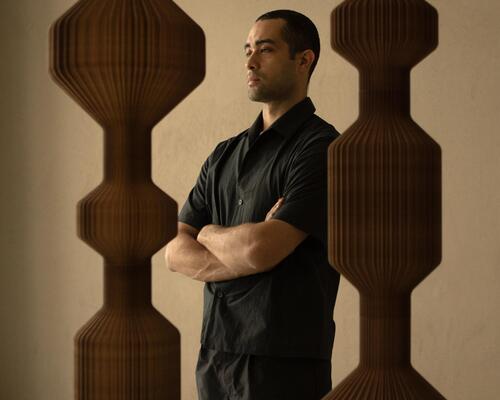
Fu worked for BIG and ZHA before launching his own practice in 2023










Designed to restore neglected land and renew the identity of Iraq’s capital city, Baghdad Sustainable Forests promises a new way of living surrounded by nature. Gensler’s Ian Mulcahay tells us why he thinks the project could become a model for the repair and enhancement of urban centres