Culture
The art of hospitality
Tasked with creating a modern art museum that offers a warm welcome for those who may never have visited an art gallery before, queen of colour India Mahdavi drew on her experience designing hotels and restaurants



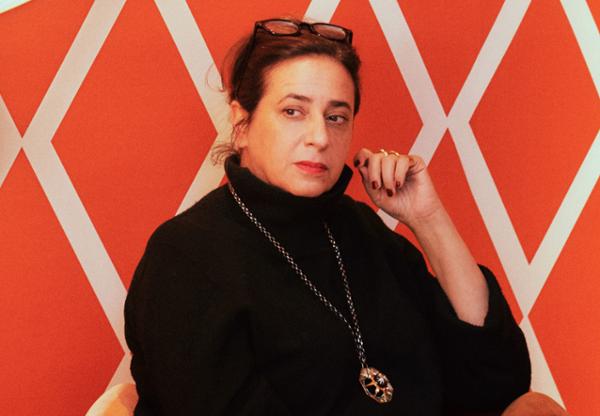
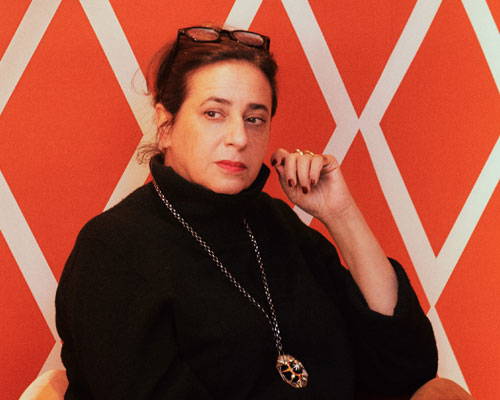
"PoMo is the first time I’ve been invited to design a museum,” says India Mahdavi. “It was a chance to widen the spectrum of my signature style of using colour and wonder.”
Often described as ‘the reigning queen of colour’ for her bright, joyful designs, Mahdavi has a portfolio of work focused mainly on hotels, restaurants and residential projects. High profile projects include The Gallery at Sketch, London; Monte Carlo Beach in Monaco; L’Apogée Courchevel in France; and the CondesaDF hotel in Mexico City.
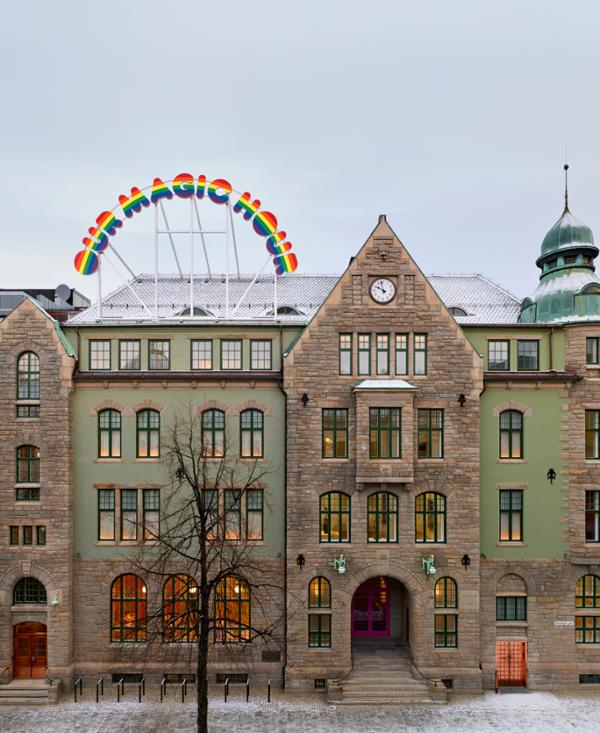
Now she has brought her colourful style to a private art museum in Trondheim, Norway. PoMo – short for Post Office Modern – opened in February 2025. The 4,000sq metre museum is set over five floors, with three art galleries, a public events space, a library, a reading room, a private lounge and a gift shop.
PoMo is a result of a vision by passionate art lovers Monica and Ole Robert Reitan, owners of the Norwegian holding company Reitan, who funded the project. Aware of the fact that art galleries can feel intimidating, the Reitans wanted to create a vibrant, inclusive space that would feel welcoming to everyone, whether they were an art aficionado or had never been to a gallery before.
“Going into a museum can be a scary thing,” Ole Robert told The Art Newspaper prior to the opening of PoMo. “We wanted to tear down some of the walls between the art world and people.”
To bring their vision to life, Monica and Ole Robert Reitan hired Mahdavi and Norwegian architect Erik Langdalen to transform Trondheim’s former Art Nouveau post office – a Grade I listed building originally designed by Norwegian architect Karl Norum.
The project interiors – as with all of Mahdavi’s work – has a playful, fun quality. Her aim, she has often said, is to put a smile on the faces of the people that visit her spaces. “I want people to feel happy – happy and joyful,” she tells CLADmag. “Life has become so difficult, and most of my spaces are linked to some kind of entertainment, so I think why not just go the whole way?
“I’m not scared of going strong, adding and adding even more and you think you have enough of it – no – and I just put more. I am not scared of colours and patterns and I’m not scared of space.
“I wanted this museum to feel inviting and inclusive,” she adds. “It’s about reconnecting the local community with the city centre and with their own history, while simultaneously offering a fresh experience that welcomes the world.”
The visitor journey
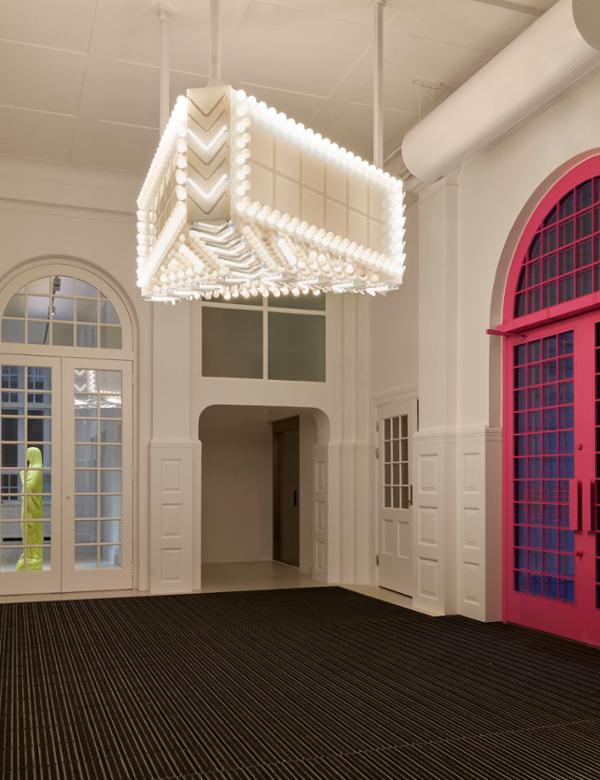
Visitors to PoMo are welcomed by a fuchsia metal and glass front door, which sits next to a copper-clad wheelchair accessible entrance. Inside, the contemporary and modern art galleries – which feature works from the Reitans’ collection – are set on the first, second and third floors. The third floor also hosts the reading room, the fourth floor features a private lounge and the basement is used to deliver a changing programme of events.
With this, her first museum project, Mahdavi drew on her experience designing interiors for restaurants and hotels.
“The relationship of the spaces in the building were orchestrated through the prism of hospitality – different from a restaurant, different from a hotel – yet complementing both the experiences of sharing and intimacy, creating a sense of permeability and a place where visitors can feel welcome,” Mahdavi says.
Her starting point, she adds, was the surrounding city. “My inspiration was drawn from Trondheim’s local culture and heritage, from its colour palette to its craft traditions.”
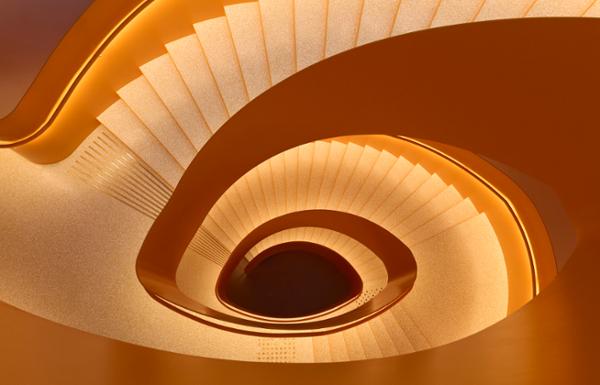
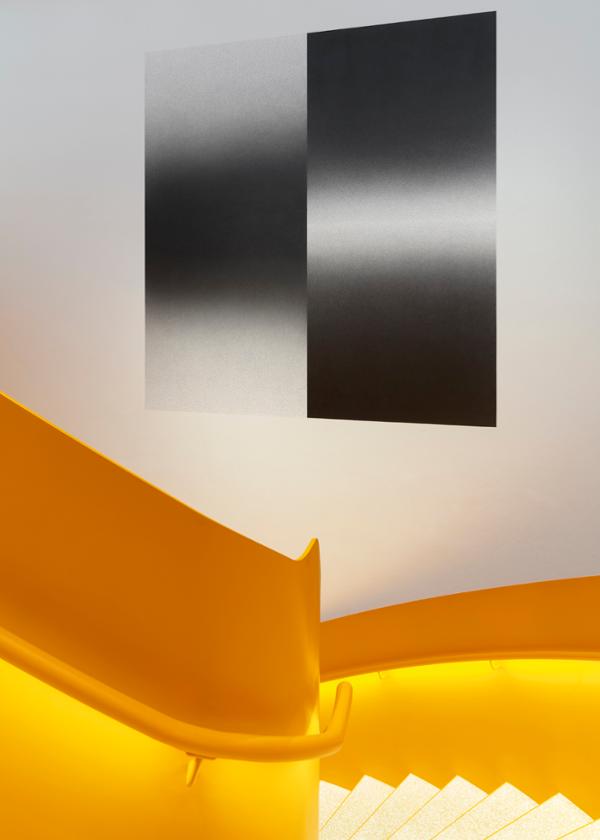
Often an afterthought, Mahdavi was determined to ensure that the interstitial spaces were as important as the exhibition spaces. The sweeping neon-lit mandarin spiral staircase – inspired by the colour of the nearby warehouses – adds drama, while the ash wood gift shop is painted pink in reference to Norwegian salmon.
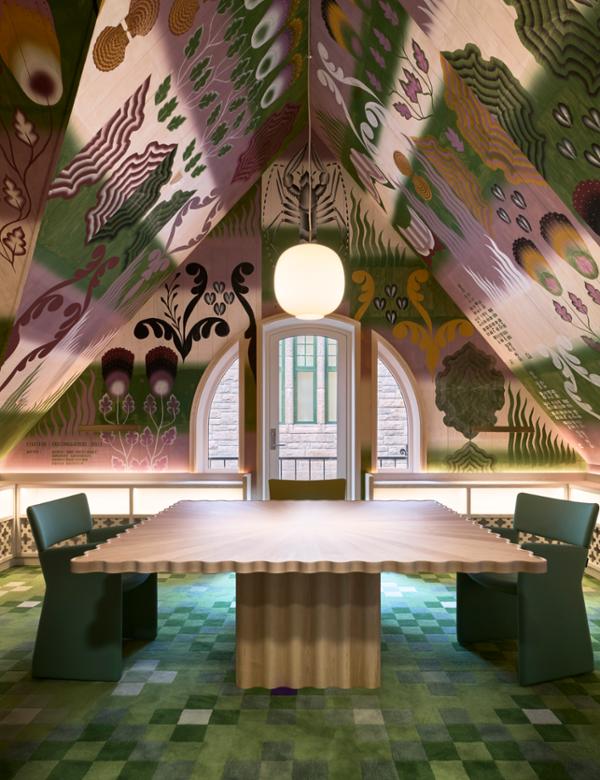
The reading room on the third floor has been designed to feel more like a lounge than a formal museum space, with squishy seating designed by Mahdavi, tables made by local artisans and a pixellated green carpeted floor. Inspired by traditional Norwegian folk art, this quirky space features nature-themed motifs painted across the walls and ceilings by Dutch artist duo FreelingWaters.
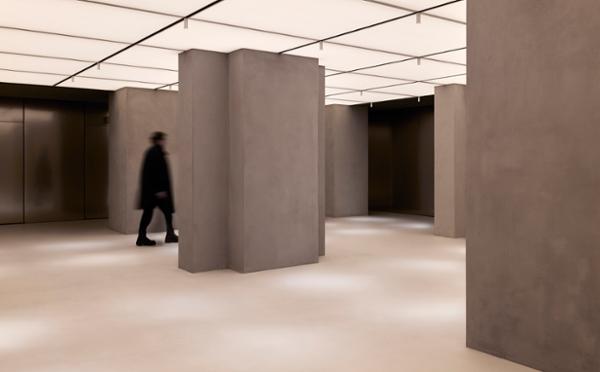
The basement floor is home to PoMo Projects – a programme of special events hosted by the museum and its design is in stark contrast to the rest of the museum. There is almost no colour in this Brutalist-inspired space, instead concrete, stainless steel and mesh metal have been used to create a flexible room described by Mahdavi as “dramatic and cinematic”.
A new normal
The founders have committed to ensuring that the PoMo collection represents a broad diversity of artists, saying that they aim to create a ‘new normal’ for contemporary Norwegian institutions, dedicating 60 per cent of PoMo’s acquisitions budget to women artists to address inequalities in museum collections.
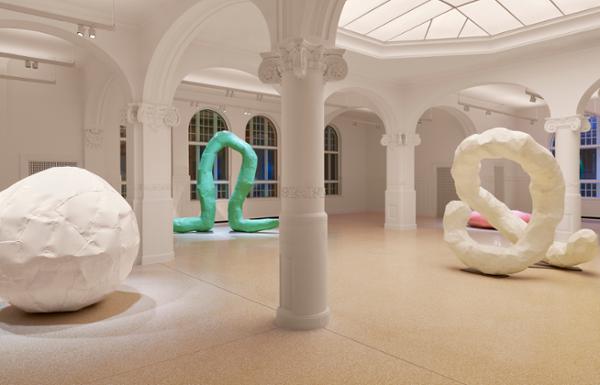
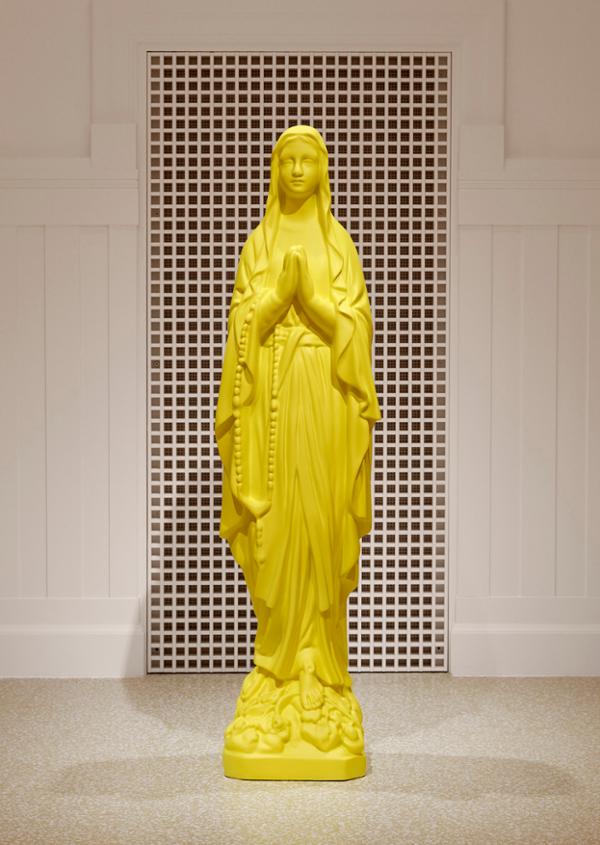
Artists currently on show at the museum include Louise Bourgeois, James Lee Byars, Katharina Fritsch, Anne Imhof, Cui Jie, Simone Leigh and Franz West.
As well as displaying its permanent collection, there will be two temporary exhibitions each year. The first, Postcard From The Future, features around 100 artworks from 24 international artists, many of whom have never exhibited in Norway before.
For Mahdavi, designing PoMo has been a deeply inspiring experience. “For the past two years, I’ve felt like a lucky conductor, directing an orchestra of talents,” she says.
“I’m proud to share my first museum project.”
Opened in February 2025, this new build 600-capacity theatre sits next to PoMo, and is also owned by Monica and Ole Robert Reitan.
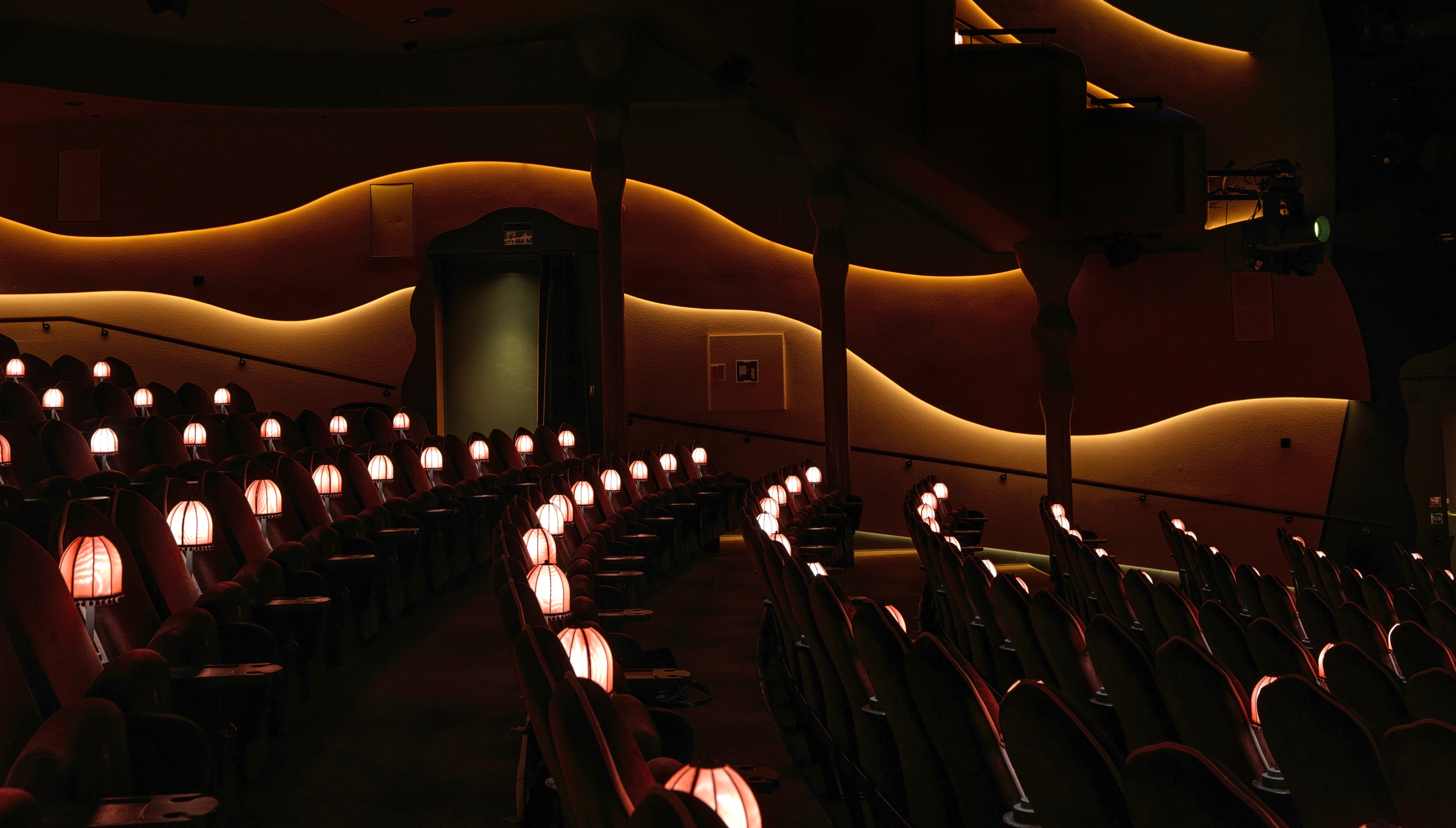
Designed by Skibnes Arkitekter, with interior design by Anemone Studio, the theatre hosts a range of productions, including classic dramas, musicals, folk comedies, farces and family shows. It has been designed as a tribute to the legendary Hjorten Revue and Variety Theatre, which opened in Trondheim in 1867 and was demolished in 1961.
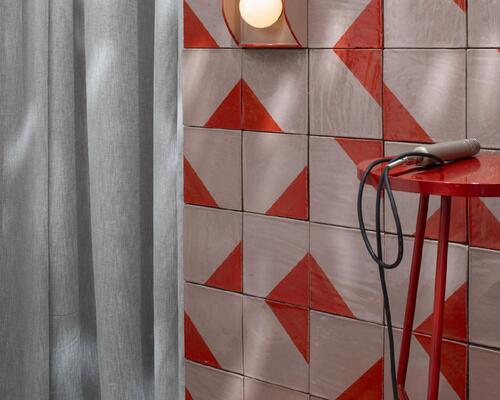
The new building’s red facades are designed with custom-made glazed, undulating tiles, inspired by the use of glazed tiles and bricks from the Art Nouveau period. A towering green-patinated copper-clad stage tower adds drama to the building.
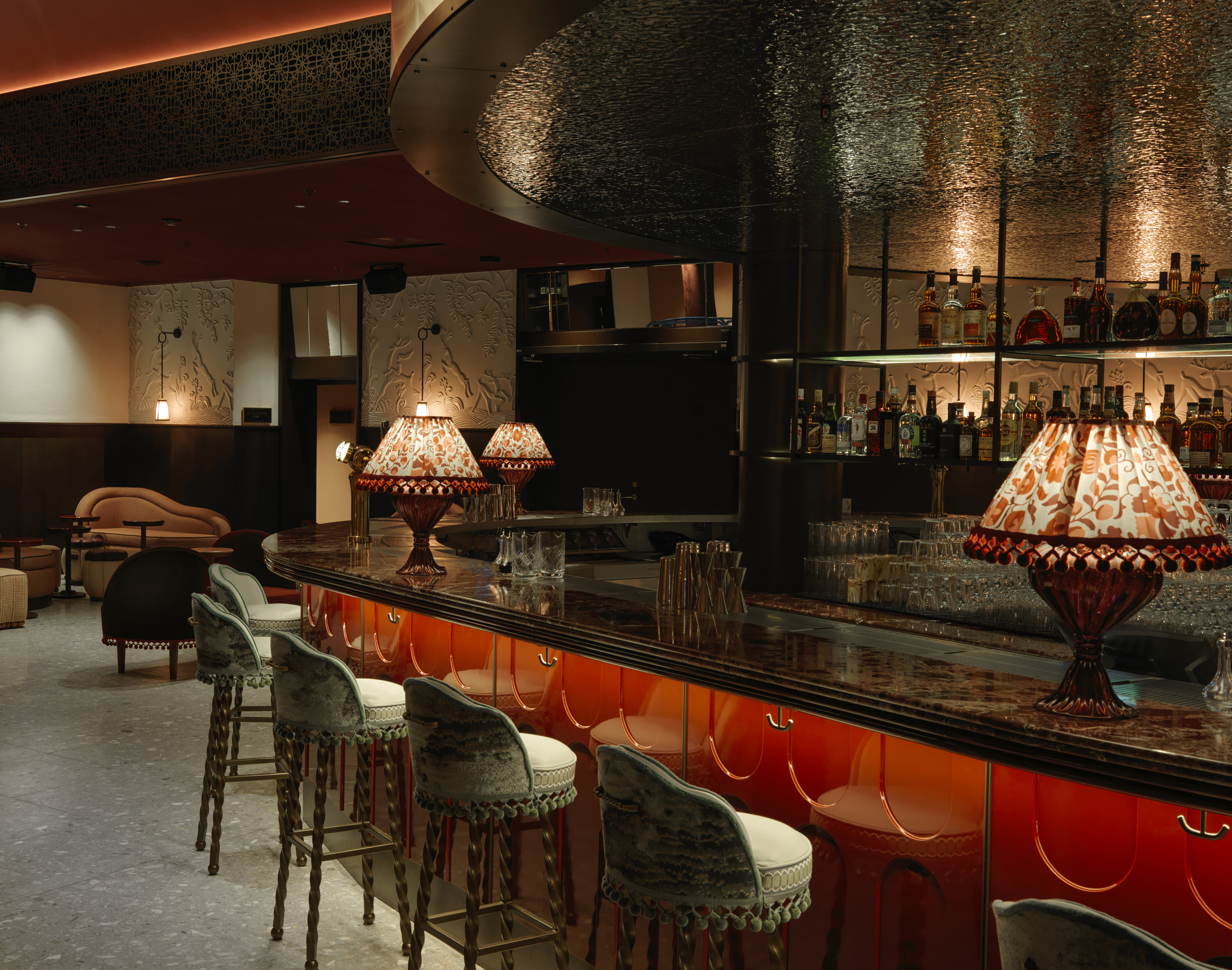
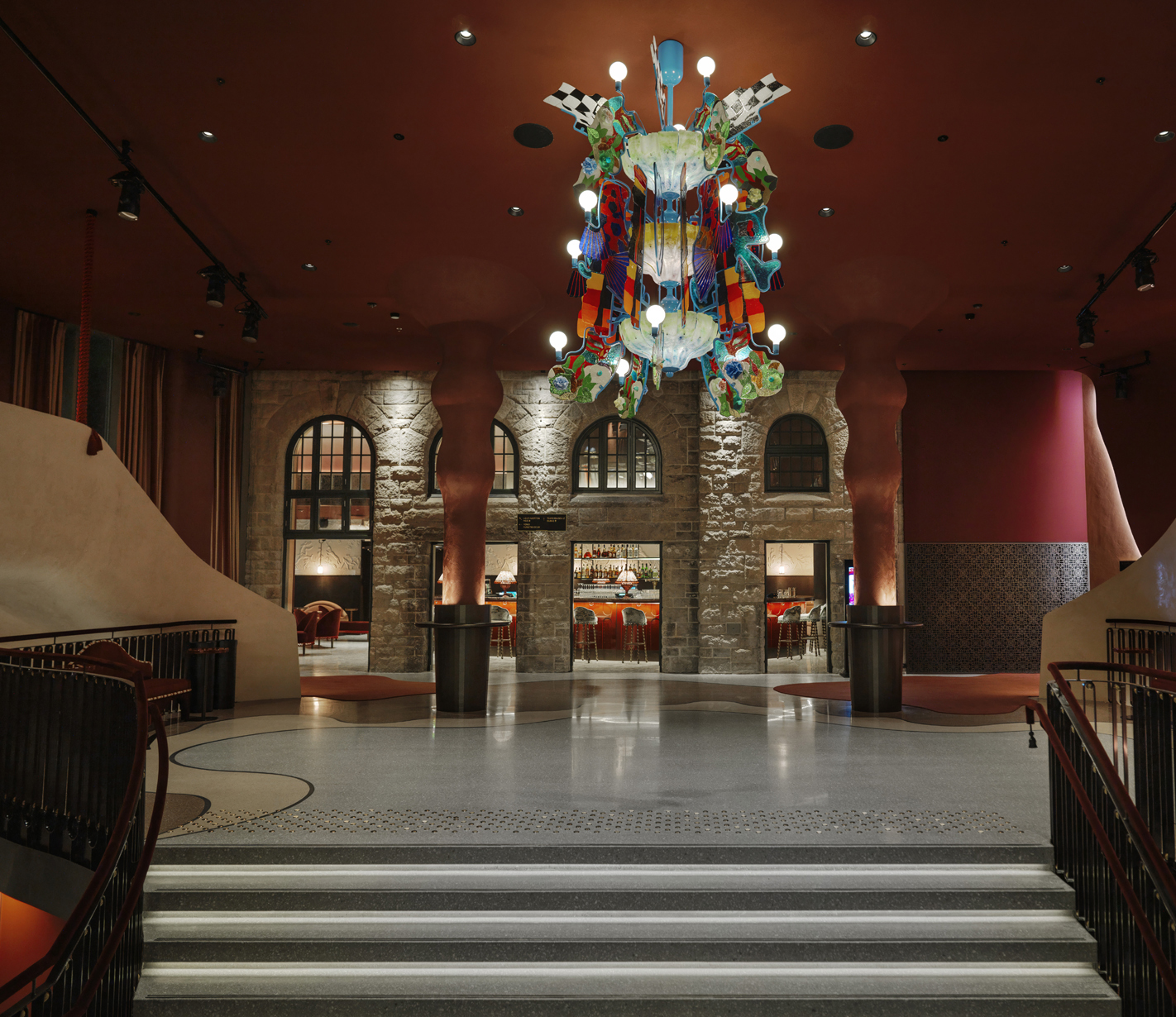
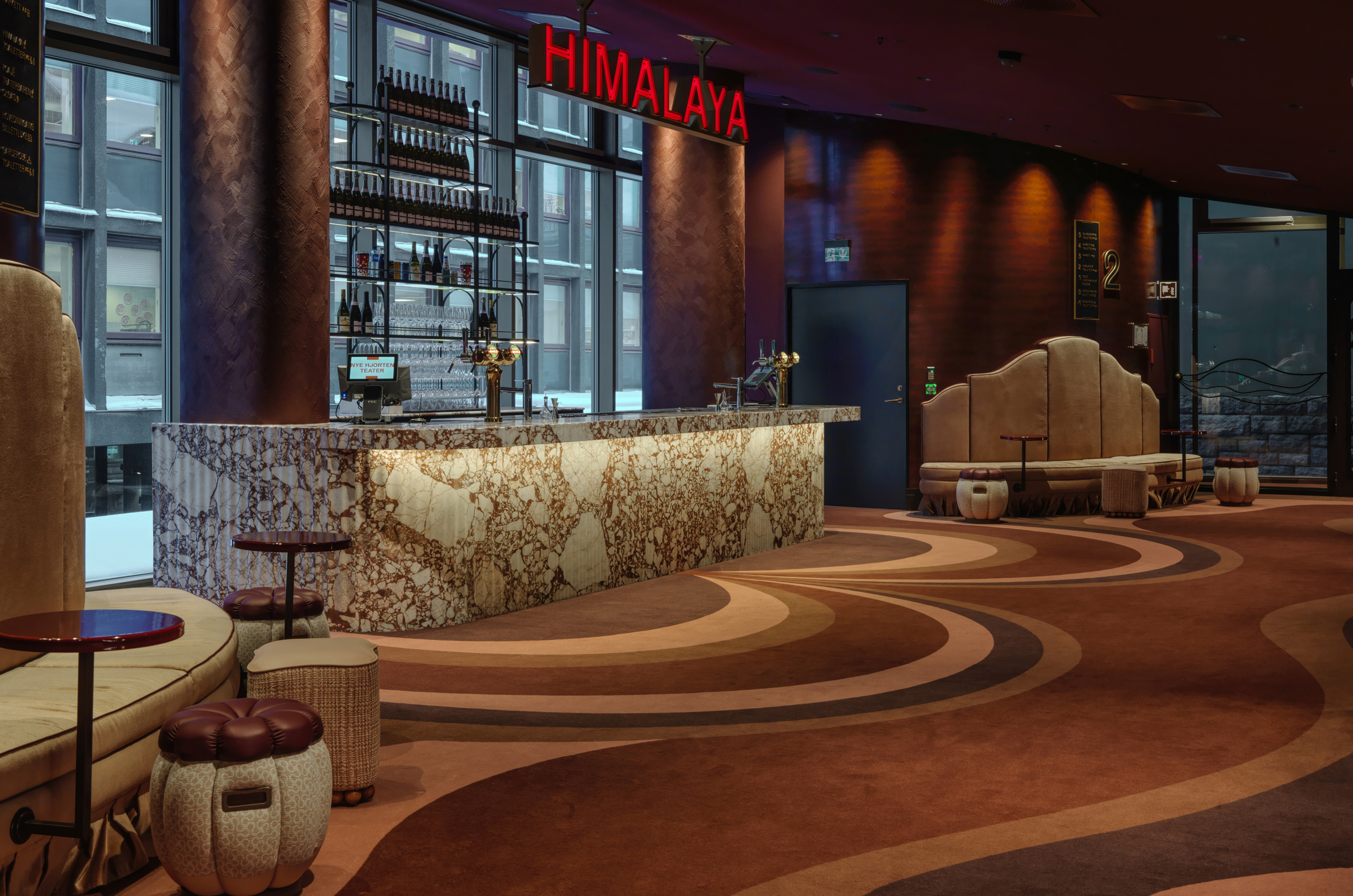
Inside, the interiors are opulent, with deep reds and golds, plush carpet and fluid lines reminiscent of Art Nouveau design. A sweeping balcony looks out onto the atrium, with a large dramatic chandelier by Norwegian artist Ida Ekblad acting as a focal point. The hedonistic spirit of Olga Topp – who ran the Hjorten Revue and Variety Theatre – was used as inspiration, and guests are offered the choice of two bars: the top floor Himalaya Bar and the curved art deco-inspired Theatre Bar.