Interview
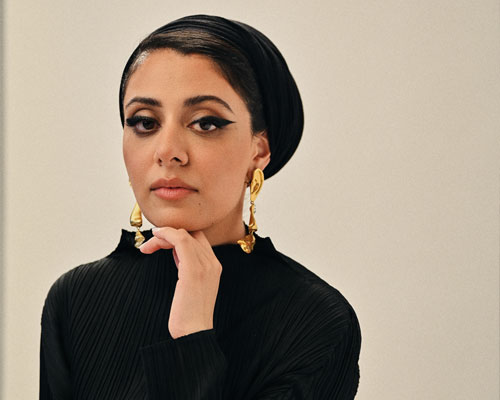
Sumayya Vally
As an architecture student, Vally was told that everything she could imagine had already been done. She has made it her mission to prove her teachers wrong, she tells Magali Robathan



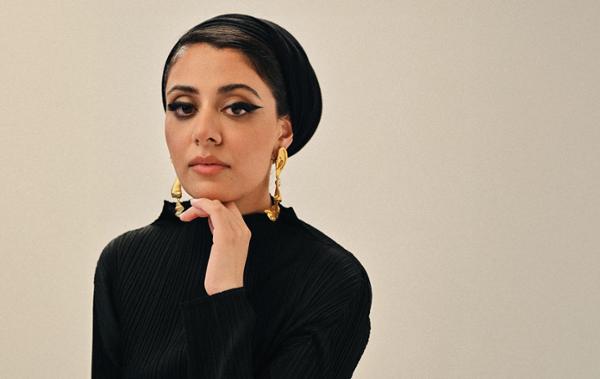
Born in an Indian-only designated township in South Africa at the end of the Apartheid era, Sumayya Vally is keenly aware of the social and cultural impact of design on the way we live.
Vally set up her practice, Counterspace, in 2015, with a mission to do things differently. In 2021, aged 30, she became the youngest architect to design the Serpentine Gallery in London’s Hyde Park; the same year, she was on Time magazine’s list of people ‘poised to make history’. In 2023, she was artistic director of the inaugural Islamic Arts Biennale in Jeddah, Saudi Arabia, and is currently working on a range of projects including an olive oil museum in Gabes, Tunisia, a cultural institution in London, UK and a gathering space in Nairobi, Kenya.
Here Vally talks to CLADmag about sustainability and honouring untold stories
How did you become interested in architecture and design?
I was born and raised in a small Apartheid-designated township called Laudium in South Africa, but I spent much of my childhood in my grandfather’s stores in the heart of Johannesburg. Many South Africans don’t have the opportunity to interact with worlds outside their own – spaces were, and still are, very much segregated.
Walking the streets in the city – especially walking to the Johannesburg City Library – let me into worlds that I wouldn’t have seen otherwise. Architecture came to me through the city and through fiction.
What was your aim when you set up your practice, Counterspace?
In my final year of architecture school, my friends and I spent lots of time exploring Johannesburg, and working to read and translate the city. Counterspace was born out of a desire to create the kind of architecture we felt we were missing in our education.
I often speak about Johannesburg as my biggest inspiration, and my practice remains attuned to and inspired by that city’s intricacies, beauty, complexities and challenges.
How would you describe your philosophy when it comes to architecture?
My philosophy is characterised by a deep interest in architecture as a means to expand the cultural domain by listening to the contexts within which we work. It comes from a desire to express hybrid identities and spaces, and explore the ways in which traditional wisdom can inform an approach to design and space-making. This is rooted in a deep interest in the relationship between territories and places, which is an ongoing fascination and thread throughout all my practice’s work.
You’re working on a new bridge in Belgium. How did this project develop?
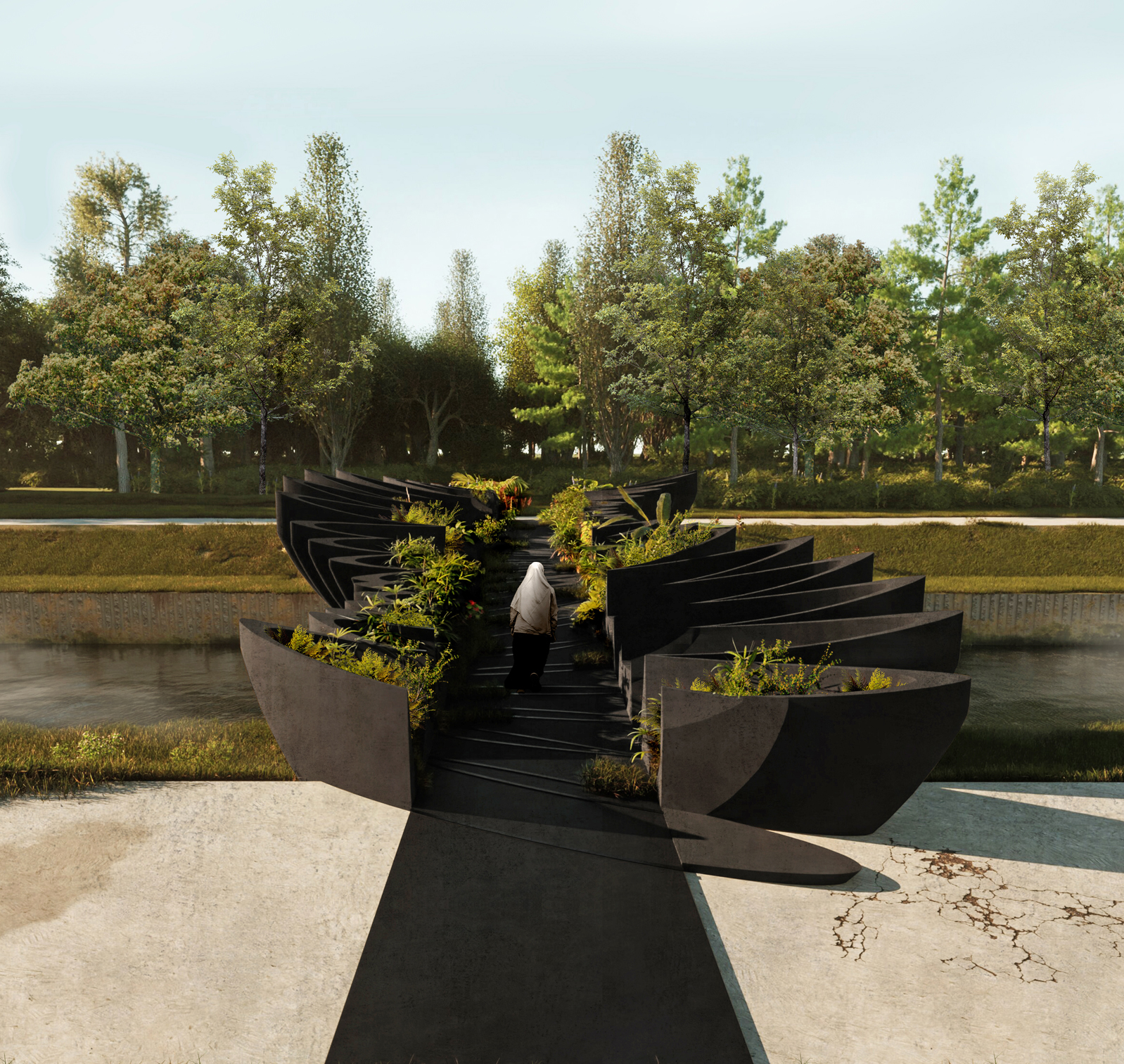
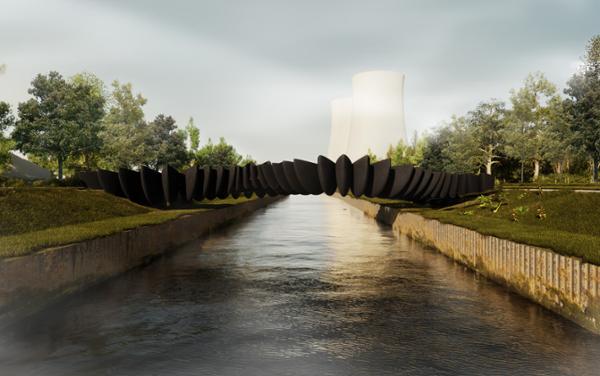
We received a brief to design a simple pedestrian bridge that would connect the Asiat Park (a new public park) and the Darse area over the Zenne River in Vilvoorde, Belgium.
Through our research, we discovered the story of Congolese agronomist and activist Paul Panda Farnana, one of the most important, yet least acknowledged, figures of the city of Vilvoorde. Farnana advocated for the rights of Black people and was instrumental in organising the first Pan African Congress in Europe in 1919, going on to establish an association for mutual aid and development of the Congolese people.
The first person from the Congo to study in Belgium, Farnana trained as a horticulturist. Our concept is centred on the species explored in his research. We also looked to the water architectures of the Congo as a starting point to honour this history. Along the Congo River, fleets of dugout canoes are seen docked alongside one another. Stacked together, they form a communal platform for gathering. Our project draws on this form – a series of conjoined boats as a place of gathering.
How did this project evolve from a simple pedestrian bridge to a cultural project?
Though the brief didn’t specify that the bridge exist as a cultural project, I think the way we approached it, and what we uncovered during the research process, has transformed it into one. Once we discovered Farnana, it felt as though we had a responsibility to honour his life and work through this project. It has been very rewarding to see the Belgian authorities and public embrace the discovery. Since announcing our concept, Farnana has been added to the Flemish Canon.
We also exhibited a sister project, Grains of Paradise, as part of the Bruges Triennale in 2024. This drew from the concept of the Congolese dugout canoes as gathering places, and expanded on the complex relationship and history between West Africa and Belgium as it relates to migrant communities and ecology.
For this project, dugout canoe-inspired boat forms were planted with bright plants and herbs, including the lesser known melegueta pepper, nicknamed ‘grains of paradise’. With its origins in West Africa, it was once a highly prized spice used for its unique flavour and medicinal properties. Bruges’ strategic location near the coast and trading networks established the city as a hub for the distribution of melegueta pepper throughout Europe, making it one of the continent’s most prosperous cities at the time.
What do you see as the future of the design of cultural spaces?
The cultural typologies that we’ve inherited are in crisis. They’re not relevant or resonant with our lives or with the ways in which the future is being shaped by other disciplines. In places where the future is actively being made – in Africa, the Middle East and the Global South more broadly – it’s important that we don’t simply defer to the same models of architecture we’ve inherited from the West which have already failed in many ways.
We have the opportunity to imagine the world differently from our unique perspectives and cultures.
My work is deeply rooted in research and invested in multi-disciplinary ways of drawing, as well as curatorial practice and teaching, because I believe that if we want to create differently, we need to work from different starting points.
You artistically directed the inaugural Islamic Arts Biennale in Jeddah, Saudi Arabia. What did this mean to you?
I thought deeply about this opportunity to create a temporary home in this context of the Muslim pilgrim’s journey, in which to invite artists and audiences to reflect on ritual, the sacred, the personal and the communal.
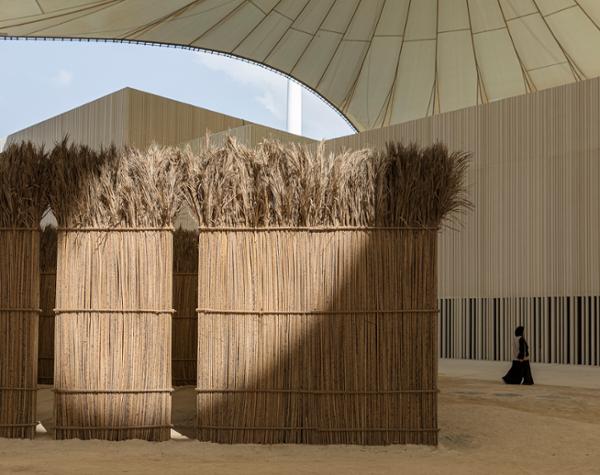
The artworks themselves demonstrated a departure from the traditional museum setting, and many of the works invited engagement through being activated by other artists, emphasising the spirit of generosity that ran through this Biennale. For example, Syn Architects’ anywhere can be a place of worship was a performance work and a civic space inspired by the Prophet’s (PBUH) first space of prayer. Syn Architects’ pavilion was created with palm fronds and disappeared entirely into the ground; it touched the earth lightly. It was a space that was made by community rituals and by people coming together. That, for me, is putting forth an art and an architectural future that’s different.
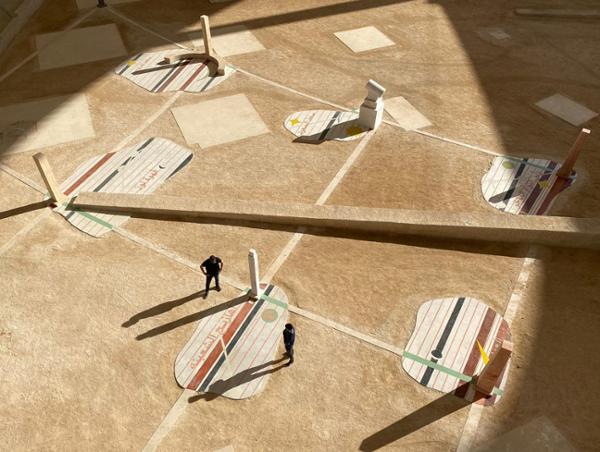
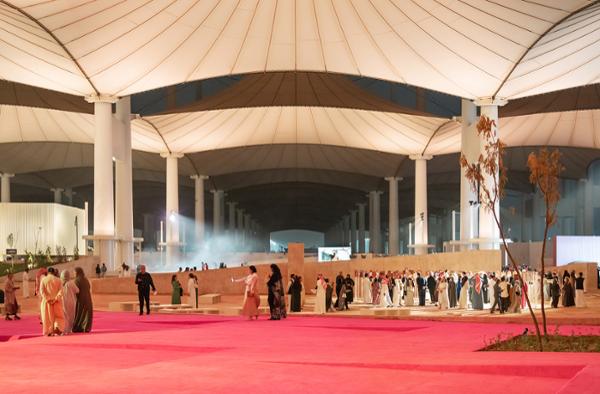
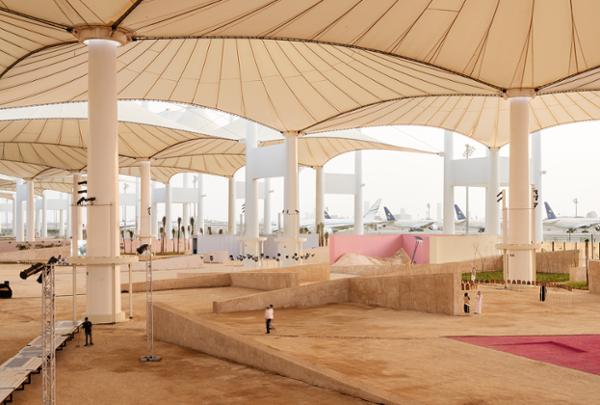
Civil Architecture’s Sun Path, Rajab to Shawwal was an installation that re imagined the traditional sundial. Set under the canopy of SOM’s Hajj Terminal at Jeddah’s King Abdulaziz International Airport Terminal, the installation features an oculus in each unit of the terminal’s canopy, which limits the amount of direct sunlight passing into the space below and acts as an inverted sundial. The installation in turn tracks the movement of a beam of sunlight rather than a cast shadow. This sunbeam passes over lines on the ground corresponding to the hours, months and seasons, as well as sculptural objects that indicate significant moments in Islamic history. This installation was inaugurated with a performance by Saudi artist Muhammad Al Faraj inspired by rice farming and agricultural practices in Al Ahsa, which used movement, poetry, storytelling, instruments and chanting to unite the audience in a moment of a collective hopeful prayer.
These kinds of platforms for sharing ideas are incredibly important in how they set the tone for the future and how they allow us to project our imaginations into real spaces. They also have a role to play in understanding the profound cultural and artistic heritages around us, and in nurturing and promoting understanding between communities.
You were the youngest architect to design the Serpentine Pavilion. How did you approach that project?
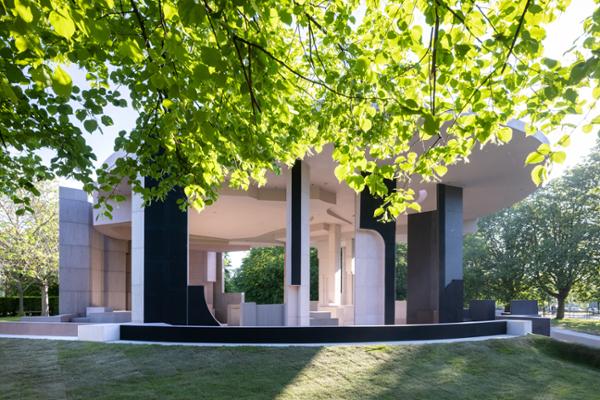
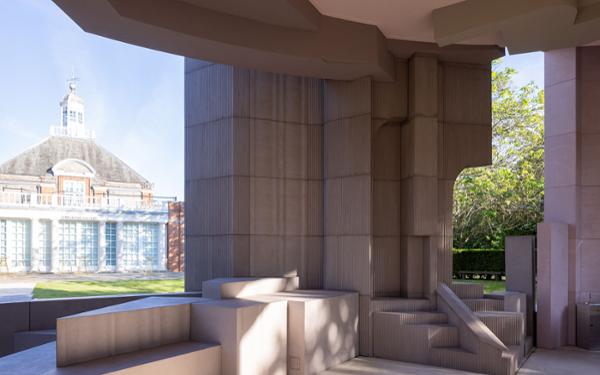
My 2021 Serpentine Pavilion drew on meeting spaces that were important for migrant communities when they first came to London, including some of the first mosques, African churches, synagogues, marketplaces for traditional ingredients and co-operative bookshops.
I wanted to bring those spaces into the centre of London in the form of the pavilion, but then also fold this back out into the city, into community institutions in the form of the Fragments of the Pavilion programme. Four institutions – which included the Tabernacle community hub in Notting Hill and the New Beacon bookshop in Finsbury Park – hosted the Fragments (detachable parts of the pavilion used as new physical spaces for reflection and performance) and ran programmes in collaboration with the Serpentine.
That idea of creating a relationship between host and home where they start to alter one other is something that subconsciously, perhaps, came from a way of being that is about moving through different cultures simultaneously.
What does sustainable architecture mean to you?
We have so much to learn from cultures and belief systems around the world that have always engaged with the land sustainably, collaborated with the seasons and thought about cycles of renewal, regrowth and regeneration.
We have forgotten how to do that because we’ve fallen into cycles based on instant gratification and knowledge that’s come from elsewhere. If we can find ways to return to those ways of being, in tandem with the technologies that we have at our disposal now and with the levels of research that we’ve developed, I really believe that the future can only be sustainable.
What are you working on right now?
We’re currently working on a private artist residency and museum on an olive oil orchard in Gabes, Tunisia, as well as a memorial and gathering space in Nairobi, Kenya, and a performance space in Johannesburg, South Africa. We’re also working on a new cultural institution for a private foundation in an existing building in the heart of London.
Location: Vilvoorde, Belgium
Tasked with designing a new pedestrian bridge connecting Vilvoorde’s Asiat Park and the city’s Darse area, Counterspace took their inspiration from Congolese activist and horticulturist Paul Panda Farnana, one of the first people from the Congo to study in Belgium. The final design takes the form of a series of ‘boats’ tied together to cross the canal, drawing on the concept of Congolese dugout canoes as gathering places.
Location: Benin City, Nigeria
Part of the Museum of West African Art campus taking shape in Benin City, the Rainforest Gallery will feature 1,400sqm of exhibition space. Inspired by the rainforest climate and tree canopy form, the structure features a series of columns rising upwards.
Location: Jeddah, Saudi Arabia
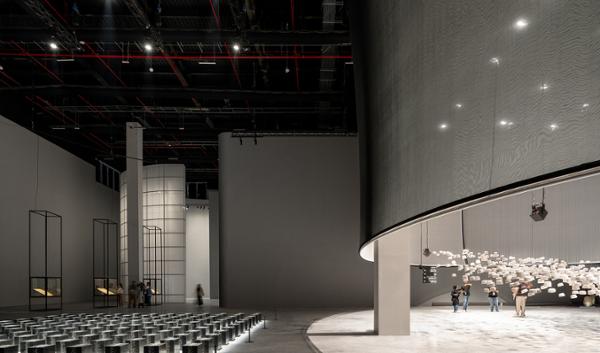
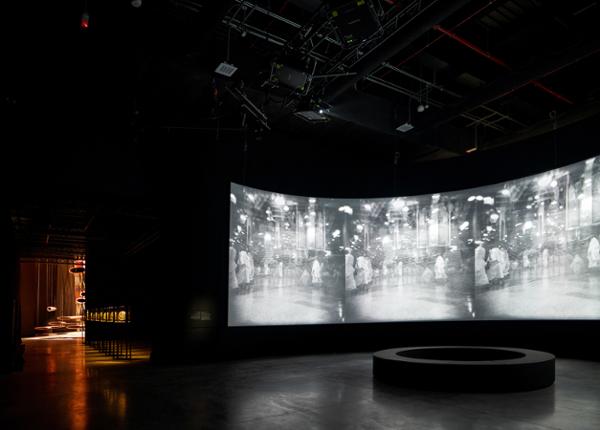
Sumayya Vally was artistic director of the inaugural Islamic Arts Biennale, held in Jeddah in 2023. Themed ‘Awwal Bait’ – meaning ‘First House’, in reference to the Holy Ka’bah in Makkah – Biennale featured more than 60 established and emerging artists from around the globe, over 40 new commissions, 280 artefacts and more than 15 never-before-exhibited works of art.
Location: Bruges, Belgium
Vally’s contribution to the Bruges Triennale honoured the historic trade routes connecting Bruges to the world during the Middle Ages, and the traditions of the melegueta pepper - Grains of Paradise - which came from Benin. The installation comprised a series of small boats, or pirogues, filled with plants including the melegueta pepper.
Location: Monrovia, Liberia
The Ellen Johnson Sirleaf Presidential Center for Women and Development is collaborating with atelier masōmī’s Mariam Issoufou Kamara, Counterspace’s Sumayya Vally, and Pan-African Engineering Group’s (PAEG) Karen Richards Barnes in the design of a state-of-the-art Presidential Center and Library in Monrovia, Liberia.
Location: London, UK
Aged 30, Vally was the youngest person to design the annual Serpentine Pavilion. Built from reclaimed steel, cork and timber covered with micro-cement, the Pavilion was based on meeting spaces significant to diasporic and cross-cultural communities across London, including mosques, synagogues, bookshops and cultural sites.