Interview
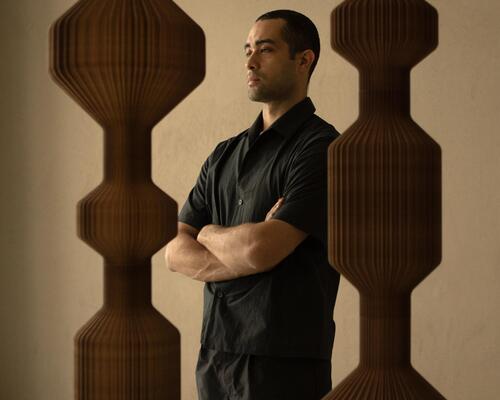
Tim Hollingsworth
Following the departure of Jennie Price, Tim Hollingsworth, former CEO of the British Paralympic Association, was recently appointed as the new CEO of Sport England. He talks to Tom Walker about preparing for the role and his plans for the body




Shortly before the identity of Sport England’s new chief executive was revealed in August 2018, Sports Management asked a number of sport and physical activity sector leaders for their advice for the incoming CEO. The resulting article, published in the Q3 issue of the magazine, was picked up by Tim Hollingsworth – the person who the commentators were, indirectly, addressing.
“I pinned that article on the wall in my office at the British Paralympic Association,” says Hollingsworth, who by then knew that he would take up the CEO role in November 2018.
“The advice from the people in that piece was really helpful. It indicated that there’s a general feeling that it’s really important for the sport and physical activity sector to come together – and that Sport England has a crucial role to play in that.
“The advice called for better advocacy for what sport can do, strong leadership to galvanise the message of what physical activity can do towards creating a healthy nation and the need for effective partnerships. It is easy to agree with all of those points.”
Building on experience
Hollingsworth was appointed to the top job at Sport England after nearly eight years as CEO of the British Paralympic Association (BPA). He led the organisation into four Paralympic Games – including ParalympicGB’s best-ever Summer and Winter Games performances at Rio 2016 and PyeongChang 2018 – and was at the forefront of efforts to increase the profile and interest of the Paralympic movement. Prior to his time at BPA, Hollingsworth spent more than six years at high performance agency UK Sport – the last of which as chief operating officer.
How useful, then, will his 14-year experience of high performance sport be in his new, grassroots-oriented role?
“I think it will be useful when it comes to having an understanding of the clarity of outcomes,” he says.
“At BPA and UK Sport the medal targets helped sharpen our focus. The clearly defined targets gave us the ability to create a narrative around why we were doing what we were doing. So that is definitely something that I have at the front and centre of my thinking.
“But I also think that to get to the level we did at both UK Sport and BPA we moved beyond the medals and understood what it took to win – rather than just count how many medals we might win at a Games.
“Similarly, here at Sport England, it will be important to understand that it’s not just about getting a certain number of people more active, but about what the wider outcomes and benefits that getting people physically active can bring. And I think my experience will help with that.
“Another thing that working in elite sport has taught me is that if you are to achieve a target, you not only need to be clear about what that target is, but you also need a ‘licence to operate’.
“By that I mean the ability to put things together to achieve those targets. The ‘licence’ is about building your organisation’s credibility, strength of purpose and ability to partner to leverage and to maximise resource.”
From “what” to “how”
Hollingsworth takes the helm at a time when the agency’s five-year strategy, Towards an Active Nation, is at its midpoint. The document, published in May 2016, outlines the organisation’s direction of travel from 2016 to 2021.
Towards an Active Nation was launched in response to the government’s Sporting Future strategy and signalled a major change in focus for the funding body, leading it to direct more of its money and resources to tackling inactivity – rather than simply growing the numbers of people playing organised sport.
There was also a significant change in number of young people it needs to consider in its grant-giving. Sport England now dedicates funding to children from the age of five. Previously, it focused on helping youngsters from the age of 14 and up.
Coming in to Sport England at the middle of this major strategic shift, Hollingsworth says he sees an organisation in transition. “Sport England has been through quite a lot of change in the last few years – and that can be unsettling,” he says.
“It feels to me like there’s a general enthusiasm now to get on with the job, having worked out what the job is and how best we can deliver it.
“Over the last 24 months alone, we have invested more than £550m in over 3,000 projects and nearly 2,000 different organisations. Our focus on inactivity has seen us challenge the NGBs to improve the experience for the customer and help grow the number of people being active, and we have new partnerships with The Richmond Group of Charities, parkrun and the Daily Mile, to name a few.”
As a result of the ongoing changes, Hollingsworth sees one of his first tasks as CEO to offer direction towards the next stage of the transition.
“There has been a lot of work on ‘what’,” he explains. “Such as what the new purpose is, what the new targets are and what the responsibilities are.
“So one of my jobs is to start thinking about the ‘how’. How are we looking to deliver to the strategy? How should we behave and engage in a way that will maximise our opportunities? How are we delivering to people who are either looking for new ways to become active or improving their current levels of activity?”
Learning on the job
Hollingsworth says the work on the ‘how’ has already started. “We are now doing quite a lot of what in the corporate world would be called ‘test and learn’,” he explains.
“These include our local delivery pilots and the work we are doing around our data and our campaigning. So we’re doing things that are relatively new to the system. We need to learn from them, see whether they work and then decide whether they are the right things to be doing.”
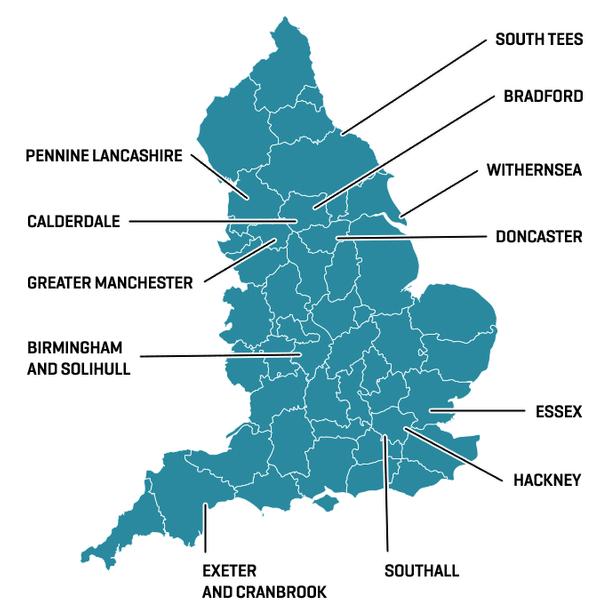
He highlights the delivery pilots as an example of the ‘test and learn’ process. Recognising that communities have their own unique structures, relationships and geography, the pilots look to understand how local identities can be used to deliver sustainable increases in activity levels.
One example of the 12 targeted pilots is the Everyone Active, Every Day project in the London Borough of Hackney. The area – which has a large Black African/Caribbean population – is characterised by high levels of deprivation, low levels of education and high unemployment. Insight gathered during the early stages of the pilot has enabled the Sport England-funded programme to segment the audience according to specific needs and design interventions with partners to address them.
The creation of such targeted programmes marks a significant change in the way Sport England goes about its business – but for Hollingsworth it is the way forward. Even if some of the pilots might prove less successful than others.
“We spend a lot of time, quite rightly, on insight and evidencing what we do,” he says. “But a part of that must also be to have the boldness to get insight into something that doesn’t work – as well as looking to replicate something that does. As a public body, that is quite a challenge. But we need to be unafraid of that challenge.”
Partnering up
Another area in which Hollingsworth hopes to use his high performance sport experience is the way elite agencies have utilised partnerships – both inside and outside the sports sector. He was part of the UK Sport team which negotiated a technology partnership with BAE Systems – a collaboration which has yielded some impressive results for both Team GB and Paralympics GB. At BPA, Hollingsworth oversaw partnerships with the likes of Sainsbury’s, BP, Cadbury, Adidas and Allianz.
“At the BPA, commercial partnerships are critical as a vast majority of the income comes from the private sector,” he says. “That definitely taught me the importance of partnerships for achieving success.
“So I’m ambitious to get commercial partners involved with Sport England too. Obviously, as a lottery distributor and in receipt of public money, we aren’t necessarily gearing up to seek large amounts of commercial sponsorship. Not least because there is a danger that it could then cannibalise that which is available to our governing bodies. But I’m convinced we can do huge amounts with effective commercial partners here too.”
Hollingsworth mentions two areas in which partnerships could help the grassroots agency’s work. “Firstly, they can help amplify our messages – especially when it comes to our campaigns,” he says. “This Girl Can being the most obvious one.
“Amplifying our campaign messages in a retail context, through media channels or through a corporation’s customer base could be huge for us – and it’s something we need to do more of and be better at.
“Secondly, I believe we could learn a lot from some companies when it comes to their practices, business processes and the way that they engage with their audiences.”
The three Ps
By coincidence, Hollingsworth is speaking to Sports Management having just completed the first 100 days of his tenure. Has he now got the “feel” of the organisation and its people – and has he already identified any areas that he feels he wants to focus on as CEO?
“I have pretty quickly understood where I need to put my energy, in terms of what we are doing as an organisation,” he says. “I categorise them as the three Ps: a sense of purpose, a sense of people and a sense of place.
“What we’re trying to do – in very thoughtful and progressive ways – is to inspire people and to make them understand why sport and physical activity could be beneficial to them. To give them a sense of purpose.
“We then need to have people – whether that’s the coaches, volunteers or a professional workforce – who can help make the experience fun and enjoyable, so that those who have been inspired to become physically active want to repeat the experience and not feel like sport is not for them.
“And then there is the sense of place – the venues, the training centres, local clubs and other facilities – where it all happens. That is perhaps the most important out of the three, as it can truly deliver that wider benefit of giving people a feeling of belonging, a feeling of being part of something. It’s all about making ‘the place’ meaningful for those who have been inspired to come along and be active.
“Because ultimately, what we are trying to do – the behaviour changes, to get people more active – is solve complex human problems.
“We are trying to help people with their lives – their health, their wellbeing, their sense of inclusion and identity. And you can only do so much to solve that with mechanistic and transactional solutions. Ultimately, it’s about human solutions to human problems.”

Armed with a background in corporate communications at media companies such as Granada TV, Hollingsworth joined UK Sport as director of policy and communications in 2005, three months before London won the bid to host the 2012 Olympic and Paralympic Games. In 2010, he became the high performance agency’s chief operating officer, before being appointed chief executive of the British Paralympic Association in 2011.
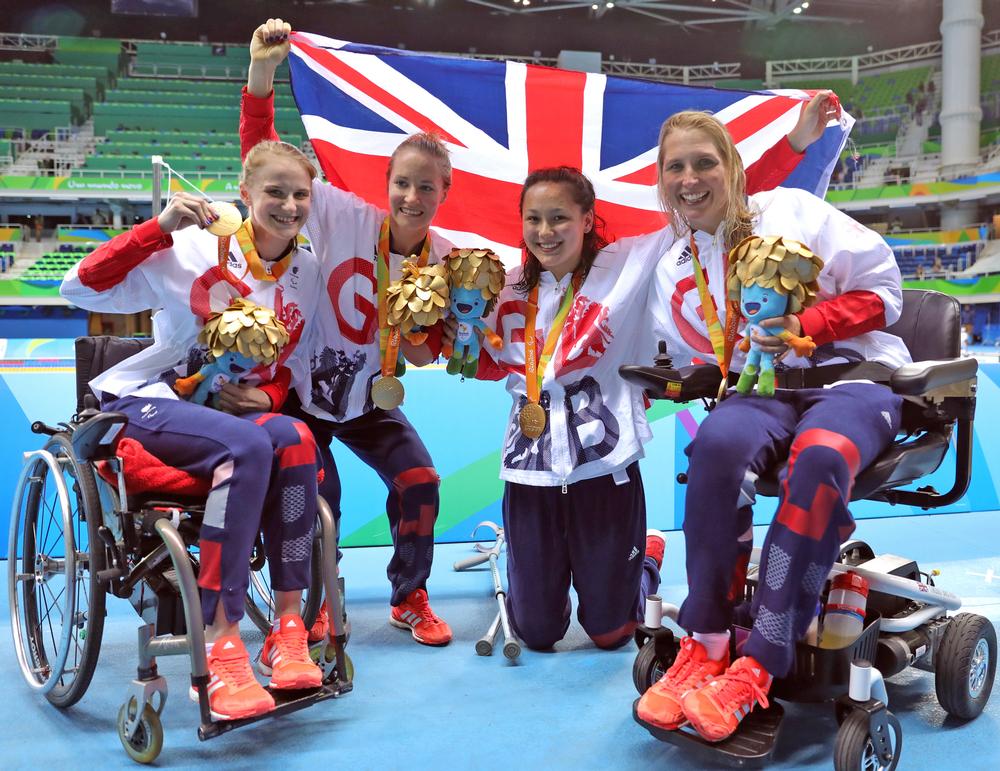
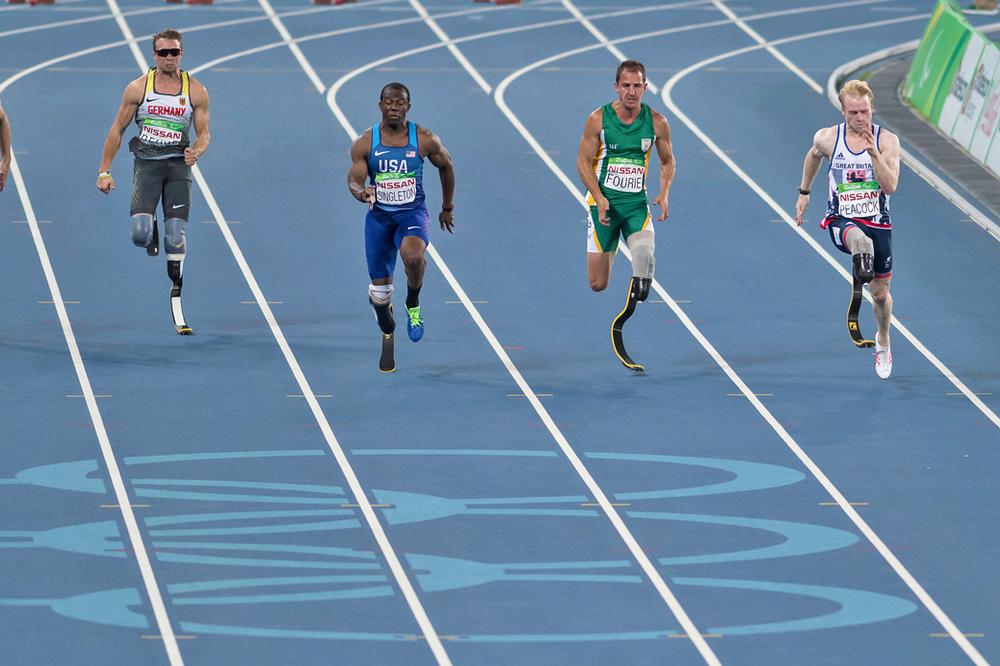
At BPA, he led the organisation into four Paralympic Games, including a best-ever Winter Games performance at PyeongChang 2018 – where ParalympicsGB won seven medals, including one gold. That followed an impressive 147-medal haul at Rio 2016 at which ParalympicsGB finished second on the medal table – its greatest Summer Games performance in the modern area and up from third and 120 medals at London 2012. His success leading the team resulted in him being awarded an OBE in 2017. He was named CEO of Sport England in August 2018 and took up the role in November 2018, replacing Jennie Price who had been at the helm for 11 years.













Designed to restore neglected land and renew the identity of Iraq’s capital city, Baghdad Sustainable Forests promises a new way of living surrounded by nature. Gensler’s Ian Mulcahay tells us why he thinks the project could become a model for the repair and enhancement of urban centres