Top team
Good Reef!
The all-new Cairns Aquarium marks the first marine attraction to open in Australia in 18 years. The team behind the project share their stories



After a number of construction setbacks, the A$54m ($42m, $32m, €37m) Cairns Aquarium finally opened its doors in September, in Cairns, Australia.
The three-storey, 10,000sqm (107,600sq ft) development mainly houses animals endemic to the local region. As a world-class tourist attraction and reef research centre, and Australia’s first new public aquarium in 18 years, it is the only facility in the world devoted to exclusively showcasing marine and plant life of the adjoining Great Barrier Reef and Wet Tropics Rainforest UNESCO World Heritage protected areas.
Top Team

General manager,
Cairns Aquarium
How did the project come about?
The privately-funded project is the vision of the company directors, Daniel Leipnik and Andrew Preston, who visited the region on holiday and saw people who went to the reef yet didn’t enter the water because they couldn’t swim, were frightened of stingers or were out of their comfort zone.
The entrepreneurs saw an opportunity to bring the Great Barrier Reef to them. Their love of animals and desire to contribute to the conservation of regional wildlife was the impetus to undertake this project.
What are the aims of the new aquarium?
We aim to foster a culture of sustainability that supports the conservation goals of the organisation and the greater public, while building a legacy of environmental stewardship for the Wet Tropics and ecosystems worldwide. Cairns Aquarium is also committed to development and implementation of policies, partnerships and other programmes that integrate environmentally conscious practices into our daily operations and convey a fundamental message of conservation.
If we’re to protect these amazing ecosystems and their wildlife for future generations, we must first understand them. The aquarium has dedicated research and development programmes that help us learn more about the extraordinary diversity of animals and plants, how they interact and the impacts of the many changes and pressures currently experienced by these natural systems. The outcomes of the research will play a significant role in educating the community about their natural environment and how to conserve, appreciate and enjoy it.
Who do you expect to visit?
The target audience includes local and domestic visitors, as well as international visitors who are predominantly Chinese, Japanese and American. Visitation is forecast at 720,000 people per annum.
How big is the attraction?
The building itself is over 11.5 metres in height, 90 metres in length and 40 metres in width. Over 15,000 animals, fish, plants and other organisms will be housed in a two-level journey that will take visitors through all the habitats of the Wet Tropics.
How many staff are you employing?
We’ll employ 130 when fully operational.
Can you describe the visitor experience?
The magic truly begins as visitors follow the path of a drop of rain as it travels from the rainforest-clad mountain range, joining creeks and streams that flow through the tropical rainforest, across the flooded plains and billabongs into the mangroves and the Great Barrier Reef before entering its final destination, the Coral Sea.
Ten North Queensland ecosystems and 71 habitats have been meticulously researched and replicated throughout the aquarium to ensure that visitors will enjoy an immersive journey where they’ll see some of the most elusive animals on earth.
What is the length of stay?
It’s about two and a half hours.
Which exhibits do visitors see?
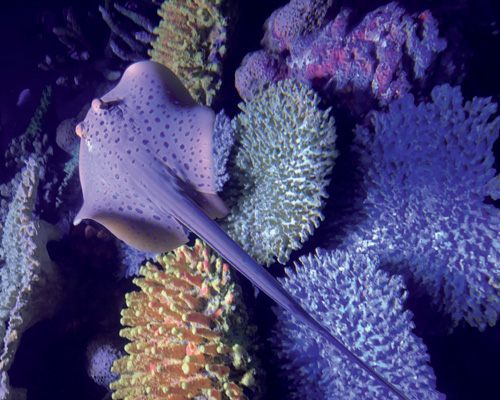
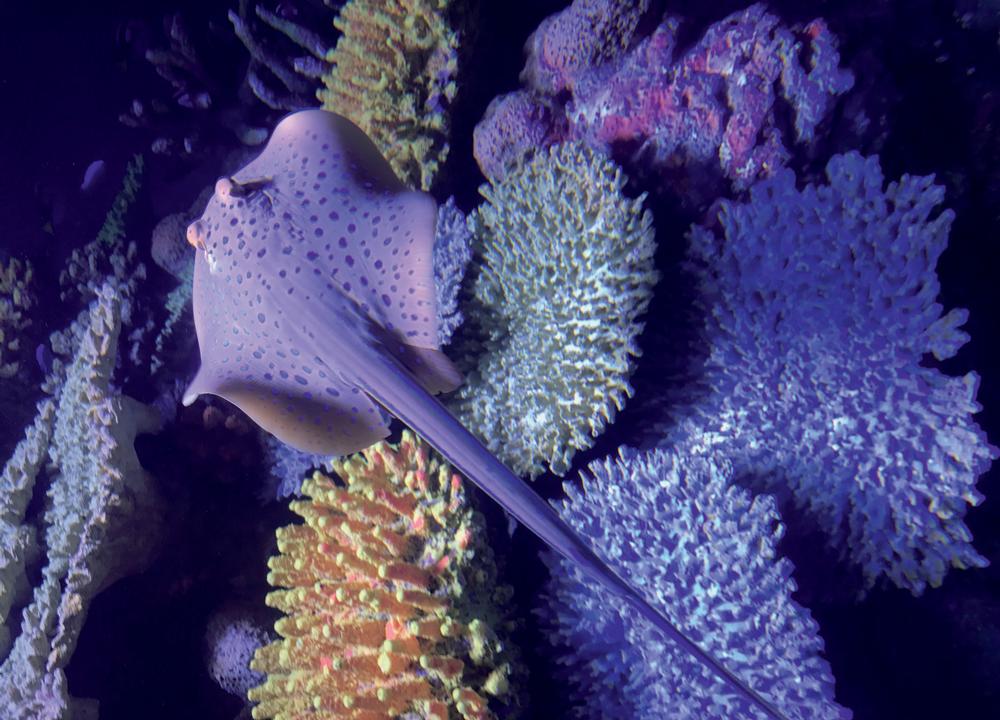
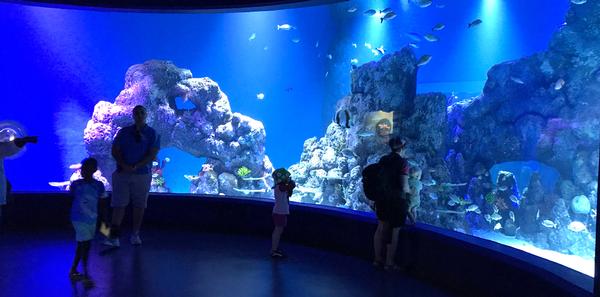
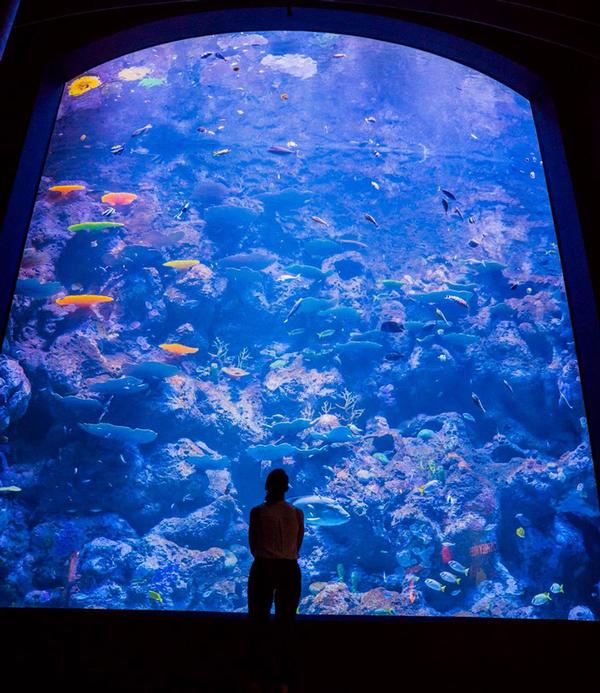
One of the most mesmerising attractions is the 300,000-litre Deep Reef exhibit, the first of its kind in Australia and one of only three in the world. This 10x8.5-metre exhibit replicates the reef dropoff, providing a view of this beautiful ecosystem and the diverse marine creatures that call it home – a view normally only seen by highly experienced scuba divers far offshore.
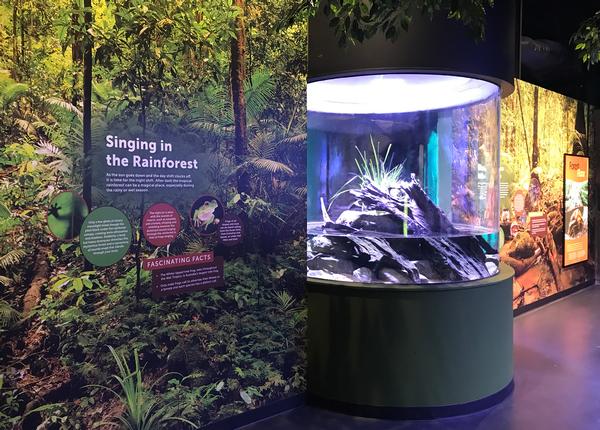
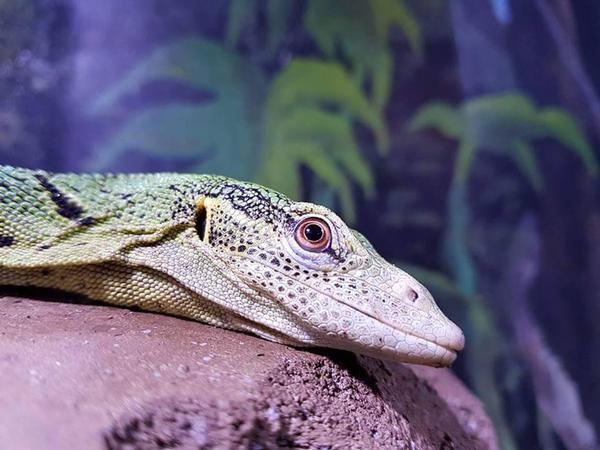
Our 1.5-million-litre Oceanarium is home to scalloped hammerhead sharks and large predators. The River Monsters exhibit houses the highly endangered sawfish and other weird freshwater creatures. The Tropical Rainforest features snakes, lizards, frogs, spiders and some of the biggest and meanest rainforest giants.
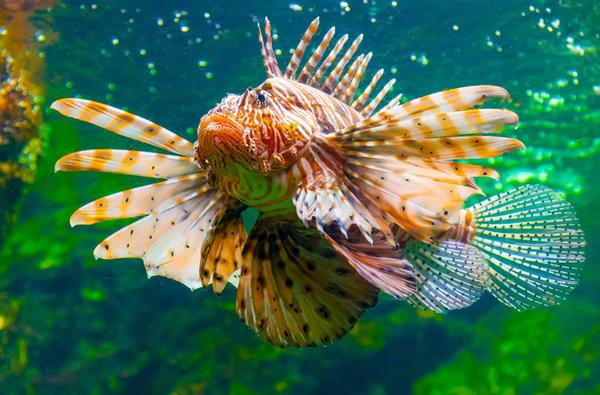
Life in the Mangroves hosts fish that live out of water, fighting crabs, baby crocodiles, sharks and rays, while Dangers of the Reef features species that can be fatal, such as stone fish, sea snakes, lionfish and jellyfish.
Touch and Talk exhibits offer visitors of all ages the ability to touch creatures such as blue sea stars, sea cucumbers and lizards supervised by a trained aquarist.
Regular daily talks by our passionate and knowledgeable staff outline the behaviours of the creatures and inspire the desire to conserve these natural assets.
Will you be WAZA accredited?
Yes.
What are the food and retail offers?
Aqualuna, a 220-seat contemporary Italian restaurant, has a 70,000-litre shark exhibit inside the restaurant. Tropical Treasures Gift Store stocks a variety of local goods.
What learning opportunities are there?
Education programmes tailored to the Australian curriculum will be available.
Our research arm will conduct vital R&D in species preservation and repopulation, aquaculture reproductive biotechnology development, and collaborations with industry partners to explore clean energy technologies in marine environments.
Will you offer any special programming?
Back-of-house tours allow visitors to see how we take care of the animals. Choices include a Turtle Rehabilitation Tour or a Behind the Scenes Tour of the aquarium operations. For the ultimate experience, there’s an access-all-areas tour with a personal guide and seven-course dinner.
Shark Sleepovers offer the chance to spend the night in the Oceanarium.
"Visitors follow the path of a drop of rain from the mountains to the creeks to the billabongs and mangroves and to the Great Barrier Reef"
Top Team
Associate director,
Arterial Design
How did you approach this project?
Initial research on all key creatures and their habitats is paramount in ensuring a design response that is bespoke to a site. From this research, behavioural and physical attributes of animals can be translated into interpretation points, ensuring all theming clearly displays natural elements specific to the zone we wish to replicate in the aquarium. For Cairns Aquarium, research focused on the far north habitats, including the reef, and key creatures such as the sawfish and sharks.
What did you want to achieve?
The key objective was to hero the animals within their natural environment. The architecture reflects this, with large viewing windows into each exhibit. Exhibit and theming design works with the architecture to ensure each animal is the main focus but is displayed in an ultra-realistic environment. The visitor experience plays on scale and detail, revealing elements within the natural environment that they may not physically experience in the wild.
Can you describe the look and feel?
Visitors enter a highly immersive, realistic depiction of the Far North Queensland natural environment. Wide corridors and tall ceilings provide a sense of open space not normally available in an indoor attraction while focused light directs attention to key theming and tanks.
What interactives are used?
The concept behind Cairns Aquarium was to be relatively low tech, with a focus on real tactile and visual experiences. Interactive learning is driven through person-to-person education and talks. Touch tanks and educational open-top tanks drive this hands-on approach.
What theming is used?
Sculpted trees, rock and artificial foliage feature throughout the attraction, interspersed with feature lighting, graphic interpretation and large-scale photography. Natural elements such as timber and plants were used where possible.
What wayfinding is used?
There are 280 educational, interpretive, and interactive signs. These are a mix of species identification signs, zonal specific educational signs and wayfinding signage.
What’s the highlight of the experience?
The highlight of the experience is the 10-metre-high Deep Reef exhibit, which is designed to showcase the aquatic biodiversity that lives over the reef dropoff.
Another enjoyable highlight is the Oceanarium with multiple viewing windows on all sides and underwater tunnels where ocean predators are visible.
For children, two stand-out experiences are the turtle tunnel viewing experience and the coastal zone marine touch tank.
What do you want visitors to take away?
We hope that visitors come away having enjoyed themselves in an immersive aquatic wonderland adventure. We hope they learn about the species, habitats and ecosystems found within the Great Barrier Reef and the adjacent rainforests of Tropical North Queensland. Through this interaction, we hope that people will develop a sense of care and respect for the environment and the amazing biodiversity found within the region.
"The key objective was to hero the animals within their natural environment"
Top Team

Assistant curator,
Cairns Aquarium
How many tanks are there and what size are they?
There are 71 tanks and they vary in size from 1,000 litres to 1.5 million litres.
What variety of marine life will be on display?
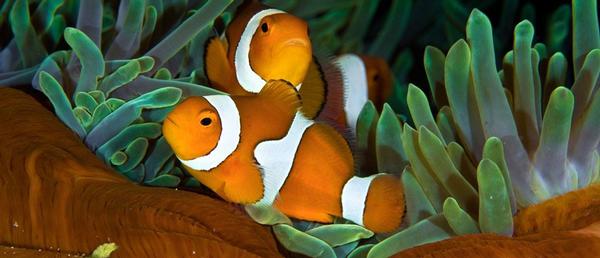
The marine life is representative of the freshwater and marine environments of Tropical North Queensland, including species found in the streams and rivers, flooded billabongs and waterways, mangroves, intertidal reef zones, the Great Barrier Reef and the Coral Sea. There are also terrestrial species on display, such as rainforest reptiles, amphibians and insects.
Why did you choose endemic animals?
There are very few locations in the world where a zoo or aquarium could develop a world- class aquarium using only species endemic to their region. Cairns Aquarium is located in one of the most biodiverse regions in the world, and given our commitment to conserving these amazing species we have chosen to exclusively showcase the fish, animals, plants and habitats of the only two adjoining World Heritage protected areas: the Great Barrier Reef and the Wet Tropics Rainforest.
Are the exhibits themed in a special way?
The exhibits are designed to look as close to the natural environment as possible.
What do you want visitors to learn?
To understand how unique this region is in terms of species diversity, how our activities are impacting them, and why it’s important to protect them for the future.
What are the conservation messages?
The primary messages are linked to the protection of the diversity of species and their habitats in the region. These are delivered via interpretive signage and during daily presentations and education programmes conducted by trained staff.
Top Team
Project leader,
Peddle Thorp Architects
Please describe your design.
Our primary vision was to provide a modern facility for aquarium exhibits with an educative journey and global environmental message. We followed the best sustainable design practices, such as using controlled natural light, carefully selected building materials, and efficient use and re-use of water.
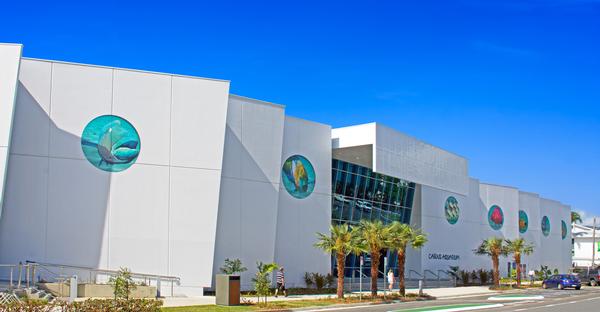
A simple material palette of steel, coloured glass, white polished concrete façade cladding and natural decorative and structural timbers allows the exhibits to be the main focus of what we would call a “natural history” experience in Cairns.
What was the inspiration?
Our design approach does not reference international building typologies, but rather envisages a contemporary Australian architecture. We chose to differentiate our design from the surrounding building stock of generally hotel and motel typologies.
The building’s external fabric is partially transparent, allowing passersby a glimpse inside. The concept for the façade is a series of tectonic plates reflecting the movement in the Earth’s crust. Fissures between the plates offer a glimpse into the land, vegetation and water exhibits within.
On entry, visitors are immediately immersed into a major exhibit, the Rainforest, with sights and sound. The journey spaces are broken up into a number of sections starting at one end of the building and weaving through the various exhibits before arriving at the final showstopper exhibit, the main Oceanarium.
What were the challenges?
Cairns is known for short, heavy bursts of rainfall so the roof needed super-sized gutters, downpipes and water collection points. This was challenge during construction as the pipes had to be navigated through the building, over, through and around exhibits.
The acrylic viewing panels were manufactured in Rome, Italy, and shipped out to Australia in full-size pieces, some of which were up to 9 metres in height and weighing tonnes. We needed to get the panels into the building once they arrived on site, so we kept vertical penetrations, like specific drop zones, at various points of the structure to lower the panels in to position. The challenge with this, as the main acrylic panels weren’t arriving towards the final stages of completing the structure, was to keep construction going around the open penetrations. We couldn’t seal the building structure until all the panels arrived and were dropped in to position.
Safety is obviously a huge element. How do you incorporate this into the design?
A building of this type has an avalanche of back-of-house areas that contain life support services, equipment, water storage, filtration, etc, that maintains water quality for the animals. A lot of these spaces are confined yet need access so we had to incorporate access points, ladders, safety harness points, handrails and balustrades so that the aquarists are able to safely and adequately access where needed.
You’ve designed aquariums before. What approach do you take to this form?
The approach always begins with the space you are given to work with, the client brief in terms of which specific exhibits are required and then the journey through for the visitor. Having the knowledge of allocating spaces for back-of-house services/spaces required for an aquarium is also a benefit during conceptual work.
In addition, Cairns Aquarium is located at the doorstep of the world’s largest Coral Reef so the experience here needed to complement this amazing natural wonder.
What do you like most about the building?
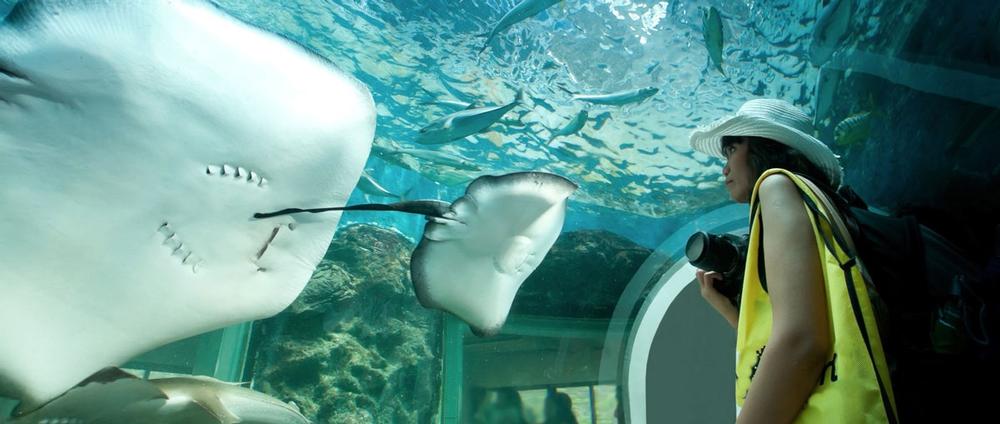
We measure the success of our aquarium projects in the smile of a child; the first time they look a shark in the eye or watch the majesty of a stingray glide overhead. We expect the experience to highlight the exhibits and we intentionally made the spaces dark so as to not compete with the displays. The building externally, particularly the front elevation, provides a sneak peak of what may be inside, but has been designed to not give too much away.
"The concept for the façade is a series of tectonic plates reflecting the movement in the Earth’s crust"
















Designed to restore neglected land and renew the identity of Iraq’s capital city, Baghdad Sustainable Forests promises a new way of living surrounded by nature. Gensler’s Ian Mulcahay tells us why he thinks the project could become a model for the repair and enhancement of urban centres