Interview
Meow Wolf's Vince Kadlubek
Now a multi-million dollar attractions operator, Meow Wolf started out as a collective of skint artists. As the company’s third permanent exhibition prepares to open in Denver, co-founder and director, Vince Kadlubek, talks to Kath Hudson about the highs and lows



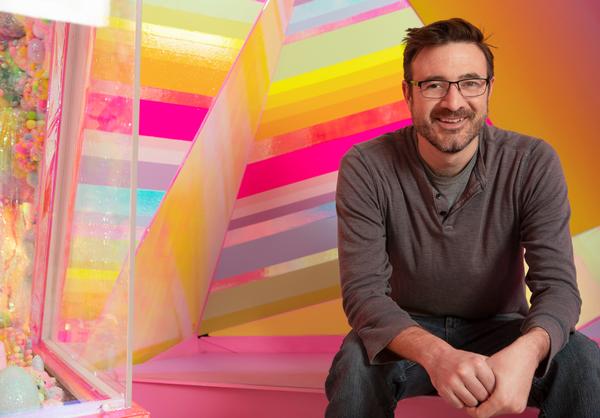
What is Meow Wolf and how did it begin?
We’re an arts and experiential arts company which creates immersive multimedia experiences. We started out in 2008 as an art collective/social group, trying to break into the Santa Fe art scene. Unable to get much traction in our own city, we felt like we were on the outside looking in. All the existing players were interested in a different aesthetic from us. It was prior to Facebook and Instagram, and before the term Millennial was broadly used, so there was a lack of understanding of the value of youthful, trendsetting fashion design and aesthetic.
As a result, we decided to open our own exhibition and found a 1,000sq ft space to deck out. No one had any money, so we looked in dumpsters for materials which we stapled to the walls. It was grungy experimentation with spray paint, chicken wire and Christmas lights. The end result was an artistic walk-through version of a dark ride.
Was that the breakthrough moment for Meow Wolf?
No, but it led to a few years of creating immersive exhibits in different spaces and we managed to get onto the radar of a few institutions and did some work within the education system. But what had been a hobby for some 20-somethings in 2008, had turned into an obligation for 30-somethings by 2014. We had momentum, but it wasn’t sustainable and there was no career for those involved.
Everyone was ready to go their own way, but I was adamant our group had more to give and more art to create and suggested we create a permanent attraction which we could sell tickets to. Money was always the main issue. None of us came from money, we were struggling artists, who didn’t have rich parents or good credit. To borrow money everyone wants to see a track record of success. To progress things further we needed someone with money to be prepared to take a leap of faith.
How did you find a backer?
I had briefly worked as marketing director at a movie theatre owned by Game of Thrones author, George R R Martin. The job didn’t last long, but we became friends. When we found the space which would work for an exhibition, I asked George if he was prepared to invest in the property and become our landlord. Luckily he went past the warning flags and took a risk on our passion. With him on board, we could leverage his name to raise money, which then opened doors and allowed us to create our first attraction House of Eternal Return in Santa Fe.
What is the concept of House of Eternal Return?
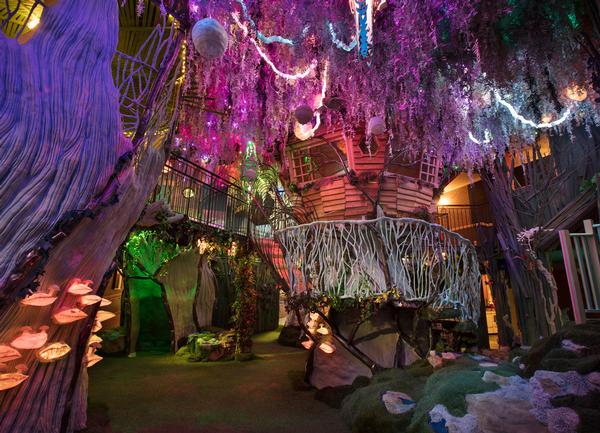
Based on the idea of a house with secret passageways, it’s a new genre of entertainment, putting storytelling into art for people to explore. As kids we always have that dream of magical spaces: it’s an idea which has been explored a lot, for example in Coraline and The Lion, the Witch and the Wardrobe, so we were playing with a proven trope. We empowered the artists to create, but because finances were tight we had a hard deadline. We first had the idea in August 2014 and it opened in March 2016.
I thought if children’s museums could get 100,000 visits a year, then we could get 150,000. We actually received 400,000 and made $6.8m in the first year.
Who came and why was it so successful?
Our marketing was good: we leveraged George’s name and used social media effectively. But also the consumer was ready: Burning Man had reached a cultural apex and people were open to experiencing new things which were weird and unexpected.
We expected to attract the more alternative and progressive families, but were surprised to find soccer moms from the Midwest travelling to visit. They probably didn’t vote for the same president as me, but they seemed to enjoy the experience. Many walked in apprehensively, but by the time they’d got on their hands and knees and crawled through the fireplace and the fridge, they were full of smiles.
Twenty per cent of visitors to House of Eternal Return are under 15, and 20 per cent are over 65. We’re very proud about pulling in the three generations.
With House of Eternal Return being so successful, did it make the next site easier?
We had some money behind us, and weren’t living pay cheque to pay cheque, but we had more to lose. The House of Eternal Return had been built quickly and on passion, but we couldn’t work like that again – we needed proper salaries, benefits and annual leave.
We started looking for other venues, and opportunities came up in Las Vegas and Denver at the same time. We hired 500 people in all kinds of creative disciplines to build the exhibitions. Once we started concept development we realised it would be insanely more expensive than we had initially imagined, so I spent 18 months fundraising, pulling in $200m.
To do two projects at one time was ambitious and insane. We won’t do it again.
Omega Mart opened this year in Las Vegas. What is the concept?
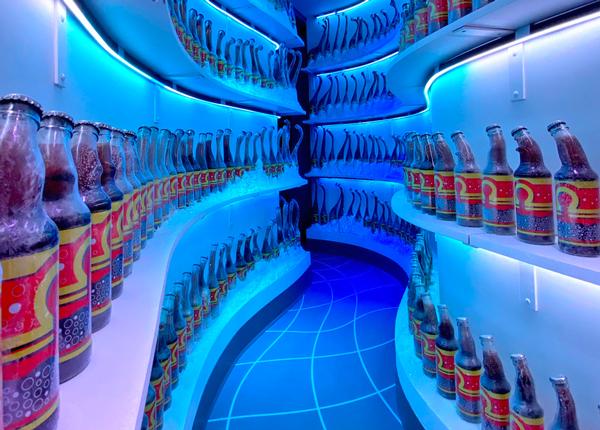
We decided to play off the consumerism of Vegas, using the concept of a grocery store owned by an evil corporation. Omega Mart tells the story of the corporation and the addictive products they create. My favourite products include a butter-scented air freshener called ‘Who Told You This is Butter?’ and a breakfast cereal called ‘Rumoured Associates’.
What impact did COVID have?
It slightly delayed us, but because construction was deemed an essential business we were allowed to continue working. The main issue was that House of Eternal Return was closed, so our bottom line was hit significantly. There has also been a phased opening, but it’s now going insanely well.
How will COVID impact attractions?
COVID-19 has accelerated existing trends, such as streaming content and shopping online. People were already questioning why they needed to leave the house and that question became even more pertinent once risk was involved. With most necessities now able to be done from home, the reason to leave the house is for experience.
Streaming services were fuelling the decline of movie theatres and that’s accelerated. What used to be an anchor is now dying, so mall developers need to take a fresh look at how to fill these spaces. This offers an incredible opportunity for value creation combining art, following the Meow Wolf blueprint.
What’s next for Meow Wolf?
Denver is the next stop and will be a landmark site, opening fall of this year. It’s our biggest and most complex project to date. Denver is a different community, so it will have its own energy and be a massive amalgamation of dimensions, making it unforgettable and transformational.
Immersive, psychedelic, mind-bending art and an underlying rich narrative will define journeys of discovery into a surreal, science-fictional epic. (More: attractionsmanagement.com/denver)
Next we’re interested in moving into any areas where creativity is involved: video gaming, film and TV, hospitality, collaborations with other attractions. We’ve already themed a dark ride for a Denver attraction – making it the first art-centric dark ride – and we’d love to do a rollercoaster.
Would you like to see more art used more in the attractions industry?
Absolutely. I would like to challenge the industry to empower artists to create original work and act in a more abstracted and culturally relevant way, investing in art which is weird, colourful, inspiring, share-worthy, challenging, original, diverse and culturally meaningful.
Parks have so much space for murals, sculpture, outdoor art, light art, immersive art, artful play spaces, immersive theatre and performance art.
Imagine if original expression was valued above IP replication and dark rides were seen as an artistic medium for original expression and abstraction.
If exploration and discovery, wonderment and inspiration, magic and weirdness, were valued higher than adrenaline and sugar, the amusement and theme park industries could become the largest supporters and employers of artistic expression ever.
The impact the visitor attractions industry could have on expanding the minds of communities through this kind of work would be astounding.
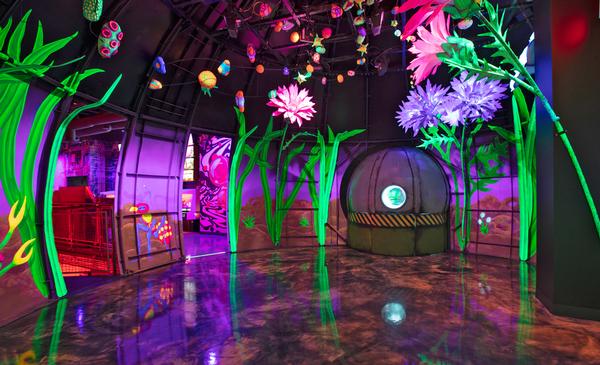
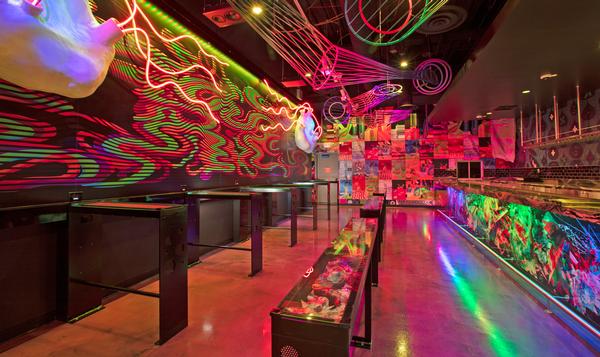
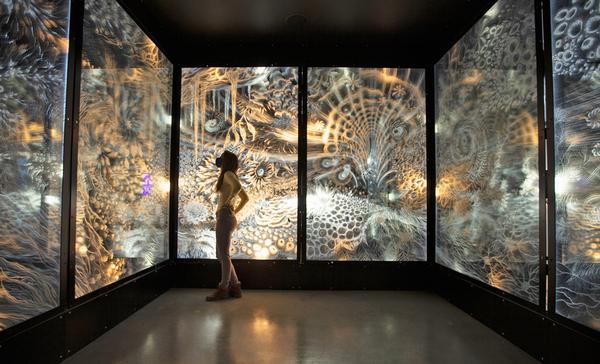
A trippy experience, which pushes the boundaries of space and reason, Omega Mart is an extraordinary supermarket which bursts into surreal worlds and unexpected landscapes. An experience in imagination and immersive storytelling.
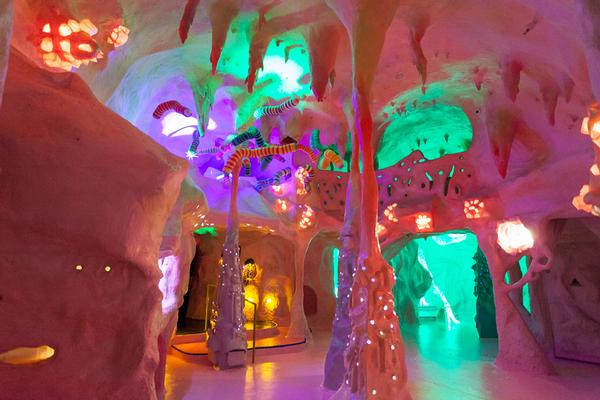
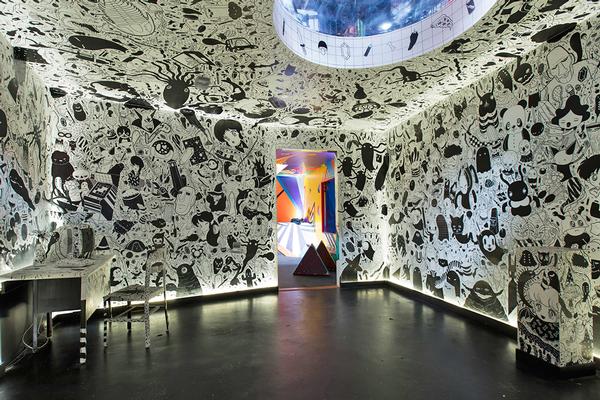
Through secret portals, visitors can explore more than 60 rooms of interactive, larger than life art, and follow the fictional storyline interwoven through the exhibit. Passing through a fridge into a different world, the experience is part video game, part escape room and part immersive theatre. Many of the products are art which is for sale, such as Plausible Deniability laundry liquid or Sweet Whispers toilet paper.
Using art to take people out of themselves, people are encouraged to experience it – explore the secret passage ways and narrow corridors; crawling, climbing and sliding through exhibits.
Guarding against sensory overload and inaccessibility, there are always alternative routes which are 100 per cent accessible, doors and pathways leading to strobing or excessive flashing lights are marked and several of the rooms offer a more minimal sensory experience.

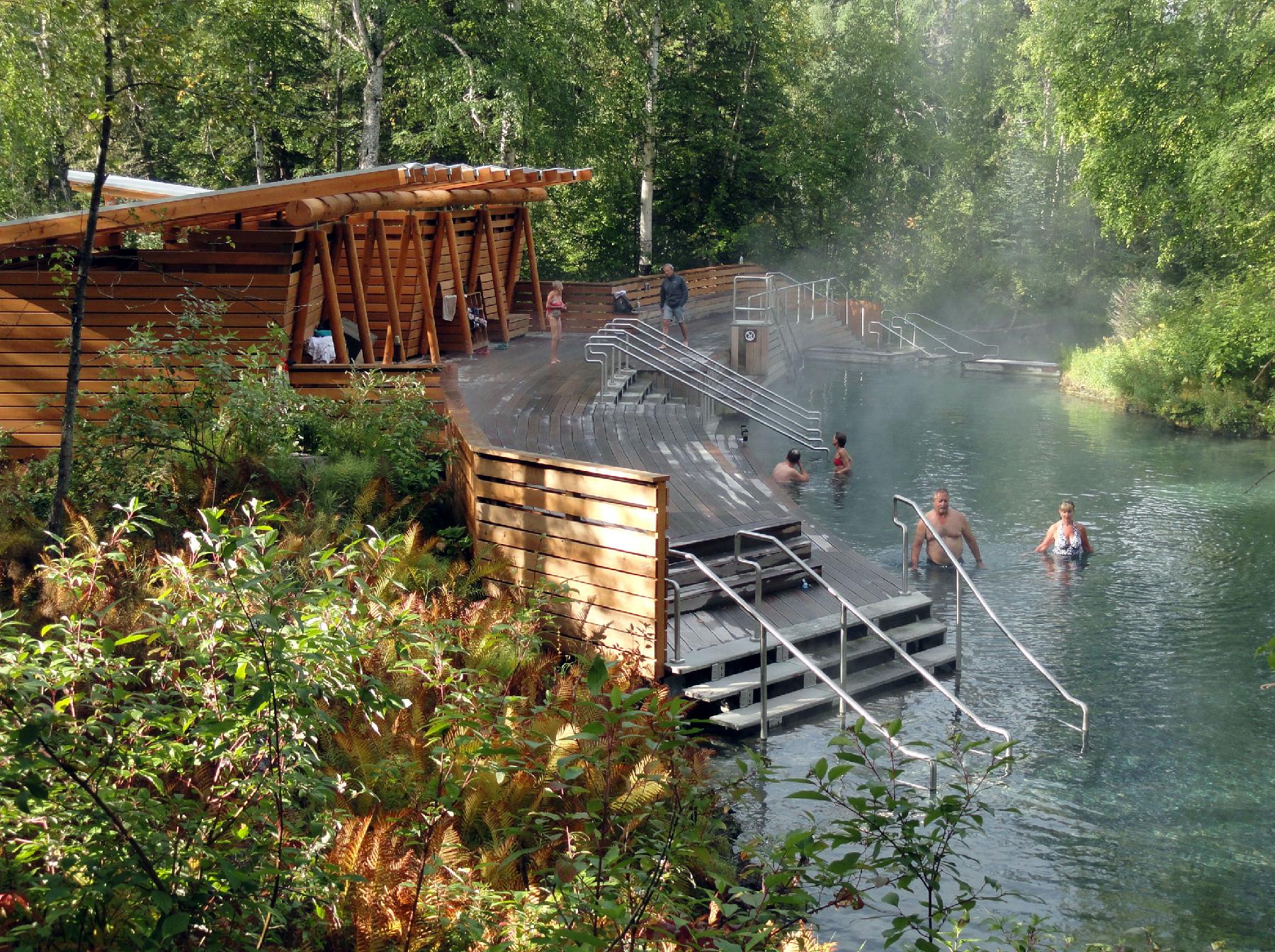






Designed to restore neglected land and renew the identity of Iraq’s capital city, Baghdad Sustainable Forests promises a new way of living surrounded by nature. Gensler’s Ian Mulcahay tells us why he thinks the project could become a model for the repair and enhancement of urban centres