News report
Mental health
A new study from the Global Wellness Institute highlights the scope of the $121bn mental wellness market, as Katie Barnes and Megan Whitby report




The Global Wellness Institute (GWI) has identified mental wellbeing as a US$121bn (€101.6bn, £91.8bn) segment of the global wellness economy, based on consumer spending in four markets in 2019.
The figure was released in the GWI’s new study, Defining the Mental Wellness Economy, claimed to be the first paper to define mental wellness as its own industry.
Researchers say the industry encompasses businesses whose primary aim is to develop our internal mental wellness resources.
A definition
The report defines mental wellness as more than just an absence of mental illness. Instead, it’s an internal resource that helps us think, feel, connect and function; it’s an active process that helps us to build resilience, grow and flourish.
Due to COVID-19, mental health issues and mental unwellness are on the rise and taking their toll on individuals, families and society.
Furthermore, the World Economic Forum has estimated mental illness and mental unwellness will cost US$16.1trn (€13.5trn, £12.2trn) globally in 2030.
In response, the report argues mental wellness can provide strategies to help increase wellbeing and be used as a pathway to ease the financial burden caused by mental unwellness and illness – a point it hopes will incentivise governments and business to promote and invest into mental wellness.
“Clearly, the human suffering and economic dislocations caused by the pandemic have increased demands for mental wellness pathways and solutions on a global scale,” said co-authors Katherine Johnston and Ophelia Yeung.
“Not enough attention is paid globally to mental illness prevention and mental wellness promotion.
“Practices that improve our mental wellness don’t only lessen the symptoms of mental illness, but also reduce the risk of developing a mental illness,” they added.
A new category
The GWI has now added mental wellness as a new industry bubble to its Global Wellness Economy framework, which defines and measures the size of the US$4.5trn (€3.8trn, £3.4trn) global wellness economy.
Johnston shared that next year’s research will focus on updating the framework diagram, which will hopefully show the impact of coronavirus on the industry in a post-virus world with a vaccine.
The paper officially launched on 9 November, the first day of the annual Global Wellness Summit (GWS), which was held in Florida, US.
Find out more about the spa and wellness market in Spa Business magazine www.spabusiness.com
The largest mental wellness sector, this category spans products, services, and design that target both our senses and the mind-body connection, with the growing understanding that environmental stimuli have a major impact on our mood, stress levels and sleep.
Sleep is the goliath sub-segment of the research, with an exploding array of sleep- and sleep-environment-optimising solutions, including smart bedding and sleep accessories; sleep apps, wearables and trackers; and sleep retreats and nap cafés.
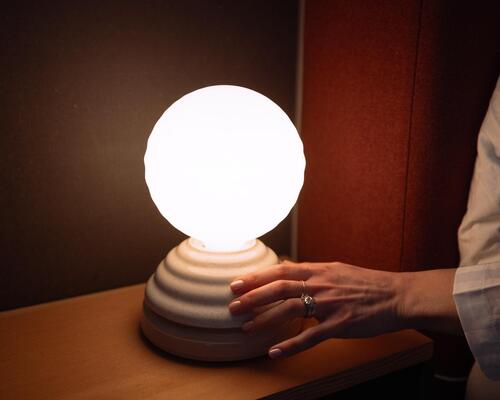
The segment includes sound (sound therapy, white noise, noise cancellation and wellness music); scent (aromatherapy, home fragrances and diffusers); touch (stress toys and gadgets and weighted blankets); and light (human-centric light and light therapy consumer devices).
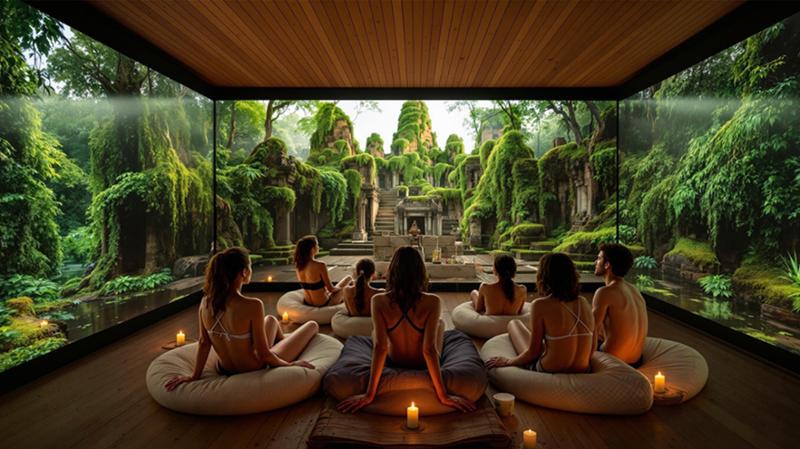
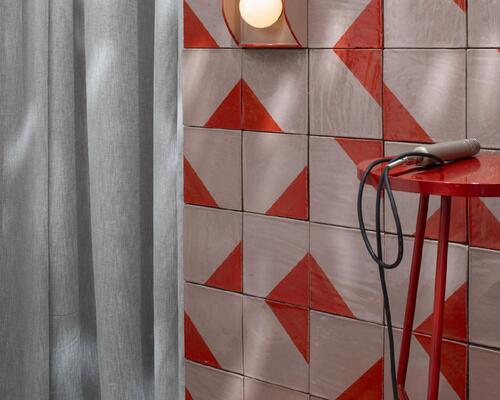
It also includes multisensory experiences (from flotation tanks to forest bathing), wellness travel, spa, fitness and entertainment destinations and sensory-based design and architecture (biophilic design and circadian lighting).

This category spans a wide range of activities associated with self-help and personal development, including classes, workshops and retreats; self-help books, media, videos, apps and online platforms; self-help gurus and influencers; personal and life coaches; self-help organisations and mutual support groups; cognitive enhancement and brain training products/services; creative organisations and interventions that combat loneliness and isolation.

While meditation and mindfulness are the approaches most firmly associated with mental wellness, it’s the smallest (if an extremely fast-growing) market, because while millions of people worldwide practise meditation, only a small fraction spend money on it.
The category includes all forms of meditation practice, related mindfulness practices (breathwork, guided imagery, body scan, relaxation exercises), and products and services that support these practices.
Key spending categories include classes, teachers, retreats, books and online platforms with mobile apps (such as Calm, Headspace, Insight Timer) – a huge driver of consumer adoption and spend.
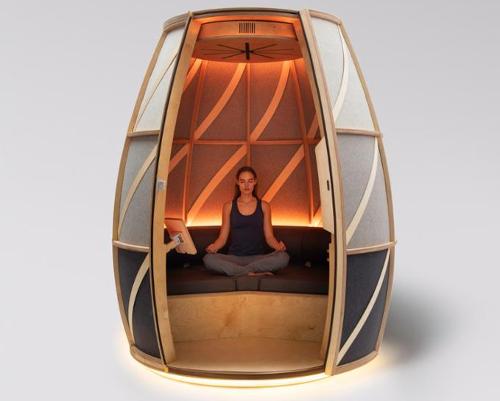
There’s a growing market for meditation accessories (cushions, beads, chimes) and mindfulness products (journals, colouring books), as well as a fast-growing range of connected gadgets, trackers and monitors to support meditation (headbands, glasses, wearable sensors, lamps) – many of which build on biofeedback, neurofeedback, and VR technologies.

This covers ingestible products developed with the specific goal of improving mental health and wellbeing, including natural supplements, herbal and botanical products and functional foods and beverages. These often claim to boost brain health, sleep, memory and energy.
The category also includes plant-based substances that are increasingly used for mental wellness, with the legal cannabis and derivatives market growing rapidly in the last couple of years and cannabis, hemp, and CBD making their way into many supplements, foods, and beverages.
The segment also includes functional mushrooms, with some seeing a rapid acceleration in clinical research for use in mental health and wellness.
GWI researchers say the quickening relaxation of regulation in some countries means plant-based psychedelic drugs will increasingly be used for both mental wellness and clinical treatment. For example, in the US recently, Oregon legalised Psilocybe cubensis and the District of Columbia decriminalised the recreational use of psilocybin and other psychedelics.





Designed to restore neglected land and renew the identity of Iraq’s capital city, Baghdad Sustainable Forests promises a new way of living surrounded by nature. Gensler’s Ian Mulcahay tells us why he thinks the project could become a model for the repair and enhancement of urban centres