Obesity
Bidding for the obesity buck
From health clubs and urban planners to science centres and drug companies, everyone is pitching to solve the problem of obesity. Kath Hudson takes a look at some of the groups and their proposals



According to the UK think tank Overseas Development Institute, one in three people worldwide are now overweight. Even developing nations are getting fatter, as incomes rise and diets become more and more fatty and sugary.
There’s a large consensus of expert opinion that says the obesity epidemic is down to a combination of easy access to cheap, highly calorific food – which is often aggressively marketed – and increasingly less active lifestyles.
So what’s the answer? Various industries have claimed they hold the key to tackling the obesity crisis and while the debate rages about whether obesity is a disease, a disability or a lifestyle illness (see HCM Aug 14, p5), this is a business opportunity where there’ll always be plenty of demand.
We look at some of the proposals currently being put forward by groups aiming to own the opportunity.
SCIENCE CENTRES
On the basis that they can hold conversations with the public, science centres have recently put themselves forward as part of the solution to the problem of obesity.
For the past three years, 17 science centres across Europe have taken part in the EU initiative Inprofood. This asks the public if they think governments should take responsibility for the obesity epidemic, or if it comes down to individuals. This November, the results will be collated and the feedback from different nations compared.
In a separate initiative, Ecsite – the European organisation representing science centres, museums and institutes – created the PlayDecide discussion game, aimed at 14- to 21-year-olds, questioning them about issues such as eating disorders, food waste, sustainable eating and personal accountability for food choices.
According to Ecsite, the results so far show that the majority of people believe decisions and choices related to lifestyles should be left to citizens, but they think governments should regulate certain areas, such as food labelling and prices, and should support healthy food providers, provide infrastructure and encourage physical activities.
Respondents also believed healthy lifestyles should be part of the school curriculum and that school meals should be carefully chosen.
SCHOOLS
With its Food for Life partnership, the Soil Association has been campaigning for better school dinners since 2001. As well as driving up standards of food in schools, with a Catering Mark to sign up to, the partnership also educates on cooking and growing food. Currently 20 per cent of schools have signed up to the Catering Mark.
According to Amy Leech, senior policy advisor at The Soil Association, independent evaluation of Food for Life saw a 28 per cent increase in primary school children eating five portions of fruit and vegetables a day. “Working with schoolchildren is incredibly important,” says Leech. “The habits we form in our youth stay with us for life.”
It’s encouraging to see that school meals are high on the government’s agenda, with the implementation of the School Food Plan, including plans to offer universal free school meals to infants, coming into effect from September. Now The Soil Association is aiming to tackle hospital food. “We think the health sector should be setting an example,” says Leech, “especially as good nutrition aids patient recovery.”
HEALTH CLUBS
Dave Stalker, CEO of trade association ukactive, argues that there needs to be more emphasis on getting people moving, since being physically active can lessen the chances of serious illness in overweight and obese people.
“Obesity is the loud, out-there issue, but inactivity is the silent killer,” he says. “Obesity will only be truly tackled when the food manufacturers reduce the sugar and fat content in food, so ukactive wants to move away from the obesity debate and engage in a debate on physical inactivity.”
According to ukactive, one-quarter of the UK population are physically inactive and this costs £20bn in public health funding each year. “Focusing on physical inactivity would have a knock-on effect on obesity. It would save the NHS and the health of the nation. You can be fat but still be fit,” says Stalker.
ukactive would like to see a rebalancing of public health spending, so that more is invested in promoting physical activity. “Our dream would be for there to be a fitness or community exercise professional in each GP surgery, counselling people to become more active,” says Stalker. This approach has proved successful in a programme piloted by ukactive in Essex (see Let’s Get Moving briefing, right).
SLEEP EXPERTS
There’s a growing body of evidence to suggest sleep deprivation can lead to obesity (see briefing below). Several theories have been mooted as to why. Sleep-deprived people may be too tired to exercise, or they might eat more as they’re awake longer and snack at night. Also, lack of sleep disrupts the balance of key hormones that control appetite, so sleep-deprived people may be hungrier than those getting enough rest.
So should governments be increasing awareness about the benefits of a good night’s sleep? And should there be more health interventions to help those who have difficulty sleeping?
Sleep psychologist Dr Andrew Mayers says he would like all GPs to be trained in sleep-related issues – or else be able to refer people on to someone who is. “This area of mental health is undervalued and has received a disproportionate amount of cuts,” he explains.
Privately-run sleep initiatives are springing up and it’s likely the sleep industry will start to grow as part of the wellness industry. London already has a Sleep School and hospitality operators are beginning to offer retreats for insomniacs – such as the Deep Sleep Retreat at Grayshott Spa in Surrey.
PARKS
One of the reasons people have difficulty sleeping is because of stress, and this can also lead to weight gain. The stress hormone cortisol causes an increase in appetite, and when we’re stressed we’re more likely to reach for high-calorie comfort foods.
“One of the cures for stress is to eat sugar and fat: the body is designed to crave this, as it gives energy quickly,” says Dr William Bird, founder of Intelligent Health. “When we were hunter gatherers, in times of stress, conflict and famine we would crave fat. When you’re stressed, you become less active and eat the wrong things.”
Bird believes a three-pronged approach is needed to tackle this issue: environment, community and purpose. He says the environment we live in has a great deal to do with our weight, stress and activity levels. “The more deprived the neighbourhood you live in, the more stressed you’ll be,” he explains. “That’s why there are high levels of obesity and inactivity in areas of deprivation.
“Green space offsets that stress, so if you live near a park or if you visit a green space regularly, it has been shown to increase your life expectancy because your stress levels drop and then your habits change: you become more active and eat better.”
BARIATRIC SURGERY
Inserting a gastric band to inhibit appetite and reduce food consumption has become a mainstream solution since it was recognised by NICE in 2002.
The NHS has a framework whereby people are assessed to show they are committed to change, and then have to engage in a year-long programme before surgery. Even then, however, it can be difficult to assess who’ll do well and who won’t, according to consultant bariatric surgeon at Nuffield Health Leeds hospital Simon Baxter.
“It’s not a magic bullet, but it can kickstart a healthy lifestyle. The benefits last for around three months, so people have to change their lifestyles to achieve long-term weight loss and health benefits,” says Baxter.
Studies show bariatric procedures cause significant long-term loss of weight, recovery in diabetes, improvement in cardiovascular risk factors and a reduction in mortality of 23 per cent from 40 per cent.
Baxter says studies are showing bariatric surgery shows a rapid return on healthcare costs. “If someone has a co-morbidity such as diabetes, it can be cheaper to operate on them than pay for the ongoing medical support,” he explains. “The other thing is that severely obese people often don’t work, whereas after surgery they may go back to meaningful work, pay taxes and contribute to the economy.”
While it can help, Baxter adds that this approach is only scratching the surface of the problem of obesity.
MEDICATION
Obesity medication can lessen appetite, make people feel full sooner, or make it harder for the body to absorb the fat from food. However, these drugs are known to have some undesirable side-effects, including stomach pain, diarrhoea, constipation, headaches, dizziness and insomnia. The chance that the side-effects may outweigh the benefits is of great concern and the medical profession only prescribes them for serious health issues.
However, if a pill could be found that was effective in bringing about weight loss without side-effects, it could provide a solution that most people – and GPs – would prefer to use.
Whatever the answer, the clock is ticking. Food and drinks companies will continue to keep pumping glucose syrup into products until governments find they are spending more on treating obesity than they recoup from taxes and other economic benefits from these companies. Nations will continue to get fatter and health services will find it increasingly difficult to cope.
In the meantime, any help in terms of education and the promotion of healthy lifestyles is of value, as many people are worryingly ignorant about the causes and dangers of obesity.
According to research by Nuffield Health, which questioned 3,100 UK adults, many obese people think they are just overweight and don’t realise they’re putting their health at risk. Of those questioned, 44 per cent said they had no concerns that they were putting themselves at risk of serious illness or premature death as a result of their weight issues.
This feature first appeared in Leisure Management, issue 3 2014.
LET’S GET MOVING
ukactive has piloted a programme, Let’s Get Moving, which is aimed at previously inactive people in danger of developing chronic diseases related to their lifestyle choices.
Funded by Sport England and supported by local authority public health teams, the programme’s aim is to create a pathway for sustainable involvement in sport and physical activity for those who are currently inactive. The pilot was carried out with a consortium of partners with five Primary Care Trusts across the county of Essex, UK. It saw 504 participants amass a total of 48,000 active hours, walking 69,000 miles.
Let’s Get Moving uses a GP referral model based on motivational interviewing techniques, designed to elicit information on the basis of which the patient can be referred to a qualified exercise professional for a fully supported programme.
In the coming months, additional funding will come from Nesta, enabling the incorporation of a peer-to-peer element that will involve patients being mentored by a trained volunteer and introduced to a network of peer supporters. The programme will also go to new areas, starting with Essex County Council and then rolling out more broadly.
A GOOD NIGHT’S SLEEP
A study funded by cancer charities and carried out by the University of Oxford has found a link between light levels in women’s rooms at night and their weight. Researchers speculated that melatonin might play a role, as it’s a hormone whose production is inhibited by exposure to light and is thought to play a role in metabolism.
A study funded by the American Diabetes Association at Temple’s Center for Obesity Research and Education in the US looked at the impact of sleep on children’s eating behaviours. When the children taking part in the study slept more, they consumed an average of 134 calories less per day, weighed half a pound less and had lower fasting levels of leptin – a hunger-regulating hormone which is highly correlated with the amount of adipose tissue – when compared to results monitored in a week when they had less sleep.
A study at Massachusetts General Hospital for Children analysed data from 1,046 children over a number of years by interviewing their mothers about their sleep patterns and, at the age of seven, measured their height and weight, lean body mass, waist and hip circumference, total body fat and abdominal fat. Researchers found an association between sleep curtailment and obesity.

URBAN PLANNING
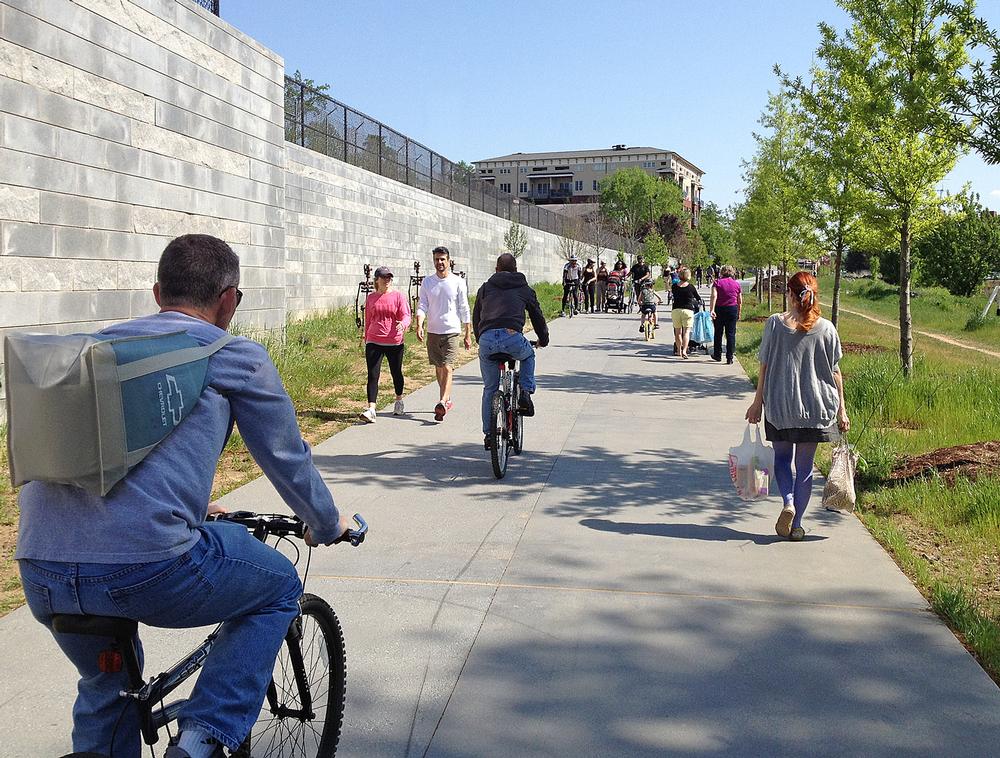
Ryan Gravel, senior urban designer at US architectural practice Perkins + Will, believes environment plays a key role in health. He came up with the idea for the Atlanta BeltLine Corridor – a 22-mile loop of green trails made out of old railway lines – around Atlanta, US. The trails link 45 neighbourhoods and have 100,000 people within walking distance of them. It has proved to be a magnet for both exercise and active commuting.
“The infrastructure we build really matters,” says Gravel. “If we build sidewalks and greenways and public transit networks, then the market responds with compact, walkable urban districts. If all we build is highways, then we’ll continue to have a very spread-out, separated, car-dependent lifestyle. Car dependency clearly has negative impacts on public health, so at a minimum we should stop incentivising and even subsidising it.”
Perkins + Will are consulting on more than 30 similar projects around the world. Fore more details, visit: www.beltline.org















Designed to restore neglected land and renew the identity of Iraq’s capital city, Baghdad Sustainable Forests promises a new way of living surrounded by nature. Gensler’s Ian Mulcahay tells us why he thinks the project could become a model for the repair and enhancement of urban centres