Features
Residential gyms
Developers are incorporating leisure facilities into their residential schemes to enhance exclusivity and add value. Neena Dhillon asks health and fitness operators in the UK and the US how this growing sector can best be served



Browse through the property pages of major newspapers and the signs indicate the housing market is on the move once more. As the UK government considers pushing through changes to planning regulations that will allow for more office blocks to be converted to residential, it seems as though our big cities could be on the verge of welcoming a greater number of walk-to-work homes.
Property developers keen to promote the benefits of their new residential schemes are increasingly listing on-site leisure facilities as a key selling point in their pre-opening marketing campaigns. So as health clubs become an integral part of residential urban communities, what are the opportunities for operators interested in this niche sector?
GROWTH SECTOR
UK-based consultancy Motive8 began designing residential gyms 10 years ago, as managing director Nick Sadler explains: “We initially designed home gyms for individuals, which led to us branching out into apartment blocks. As I used to live in New York, where it was commonplace for residential towers to have their own gym, I took inspiration from that model.”
The consultancy has since worked with companies such as Barratt Homes and Savills on 140 residential sites in cities across England, many of which are designed, built and managed by Motive8’s 49-strong team.
Sadler says there is growth in the sector, partly driven by people taking greater interest in their own fitness, and partly by developers seeking to maximise their commercial spaces. “In a high-rise block, the ground floor is usually allocated to commercial use, so not only does the installation of a gym give developers an edge over competitor schemes, but it also means they can recover some of their costs via a service charge generated from renting the space back to the tenants’ association.
“From the residents’ point of view, think of the annual saving a couple can make when they don’t have to pay separate gym membership, because they have access to facilities on a par with a health club through their service charge.”
IN IT FROM THE OUTSET
Residential gyms are no longer an afterthought. Instead, developers are approaching operators at the planning phase of a new build, seeking input into the size, layout and fit-out of an on-site club. With required services ranging from design consultation to a turnkey solution – where a health club is built, maintained and managed by an operator – business models are typically based on consultancy fees or a management contract.
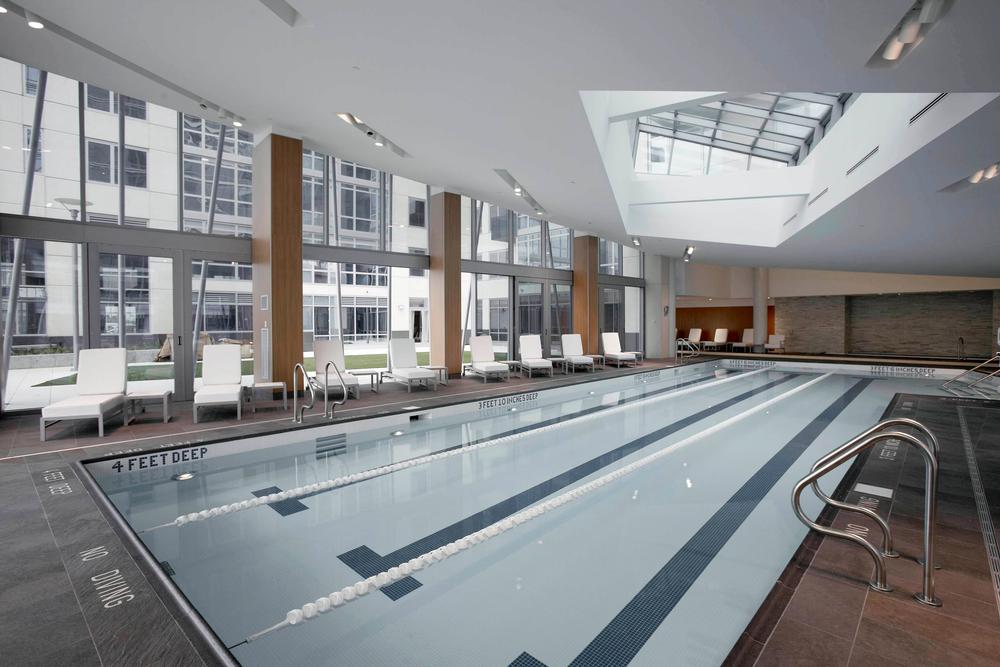
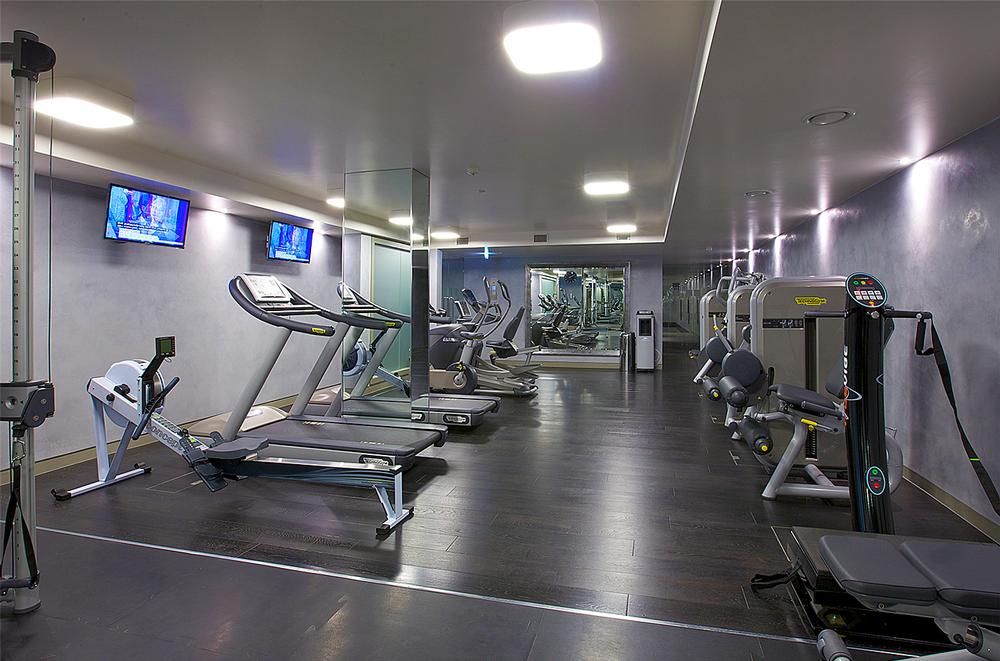
One of Motive8’s latest projects is a 370sq m (4,000sq ft) gym and spa at The Lancasters, a luxury 77-home development by Northacre and Minerva, overlooking Hyde Park in London, UK. Comprising a swimming pool, state-of-the-art gym, sauna, steam and treatment room, the facility is open exclusively to residents. Motive8 is responsible for monthly technical maintenance of the part-time managed site. It also supplies staff such as PTs, fitness instructors and therapists, who are charged out to residents at a fee, and it has marketed the gym with a bespoke brochure.
“We don’t pay rent or other operating costs and enjoy healthy margins by providing services, products and staff to this sector,” acknowledges Sadler. “But there are certain things you have to get right. Developers expect amazing customer service; you’ll need to put in the hours to work with these demanding clients. An understanding of the industry is also required because a developer, architect, interior designer or management company might engage you.
“Finally you need an innate grasp of how to tailor your marketing. Affluent residents may respond to awareness drives in the form of glossy brochures or the offer of exclusive spa products. Others may be motivated by incentives like a free nutritionist consultation if they buy five PT sessions.
“Some of our sites have a daily footfall of 70–90 residents. This is essential to secure future work: you must prove to developers that a gym is a worthwhile investment.”
As an example of “going the extra mile”, Sadler explains that Motive8 has established sinking funds at selected full-service locations. This is to enable the repair and upgrade of equipment years down the line: “Once a developer has sold a block and its accompanying freehold, it often won’t commit further investment to the leisure facility. We prepare for this eventuality with a fund that can be accessed by the management company when the time comes.”
BALANCING AUDIENCES
As a new entrant to the sector, with five residential clubs in south-east England, Nuffield Health has incorporated this stream of business into its corporate wellbeing division and is looking to expand through partnerships with developers such as Ballymore. In two of the sites it operates, Nuffield works on a management contract basis, taking a monthly fee with a built-in margin.
“Some developers see a health club primarily as a promotional tool and are therefore willing to subsidise a residents-only facility because of the marketing benefits,” says account director Chris Harrison. “After all, would you rather live above a Tesco Express or a full-service health club?”
Nuffield, though, is equally interested in evolving a more commercial model, enabling it to take on a development’s facility akin to a leaseholder, by assuming responsibility for all costs and profits. Harrison explains more: “Under a management contract, much of the risk sits with the developer or freeholder. We’re seeking control of our own destiny by taking on the risks and costs associated with fitting out and operating a club, while also keeping any income generated from the space. For this model to succeed, a developer must agree to the health club being opened out to non-residents.”
A feasibility study – exploring indicators such as local demographics, head count and location – is carried out to assess whether Nuffield can sell sufficient ‘outside’ memberships to boost the fixed income due from the residents’ service charge. Just as potential income is input into a P&L, so too are costs such as initial outlay for equipment, club maintenance and monthly service charges back to the freeholder (examples include utilities, security and grounds upkeep).
Harrison points out, however, that careful consideration should be given to the number of non-residential memberships being sold, to ensure a developer does not believe its building and residents are no longer a priority.
Opened in 2012 by Nuffield, the 1,425sq m (15,340sq ft) Club Baltimore is part of the Baltimore Wharf development in London’s Docklands. With 1,000 paying members (on a fixed monthly fee of £49.50) and 1,000 residential members, the club offers an array of facilities from a 75-station gym to a boxing ring, swimming pool and 44 group exercise classes a week.
“We launched with a heavy local marketing campaign to achieve our target goal of 50/50 residents/non-residents. It helped that the club has its own high street frontage,” says Harrison. “Having said that, residents really do see Club Baltimore as an extension of their homes, and often introduce friends to the site. So not only do we have ready-made membership with good retention levels, but there’s word-of-mouth too.”
Nuffield has aimed to engender a sense of belonging by launching three clubs-within-club, all offered as part of the studio timetable. Fight Club, for example – for those interested in exercise-based sessions in the boxing ring – encourages residents to train together by attending regularly.
There’s a sizeable area equipped with a pool table, table tennis, table football and Xbox, where residents are invited to unwind and socialise with neighbours. As a further incentive to use Club Baltimore, residents receive discounts on PT sessions.
“There are constraints to the model because you still report to your client, who will expect to be shown that your priorities remain aligned,” Harrison adds. “But when the relationship works, with a tight agreement in place from the outset, the residential sector is an attractive proposition.”
HOLISTIC HEALTH
As a pioneer in the US market, American Leisure operated the first sizeable lifestyle centre to be opened by a real estate developer in Manhattan in the 1980s. Today the company manages over 80 locations in New York, New Jersey and southern Florida.
President Wendy Bosalavage says that sophisticated US consumers are driving growth: “Savvy consumers who are buying or renting property now expect leisure facilities at home to be on a par with the best commercial health clubs. In New York and the surrounding regions, the market is benefiting from new developments in urban and suburban neighbourhoods, where real estate companies are looking to create a sense of community through lifestyle centres.”
Bosalavage explains that the term ‘lifestyle centre’ is pertinent, indicating a range of services beyond a traditional gym – incorporating fitness machines, movement studios, therapy rooms, dry and wet spa areas, swimming pools, basketball courts and lounges. In return for operating the facility and providing staff – depending on the client, requirements can vary from fitness to cleaning teams – American Leisure takes a management fee and captures additional revenue from specialised services such as swimming lessons, massage and personal training. The company budgets for the running costs of a centre either through a share of the residents’ common charge or, in the case of rentals, by estimating a monthly membership fee for individuals below market value. This is so the developer can run a self-sustaining facility rather than make a profit.
“We’re there to support real estate companies to leverage their developments for sale or rental and, as such, we’re brought in at the conceptual stage to assess local demographics and incorporate the latest lifestyle trends,” Bosalavage explains. “We shape the design and content of the bricks and mortar – so, for example, we will tailor the type of branded equipment according to the demographic. This may mean installing a significant free weights area for a young audience, or looking at facilities that support functional medicine for the over-50s. But in addition to the bricks and mortar, we provide forward-thinking programming.”
In real terms, this equates to American Leisure staff working with residents to create programmes with measurable goals. “Using the technology inherent in modern residential developments, we disseminate information about our clubs, free community events and programme offerings,” she continues. “We hold regular focus groups so we can respond to changing needs.”
A newly launched initiative is ‘Your Wellbeing’, which invites residents to consider five pillars of wellbeing: physical, emotional, intellectual, social and mindful. Under the programme, a resident could enjoy a two-hour ‘digital detox’ session by playing backgammon or table tennis with neighbours. Intellectual stimulation could come in the form of film screenings, wine tastings or cookery lessons, all within the setting of the lifestyle centre. While those residents engaging with the Your Wellbeing initiative will be charged for this type of service, some of American Leisure’s other goals-orientated programmes are complimentary.
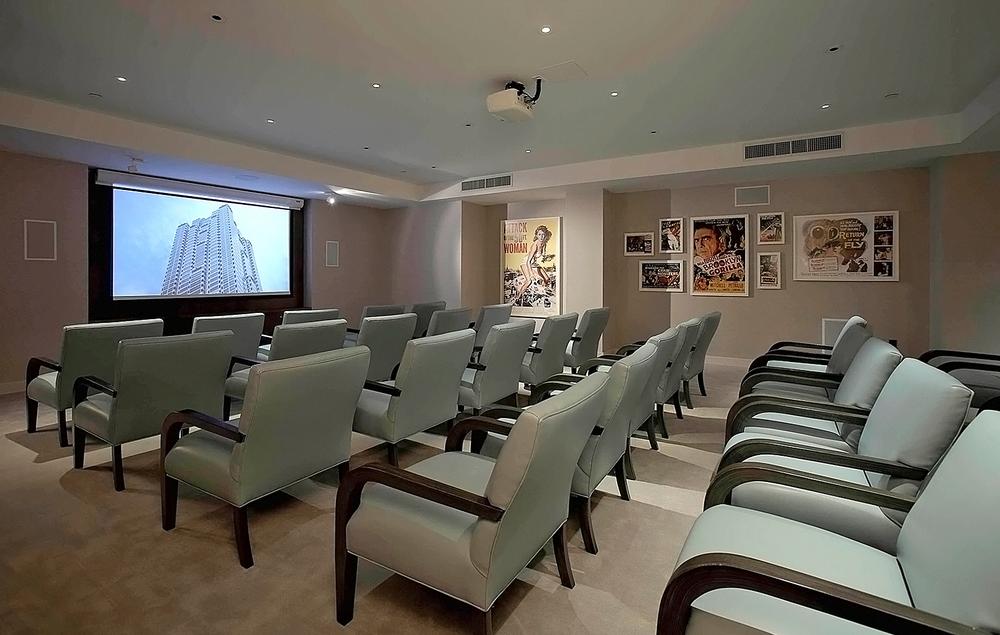
One of American Leisure’s recent success stories is Williamsburg Edge on the waterfront in Brooklyn, New York. Two buildings consisting of 780 condo units offer lifestyle centres occupying a combined space of 6,320sq m (68,000sq ft). Bosalavage describes the “quintessential” centres as incorporating the full array of lifestyle amenities, with additional touches such as a communal fire pit, chef’s kitchens and screening rooms.
The focus here was to attract and build a youthful community in an area that had once been depressed, so American Leisure ran neighbourhood contests, organised a trek, put on healthy eating dinners and designed events to highlight organic products and recipes – all with its young audience in mind.
“Our residential audiences are not transient, so it’s important to programme for a stable community and to staff centres with highly trained team members who appreciate the relevance of five-star service in a home environment,” Bosalavage adds. “This is a particularly exciting time for our industry as more time-starved people turn to the convenience of residential lifestyle centres where they can take care of their health holistically.”
NEW OPPORTUNITIES
Examples from the UK and US markets show that residential gyms are not a new phenomenon. But as more property developers seek to differentiate their schemes with sophisticated leisure facilities equivalent to the leading high street clubs, the sector offers promise to those operators who have the required stamina, imagination and commercial awareness, and who can tap into its potential by programming and marketing to different demographics.




















Designed to restore neglected land and renew the identity of Iraq’s capital city, Baghdad Sustainable Forests promises a new way of living surrounded by nature. Gensler’s Ian Mulcahay tells us why he thinks the project could become a model for the repair and enhancement of urban centres