Under-reporting of calorie intake “misleading UK policy makers”
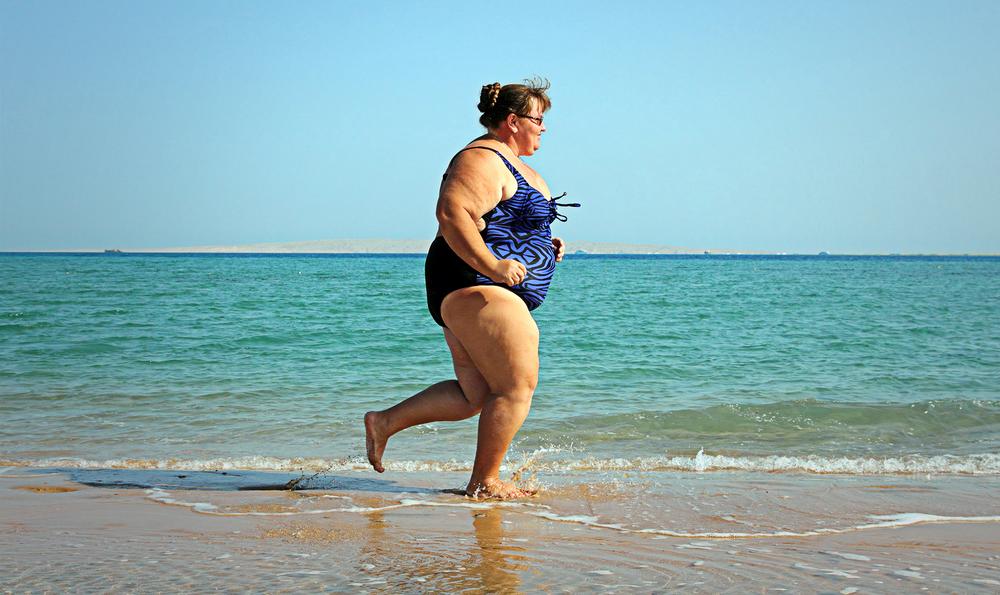
The British public has been under-reporting its daily calorie consumption, potentially misleading policymakers to focus on wrong strategies – such as increasing physical activity levels – when attempting to tackle the obesity epidemic.
The claim is made in a paper published today by the influential Behavioural Insights Team (BIT).
In its Counting Calories: How under-reporting can explain the apparent fall in calorie intake report, BIT points to scientific and economic data which shows the average daily intake to be at 3,000 calories per person – rather than the 2,000 cited in official surveys.
According to BIT, the discrepancy could explain rising obesity levels, despite decades of surveys showing people to be eating less – and could mean that focus should be switched from increasing people’s activity levels to reducing their calorie intake.
The report suggest there are three main reasons people are not accurately reporting what they eat – the difficulty of tracking snacks, “dishonesty” by those desiring to lose weight and fewer people overall taking part in the surveys.
“Several recent reports have noted that official statistics show a large decline in calorie consumption during the last forty years – the same period that obesity rates have gone up,” says Michael Hallsworth, BIT’s director of health and tax.
"If we really are eating much less, it suggests that policymakers should focus on increasing physical activity – rather than reducing consumption – in order to tackle obesity.
“However, we found that the national surveys used to measure calorie intake are under-estimating how much people are consuming. We also found that this problem has been getting worse over time – so calorie consumption may have been rising, not falling.”
Following its findings, BIT is now calling for policy makers to shift their focus from efforts to increase exercise levels to those looking to lower calorie intakes.
“Our conclusion is that policies to reduce calorie consumption have an important part to play in an obesity strategy,” the report states.
“Although attempts to increasing physical activity should be part of the policy mix, they should not act as a distraction from the central importance of reducing calorie consumption.”
The report’s findings are likely to cause a stir among those driving efforts to improve the UK’s record-low physical activity levels.
Responding to the report, Steven Ward, executive director of ukactive, said physical inactivity and obesity are “two separate issues often wrongly conflated”.
“Unfortunately, there is a lot of misunderstanding around the topics of obesity and physical inactivity," he said.
“We, and a growing number of the world’s leading health academics, have always been clear that obesity and physical inactivity are two distinct public health concerns of equal importance, which we must tackle by leading healthier lifestyles.
“Physical inactivity is a top-level health concern in its own right and the benefits of exercise cannot even begin to be measured by looking solely at waistlines.
“Physical activity has been hailed by doctors as a miracle cure which can help to treat and prevent more than 20 lifestyle-related diseases including cancer, heart disease, stroke and diabetes.
“Research from Cambridge University shows there are currently twice as many Europeans dying from physical inactivity as there are from obesity, while the recent study in The Lancet showed inactivity causes more deaths globally than smoking.
“We should follow the lead of NHS chief executive Simon Stevens, who is currently implementing an integrated workforce wellness programme for NHS staff which seeks to tackle inactivity through a range of exercise initiatives and overcome obesity by offering healthier food options.”
The Behavioural Insights Team (BIT) is a part-privatised government agency tasked with encouraging people into making better life choices.
Dubbed the government’s “nudge unit”, it started life inside 10 Downing Street in 2010 as the world’s first government institution dedicated to the application of behavioural sciences.
To read the full Counting Calories: How under-reporting can explain the apparent fall in calorie intake report, click here.
fitness obesity ukactive

BIG unveils Eve Music Hall as Croatia venue nears completion


Bob Rogers hands BRC to long-serving leadership team

Wellness care hospital opens in Vilnius with innovative spa and hospitality concept

Universal and Puy du Fou projects point to rise of Oxford–Cambridge corridor
A proposed Puy du Fou development near Bicester and Universal Destinations and Experiences’ planned resort in Bedford are emerging as part of a wider transformation of the Oxford–Cambridge Growth Corridor into a major centre for UK leisure and tourism investment.
For years, the corridor has been associated primarily with science, technology, housing and university-led economic growth. However, the clustering of large-scale visitor attraction projects along the

All-inclusive eco-wellness development Auko to open near Vietnam’s Son Doong caves
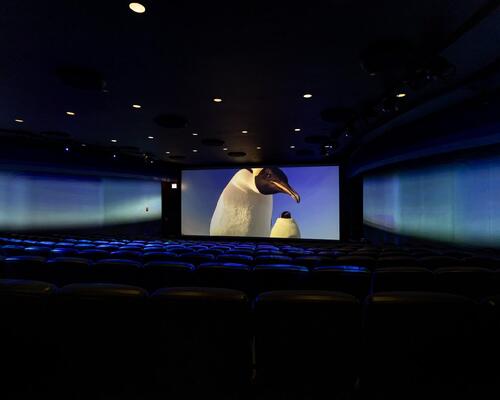
Shedd Aquarium upgrades its visitor experience with new Immersion Theater
Shedd Aquarium has opened the Immersion Theater developed in partnership with SimEx-Iwerks, as part of a wider strategy to enhance the guest experience and create additional revenue opportunities.
The attraction has transformed the aquarium’s Phelps Auditorium into a multi-sensory venue combining panoramic projection, environmental effects and interactive technology.
A new pre-show area allows visitors to engage with augmented reality marine animals before entering the

Mandarin Oriental announces standalone Mansions-branded residences for Abu Dhabi
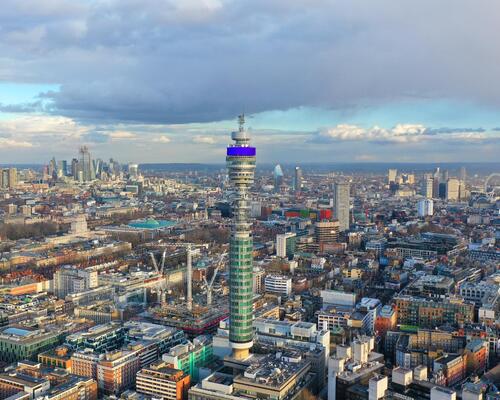
MCR is planning a luxury hotel for London's BT Tower

Joy as a radical act: Yinka Ilori launches solo exhibition celebrating the rebellious power of spreading happiness

Work gets underway on Madrid's €800 million leisure complex
Work is underway in Madrid on one of Europe’s most significant multi-functional complexes, combining sport, entertainment, culture and education.
The €800 million initiative to regenerate the former Olympic Aquatic Centre in the north-east of the city, next to the Riyadh Air Metropolitano stadium, is being led by Barsento – a joint venture between Live Nation Entertainment, Oak View Group and Atlético de Madrid. The project will
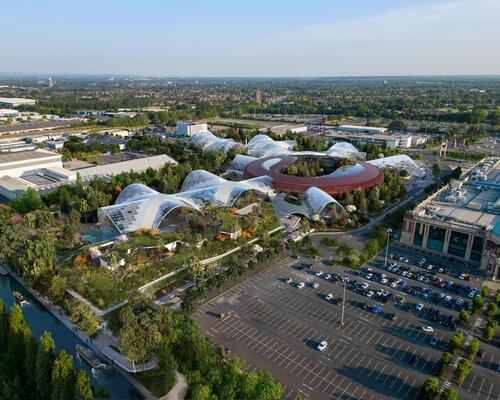
Therme Manchester reveals 90:90 strategy – 90 per cent of the UK population within a 90-minute drive of a Therme

Four Seasons’ Naples Beach Club opens 2,800sq m Sanctuary spa inspired by indigenous Calusa people
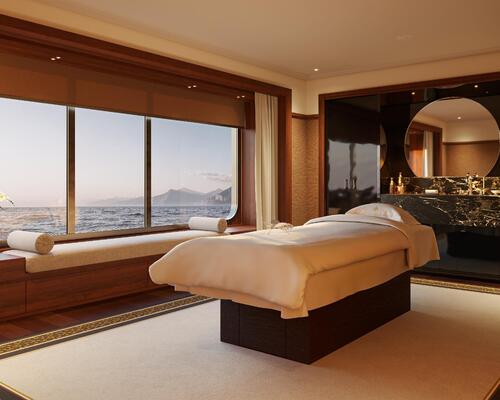
Orient Express Corinthian to host Ocean Rebirth wellness retreat in collaboration with Guerlain

Famed London nightclub, Tramp, launches Tramp Health
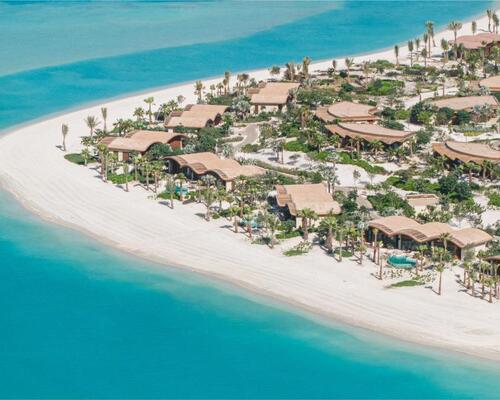
First look: Miraval opens on the Red Sea in Saudi Arabia

Hainan Science Museum by Ma Yansong, opens in China
A new science museum has opened to the public in Haikou after attracting more than 350,000 visitors during a four-month soft opening period.
Designed by Ma Yansong and his practice MAD Architects, the Hainan Science Museum is located on the edge of Wuyuan River National Wetland Park and has already recorded peak attendance of more than 5,800 visitors in a single day.
Commissioned by

Zannier Île De Bendor launches with design by Hardel Le Bihan Architectes
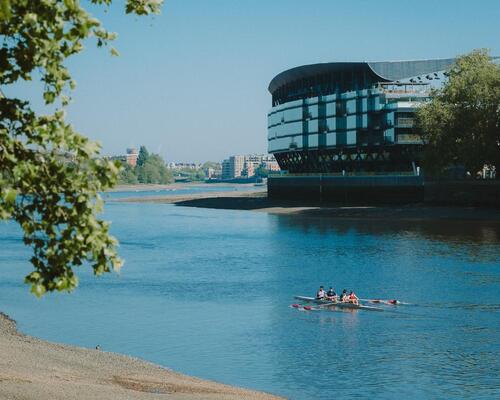
Sæl Spa readies for launch in London: “a modern British sanctuary”

Immersive art bathhouse Submersive announces debut location in Austin

Construction begins on regenerative wellness destination The Shenandoah Nature Resort

Royal Caribbean reveals record-breaking cruise ship

V&A East opens in London

David Geffen galleries open at LACMA

New venue The Lands by Capella includes a longevity centre to complement sister hotel Capella Sydney

World of Frozen launches at Disneyland Paris
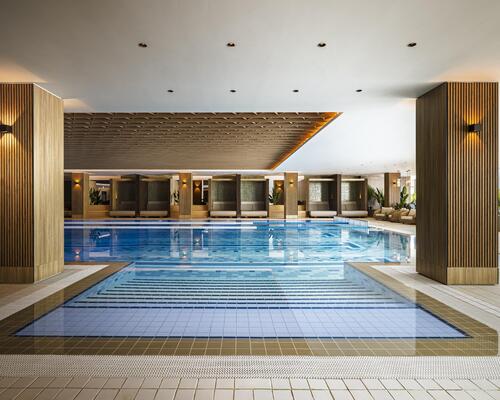
Pical Resort by Valamar reveals first Croatian spa under the ESPA brand

Mandarin Oriental creates end-to-end Egyptian journey with two new hotels and first-ever luxury river cruise

Designers Mendil + Meyer launch new division called Lām Concepts for strategic wellness projects

Wilderness Bisate in Rwanda reveals brand’s second Sanctuary spa
4a Architekten shares details of wellness extension at Salinarium Bad Dürkheim Thermal Spa