Heated debate – industry experts clash over sauna science and COVID-19


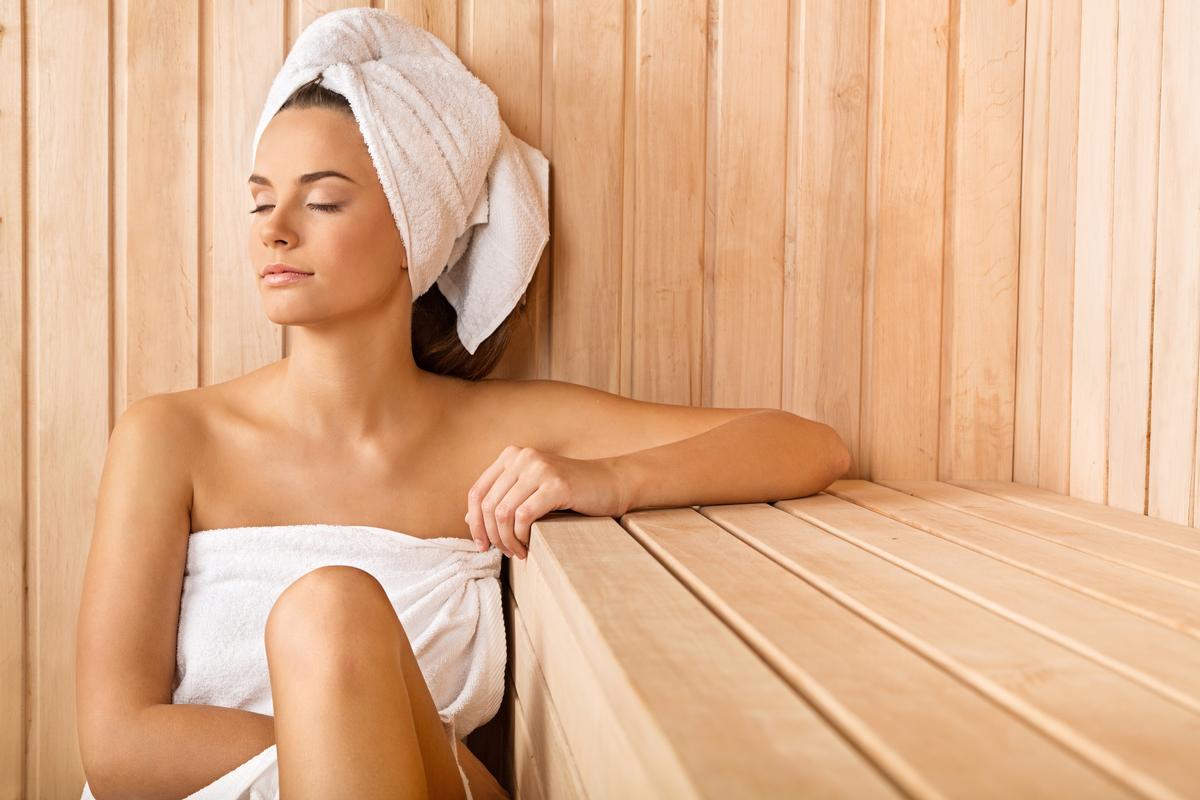

– Professor Marc Cohen
With no cure for the coronavirus, there is much debate in the wellness industry about interventions which can support those with the virus and strengthen the immune systems of those who want to take steps to avoid it.
Integrative medicine expert, professor Marc Cohen, and Risto Elomaa, president of the International Sauna Association, have both recently made statements about sauna and its potential efficacy in prevention and helping people cope with coronavirus.
“If you’re sick with the coronavirus or any respiratory illness, you should refrain from using the sauna,” said Elomaa. “Sauna will not directly contribute to healing the disease and the body's reaction to heat can put a strain on an already stressed body, which can lead to serious health issues.”
However, Cohen disagrees with this position.
Cohen told Spa Business that using heat-stress could actually be advantageous in the prevention of COVID-19 and in helping those suffering from the virus – both physiologically and psychologically.
Cohen is in the process of completing an academic paper detailing how heat-stress from sauna, steam and humidity could be used as a therapeutic strategy to help people cope with coronavirus.
He’s collated scientific evidence from previous studies to show the positive impact heat-stress could have on those infected with coronavirus.
“I’m frustrated and concerned there’s no positive health information coming from the authorities on what to do once you have the virus,” said Cohen.
“It’s all focused on washing your hands and self-isolating, nothing about how to boost your immunity, clear the virus from your upper airways or about the effective use of heat, sunlight or essential oils. Instead, people who’re infected are told to just ‘hunker down and wait for a vaccine’.”
Cohen explained that there is plentiful medical evidence to show that people who use saunas regularly get less viral infections.
Treating the common cold and other respiratory viruses with heat also leads to lower-incidence rates, as shown by studies such as the 2017 research paper, Frequent sauna bathing may reduce the risk of pneumonia in middle-aged Caucasian men, by S K Kunutsor, T Laukkanen and J A Laukkanen (Read the study by clicking here).
Cohen also contended that there is evolutionary evidence that all mammals use heat, in the form of fever, to trigger the immune system to produce white blood cells and antigens to fight viral and bacterial infections.
He said humans have also been using heat – such as saunas and sweat lodges – for prevention and cure, throughout history,
This approach essentially uses the sauna to ‘outsource’ the work of the human immune system to simulate a fever, meaning less physical exhaustion for the body than a fever driven by infection.
“We need more evidence before we can be sure of the effects of heat in combating coronavirus, because that research has not yet been done, as COVID-19 is a new virus,” explained Cohen, “but there’s a huge line of evolutionary and historical evidence from humans, as well as epidemiological and laboratory evidence that consistently point to the therapeutic application of heat having a positive effect in dealing with respiratory viruses.”
The major motivation in having a coronavirus patient use heat-stress therapy is that humans can tolerate high temperatures which the virus cannot survive, because we have a more sophisticated metabolism.
In addition, heat-stress activates, heightens and stimulates the human immune system, while inhibiting viral replication, says Cohen.
He cautioned, however, that because the body goes through a physiological state of hyper-arousal in a sauna, it’s important to balance this with an equal time of hyper-relaxation to allow the body to rest.
Furthermore, Cohen believes sauna can help alleviate psychological symptoms when coping with coronavirus, stressing that it can help people feel more in control of their symptoms and force mindfulness.
“Fear is contagious and puts your body into fight or flight which stimulates the production of adrenaline and cortisol which suppresses your immune system,” he said. “Around 80 per cent of people will get this virus, they may be asymptomatic or get milder symptoms, but they’re all panicking. If you’re in fight or flight mode your body is not going to be using energy on healing from coronavirus.”
Cohen believes sauna-use can provide psychological benefits because it gives time for dedicated relaxation, allows people to focus attention on positive actions within their control and provides a space to bond with family.
With the initiation of global government shutdowns, spas, thermal experiences and public bathing facilities have been closed, restricting accessibility to heat-stress therapies, such as saunas, steamrooms and hammams.
Cohen believes that once facilities reopen medicalised protocols need to be implemented for heat-stress modalities.
For protocols to be put in place spas need to become a bit more medicalised, with rules about social distancing and protocols adapted from existing hospital regulations.
“I actually think there's a huge scope for including saunas, steamrooms and hot bathing into hospitals, care-homes and public facilities. I really think that when we come out of this, the health system could really be much more integrated with conventional medicine and wellness practices,” concluded Cohen.
10 ways saunas help your body overcome COVID-19
By Marc Cohen:
- Saunas can helping destroy viruses in the places in the body where they first lodge – the nose and throat
- They keep mucus thin and mobile, so cilia can clear the airways and prevent viral penetration
- Saunas mimic a fever, speed up metabolism and stimulate immune function whilst inhibiting viral replication
- Heat-stress induces mild hyperventilation which changes blood pH, gives your body an advantage in fighting infection
- Saunas release Heat Shock Proteins that protect immune cells and increase their number and activity
- They also induce hormesis and increase your ability to tolerate and recover from heat and other physiological stresses
- Saunas flush your skin with blood and sweat which nourishes and cleans it from the inside out
- Saunas flood your internal organs with blood and lymph so clean water and herbal tonics can flush out toxic compounds
- Saunas exercise your heart, lungs and vascular system without significant production of metabolic waste products
- Essential oils with antiviral, and decongestant properties, can be delivered to your upper respiratory tract while in the sauna
Five ways saunas could help your mind overcome COVID-19By Marc Cohen:
- Saunas are fun and provide dedicated relaxation time
- They provide an opportunity to focus attention on positive actions within your control
- They facilitate a healthy space to bond with friends and family
- Saunas feel good and activate the placebo effect and ‘remembered wellness’
- Saunas force you to be mindful and just breathe
Dr Marc Cohen launches ‘Extreme Bathing’ wellness retreats
International Sauna Congress brings together delegates from around the world
FEATURE: Design – Heat of the moment
FEATURE: Research – Finishing touch - Heat of the moment
FEATURE: Event report – International Sauna Congress

BIG unveils Eve Music Hall as Croatia venue nears completion

Bob Rogers hands BRC to long-serving leadership team

Wellness care hospital opens in Vilnius with innovative spa and hospitality concept

Universal and Puy du Fou projects point to rise of Oxford–Cambridge corridor
A proposed Puy du Fou development near Bicester and Universal Destinations and Experiences’ planned resort in Bedford are emerging as part of a wider transformation of the Oxford–Cambridge Growth Corridor into a major centre for UK leisure and tourism investment.
For years, the corridor has been associated primarily with science, technology, housing and university-led economic growth. However, the clustering of large-scale visitor attraction projects along the

All-inclusive eco-wellness development Auko to open near Vietnam’s Son Doong caves
Shedd Aquarium upgrades its visitor experience with new Immersion Theater
Shedd Aquarium has opened the Immersion Theater developed in partnership with SimEx-Iwerks, as part of a wider strategy to enhance the guest experience and create additional revenue opportunities.
The attraction has transformed the aquarium’s Phelps Auditorium into a multi-sensory venue combining panoramic projection, environmental effects and interactive technology.
A new pre-show area allows visitors to engage with augmented reality marine animals before entering the

Mandarin Oriental announces standalone Mansions-branded residences for Abu Dhabi
MCR is planning a luxury hotel for London's BT Tower

Joy as a radical act: Yinka Ilori launches solo exhibition celebrating the rebellious power of spreading happiness

Work gets underway on Madrid's €800 million leisure complex
Work is underway in Madrid on one of Europe’s most significant multi-functional complexes, combining sport, entertainment, culture and education.
The €800 million initiative to regenerate the former Olympic Aquatic Centre in the north-east of the city, next to the Riyadh Air Metropolitano stadium, is being led by Barsento – a joint venture between Live Nation Entertainment, Oak View Group and Atlético de Madrid. The project will

Therme Manchester reveals 90:90 strategy – 90 per cent of the UK population within a 90-minute drive of a Therme

Four Seasons’ Naples Beach Club opens 2,800sq m Sanctuary spa inspired by indigenous Calusa people
Orient Express Corinthian to host Ocean Rebirth wellness retreat in collaboration with Guerlain
Famed London nightclub, Tramp, launches Tramp Health

First look: Miraval opens on the Red Sea in Saudi Arabia

Hainan Science Museum by Ma Yansong, opens in China
A new science museum has opened to the public in Haikou after attracting more than 350,000 visitors during a four-month soft opening period.
Designed by Ma Yansong and his practice MAD Architects, the Hainan Science Museum is located on the edge of Wuyuan River National Wetland Park and has already recorded peak attendance of more than 5,800 visitors in a single day.
Commissioned by

Zannier Île De Bendor launches with design by Hardel Le Bihan Architectes

Sæl Spa readies for launch in London: “a modern British sanctuary”
Immersive art bathhouse Submersive announces debut location in Austin

Construction begins on regenerative wellness destination The Shenandoah Nature Resort

Royal Caribbean reveals record-breaking cruise ship

V&A East opens in London

David Geffen galleries open at LACMA

New venue The Lands by Capella includes a longevity centre to complement sister hotel Capella Sydney

World of Frozen launches at Disneyland Paris
Pical Resort by Valamar reveals first Croatian spa under the ESPA brand

Mandarin Oriental creates end-to-end Egyptian journey with two new hotels and first-ever luxury river cruise

Designers Mendil + Meyer launch new division called Lām Concepts for strategic wellness projects
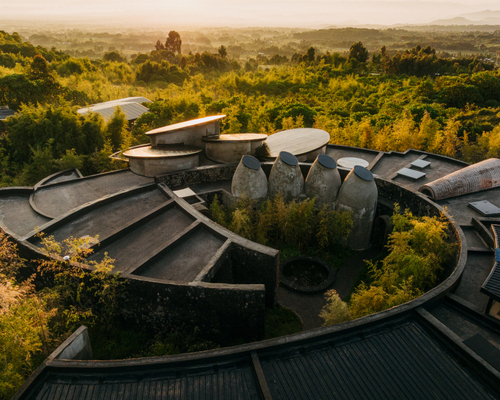
Wilderness Bisate in Rwanda reveals brand’s second Sanctuary spa
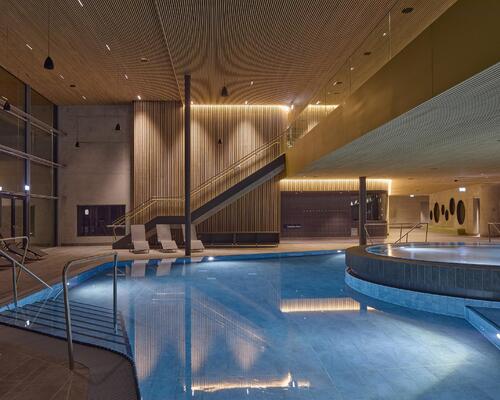
4a Architekten shares details of wellness extension at Salinarium Bad Dürkheim Thermal Spa