Historic day as UK government pivots to prevention


The much anticipated Fit for the Future: 10 Year Health Plan for England reveals ambitious targets to create a new way of delivering health.
Although the document contains no mention of gyms, leisure centres, health clubs, wellness, exercise, fitness, sport, physical activity, or workplace wellness, there are nonetheless changes announced which will create opportunities for the sector, should it choose to take them, such as paid-for-result support in the implementation of weight loss drugs and partnerships with new Neighbourhood Health Centres.
The hotly-anticipated policy paper highlights a pivot to prevention as one of three pillars – along with moving treatment from hospital to community and moving from analogue to digital. The prevention focus appears to be mainly underpinned by technology: data, AI, genomics, wearables and robotics, in addition to the development of the neighbourhood health centres.
"More care will be available on your doorstep and from the comfort of your own home. It will be easier to see a GP and Neighbourhood Health Centres will be available in every community," it reads.
Beginning with places where healthy life expectancy is lowest, these centres will be a ‘one stop shop’ for patient care and the place from which multidisciplinary teams operate. They will be open at least 12 hours a day and six days a week.
The government is expecting people to be more involved with their own health and self care and this will include making more healthy choices. The report says the new vision will: “encourage citizens to play their part, including through a new health reward scheme to incentivise healthier choices."
This may be referring to the 'Better Health Rewards' pilot which has been running quietly in Wolverhampton for some years now, but this has not yet been confirmed.
Rather randomly, the plan includes a commitment to work with Brendan Foster's Great Run Company to set up a campaign to motivate millions to run more on a regular basis, although the wisdom of offering running as the sole nod to physical activity in an ageing population is questionable.
More than a quarter of the UK population have a long-term health condition and they now account for 65 per cent of NHS spending. “The NHS today is no longer just a safety net to help people in crisis,” says the report, “it must provide a continuous service for those who have a chronic illness. The challenge is to shift from a model of care that is episodic and disempowering, to one that is continuous and empowering. The opportunity is to enable patients to exercise greater control over both their health and their care.”
In the longer-term, the report says there will be a move to a new NHS financial model, where money will increasingly follow patients through their lifetime. “Providers will be rewarded based on how well they improve outcomes for each individual, as well as how well they involve people in the design of their care’” it says, “not solely on whether they provide episodic instances of care on demand.”
People are living too long in ill health, with the gap in healthy life expectancy between rich and poor growing – nearly 20 per cent of children leave primary school with obesity. “Our overall goal is to halve the gap in healthy life expectancy between the richest and poorest regions, while increasing it for everyone and to raise the healthiest generation of children ever,” says the report. “This will boost our health, but also ensure the future sustainability of the NHS and support economic growth.”
Partnership working is given a great deal of prominence in the report, which says: “We will achieve our goals by harnessing a huge cross-societal energy on prevention. We will work with businesses, employers, investors, local authorities and mayors to create a healthier country together.”
Genomics will receive hefty investment to predict disease, personalise treatment and address health inequalities. For example, a newborn genome sequencing programme will be introduced to detect more than 200 rare conditions in babies.
Wearables will become standard in preventative, chronic and post-acute NHS treatment by 2035.
Obesity will be tackled via broader access to medications, however, there is no mention of the importance of exercise in delivering these interventions safely, nor the potentially catastrophic outcomes of not doing so.
The government says it will negotiate new partnerships with industry to provide access to obesity treatments on a ‘pay for impact on health outcomes’ basis, opening up opportunities for the fitness, health and wellness sector to deliver health outcomes for cash.
There will be some pressure on the food industry, with mandatory health food sales reporting for all large companies and the data will be used to set new mandatory targets on the healthiness of sales, although the detail of this scheme was not explained.
Junk food advertising aimed at children will be restricted and the soft drinks industry levy will be reformed to encourage reformulations.
Access to free school meals will be expanded, with higher nutrition standards set, giving access to healthier food.
With vaping among 11- to 15-year-olds doubling over the last five years, there will be a ban on advertising and sponsorship of vape and other nicotine products.
Children turning 16 this year (or younger) can never legally be sold tobacco and the introduction of the Tobacco and Vapes Bill will push for a smoking-free generation.
There will also generally be a greater focus on smoking cessation, especially for pregnant women and those with smoking-related conditions.
New standards will be introduced for alcohol labelling and the no and low-alcohol market will be supported.
Immunisation programmes are also part of the prevention agenda, with improved access via pharmacies and the introduction of new vaccination programmes. The government has ambitions to eliminate cervical cancer by 2040.
Screening for diseases will also be broadened, especially for those with risk factors, such as a history of smoking.
The mental health of young people will be supported via Young Futures Hubs, which will provide mental health support teams in schools and colleges.
By 2035 most non-emergency care will happen outside hospitals, relieving pressure on acute services. In the shift from hospital to community, thousands more GPs will be trained and 2,000 more nurse apprenticeships created in the next three years. The Neighbourhood Health Service will focus around Neighbourhood Health Centres, which might be formed via public private partnerships and hold potential for sector involvement by leisure centres, health clubs and gyms.
The NHS App will become a “doctor in the pocket”, giving more advice, access to health records and allowing people to directly book tests and vaccines, have a consultation and manage a long-term condition. This is part of the drive to involve people in their own care.
The government says the set of reforms will reimagine the NHS into a world-leading healthcare system, underpinned by science and technology, which will tackle inequalities, predict and prevent ill health and be an engine of economic growth by getting people fit for work. It will stay true to its founding principles of providing universal care, free at the point of delivery.
The NHS accounts for 38 per cent of government spending, projected to rise to 40 per cent by the end of this Parliament and the plan is backed by an additional £30 billion expenditure.
However, the government has warned that the era of “more money, never reform” is over and there will have to be better outcomes for the money spent. The report says spending 'at the centre' of the NHS will reduce by 50 per cent by 2027, with the resources diverted to community action.
Around 200 health organisations will be disbanded as part of the overhaul of the system, with NHS England among them.
In response to the report, Huw Edwards, CEO of UK Active, said: “Prevention must be at the heart of our nation’s health strategy and there is collective hope that the 10-Year Plan, and the implementation plans that follow, will help create an NHS ‘fit for the future’.
“But for this plan to be successful where previous plans have failed, the Government must lean on our nation’s network of gyms, pools and leisure centres to support people in all areas to be more active.
“The plan recognises the value of ‘getting millions more moving’ which is welcomed, but any campaign to drive this must involve the full breadth of the physical sector, especially ukactive’s members, who are the engine room behind the UK’s physical activity levels.
“Our sector already has a huge impact on the health and wellbeing of millions, with fitness activities and swimming shown as the biggest drivers of physical activity other than walking, but demand is growing and there is an urgent need to reach more communities.
“The Government has an opportunity through the ‘neighbourhood health service’ to integrate physical activity into the deprived areas where inequalities are highest.
“We need to see clear plans to help incentivise more people to be active and for the full integration of health and fitness services into care pathways, including scaling proven programmes such as MSK hubs and Prehab4Cancer.
“In the case of weight-loss medications, it is essential the Government works with our sector on the required wraparound support to ensure people achieve sustainable results and avoid potential health complications.
“We will work with the Government to understand the details behind the plan and ensure all areas for our sector’s support and investment are addressed.”
Liz Terry, editor of HCM said: "Seeing the UK government acknowledge the power of prevention so wholeheartedly makes today a huge day for everyone who has lobbied for this change for so many decades. The case for treating the cause and not the symptoms and also for early invention has been thoroughly understood and acted upon and we absolutely applaud this important change of direction.
"This would not have been possible without the many years of lobbying by the wellness and health sector going right back to the 1920s and we salute everyone who has been involved with this labour of love over so many decades.
"While it's frustrating to discover that the report – which will direct the spending the best part of half of all government funds each year – does not foresee an immediate and direct role for the fitness, health and wellness sectors, nevertheless, there are opportunities to be had when it comes to collaboration, such as the delivery of weight loss and Type 2 diabetes interventions and support for Neighborhood Health Centres.
"We can also be very confident that – once the health service has been through its pivot to prevention, it will be far more open to working with us and developing meaningful partnerships. We need to be patient, keep producing powerful evidence of the efficacy of our interventions and continue to nurture partnerships. Change will come in time – probably sooner than we think, given the financial benefits."
UK government The 10 Year Health Plan genomics AI The Great Run Company Neighbourhood Health Centres
UK's 10 Year Plan for the health service will be based on a massive pivot to prevention
DCMS secures £8.2bn in UK Spending Review


BIG unveils Eve Music Hall as Croatia venue nears completion
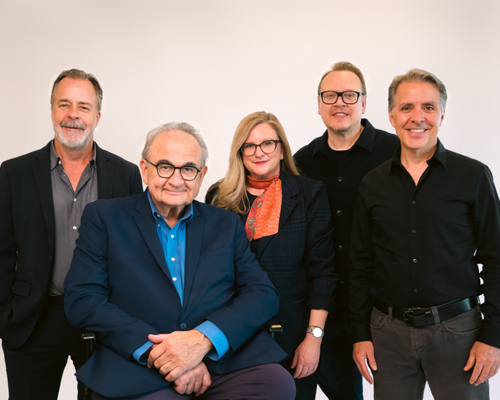
Bob Rogers hands BRC to long-serving leadership team

Wellness care hospital opens in Vilnius with innovative spa and hospitality concept

Universal and Puy du Fou projects point to rise of Oxford–Cambridge corridor
A proposed Puy du Fou development near Bicester and Universal Destinations and Experiences’ planned resort in Bedford are emerging as part of a wider transformation of the Oxford–Cambridge Growth Corridor into a major centre for UK leisure and tourism investment.
For years, the corridor has been associated primarily with science, technology, housing and university-led economic growth. However, the clustering of large-scale visitor attraction projects along the

All-inclusive eco-wellness development Auko to open near Vietnam’s Son Doong caves
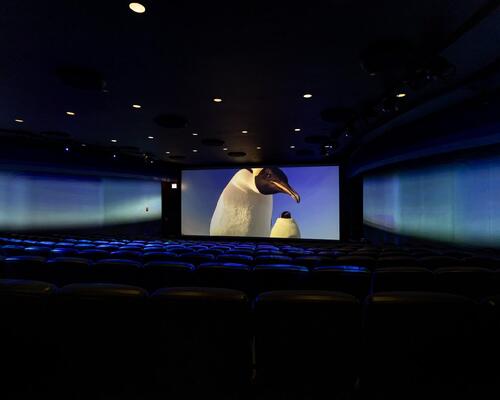
Shedd Aquarium upgrades its visitor experience with new Immersion Theater
Shedd Aquarium has opened the Immersion Theater developed in partnership with SimEx-Iwerks, as part of a wider strategy to enhance the guest experience and create additional revenue opportunities.
The attraction has transformed the aquarium’s Phelps Auditorium into a multi-sensory venue combining panoramic projection, environmental effects and interactive technology.
A new pre-show area allows visitors to engage with augmented reality marine animals before entering the

Mandarin Oriental announces standalone Mansions-branded residences for Abu Dhabi

MCR is planning a luxury hotel for London's BT Tower
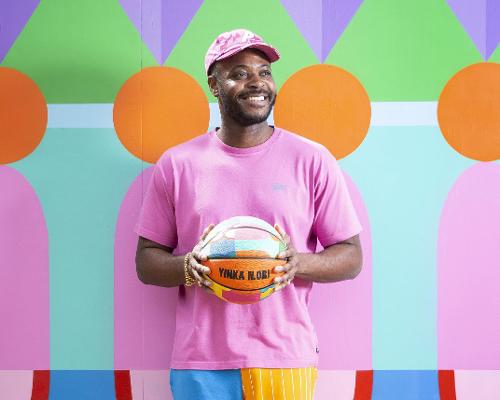
Joy as a radical act: Yinka Ilori launches solo exhibition celebrating the rebellious power of spreading happiness

Work gets underway on Madrid's €800 million leisure complex
Work is underway in Madrid on one of Europe’s most significant multi-functional complexes, combining sport, entertainment, culture and education.
The €800 million initiative to regenerate the former Olympic Aquatic Centre in the north-east of the city, next to the Riyadh Air Metropolitano stadium, is being led by Barsento – a joint venture between Live Nation Entertainment, Oak View Group and Atlético de Madrid. The project will

Therme Manchester reveals 90:90 strategy – 90 per cent of the UK population within a 90-minute drive of a Therme

Four Seasons’ Naples Beach Club opens 2,800sq m Sanctuary spa inspired by indigenous Calusa people
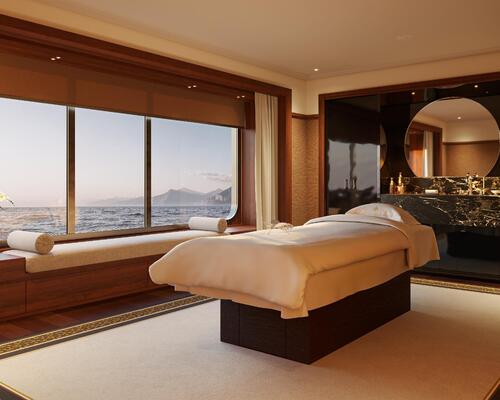
Orient Express Corinthian to host Ocean Rebirth wellness retreat in collaboration with Guerlain

Famed London nightclub, Tramp, launches Tramp Health

First look: Miraval opens on the Red Sea in Saudi Arabia

Hainan Science Museum by Ma Yansong, opens in China
A new science museum has opened to the public in Haikou after attracting more than 350,000 visitors during a four-month soft opening period.
Designed by Ma Yansong and his practice MAD Architects, the Hainan Science Museum is located on the edge of Wuyuan River National Wetland Park and has already recorded peak attendance of more than 5,800 visitors in a single day.
Commissioned by

Zannier Île De Bendor launches with design by Hardel Le Bihan Architectes

Sæl Spa readies for launch in London: “a modern British sanctuary”

Immersive art bathhouse Submersive announces debut location in Austin

Construction begins on regenerative wellness destination The Shenandoah Nature Resort

Royal Caribbean reveals record-breaking cruise ship

V&A East opens in London

David Geffen galleries open at LACMA

New venue The Lands by Capella includes a longevity centre to complement sister hotel Capella Sydney

World of Frozen launches at Disneyland Paris
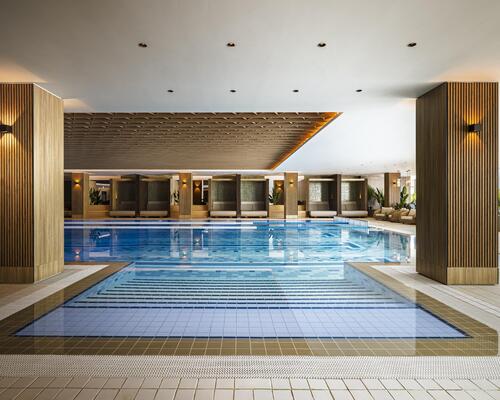
Pical Resort by Valamar reveals first Croatian spa under the ESPA brand

Mandarin Oriental creates end-to-end Egyptian journey with two new hotels and first-ever luxury river cruise

Designers Mendil + Meyer launch new division called Lām Concepts for strategic wellness projects

Wilderness Bisate in Rwanda reveals brand’s second Sanctuary spa
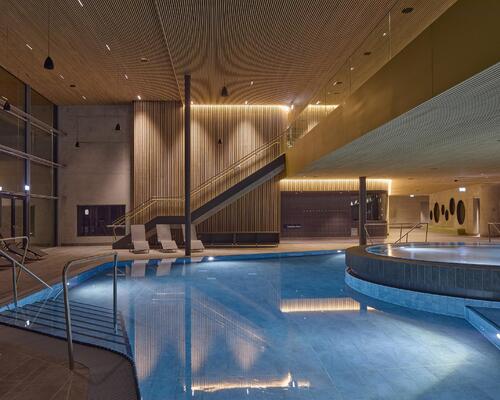
4a Architekten shares details of wellness extension at Salinarium Bad Dürkheim Thermal Spa










Designed to restore neglected land and renew the identity of Iraq’s capital city, Baghdad Sustainable Forests promises a new way of living surrounded by nature. Gensler’s Ian Mulcahay tells us why he thinks the project could become a model for the repair and enhancement of urban centres