'Eurocentric' science centres hindering education in STEM for black youths


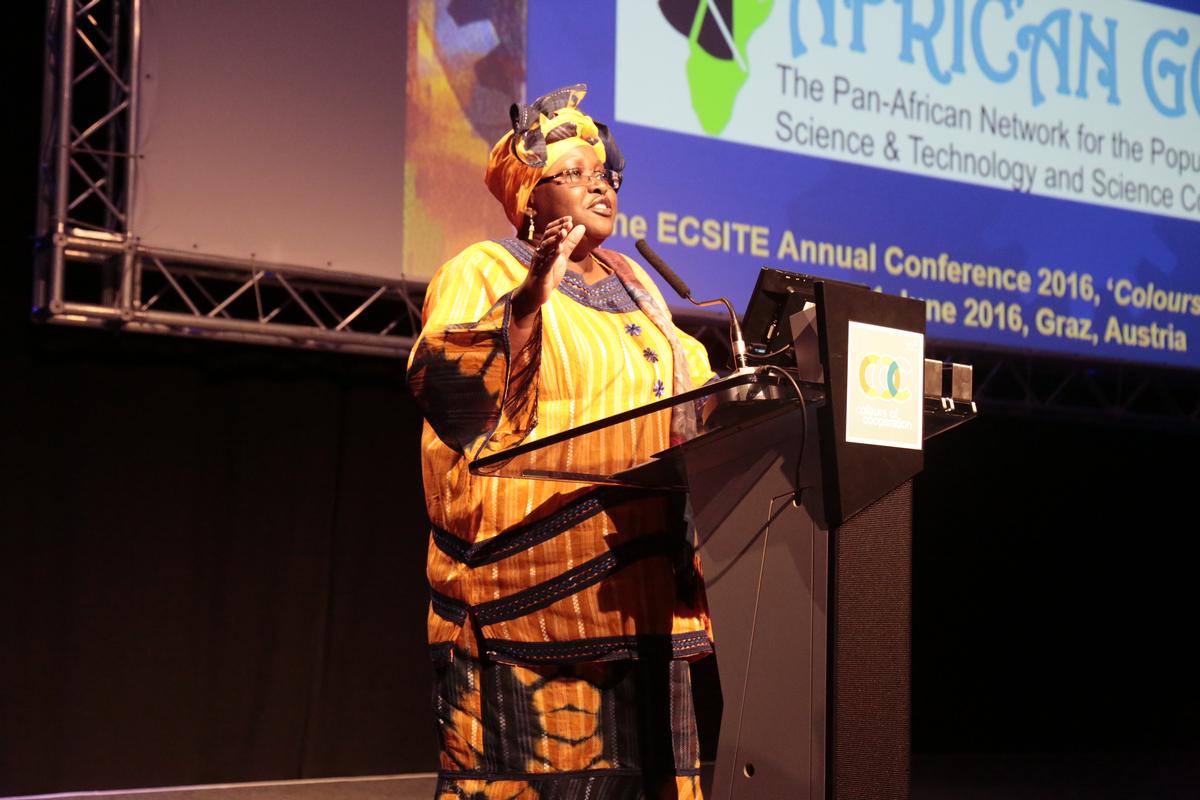
One of Africa’s leading scientists has called for science centres across the world to address a Eurocentric model excluding many young black people from pursuing interest and potential careers in STEM subjects.
Delivering the keynote address at last week’s Ecsite conference in Graz, Austria, Dr Elizabeth Rasekoala, president of the Pan-African Network for the Popularisation of Science and Technology (Gong), recounted her first Ecsite in 1995 when just a handful of people attended the event.
“We barely filled a room in King’s College in London back then,” she said to the 1,000+ delegates in attendance. “Those were the days full of excitement. I remember that conference and I remember asking myself two questions. First I asked how long will it take before we have more women in the room and it is good to see that that has been question answered well. The second question was how long would it be before I am no longer the only black person in the room? That has still not been answered, that’s on your major to do list.”
Rasekoala went on to share global science centre and science museum visitor statistics, with one in every 1,900 people in Africa visiting such an institution compared to the UK where the figure was significantly lower at one in four. According to Rasekoala, the European education system tells a similar story.
“We see European STEM education welcoming graduates from developing countries, yet they cannot deliver the same progression for local students from those same backgrounds,” she said. “I found myself as a postgraduate African student dealing with a perverse dichotomy of a university department that supported me and my aspirations and yet at a children’s primary school, they are deemed to be underachieving black youths who can only excel in sports and music. You are living with this sort of schizophrenia in society. How do we explain that?”
Rasekoala said that science centres in Europe had failed to deliver a socially-inclusive model, something that was demonstrated by the upcoming UK/EU referendum.
“It’s not surprising that when you look at the UK/EU referendum debate that many ethnic minorities are backing the leave camp because they see the European narrative as toxic and disingenuous and they do not see how it’s going to improve their integration and advancement in the UK, they want out and I find that really sad because I am a great believer in the European project but we must have the courage to take it as far as it can go and not sit in the comfort zone. That’s the globalisation challenge.
“The future wellbeing of science centres and museums will greatly depend on the extent to which today’s institutions are willing to respond to key dynamics which are influencing people’s key decisions, including how and where they learn, whether they wish to learn science and technology or not, and how and when they enjoy their leisure time.”
Rasekoala added that the Eurocentric approach to science has had a trickledown effect in Africa, creating a vicious cycle of inequality that is being replicated worldwide.
“Within the African context we can see the global footprint of these inequalities,” she said. “Somewhat ironically, the contamination of this Eurocentric approach means that in Africa we have African scientists marginalised and so aware of being marginalised that when they go back home they perpetrate the same inequalities. It’s like children who’ve been abused who grow up and become abusers. That’s what we are creating, we are exporting Eurocentrism.
“The STEM and science sectors in Africa are no different. We still have the same inequalities of race, ethnicity, social class and gender, with a huge divide between where Africans are, where the ordinary people are and where the scientists are. This challenge is global and we must work together to address and create a global platform of transformation. This is an equal opportunity failure, we have all failed, period.
“Even in South Africa where we have the most science centres on the continent and where 90 per cent of the population are black Africans, you’ll be shocked to know that less than 5 per cent of visitors to science centres and science museums are black Africans – and that’s in 2016.”
Concluding her keynote, Rasekoala said the Ecsite and the network of global science centres should urgently address the issue, reshaping science to educate with a truly global approach that encourages all to take up science and STEM subjects.
“Science as it is taught, researched, practised and disseminated today is riddled with Eurocentric cultural perspectives and yet it was not always like this. We forget about the roots of science,” she said.
“I want to leave you with my humble recommendation that we move away from projects and look at the Ecsite leadership, the field adopting a transformational and dynamic, diversity, equity and inclusion framework to be endorsed by all science centres and museums as a good practice template for their operations and to be utilised as a practical toolkit for achieving social inclusion. What are the parameters that should be included? It’s up to you to work out but to me these are the key points. This is place where the dead bodies are buried and this is where we’re going to have to dig them up if we want to make change.”
Ecsite Elizabeth Rasekoala Science Centre Planetarium black educationEcsite president urges members to fight fear with inclusion
Ecsite 2016: UNESCO backs first world science centre day, coming in November
Ecsite 2016: Use space to encourage future careers in STEM
Austrian President Heinz Fischer opens Ecsite 2016
Attractions bodies launch Europe-wide biodiversity campaign
BIG unveils Eve Music Hall as Croatia venue nears completion
Bob Rogers hands BRC to long-serving leadership team

Wellness care hospital opens in Vilnius with innovative spa and hospitality concept

Universal and Puy du Fou projects point to rise of Oxford–Cambridge corridor
A proposed Puy du Fou development near Bicester and Universal Destinations and Experiences’ planned resort in Bedford are emerging as part of a wider transformation of the Oxford–Cambridge Growth Corridor into a major centre for UK leisure and tourism investment.
For years, the corridor has been associated primarily with science, technology, housing and university-led economic growth. However, the clustering of large-scale visitor attraction projects along the
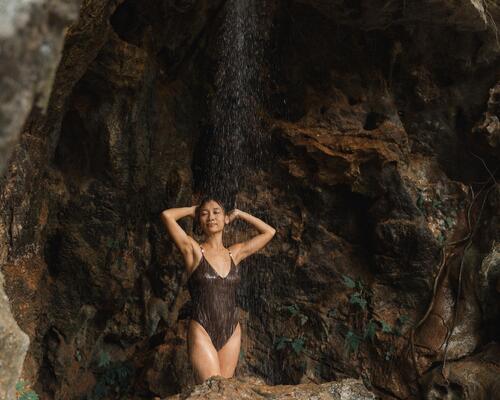
All-inclusive eco-wellness development Auko to open near Vietnam’s Son Doong caves
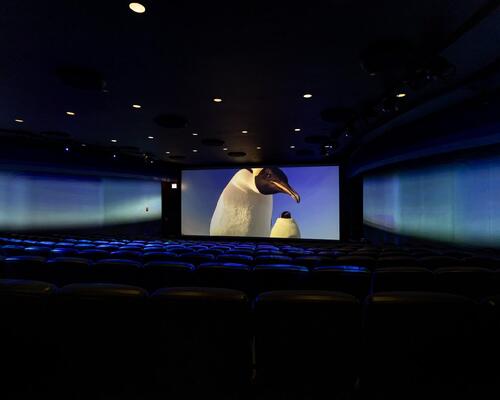
Shedd Aquarium upgrades its visitor experience with new Immersion Theater
Shedd Aquarium has opened the Immersion Theater developed in partnership with SimEx-Iwerks, as part of a wider strategy to enhance the guest experience and create additional revenue opportunities.
The attraction has transformed the aquarium’s Phelps Auditorium into a multi-sensory venue combining panoramic projection, environmental effects and interactive technology.
A new pre-show area allows visitors to engage with augmented reality marine animals before entering the
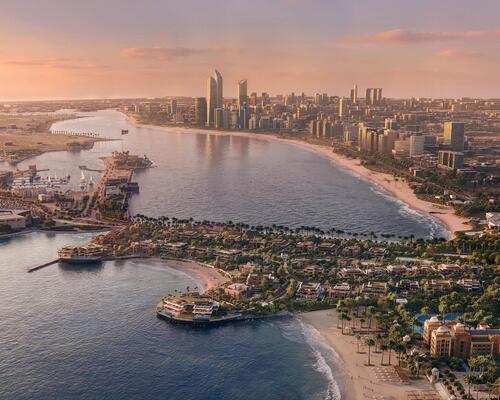
Mandarin Oriental announces standalone Mansions-branded residences for Abu Dhabi
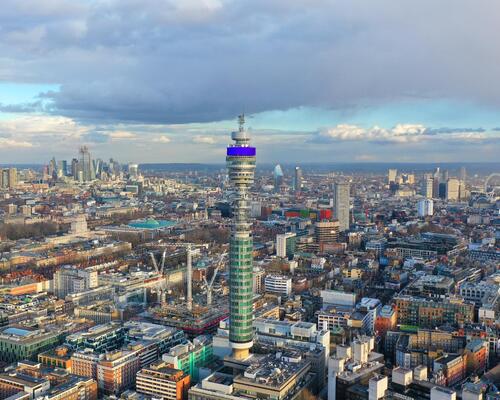
MCR is planning a luxury hotel for London's BT Tower
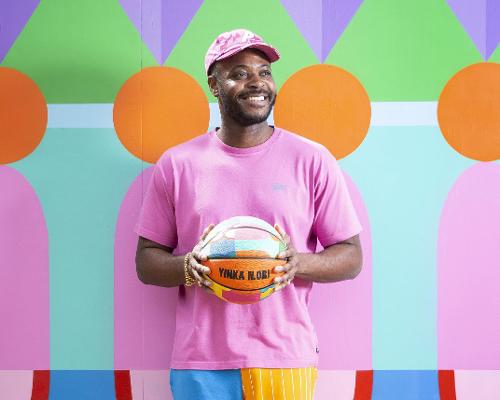
Joy as a radical act: Yinka Ilori launches solo exhibition celebrating the rebellious power of spreading happiness

Work gets underway on Madrid's €800 million leisure complex
Work is underway in Madrid on one of Europe’s most significant multi-functional complexes, combining sport, entertainment, culture and education.
The €800 million initiative to regenerate the former Olympic Aquatic Centre in the north-east of the city, next to the Riyadh Air Metropolitano stadium, is being led by Barsento – a joint venture between Live Nation Entertainment, Oak View Group and Atlético de Madrid. The project will
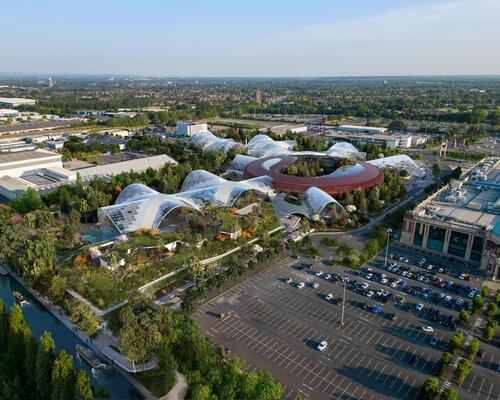
Therme Manchester reveals 90:90 strategy – 90 per cent of the UK population within a 90-minute drive of a Therme

Four Seasons’ Naples Beach Club opens 2,800sq m Sanctuary spa inspired by indigenous Calusa people
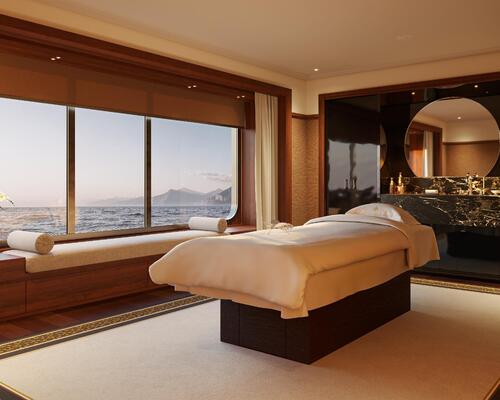
Orient Express Corinthian to host Ocean Rebirth wellness retreat in collaboration with Guerlain
Famed London nightclub, Tramp, launches Tramp Health
First look: Miraval opens on the Red Sea in Saudi Arabia

Hainan Science Museum by Ma Yansong, opens in China
A new science museum has opened to the public in Haikou after attracting more than 350,000 visitors during a four-month soft opening period.
Designed by Ma Yansong and his practice MAD Architects, the Hainan Science Museum is located on the edge of Wuyuan River National Wetland Park and has already recorded peak attendance of more than 5,800 visitors in a single day.
Commissioned by
Zannier Île De Bendor launches with design by Hardel Le Bihan Architectes
Sæl Spa readies for launch in London: “a modern British sanctuary”
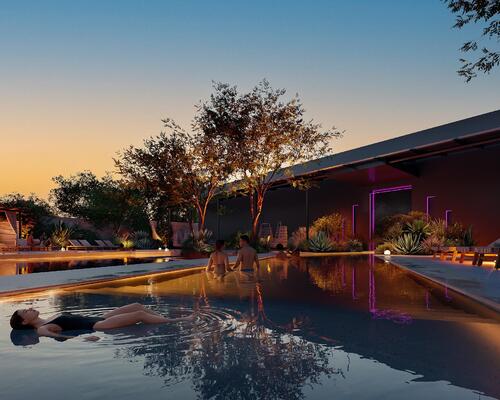
Immersive art bathhouse Submersive announces debut location in Austin

Construction begins on regenerative wellness destination The Shenandoah Nature Resort

Royal Caribbean reveals record-breaking cruise ship
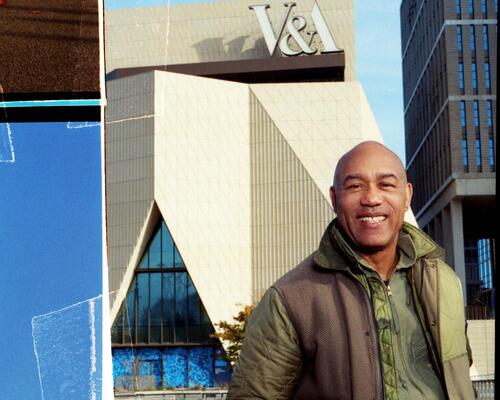
V&A East opens in London
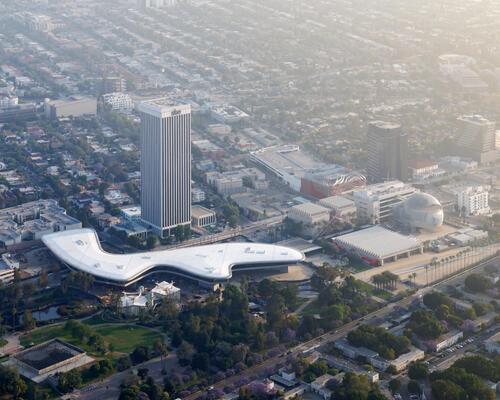
David Geffen galleries open at LACMA

New venue The Lands by Capella includes a longevity centre to complement sister hotel Capella Sydney

World of Frozen launches at Disneyland Paris
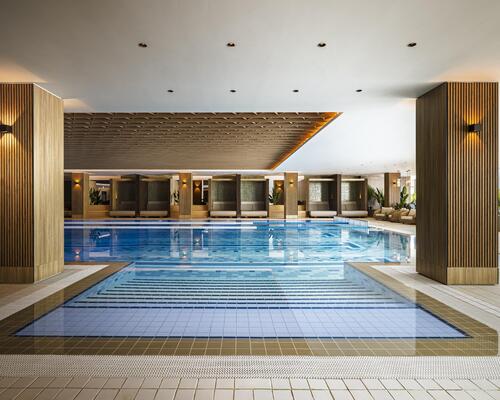
Pical Resort by Valamar reveals first Croatian spa under the ESPA brand

Mandarin Oriental creates end-to-end Egyptian journey with two new hotels and first-ever luxury river cruise

Designers Mendil + Meyer launch new division called Lām Concepts for strategic wellness projects
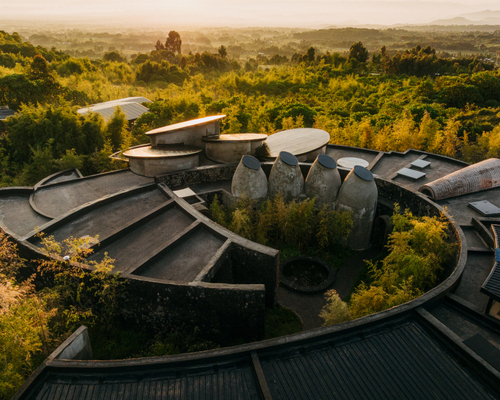
Wilderness Bisate in Rwanda reveals brand’s second Sanctuary spa
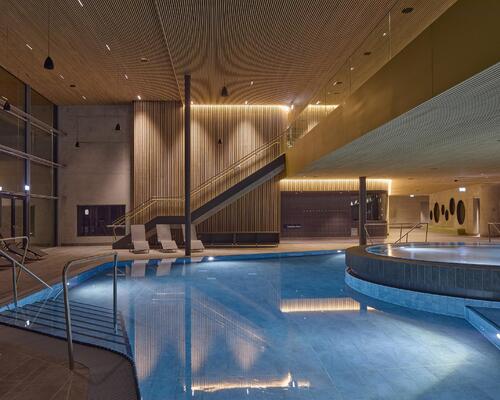
4a Architekten shares details of wellness extension at Salinarium Bad Dürkheim Thermal Spa













Designed to restore neglected land and renew the identity of Iraq’s capital city, Baghdad Sustainable Forests promises a new way of living surrounded by nature. Gensler’s Ian Mulcahay tells us why he thinks the project could become a model for the repair and enhancement of urban centres