Global pandemic – research shows how the fitness sector is responding

Providing digital fitness content is emerging as a critical value driver for health club operators during the coronavirus (COVID-19) shutdown, according to a wide-ranging study on the effects of the pandemic on the global fitness industry.
The study, by brand and consumer insight firm ClubIntel, looked at how operators were reacting to challenges posed by the pandemic in three key areas of fitness operations – employees, members and the community.
Based on an online survey, the report – titled The Fitness Industry’s Response to COVID-19: Insights into the Collective Improvisation, Innovation and Resilience of Global Fitness Operators – collated the responses from a total of 195 operators across the globe.
Approximately 46 per cent of the responding clubs and studios had been forced to close their doors due to COVID-19.
One of the headline findings was that less than half of operators affected by closures were offering membership freezes and in-club credits.
While the survey captured responses from every major geographic region, the US and Australia/New Zealand represented 72 per cent of all respondents. Canada and Europe also had strong representation.
"The reason the geographic distribution is skewed toward the US, Australia/New Zealand and Canada is likely due to the survey only being in English," the report's authors say.
Commercial fitness facilities were responsible for 49 per cent of all responses, followed by boutique fitness studios at 20 per cent and non-profit facilities at 14 per cent.
Here, HCM presents some of the key findings from the report:
How are operators supporting members during club closures?
Around 75 per cent of closed facilities are offering members streaming and/or on-demand group fitness content through a virtual platform and/or offering tips on staying healthy through digital platforms. Approximately 60 per cent are extending virtual fitness coaching content to members.
"The leading engagement strategy being implemented by facility operators while closed (74 per cent of all closed operators) is offering on-demand and/or streaming group fitness content," the report states.
"A second key engagement strategy has been to introduce instructional/coaching content.
"The leading platform for providing virtual content to members is a brand-based mobile app (51 per cent). In this instance, the vast majority are providing this virtual content for a nominal fee.
"Operators stated that the reason these services tend to be delivered for a small fee is to retain some revenue generation during closure. The two virtual platforms operators have leveraged the most are Les Mills at 31 per cent (group fitness-driven platform) and Virtuagym at 39 per cent (coaching and instructional oriented)."
When it comes to providing members with home-equipment bundles, only 20 per cent of operators have considered this, and fewer than 5 per cent have reached out to vendors to arrange special discounts on home equipment for their members.
Some operators commented that they are renting facility equipment to members for home use.
When it comes to ensuring continued contact with members, 78 per cent of closed clubs regularly post tips on staying healthy and active on a club blog, social media pages and/or websites. A further 9 per cent plan to do so over the next three months. Only 6 per cent of the clubs that have closed their doors have no plans to undertake such contact with members.
Membership collections and payment freezes – what are operators doing?
One of the key issues – and a potentially contentious one – is the way clubs deal with their membership payments while their facilities remain shut.
According to the ClubIntel data, less than half (44 per cent) of operators reported offering members a membership or subscription freeze during the time their facility is closed.
Among those facilities offering a membership freeze, 57 per cent report freezing the entire value of the membership (100 per cent), while 22 per cent are freezing dues somewhere between 50 per cent and 100 per cent.
Close to 40 per cent of facilities aren’t offering any freezes on memberships and subscriptions.
In its commentary, ClubIntel says operators who aren't offering any freezes on memberships could be jeopardising the goodwill of their customers.
"When facilities reopen, this (no-freezes) approach to handling dues during closure may generate less than favourable sentiment from existing members, giving cause for not returning to a facility once it reopens," the report's authors say.
What steps are facilities taking to support employees during closures?
The leading strategy adopted by operators to support employees economically seems to be the guarantee of employment once their facility re-opens.
Just a third (37 per cent) are offering staff paid sick leave, while 33 per cent are providing partial compensation to full-time and/or part-time employees during closure.
In respect to other economic benefits for employees, a minority of operators are extending benefits such as extended healthcare coverage, financial incentives to cover basic employee needs or severance compensation for those terminated.
"Considering most fitness operators are small business owners the data gels with the economic reality of nearly all small business owners," the report states.
"Those operators who are offering extended healthcare coverage, financial incentives and/or partial compensation are most likely to be the operators to experience the greatest success upon reopening."
What steps are operators taking to address the needs of the community?
The report shows that the main focus for most operators is to stem the loss of revenues by expanding the base of online subscribers – at the expense of their communities.
"It is evident from the responses that most fitness operators are not focused on serving the community during this crisis, other than reaching out to their communities to offer access to virtual fitness content," the report states.
"Very few operators indicate they are reaching out to support the community by donating time/money to charitable organizations addressing the public need for assistance during then pandemic (14 per cent), and even fewer are offering their facilities to healthcare providers to use for testing or triage (8 per cent). Few if any operators indicate they are considering community-centric actions beyond 90 days."
• To download and read the full report, click here.
ClubIntel fitness industry fitness coronavirus COVID-19 health club digital fit techCoronavirus lockdown transforming people's exercise habits
US gym operators facing lawsuits over membership fee collections during lockdown
Have your say: ClubIntel launches annual study to explore fitness trends
FEATURE: Industry trends – Staying on trend

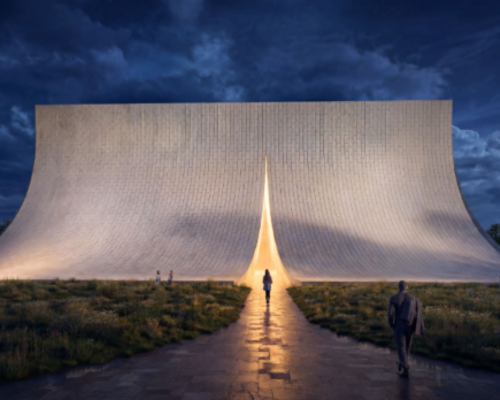
BIG unveils Eve Music Hall as Croatia venue nears completion


Bob Rogers hands BRC to long-serving leadership team

Wellness care hospital opens in Vilnius with innovative spa and hospitality concept

Universal and Puy du Fou projects point to rise of Oxford–Cambridge corridor
A proposed Puy du Fou development near Bicester and Universal Destinations and Experiences’ planned resort in Bedford are emerging as part of a wider transformation of the Oxford–Cambridge Growth Corridor into a major centre for UK leisure and tourism investment.
For years, the corridor has been associated primarily with science, technology, housing and university-led economic growth. However, the clustering of large-scale visitor attraction projects along the

All-inclusive eco-wellness development Auko to open near Vietnam’s Son Doong caves
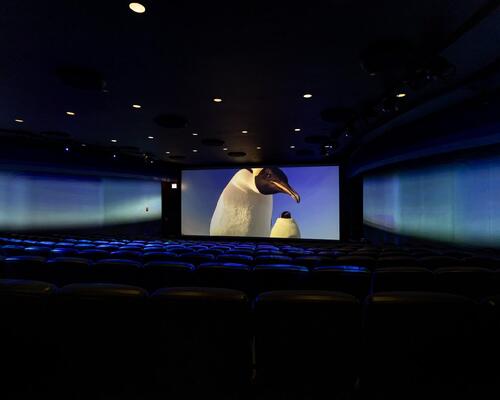
Shedd Aquarium upgrades its visitor experience with new Immersion Theater
Shedd Aquarium has opened the Immersion Theater developed in partnership with SimEx-Iwerks, as part of a wider strategy to enhance the guest experience and create additional revenue opportunities.
The attraction has transformed the aquarium’s Phelps Auditorium into a multi-sensory venue combining panoramic projection, environmental effects and interactive technology.
A new pre-show area allows visitors to engage with augmented reality marine animals before entering the

Mandarin Oriental announces standalone Mansions-branded residences for Abu Dhabi
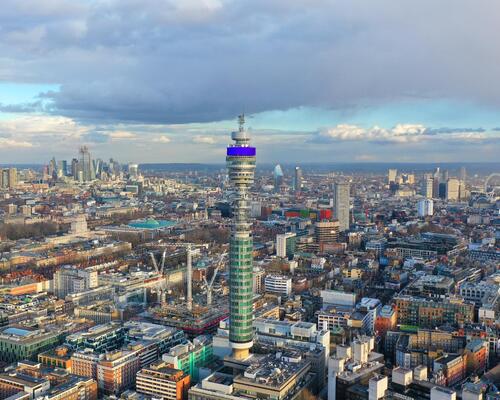
MCR is planning a luxury hotel for London's BT Tower

Joy as a radical act: Yinka Ilori launches solo exhibition celebrating the rebellious power of spreading happiness

Work gets underway on Madrid's €800 million leisure complex
Work is underway in Madrid on one of Europe’s most significant multi-functional complexes, combining sport, entertainment, culture and education.
The €800 million initiative to regenerate the former Olympic Aquatic Centre in the north-east of the city, next to the Riyadh Air Metropolitano stadium, is being led by Barsento – a joint venture between Live Nation Entertainment, Oak View Group and Atlético de Madrid. The project will
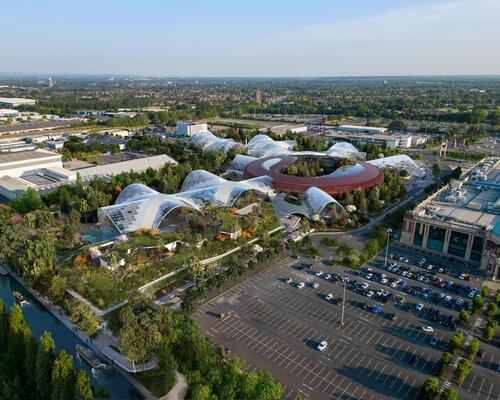
Therme Manchester reveals 90:90 strategy – 90 per cent of the UK population within a 90-minute drive of a Therme

Four Seasons’ Naples Beach Club opens 2,800sq m Sanctuary spa inspired by indigenous Calusa people
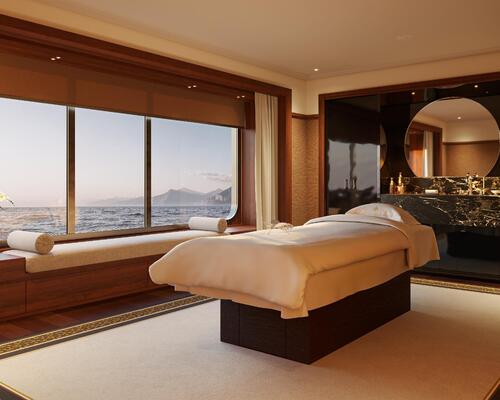
Orient Express Corinthian to host Ocean Rebirth wellness retreat in collaboration with Guerlain
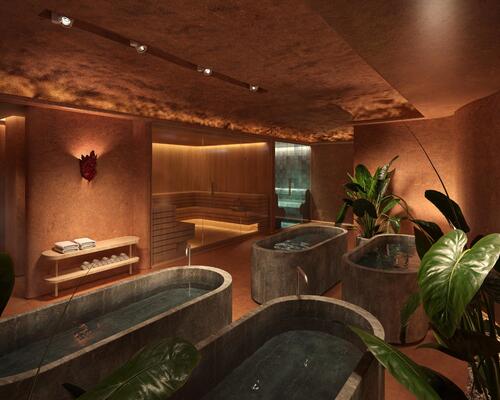
Famed London nightclub, Tramp, launches Tramp Health
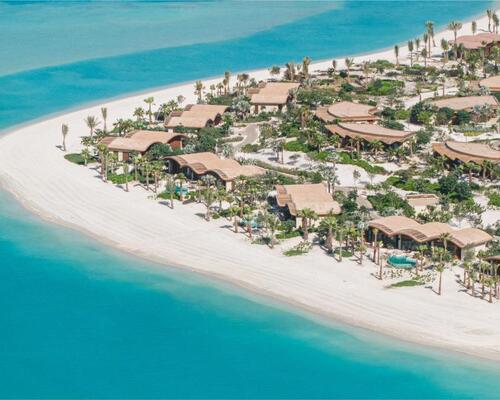
First look: Miraval opens on the Red Sea in Saudi Arabia

Hainan Science Museum by Ma Yansong, opens in China
A new science museum has opened to the public in Haikou after attracting more than 350,000 visitors during a four-month soft opening period.
Designed by Ma Yansong and his practice MAD Architects, the Hainan Science Museum is located on the edge of Wuyuan River National Wetland Park and has already recorded peak attendance of more than 5,800 visitors in a single day.
Commissioned by

Zannier Île De Bendor launches with design by Hardel Le Bihan Architectes

Sæl Spa readies for launch in London: “a modern British sanctuary”
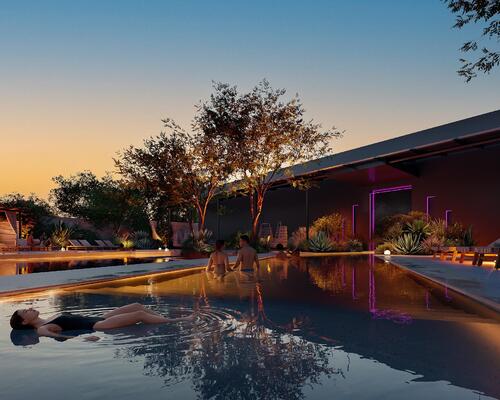
Immersive art bathhouse Submersive announces debut location in Austin

Construction begins on regenerative wellness destination The Shenandoah Nature Resort

Royal Caribbean reveals record-breaking cruise ship

V&A East opens in London

David Geffen galleries open at LACMA

New venue The Lands by Capella includes a longevity centre to complement sister hotel Capella Sydney

World of Frozen launches at Disneyland Paris
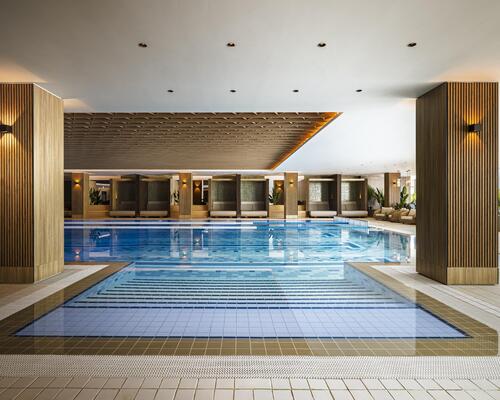
Pical Resort by Valamar reveals first Croatian spa under the ESPA brand

Mandarin Oriental creates end-to-end Egyptian journey with two new hotels and first-ever luxury river cruise

Designers Mendil + Meyer launch new division called Lām Concepts for strategic wellness projects
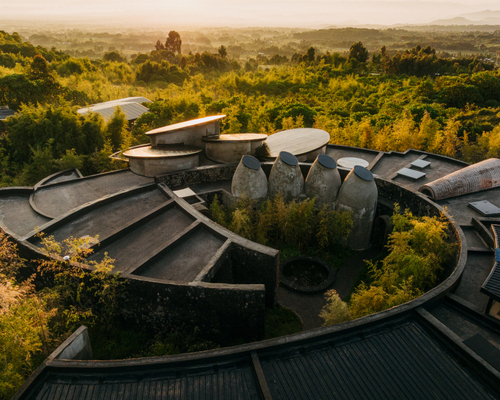
Wilderness Bisate in Rwanda reveals brand’s second Sanctuary spa
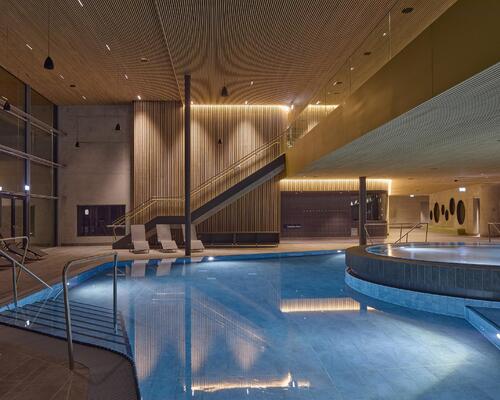
4a Architekten shares details of wellness extension at Salinarium Bad Dürkheim Thermal Spa