Interview
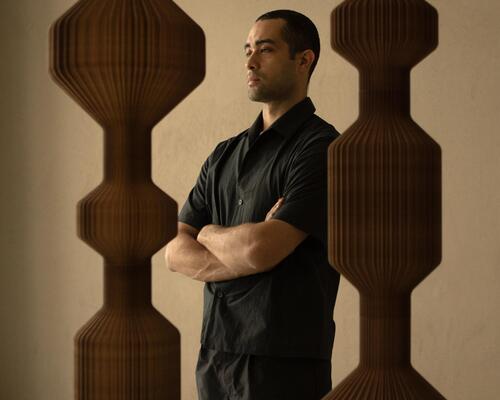
Alfred Waugh
Raised in the Canadian wilderness by a British father and a mother of First Nations descent, the founder of Formline Architecture + Urbanism has made it his mission to bring together Indigenous wisdom with Western knowledge. He tells Magali Robathan about his biggest project yet



'In Indigenous culture, it’s more important to understand where you come from than what you do for a living,” Alfred Waugh tells me, speaking from his office in Vancouver, Canada.
“When I sit down with an Indigenous Elder, they want to know – who are you? Not how many letters do you have after your name?”
For Waugh, who he is and where he comes from is inextricably bound up with his work and philosophy. Growing up in the wilderness just outside Yellowknife, in Canada’s Northwest Territories, Waugh developed a profound connection to the land. His mother was Indigenous, part of the Fond du Lac First Nation Community, while his father was a British prospector who had come to the area in search of gold. Waugh grew up in a house with no running water, hunting and fishing for food. From his father, he inherited a passion for understanding the mechanics of how things work – his father taught him how to weld as a young child, and they built Waugh’s first car together – while his mother taught him the importance of being connected to his roots. Both parents showed him how to be resilient and inventive, and instilled in him a deep respect for the land that he has carried through to his work.
“I’m driven by a desire to bring Indigenous wisdom together with Western knowledge,” he says. “In western civilization, we’re very good at analysing things and understanding the mechanics of how nature works so that we can manipulate it for our own means. However, we forget we’re connected to nature and we’re very dependent on it. Indigenous ways of knowing place nature at the centre and embrace our profound interconnectedness with the world around us. I think there’s this reconciliation we can have by bringing those two worlds together.”
This philosophy has led to a varied portfolio of projects that includes the Squamish Lil’Wat Cultural Centre in Whistler, British Columbia; the First People’s House at the University of Victoria, British Columbia; Saskatoon Library in Saskatchewan; and the off-grid Liard River Hot Springs spa in the Boreal Forest in British Columbia. The practice specialises in culturally and environmentally sensitive projects – both Indigenous and non Indigenous – and is known for its deep listening and its collaborative approach.
Now Waugh is working on perhaps his most high-profile project yet – the creation of a new home for Vancouver Art Gallery.
A new start
Vancouver Art Gallery (VAG) is currently housed in a former provincial courthouse, which was re-purposed for museum use in the early 1980s. In 2013, the board of trustees announced that they planned to build a new home for the museum in downtown Vancouver, and in 2014 Herzog & de Meuron were appointed to design the building. However, as a result of delays and spiralling costs – the budget soared from C$400m ($296.4m) to $600m ($444.6m) – board members announced in December 2024 that they had ended their relationship with the Swiss firm and had invited 14 Canadian architects to submit proposals for a smaller, more practical building. In September 2025, the VAG appointed Formline Architecture + Urbanism alongside Toronto-based practice KPMB, led by Bruce Kuwabara.
At approximately 200,000sq ft, KPMB and Formline’s building will be around half of the size of Herzog & de Meuron’s. The aim is to create a welcoming cultural and community hub that reflects the diversity of Vancouver’s communities. As well as hosting exhibitions, it will host a wide range of art-based events and activities aimed at improving wellbeing and encouraging connection. Vancouver has a diverse population which includes many Indigenous people, and is the traditional territory of three nations: Musqueam, Squamish and Tsleil-Waututh.
“Working on this building is an honour and also a responsibility, because I don’t want it just to be a token reconciliation project,” says Waugh. “I want to design a building that is meaningful, and that creates a safe and inclusive cultural hub within the city.
“I want to somehow build a partnership between the Vancouver Art Gallery and the Nations.”
It was important to finalise the gallery’s programming before entering the design phase proper, says Waugh. “I’m not just interested in designing a pretty building and a great experience, I’m interested in how this building is going to operate. I want to create a fantastic piece of architecture, but I also have a responsibility as a designer and community member to be thoughtful about what we’re doing and make sure there’s a business case for it.”
While it’s too early in the process to share design details, Waugh has some general ideas. “I want to develop a design that’s reflective of the region, and somehow bring mass and wood timber into the building,” he says. “I really like inventive details, and I plan to work with some innovative sub trades in the local area on the glazing, steelwork and wood details.
“I thought that the woven copper façade that Herzog and de Meuron developed together with Squamish Chief Janice George was quite beautiful. The woven fabric is a symbol of protection, and it’s also symbolic of transformation – I love that narrative, and I think we’ll try and keep it in some form. I want to build on some of the thoughts and hard work that went into the previous design.”
What did Waugh think of Herzog & de Meuron’s design for the new Vancouver Art Gallery overall, I ask.
“I don’t like to criticise other architects, and their building certainly had an iconic presence,” he says. “I wasn’t too sure about creating a wall around the gallery to encapsulate the courtyard, though – it’s not a very inviting design. And because the building was made up of vertical galleries stacked on top of one another, with all these escalators, it was very expensive, and meant that when you had a changeover of an art installation, you’d have to block off a floor. There were a number of programmatic and pragmatic things that could have been better.
“Also, the team didn’t really understand the importance of Indigenous influence and reconciliation, and they brought in the Indigenous input late in the process. I often find that the application of culture to buildings can be quite superficial.”
This time around, communities are being consulted from the very beginning. As with all of Formline’s projects, this starts with a process of deep listening; of attuning to the clients’ voices in order to really understand their priorities.
“We try to listen to as many people as we can and figure out a common thread through all the different groups, in order to try to build a vision of that project that people can buy into,” he says. “What you’re trying to do is to set some foundations of what the building means to the people in the community, so that you can create designs that reflect the soul of their culture. If you’re successful through the execution of the building, there should be a spirit in that building.”
Is there anything unique about collaborating with Indigenous communities, I ask. “Yeah, there definitely is. Because when you’ve taken a culture and you’ve stripped them of their cultural identity for 200 years, and a lot of the Elders have gone, there’s a bit of a struggle to define what represents you as a culture. A lot of architects abuse that with Indigenous projects.”
A different path
For Waugh, the Vancouver Art Gallery project is deeply personal and ties back to a conversation with his late mother, which led him to a career in architecture in the first place.
“I guess I didn’t follow the typical route into architecture,” he says. “I spent much of my youth out on the land, and then I moved away from Yellowknife once I finished high school. I worked various jobs: in the bush, on gold mines and then on oil rigs.
“I was making good money, but one day my mom said to me, you’re too smart to waste your life working on an oil rig. You need to go to university, and then you need to do something meaningful for your people.”
Waugh enrolled on a pre-engineering programme at the University of Lethbridge, Alberta, where one of the professors noticed his talent for design and suggested a career in architecture. In 1993, Waugh graduated from the University of British Columbia’s school of Architecture with honours, becoming the first Indigenous student to complete the programme. He began his career at Busby, Perkins & Will, before founding Formline Architecture + Urbanism in 2005. Today, the practice employs [how many?] people, working out of its Vancouver office.
“This commission to design the new Vancouver Art Gallery brings my personal journey full circle in a profound way,” says Waugh. “My mother’s request sparked my journey into architecture – now Formline and KPMB have been privileged with this opportunity to celebrate Vancouver’s vibrant culture while honouring the Indigenous peoples who have stewarded this land for generations, and paying tribute to the beautiful mountains and lush rainforests that define our region.”
Due for completion: 2027
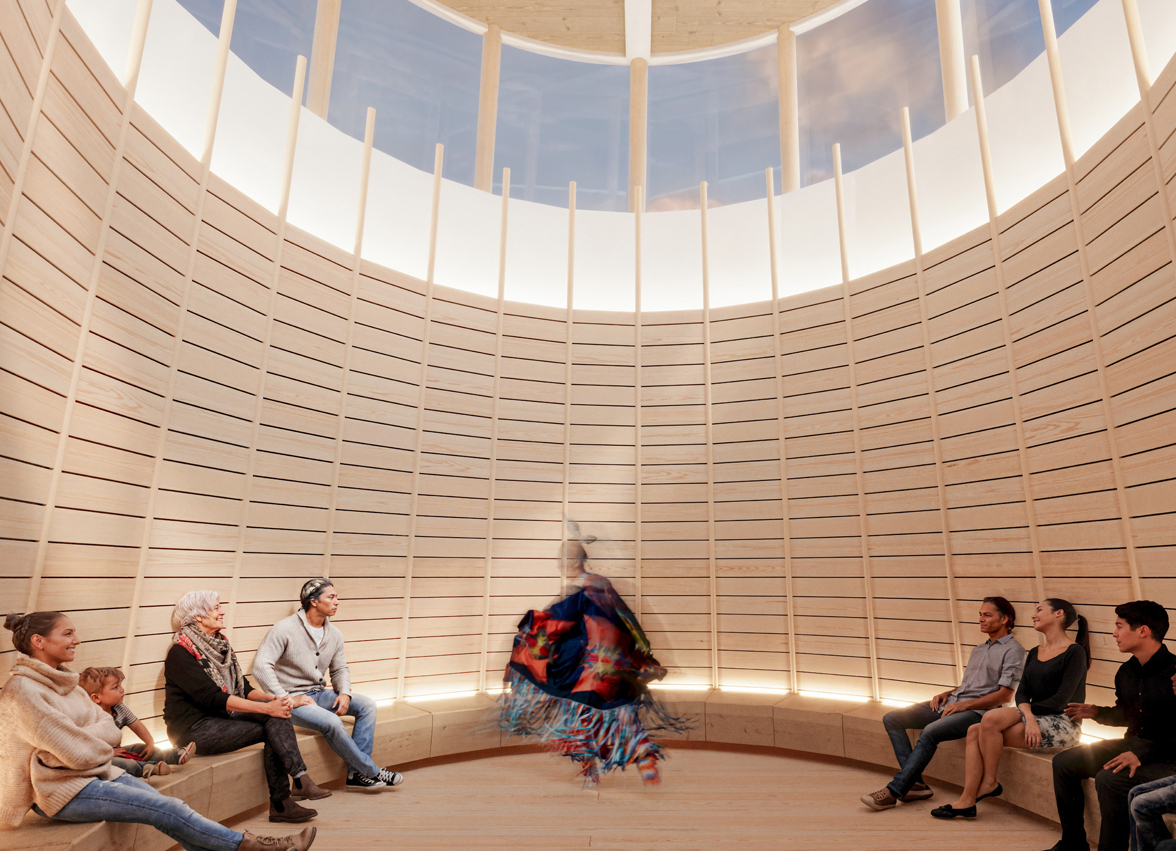
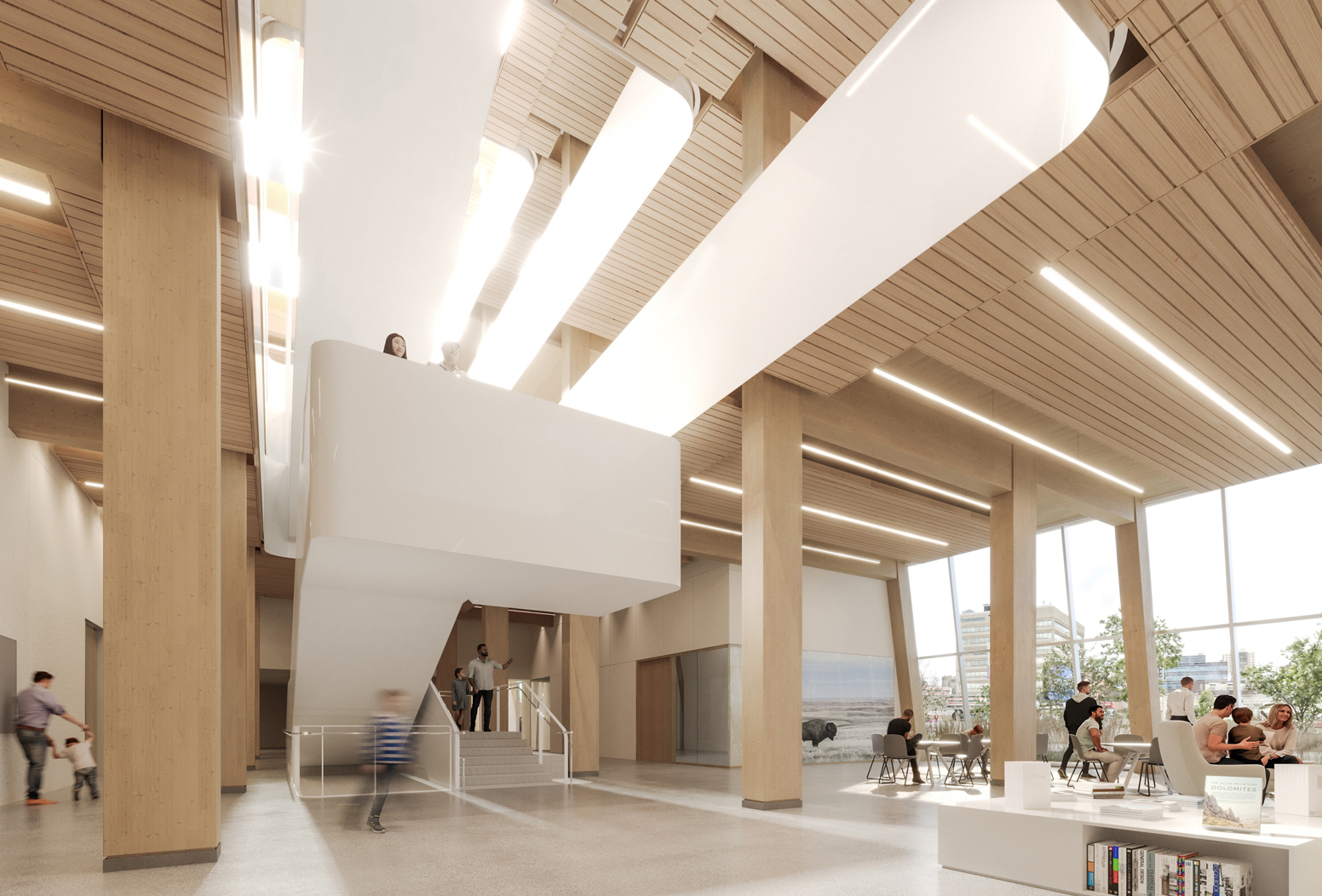
The new central library is a flagship of Canadian public library reconciliation in action. The design of the building will honour the Indigenous, Métis and the people and culture of Saskatoon. The building will serve as a living room, a safe place to learn, be inspired, and share ideas.
During the design concept process, a mass timber structure was chosen to express the importance of wood to both the Indigenous and Métis people, rooted in the log poles of the tipi and the log cabin. Wood is also the first choice as a sustainable material for its low embodied energy and carbon sequestering qualities.
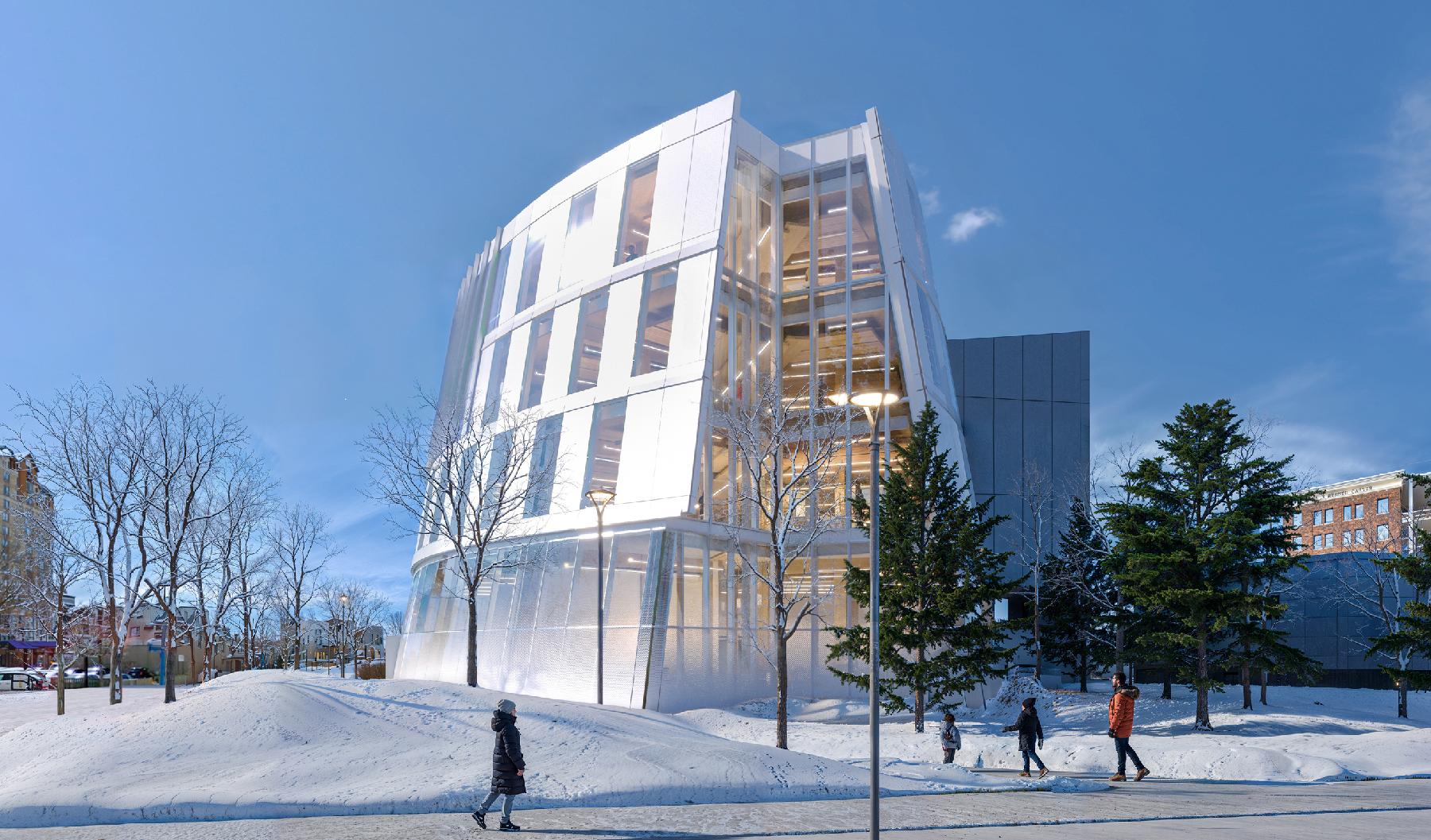
The shape of the building is inspired by the tipi with its gently sloping façade and conical prow facing south to greet visitors. The façade is composed of triple glazed windows with white ceramic frit and white insulated metal panels. The colour white is evocative of the canvas tipi and in combination with the wood interior will have a warm glow at night, similar to the translucent quality of the tent.
The second to fourth levels feature a shingled glass and wall system that allows natural ventilation at each overlap. The expression of the façade is carried into the interiors with sloped unlaminated columns supporting the exterior window wall at approximately 3050mm (10ft) on center. The ground floor level and the rear alley portion of the building is clad in beige tyndall stone relating to the brick context of Saskatoon.
Completed 2008
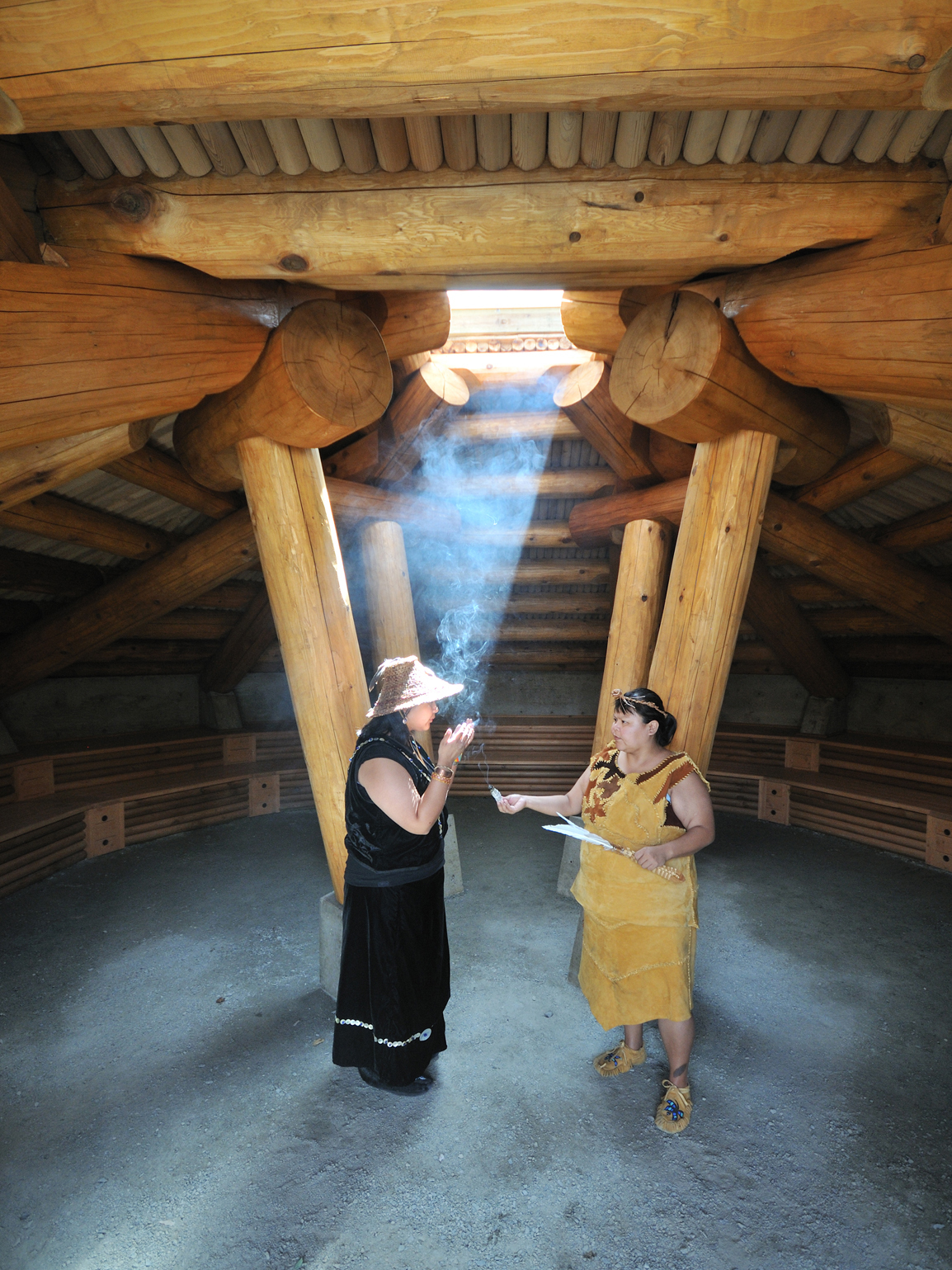
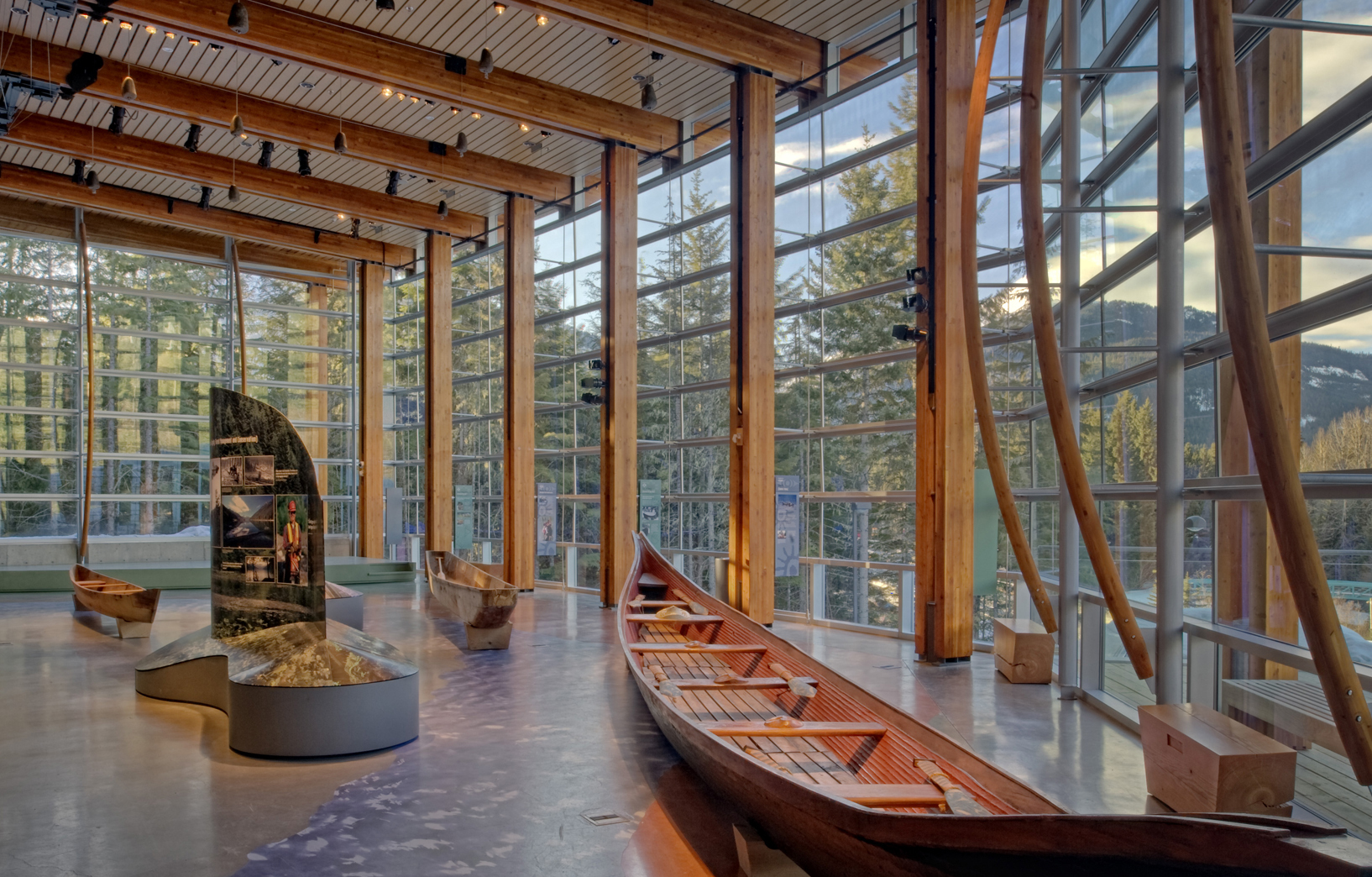
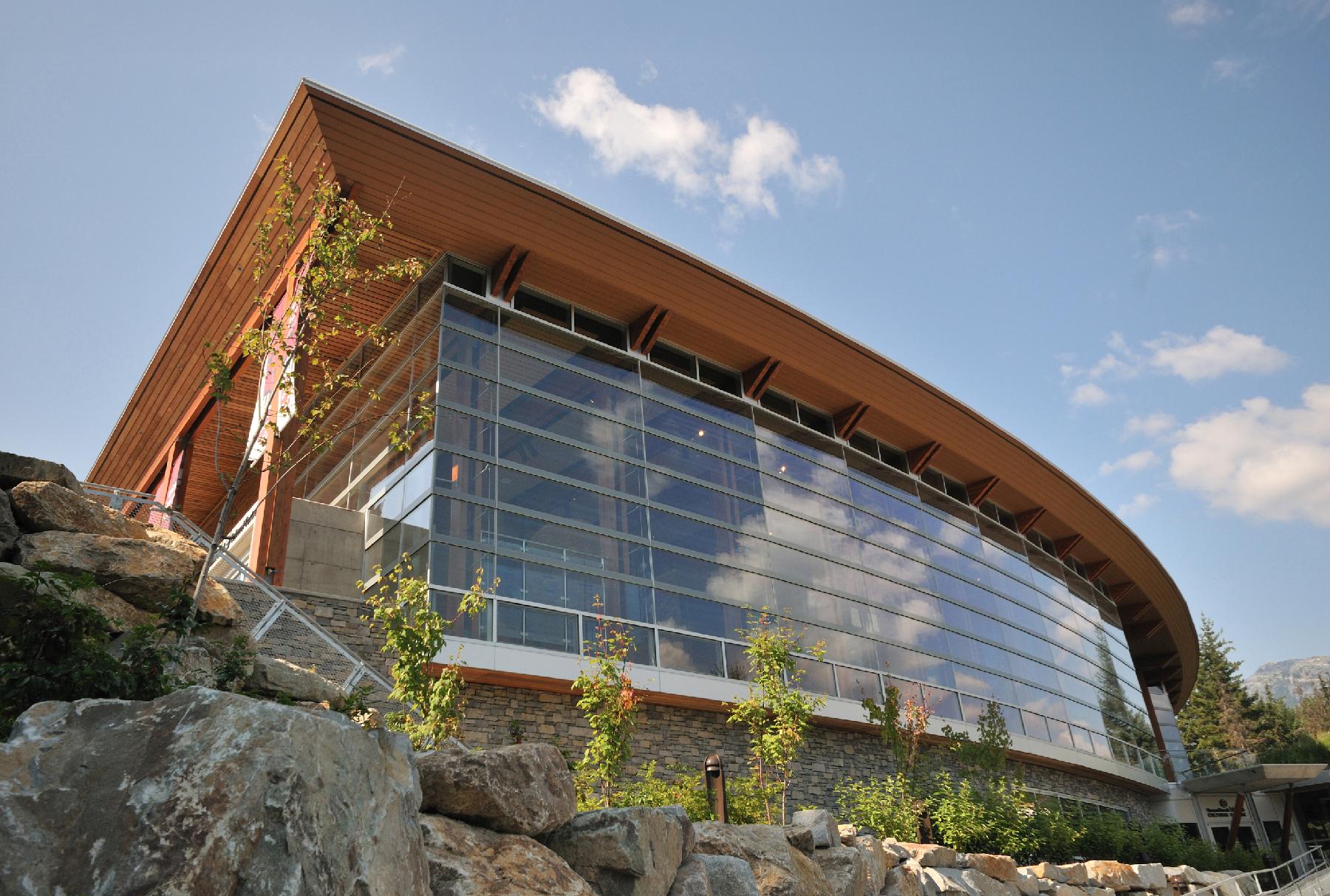
The Squamish Lil’wat Cultural Centre is a celebration of two Nations; a symbol of the Squamish and Lil’wat Nations working together to share their overlapping territories in the Pristine Valley. Providing authentic experiences for visitors, the cultural centre contributes to the preservation of each Nation’s culture as well as educating visitors about Aboriginal culture in general.
The Cultural Centre has been built to respect the landscape and act as the doorway to the forest.
Through green planning and design practice, this project significantly contributes to Whistler’s reputation as an innovative community, emphasising its efforts to prevent as well as reduce negative environmental impacts. The building is Leed® Certified.
Completed: 2012
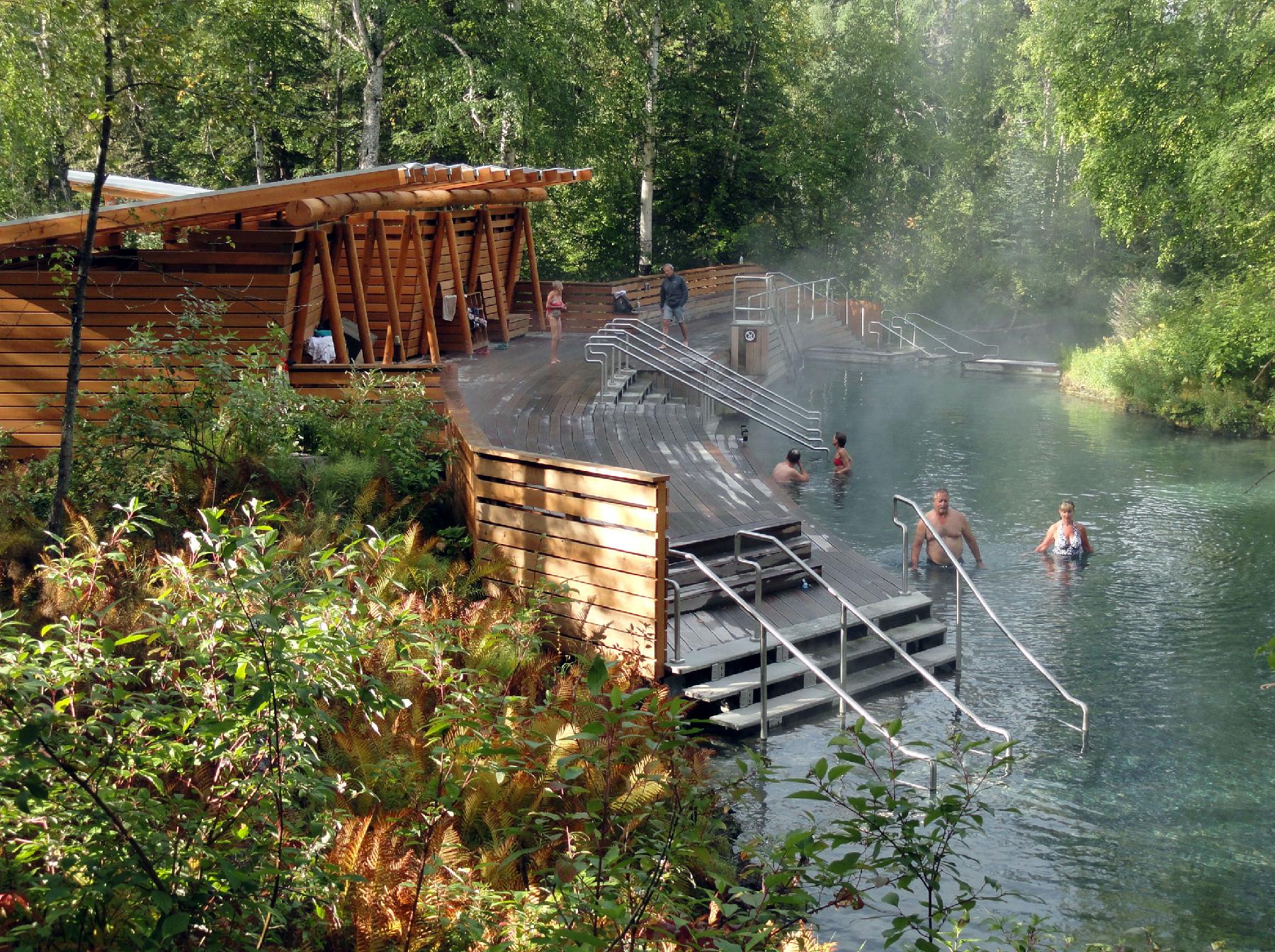
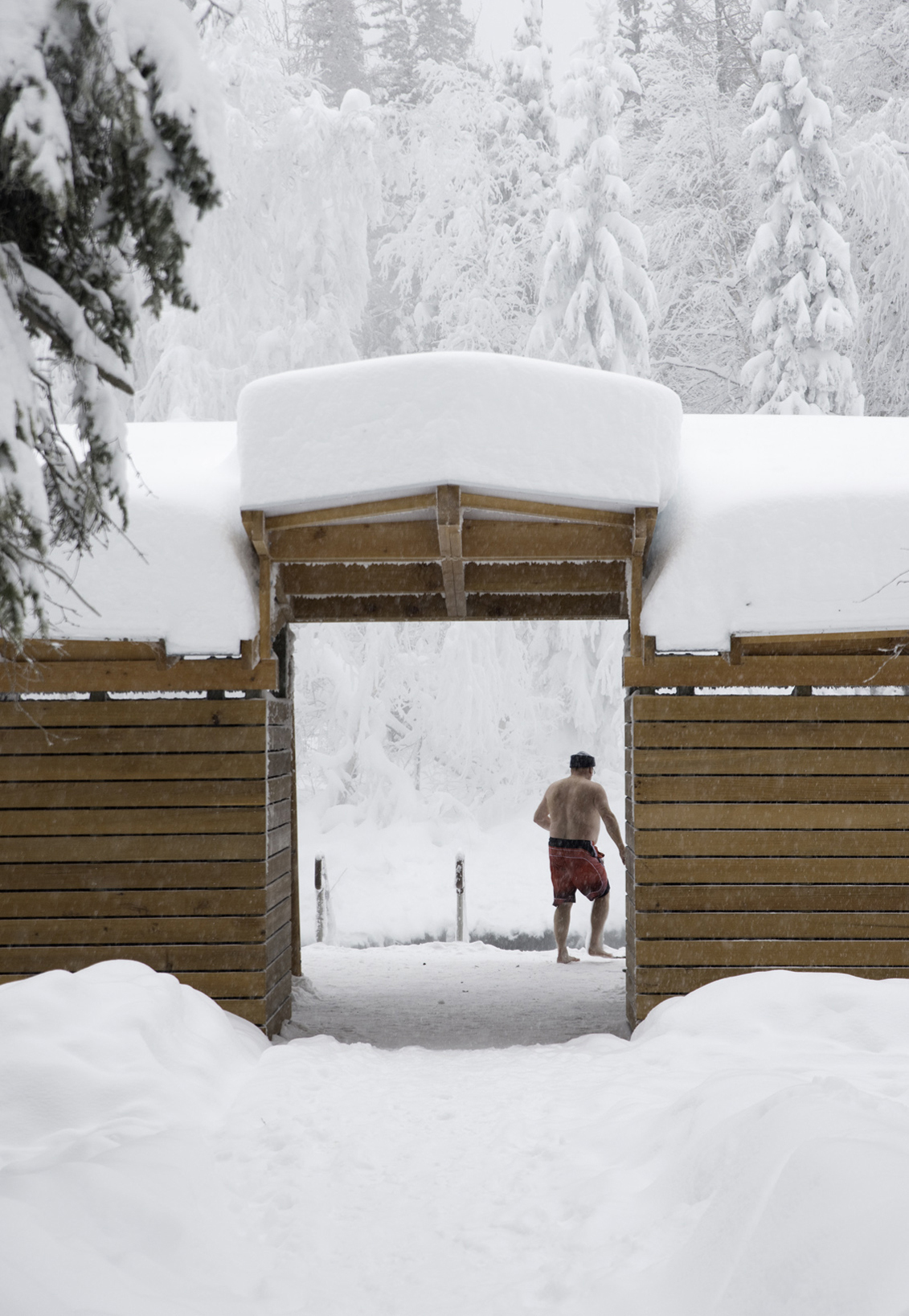
The Liard River Hot Springs project replaced the existing timber deck and changing room facility that was eroding due to environmental exposure.
The hot springs facility is completely off grid, meaning that Formline Architecture + Urbanism had to design to maximise natural light in the changing rooms.
One of the most unusual design features is the addition of bear peep-holes in the changing room doors, allowing bathers to check for grizzly bears before emerging.
In order to ensure that the new facilities tied in well with the natural surroundings, Formline chose to clad the pavilion in western red cedar. The wood was also chosen for its thermal properties and resistance to weathering, mold, fungus and insects.