Interview
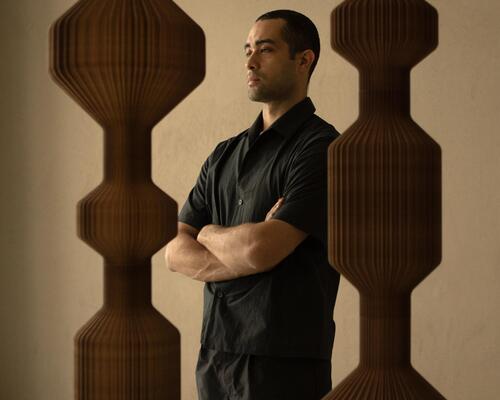
James Sanderson
Gyms have a role to play in collaborating with the social prescribing movement to improve the nation’s health, the CEO of the UK’s National Academy of Social Prescribing tells Kate Cracknell




What is social prescribing and how does it work?
Social prescribing is a great new way to help people look after their physical and mental health. GPs and other agencies can refer patients to a social prescribing link worker, who in turn can connect them to a variety of community groups and activities for practical, social and emotional support.
This creates a powerful bridge between health services and the local community and allows people more control over their wellbeing in a way that suits them. The services offered are wide-ranging but can include things such as physical activity, healthy eating advice, arts activities, gardening, cooking classes and befriending schemes.
Is social prescribing the answer to growing health inequalities across the UK?
The National Health Service is moving towards more personalised care and social prescribing is a key part of that – particularly in tackling health inequality. At least one in five GP appointments are about wider social needs rather than just medical issues.
Through social prescribing, we can support people facing these problems by connecting them to community groups, support services or activities that can address these wider issues, on top of improving their physical and mental health.
What’s the relationship between NHS England and the NASP?
Essentially, NHS England and NHS Improvement’s role is to implement commitments made in the NHS Long Term Plan and set the future direction.
We support social prescribing link workers, primary care and integrated care systems to implement social prescribing right across England. We work with a number of partners to achieve this, including the National Academy of Social Prescribing (NASP).
NASP was launched by the UK government in October 2019. It creates partnerships across a variety of sectors to promote the kind of services we’ve talked about and is a brilliant champion for social prescribing and the work of local communities.
What’s your personal vision for social prescribing?
I think the social prescribing movement gives us a unique opportunity to rebalance health and wellbeing activity. It provides us with clear ways to deliver psychosocial support alongside more traditional, medical interventions. There’s growing evidence of the power of social prescribing to transform lives and I hope we can enable as many people as possible to achieve their health goals through the programme.
Can you give some examples of best practice social prescribing?
I was personally really moved by the story of Patrick, a 75-year-old dad and husband from Stockport who had retired and felt he’d lost his purpose in life (www.HCMmag.com/patrick). He said he felt he couldn’t carry on and his wife made him an appointment with his doctor, who was able to give him a social prescription and put him in touch with his link worker.
Patrick subsequently joined the bowling club, did a Men Matters holistic health course, managed to cook his wife a meal after a cooking lesson and now joins others on weekly walks. He says he’s now in a much better place and for me, it’s hearing stories like this that makes me so proud of the programme and what can be achieved.
How localised are the networks, and how will you scale best practice?
NHS England & Improvement (NHSE/I) has committed to rolling out social prescribing and funding link workers across England. The ambition in our long-term plan is that over 900,000 people a year will be referred to social prescribing by 2023/24, which would mean organising approximately 4,500 social prescribing link workers.
NHSE/I and NASP work closely together to spread best practice around the country. In addition to NHSE/I’s regional support for health and care systems, NASP also has a great regional Thriving Communities programme. This programme works with the NHS to support small community organisations, bringing together a whole host of partners such as Sports England, the Arts Council, the Money and Pensions Advisory Service, Historic England and Natural England.
What will be the role of social prescribing in the aftermath of COVID-19?
I think social prescribing will be a key tool in recovering from the pandemic, which has sadly had a huge impact on the nation’s physical and mental health. The programme not only helps us address health inequalities but also wider determinants of health, such as stress and loneliness. Ultimately, it helps people connect or reconnect with their local communities.
In particular, I think green social prescribing – with a focus on nature-based activities – will be vital in the coming months and years. This can range from things such as walking schemes and community gardening projects, to green gyms, forest bathing and outdoor arts activities.
As part of a £5.77m government project – working with the Department for Environment, Food and Rural Affairs, the Department of Health and Social Care, Natural England, Public Health England, NASP, Sport England and the Ministry of Housing, Communities and Local Government – we’ve launched seven ‘test and learn’ sites across the country this year to see how green social prescribing could be implemented more widely.
At what point in the process do you see health clubs and gyms having a role?
Lockdown has meant more inactivity and simultaneously fewer opportunities to access services such as gyms, which will now hopefully play a significant role in restoring access to traditional physical activities.
Our partnership with ukactive is an important step in connecting social prescribing with fitness and leisure activities. With free gym and leisure sessions being offered for up to 100,000 people through social prescribing, more people will be able to access a whole range of local physical activities to help them stay fit and healthy. This can only be a good thing.
I’m sure we’re also going to see gyms and similar services finding new ways to deliver services to encourage more people to become more active. There are great opportunities for gyms to work alongside social prescribing link workers, health and wellbeing coaches and local communities to develop creative alternatives that can boost physical and mental health outcomes.
What other things can the health club sector do to support the NHS agenda?
For me, it’s about planning leisure opportunities around what matters to the community and being less prescriptive and more willing to develop bespoke services – designed with local people – to create community-led services to address the challenges.
It’s also really important for the health club sector to support employees in developing new skills, as well as allowing them to take a more personalised approach. There are clear opportunities here for the NHS and the sector to work closely together, particularly as we’re all working towards similar goals.
What would be your call to action to the health club sector as a whole?
I’d like to see the sector help champion the social prescribing agenda, as a route to getting more people engaged in physical activity.
Collaboration is ultimately at the heart of the programme. Social prescribing’s strength is built on working alongside the communities where people live their lives. It’s not just the opportunity to bring people together, but about creating interactions that are social, active and fun.
Seven locations will receive a share of a £5.5m UK government investment pot to research how nature can be used to improve mental health and wellbeing.
www.HCMmag.com/nature
Physical activity will play a greater role in helping people look after their health and wellbeing due to a partnership between ukactive, NHS England and Improvement Sport England and the National Academy for Social Prescribing to highlight the role of fitness within social prescribing.
www.HCMmag.com/100k

James Sanderson is CEO of the National Academy of Social Prescribing and director of personalised care for NHS Improvement and NHS England











Designed to restore neglected land and renew the identity of Iraq’s capital city, Baghdad Sustainable Forests promises a new way of living surrounded by nature. Gensler’s Ian Mulcahay tells us why he thinks the project could become a model for the repair and enhancement of urban centres