The Health Agenda
Healthy collaboration
For years the health and fitness sector has aspired to be taken seriously by the health sector. Is now the time? asks Kath Hudson



In the UK, the pandemic has exacerbated serious health inequalities which already existed in society and proved that across the population people need to start taking more responsibility for their health and wellbeing.
They need to be inspired to move more and to be aware of the importance of nurturing good mental health and maintaining a healthy weight.
Without lockdowns, health services in the UK would have stopped functioning and this fact has finally convinced the government that prevention is better than cure – just as our industry has been saying for years.
So are we emerging out of lockdowns into a dramatically changing landscape? Will there be more opportunities for the health club sector to work with the health service?
If so, how can health and fitness operators in the public and trusts sector access these opportunities? We ask the experts
As a result of the pandemic, there are certainly more opportunities than before for health and fitness operators to work with the health service, for example, in the provision of weight management programmes and via support for COVID recovery.
It’s anticipated it will take three to five years to clear current waiting lists for medical treatment which have built up over the last year. Therefore, it will be important for National Health Service (NHS) teams to redesign patient pathways to increase their capacity.
One idea has been to free up more space in hospitals by moving out non-acute outpatient services. Leisure centres are a natural choice of location for these kinds of services: allowing qualified leisure teams to support less acute patients while the health service focuses on those who need enhanced support.
GLL is working with both the NHS Trusts in Cumbria to co-locate their musculoskeletal physiotherapy services into leisure settings as part of the transformation, for example.
In order for the sector to raise its profile, networking is key and takes time. It’s all about relationship building and proving what we can do – which is often a lot more than the healthcare sector realises.
Firstly, establish what your local health system has outlined as a priority for the community. Consider how your services could support this and, using available research, build a case for how your offering could support these priorities. Network hard, making contact with NHS service leads and articulate what you can offer in terms of long-term benefits and savings. Be confident in what you’re talking about, do your research and create a good business case and then prepare to be persistent.
GM Active has had some notable successes working with the health service. The Prehab4Cancer programme has treated more than 2,000 cancer patients across Greater Manchester, to make them more robust for their cancer treatment.
The results have been outstanding in terms of improved recovery times and shorter stays in hospital. Going forward, the vision is to replicate this service for other conditions, including for those at risk of amputations due to poor lifestyle habits.
Running these types of programmes isn’t easy. Collaboration is crucial – we’ve had the benefit of some heavyweight allies in the health world and work closely with our Active Partnership (Greater Sport) which presents GM Active as a collection of community focused professionals and not operators simply chasing the money.
It’s this system-wide approach that builds trust and credibility and is often sadly lacking between leisure operators and the health world. It’s not enough to simply train your staff to various level 3 and 4 qualifications. You need to train your leaders to be part of the system more generally.
Only when we’re considered part of the wider ecosystem, with values aligning with the NHS, will we be treated as we desire – as part of the solution for so many treatable and preventable conditions.
Unfortunately this training doesn’t currently exist, so GM Active is working to create a leadership programme which builds on our learnings and system leadership theories. This will enable us to build on the success of Prehab4cancer and transform our workforce and proposition, so we can finally take our rightful place at the Allied Health Professionals’ table (www.HCMmag.com/AlliedHealthProfessionals).
One of the proudest moments in my career was when the Prehab4cancer programme was launched at East Manchester Leisure Centre and our instructors were referred to by a medical colleague as “fellow health professionals”, alongside cancer physiotherapists, nutritionists and psychologists. It can be done!

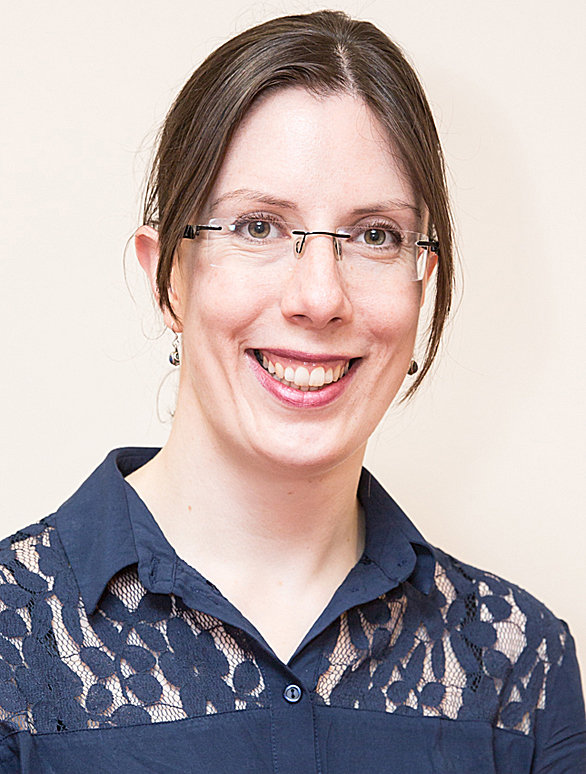
Health and wellbeing has never been higher on people’s agenda, so there’s an opportunity to harness some of the rhetoric around being physically active.
At government level there are also opportunities – for example the Office for Health Promotion will be a good fit with our sector and the £100m obesity fund crosses over with work which is already happening in health and fitness.
Although there are opportunities on the horizon, the question is how we can seize those opportunities and make the links. As everything currently happens at a local level, it still comes down to a postcode lottery. Ideally, we need a national strategy which can be delivered locally.
This is a high priority area for CLUK. We’re strengthening the links between our sector and healthcare, as well as sharing best practice among members.
We’ve just produced a draft document for members in Scotland, highlighting what is going on and how they contribute and now we’re looking to do the same for England and Wales. This will break down barriers and shine a spotlight on what’s working.
We’re optimistic about the opportunities. The tools are there – the new Sport England strategy, as well as awareness and public appetite for better health – so it’s a matter of how we bring those elements together, at a time when all operators are busy just trying to get back to normal.
Our sector will have to be proactive. We must go to the healthcare sector with a very clear case, so it’s easy for them to look at it and say yes, this is an opportunity for us to work together. The good news is that through the monitoring evaluation of the Leisure Recovery Fund we will have consistent data which we’ve never had before.
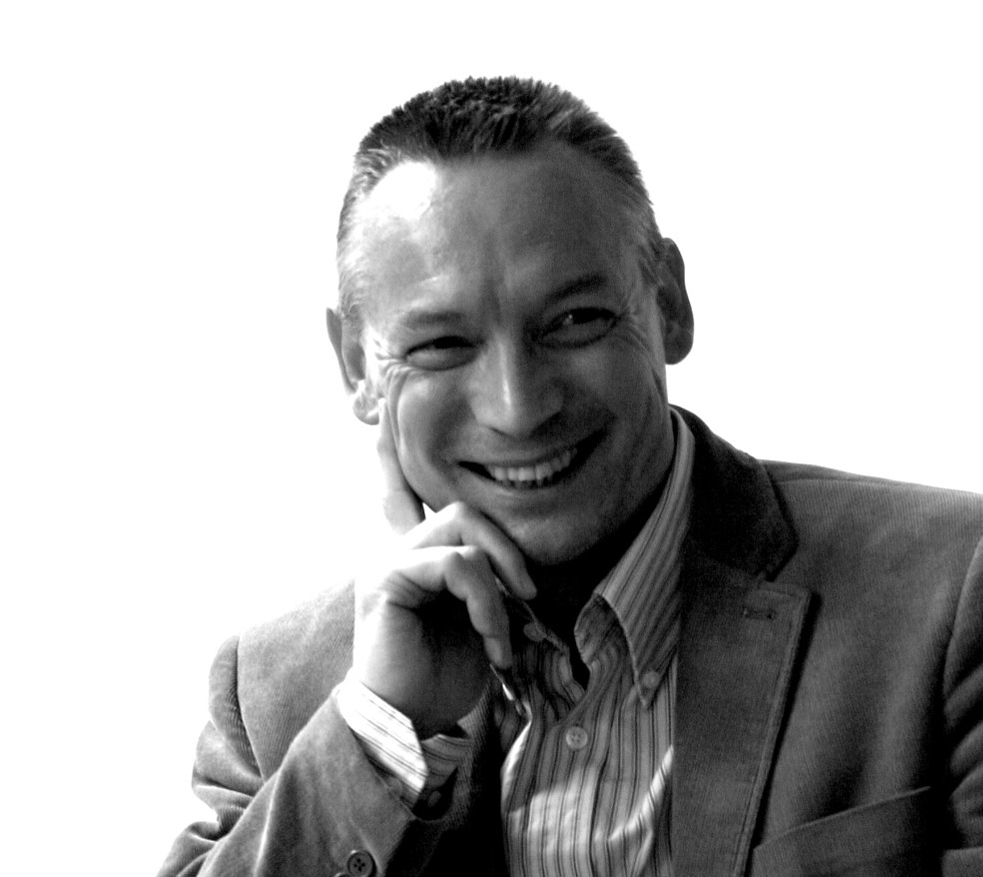
The physical activity sector has found it challenging to truly connect with health agencies. Aside from some pockets of great practice, physical activity as a mainstay of a nationally-driven preventative health agenda has not gained traction.
Sir Michael Marmot’s review at the end of 2020 confirmed that health inequality across the UK has worsened over the last ten years. Despite a greater number of facilities, enhanced quality and access to more affordable options, our sector has played its part in contributing to deepening health inequality.
Only 15 per cent of the population are members of gyms and leisure centres, and across all communities, participation is over-represented by the most affluent, while being under-represented among the most deprived. We’re perfectly formed to serve the people we get: we have outstanding marketing, programming and pricing strategies which appeal to just 20 per cent of the population at any one time.
So, what’s the opportunity? There should be a subtle shift in our language. We need to talk about health rather than fitness, and communities rather than markets. We need to see ourselves as part of a wider system that may include health, education and social care.
Most importantly, we need to understand the implications of the new Health White Paper – this insists on collaboration between local authorities and health agencies and has preventative health as a foundation principle.
We must also navigate our way around the emerging Integrated Care Services (ICS). Part of the new ICSs are Primary Care Networks, so we need to find out about those in our areas too.
Everything starts with a conversation, and it’s through developing those relationships that our sector will become part of this emerging collaborative approach to population health. This will take local – not national – initiative and will require us to show humility, as we build rapport with new partners. I urge us not to barge in with an ‘oven-ready solution’, but to enquire and explore opportunities to become an established part of a health care system.
There are fine examples across the UK of facilities playing a part within social prescribing, delivering cardiac rehab, cancer prehab and weight management interventions, and there are examples of long-COVID recovery programmes. These can become a more permanent and significant part of our proposition.
It requires us only to have a desire to think more broadly, to get a grasp of a new language and to expose ourselves to building new relationships in unfamiliar environments. This will not necessarily be easy, but the worthwhile things in life – those that make positive and lasting improvements to society – often aren’t.


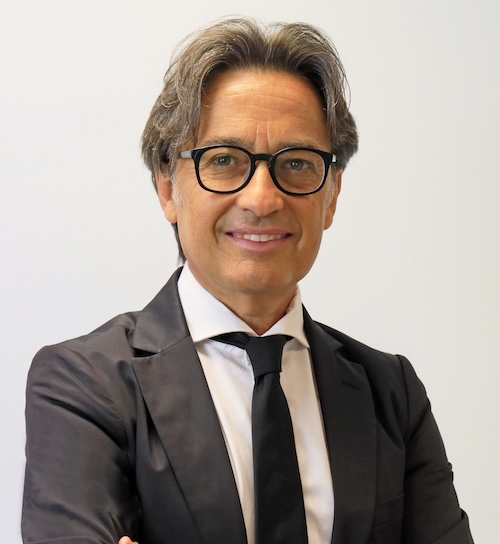











Designed to restore neglected land and renew the identity of Iraq’s capital city, Baghdad Sustainable Forests promises a new way of living surrounded by nature. Gensler’s Ian Mulcahay tells us why he thinks the project could become a model for the repair and enhancement of urban centres