Interview
John Foley
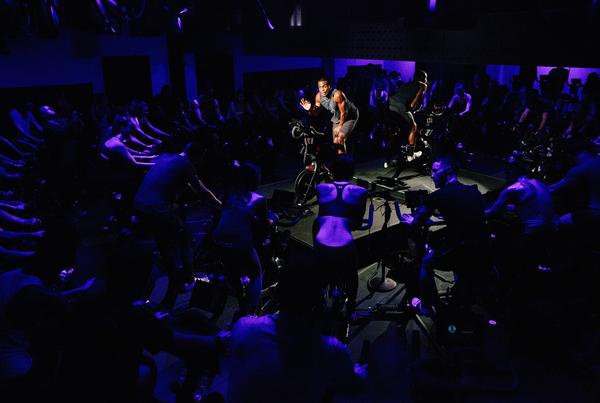
Ever since its state-of-the-art bikes entered living rooms in 2014, Peloton has been transforming home fitness, giving members access to live boutique cycling classes. Fit Tech speaks to founder and CEO John Foley about the brand’s journey...



What was your background before founding Peloton?
I began my career working in manufacturing at Mars Inc. I went on to work for various consumer technology brands, including Pronto.com, where I served as CEO and was also a co-founder of both Evite.com and Citysearch.com.
Prior to Peloton, I was president of Barnes & Noble. This background in manufacturing and technology, combined with my own passion for boutique fitness, led me to start Peloton.
How did you come up with the concept for Peloton?
My wife, Jill, and I have always been pretty serious about staying fit and we enjoyed going to boutique studio fitness classes. But, with an increasingly busy work schedule and two young children, we found that we were struggling to work out as much as we wanted. I felt that there had to be a better way, a way where you could digitise and scale the experience, and so the idea of Peloton was born.
Why did you decide to create your own bike, rather than simply creating a streaming platform?
Peloton sits at the nexus of fitness, technology and media, but that concept evolved over time. In the early years, we knew we wanted to be a software company, so we looked at the hardware options already out there and considered adding our software to someone else’s bike. However, there hadn’t been much innovation or capital in the category so we decided to build our own bike.
How did you turn your concept into reality?
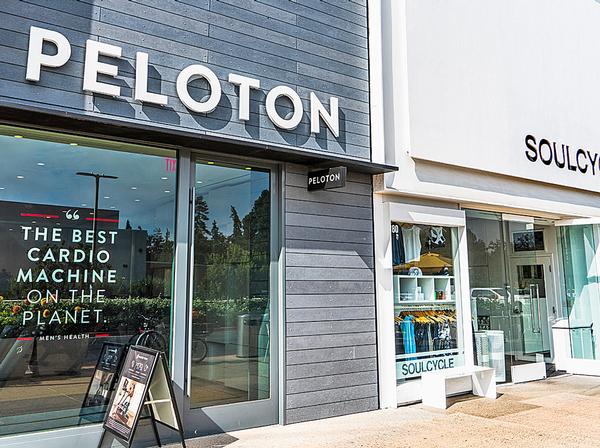
At first, my co-founders and I were incredibly focused on technology and getting the product right. We launched a Kickstarter campaign for the bike and did a small amount of marketing on Facebook. In late 2013, we found a retail space in the Short Hills shopping mall in New Jersey. This would become our first showroom; we now have over 80 across the US, UK, Canada and Germany.
The next area of focus was logistics – we knew we wanted to deliver the bikes ourselves and be able to tell our new members about the product. So, we hired a van and tested deliveries in a few zip codes in New Jersey. Today, we still deliver 70 per cent of our bikes and treads.
When designing the bike, what features did it need to have?
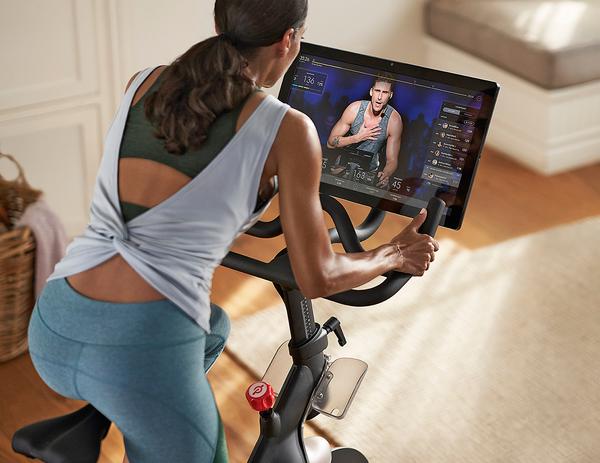
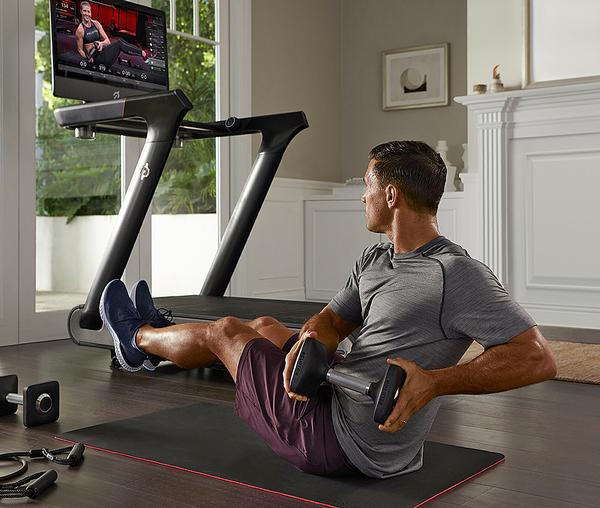
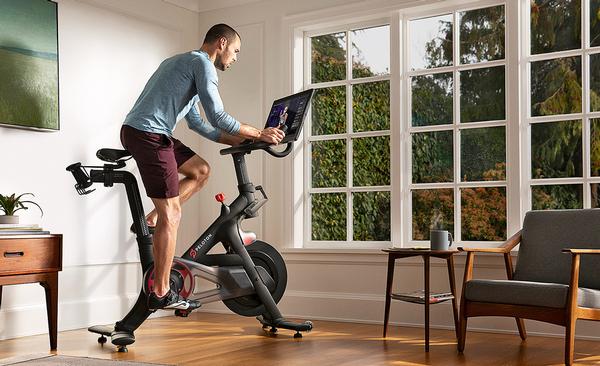
We put a ton of thought and engineering into the design and technology of the bike, which we believe is the best out there. As the bike is designed for home use, there were certain features it absolutely had to have.
For example, the near silent belt drive, which enables our members to ride without noise or disruption, and the magnetic resistance – there is no contact between the moving wheel and the brake, leading to a much smoother feel and more consistent braking force on the bike.
How did investors take to the concept?
For investors in the early days, Peloton felt capital intensive with a high operational risk, so they didn’t initially see that it was a good idea. We were also doing something completely new, so for some potential investors the vision felt too far-fetched, that we were trying to be too much. However, my co-founders and I could see what needed to be done not only to fill a gap in the marketplace, but also to create an entirely new category and so we kept going.
Who is Peloton’s main target market?
We have a very diverse member community across everything from geography to socio-economic level. They are often time-poor so really appreciate the ability to fit an amazing workout into their busy schedules.
Overall, we created a product that allows people to connect with a community that shares their passion, without having to leave the comfort and convenience of their own home.
Tell us more about your journey growing the Peloton brand?
In the early days, we had the challenge of convincing investors of our vision, but Peloton has grown rapidly and is now the category leader for connected fitness. We have a highly engaged audience of 1.6 million members worldwide.
In 2018, we began our expansion, starting with the UK and Canada. This year we launched in Germany, our first non-English-speaking market. We’ve introduced German instructors and a fully localised bike UI for our German members.
In terms of people, we’ve grown from a team of four to over 2,000 employees globally.
Tell us about Peloton digital
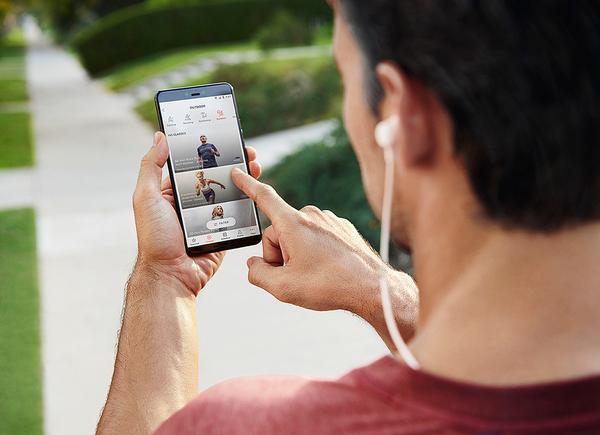
The Peloton app launched in 2018. It’s complimentary for all bike and tread owners and provides access to all of our content anytime, anywhere. You can also purchase our digital membership as a standalone product.
Over time, we’ve introduced more and more features on our app. For example, this year we added GPS metrics for our outdoor content and Apple Watch integration for members working out with the Peloton app on their iPhone. This means more and better metrics and improved control access. In addition, we’ve just launched on Amazon Fire TV so you can take one of our classes – anything from strength to yoga – in front of the largest screen in your home.
Digital is an exciting opportunity, as we can provide even more people with access to our content. For example, people who already own a non-Peloton stationary bike or treadmill can now transform their workout experience.
Do you supply Peloton bikes and treadmills to many businesses?
Our focus will always be B2C. However, since we delivered our first bikes in 2014, we’ve heard from our community that they want to continue working out with Peloton while they travel. Today, there are hundreds of hotels that have purchased Peloton bikes for their guests to enjoy.
For our members, the availability of bikes at hotels means they can continue their Peloton experience and stay connected to their fitness routines even while away from home. It also enables us to bring our brand to an entirely new audience, who we’re sure will fall in love with the Peloton experience as well.
Last year, we launched an interactive Hotel Finder map so that Peloton members can not only search for properties that have Peloton bikes, but they can also search and book hotels directly through the site.
We also work with a select number of corporate partners to provide the Peloton experience to their employees.
Do you see Peloton as competing solely with other at-home fitness products, or is it also competing with studios like SoulCycle?
No one is doing what we’re doing, anywhere in the world – combining the best software, hardware, content and experience in one place. We created the category and we’re confident about the quality and uniqueness of the Peloton experience, so we spend a lot more time thinking about how we can continue to innovate and deliver the best possible experience to our members globally than focusing on competition.
Speaking of focusing on your members, how do you use their data?
We provide data for all of our members to track their own workouts and progress over time. One of my favourite pieces of work we do is our annual year in review.
Each member receives an overview of their workouts from that given year, the instructor they took the most classes with and some fun, comparative stats.
We also use data to inform content choices, such as the length and type of classes we’re producing, which ultimately improves the experience for our members.
How do you manage music licencing? Would you say it’s essential to your business to be able to use popular music, despite the high costs and legal issues?
Music is a hugely important part of our business and, in many ways, we are a music discovery platform. We have agreements with major publishers, record labels and performing rights organisations, as well as many independent publishers and labels. These agreements provide licenses to a broad catalogue of music that our instructors can choose from to help them programme great class content.
In 2018, we began working with a few artists, who we know our members and instructors love to ride to, for the launch of a series celebrating their music in artist-dedicated classes. This has been a great success, and we’ve worked with some incredible artists, such as Lizzo, JLo, Paul McCartney, Madonna and Pink.
Last year, we also launched a Track Love feature, which allows members using our hardware to save songs from our classes to a playlist in their Apple Music or Spotify accounts for later listening and sharing.
Do you have plans to release any new products or features?
Our research and development team is always working on ideas and this past year we’ve introduced lots of new features, including an improved home screen on the bike, which brings personalised class recommendations to front and centre. Many of these have been launched based on member feedback. Ultimately, our true north star is ensuring that members have the best experience possible — whatever innovations we may have on the horizon.
What do you predict home fitness will look like in 5 or 10 years?
Technology will continue to play a huge role. For Peloton, technology underlies everything we do and it’s a big differentiator for us. Also, I think there will be more focus on the breadth of content. At Peloton, we produce broadcast quality content from state-of-the-art studios and we’re continually introducing new formats.
What aspect of Peloton and its journey are you most proud of?
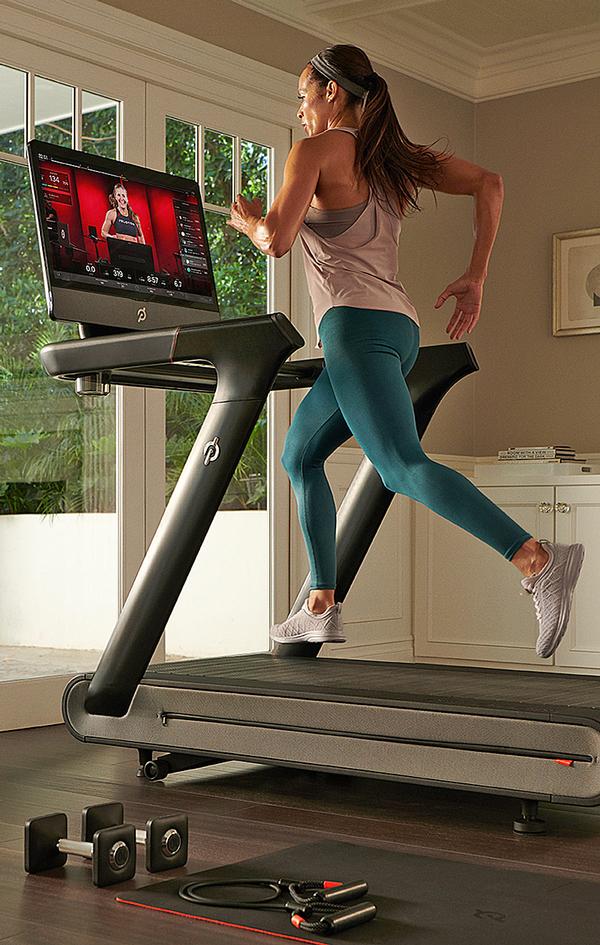
Peloton started off with a bike, but we never set out to be just a bike company and I’m most proud of how the company has grown and evolved. Since launch, we’ve introduced new hardware (the Peloton Tread), yoga and many other content formats. We’ve expanded internationally and grown our community to 1.6 million members worldwide. This year, we’ll launch state-of-the-art studios in London’s Covent Garden and NYC’s Midtown West.











Designed to restore neglected land and renew the identity of Iraq’s capital city, Baghdad Sustainable Forests promises a new way of living surrounded by nature. Gensler’s Ian Mulcahay tells us why he thinks the project could become a model for the repair and enhancement of urban centres