Landscape design
Frederic Francis
With collaborators including Zaha Hadid, Jean Nouvel and OMA, the principal of Francis Landscapes works with nature to create green spaces, often in harsh desert climates. Kath Hudson reports



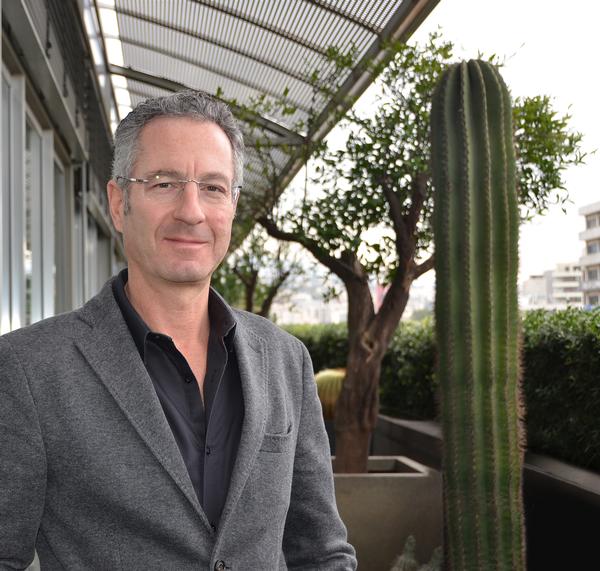
One of the first landscape architecture firms in the Middle East, Lebanon-based Francis Landscapes was established by Irmtraut Schoeber Francis in 1987, who inspired a deep love of both the profession and nature in her son, Frederic Francis. Francis is now taking the company forward, with projects in the Middle East, northern Africa and India.
When did you first decide to become a landscape architect?
It’s in my veins and my blood. I grew up in both Beirut and Vienna and throughout my childhood, I spent time in the gardens with my mother, which developed a love of nature and planted the desire to be a landscape architect. Although I formally trained in Europe, I have gained much of my knowledge about working in the Middle Eastern environment from my mother.
After training in Europe, why did you come back to the Middle East to work?
I grew up in both Lebanon and Austria; this helped me widen and diversify my cultural knowledge. Since there was no adequate training back then in landscape architecture in the MENA region, I studied in France and Belgium.
After graduating in 1993, I returned to Lebanon and took on the management of the firm with the plan to grow it nationally and internationally.
What are the main challenges of working in the Middle East?
The first one is the harsh climate, which makes things harder to grow than in Europe. Also we frequently build landscapes from scratch, where nothing exists other than barren, desert land.
Although there’s an ancient culture of gardening in the Middle East, in more recent times those skills have been lost and people generally have no idea what landscape architecture is.
It was challenging in the early days, as I needed to persuade people that they needed a landscape architect to conceive their outdoor spaces. It felt as though I was setting off on a pilgrimage.
I came back to this part of the world so that I could express myself. I’m constantly having to break new ground and discover new techniques. Each day that presents a new challenge is a happy day for me, because it gives me the chance to educate and inspire people. I like creating spaces where people meet and live and feel good.
You have worked extensively in northern Africa and India. How does it compare to the Middle East?
The culture of tending the land in India extends back to Mogul times, so generally the people relate to gardening. In Africa, you have to sensibilise people about the topic. In Egypt and Morocco the best hotels and resorts are based around luxury and outdoor living in beautiful gardens, so you have to fight against the climate to create an oasis.
However, even in difficult conditions, if you respect and work with nature, you will succeed. In a desert landscape you need minimum water in the beginning – just some localised water to help the plants stabilise and grow – and after a few years nature takes over. People are amazed by the results we can create.
What is your USP as a landscape architect?
Clients say we are profound in our approach. I do it out of passion and commitment: I believe gardens are where the soul rests and that they should awaken all of the senses. The places we create are strong and have their own personal identity. I would say I tend to have a rather minimalistic and pure approach – I listen to nature first as each project needs to be responsive to its environment, as well as the specifics of its location.
How do you approach a new project?
It’s very important to create a garden which meets the needs of the client and which has its own identity, philosophy and story.
First, I think about how to introduce a green approach, as landscape architects have a social responsibility to try to solve the environmental challenges presented by each project. I then think about how to connect the garden to its people.
What future plans or ambitions do you have?
I’d like to continue to push the limits of landscape architecture and to try and open more doors with my work. I’d love to have children so that I could pass my passion for gardening on to them, in the way my mother did for me. And I’d like to continue to work in wider geographical areas, such as Iran, which is a very interesting country.
Jordan
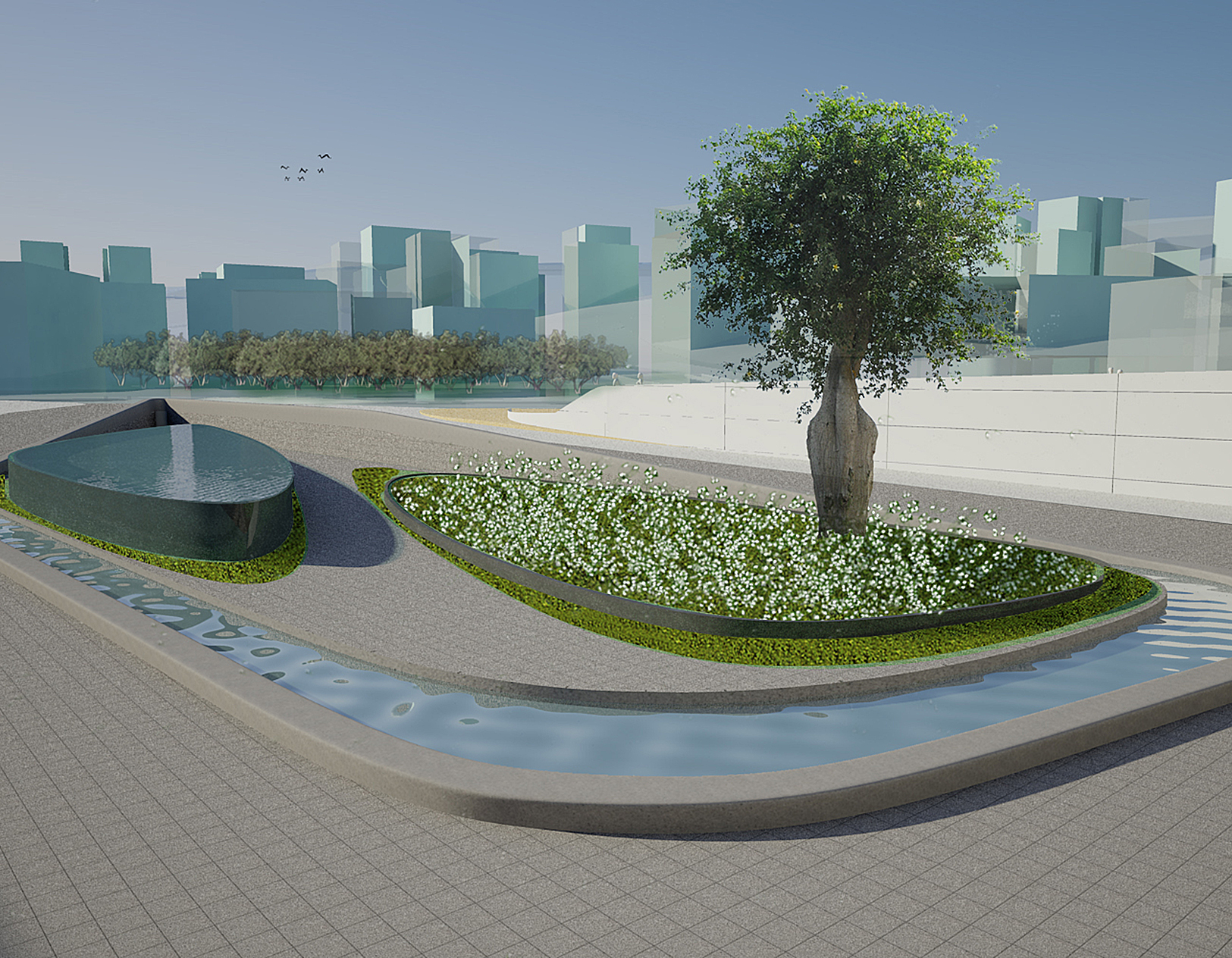
Frederic Francis says: “This was my first collaboration with Zaha Hadid Architects – I have worked on around 10 ZHA projects to date – and it was quite a challenging one set in a challenging climate where landscape and architecture blended in gracefully. Our approach was to create bold gestures with over-the-top components.
Designed by Zaha Hadid, this project was inspired by the concept of erosion and the transformational quality of rock and natural substances. Landscaped areas are integrated as melding, moving carpets and treated as bold spaces which acquire a variety of textures and forms. The architecture is curved out from the rock, as though it has been moulded by wind and water.
Existing trees were preserved in addition to the introduction of a new botanical language which is in tune with the proposed design concept and innovative architecture. Low to medium maintenance ground covers and plants with low water requirement were used.
Jordan
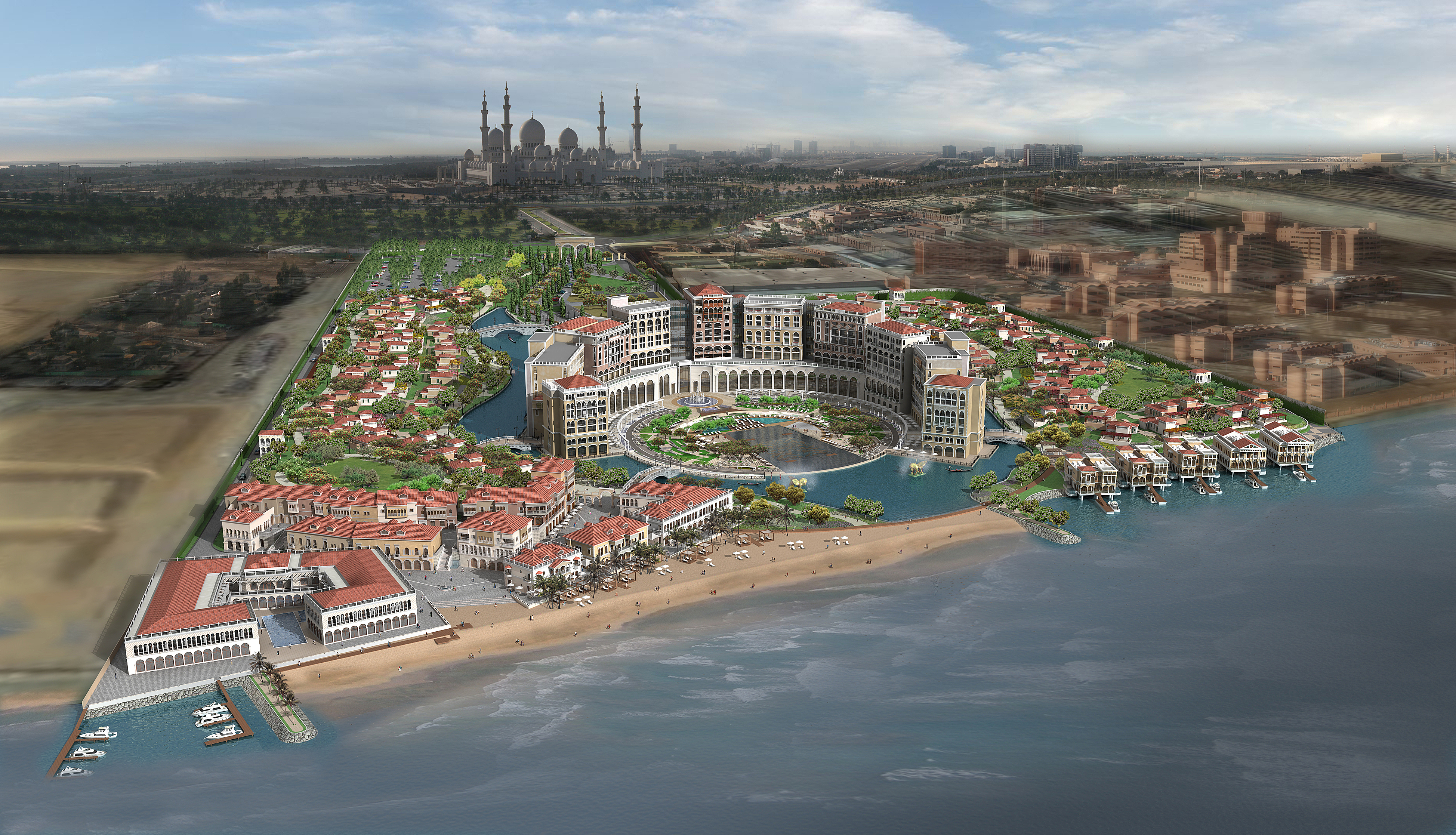
Built on a 250,000sq m plot of deserted land on the canal, Francis Landscapes conceived a Venetian type luxurious hotel with lush green gardens, man-made hills, sandy beaches and artificial lagoons out of desert, arid land, where the temperatures exceed 40 degrees Celsius. It had to be competitive because there are a lot of five star hotels in the region. Two lagoons were carved into the land to enhance the waterfront experience; a number of the buildings nestle into man-made landscaped hills. Olive trees, palms and bougainvillea were among the plants and trees used.
Jordan
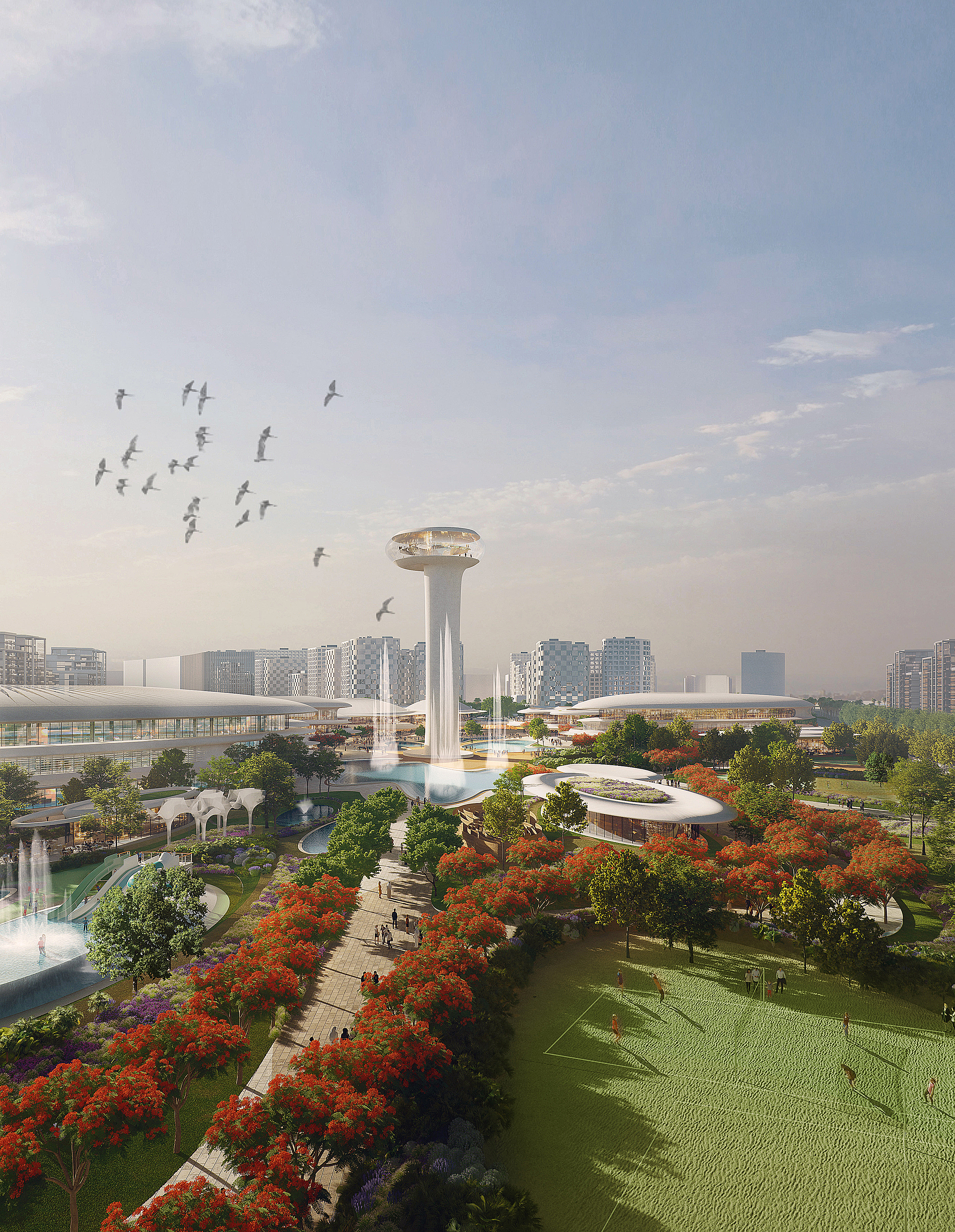
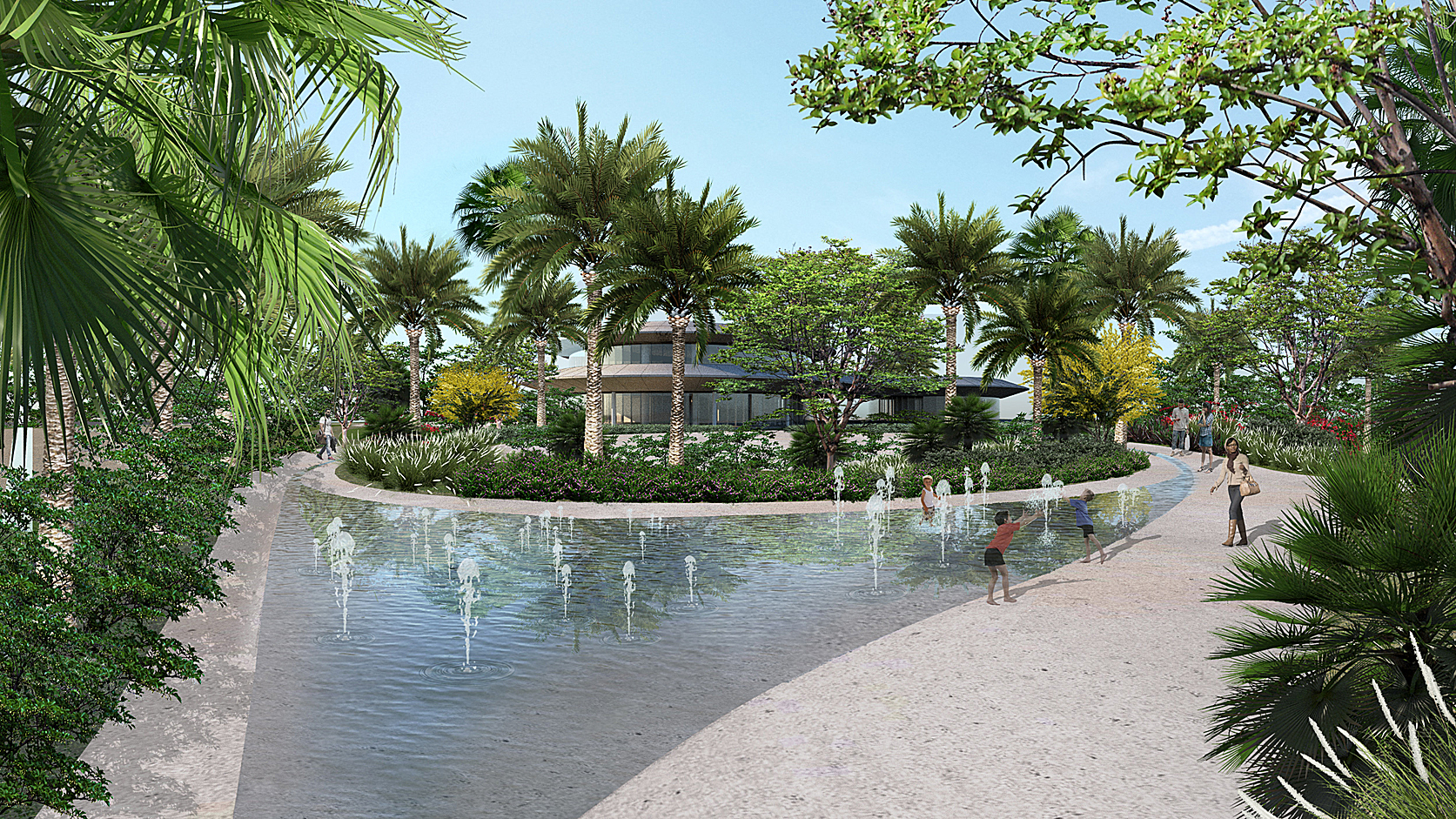
This was another collaboration with Zaha Hadid, creating a new city in Sharjah, near Dubai, for 450,000 people, with all the infrastructure a city needs, as well as leisure, retail, and restaurants.
Francis Landscapes’ brief was to create a centrepiece which people would want to spend time in with walking and cycling trails, sports facilities and water attractions. The architecture is based on the idea of the splash of a droplet of water – this idea is extended throughout the entire site and reproduced in the landscape and architecture.
Jordan
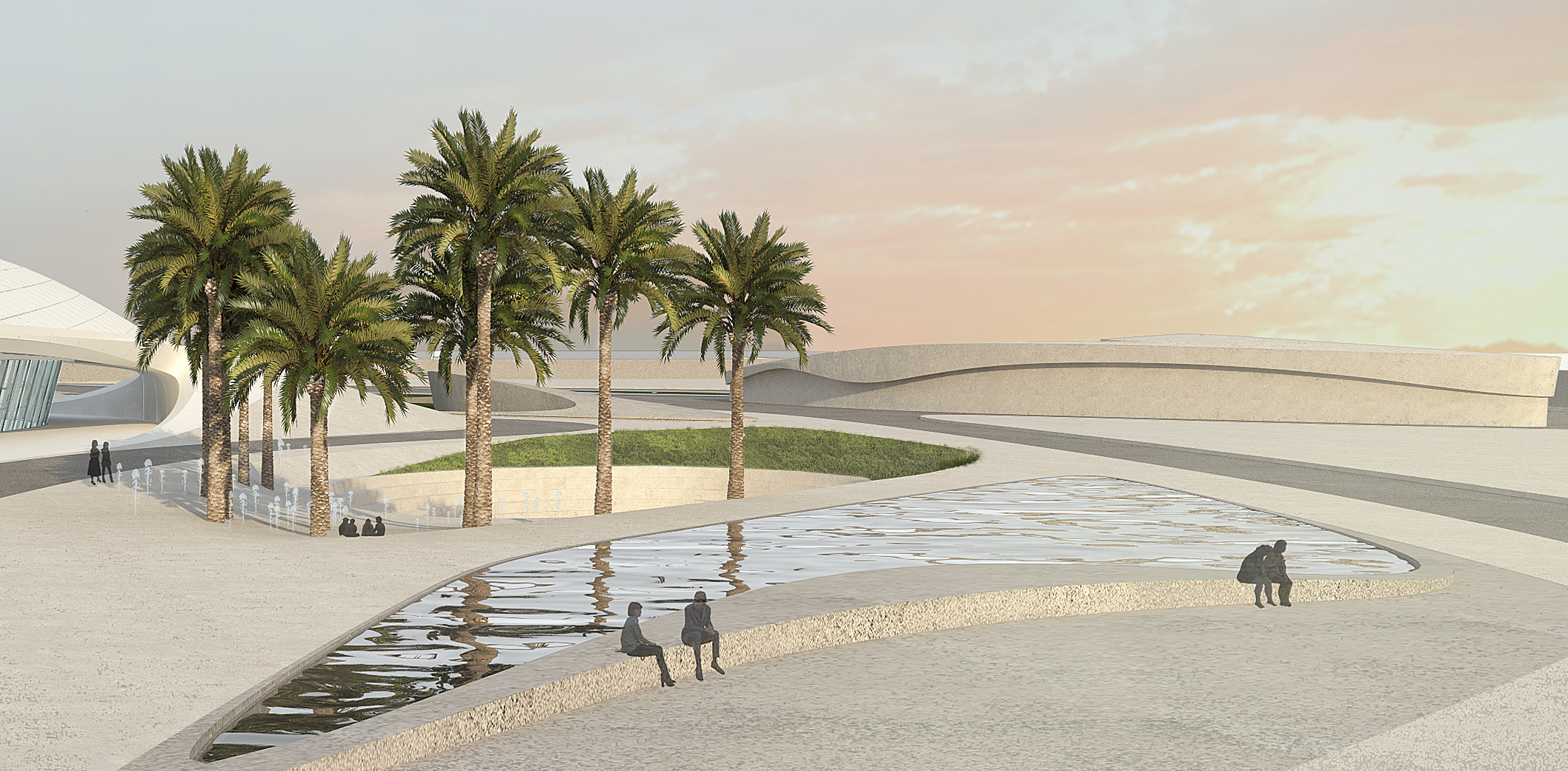
Francis says: “This was another project we worked on with Zaha Hadid to create a landscape around a waste management company. For me, this is a one of a kind project which pivots around the idea of creating an architecture and a landscape which really melt into the desert. To recreate and integrate landscape in its natural environment.
“I made it a point to only use the materials needed to build the landscape out of the products recycled by the firm, such as concrete, sand, rubber mulch from tyres and demolition aggregate for the roads and walkways. We created artificial dunes using the existing sand which were shaped as they would be in the desert and used for numerous functions such as energy storage, gathering spaces and shaded areas. Native desert plants which regenerate were used, and encouraged local fauna and flora.”
Beirut
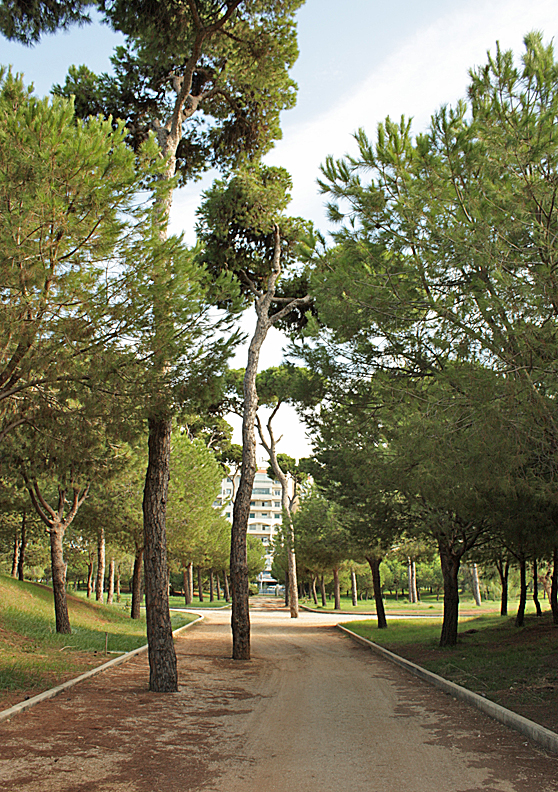
Francis says: “Spanning 300,000sq m, this is the main public park in Beirut which was mostly burned in 1982. Originally designed in the seventeenth century, it had been planted with pine trees and was known as the pine forest of Beirut. I was part of the team which won the project in the international competition launched in 1992.
“It’s known as the lungs of Beirut as it’s right in the middle of the city and the only green space. With its reinvention, we had to accommodate all types of activity – playgrounds, seating areas, jogging trails, botanical gardens, an amphitheatre and water features. We wanted to create a project which connected the city and the people.
“ We used native plants from the Mediterranean and planted 40,000 pine trees among other trees such as olive and eucalyptus. I’m most proud of the fact that I planted the first 100 trees by hand. It’s rewarding to see how, coming back several years later, nature has taken over and the park has been resurrected from the ashes. It’s good to see how people relate to the garden you have conceived, and how they use it to enhance their daily routines.”








Designed to restore neglected land and renew the identity of Iraq’s capital city, Baghdad Sustainable Forests promises a new way of living surrounded by nature. Gensler’s Ian Mulcahay tells us why he thinks the project could become a model for the repair and enhancement of urban centres