Interview
Alison Brooks
The designer of the award-winning Smile installation talks to Magali Robathan about timber building, protecting the public realm and the unsung role of architects



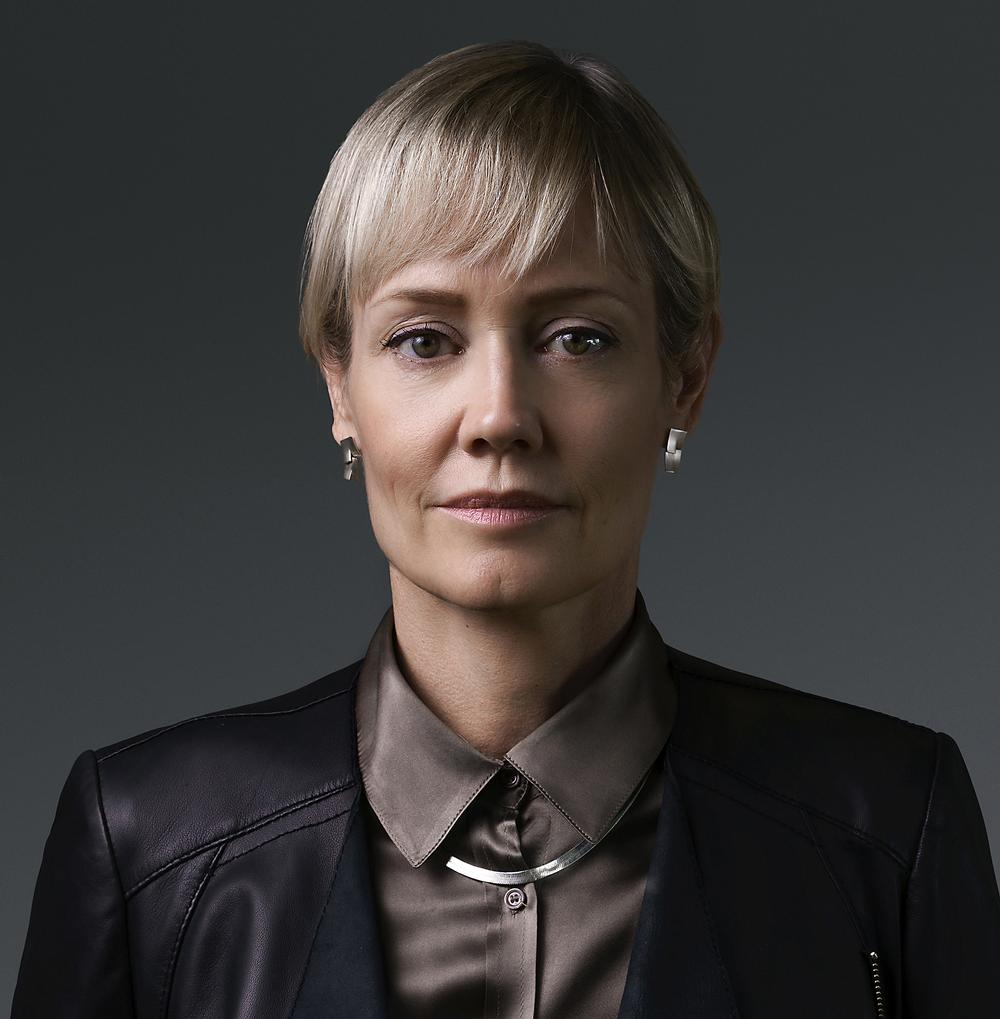
One of the things we have to address in the profession is a lack of public understanding that architects are on their side,” says Alison Brooks, founder of Alison Brooks Architects, RIBA Stirling prize winner, designer of the Smile, the Quarterhouse Performing Arts Centre in Folkestone UK and a range of award-winning housing projects.
“Architects have a responsibility to protect the public realm. It’s a role we provide, that’s not generally acknowledged.
“Most architects spend inordinate amounts of time fighting for improvement to civic space, introducing new squares and gardens, to open our projects to a more public audience. We also fight very hard and take big risks to try to deliver designs that satisfy a need for identity, for beauty and for meaning.
“We never get a brief that says ‘we require a beautiful, meaningful, characterful building that delivers the highest quality of space for a 300 year future’, but that’s what we’re all fighting for. It’s just not what’s understood by the public and society at large.”
I’m interviewing Brooks in Berlin, at the World Architecture Festival, where her latest project, the hardwood cross laminated timber structure the Smile, won in the Display – Completed Buildings category.
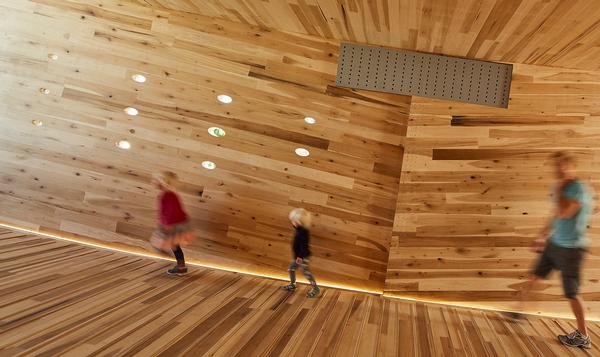
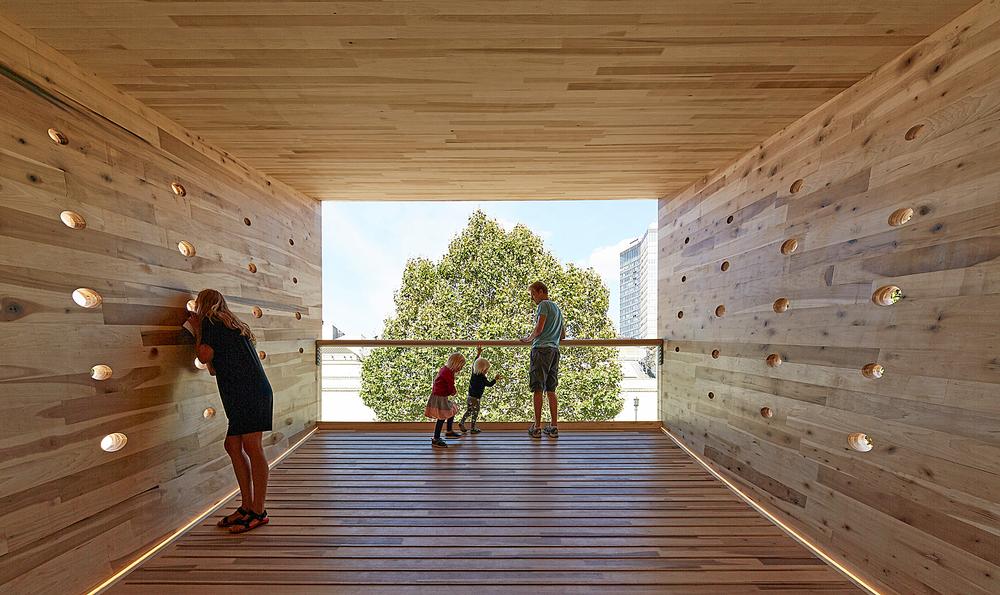
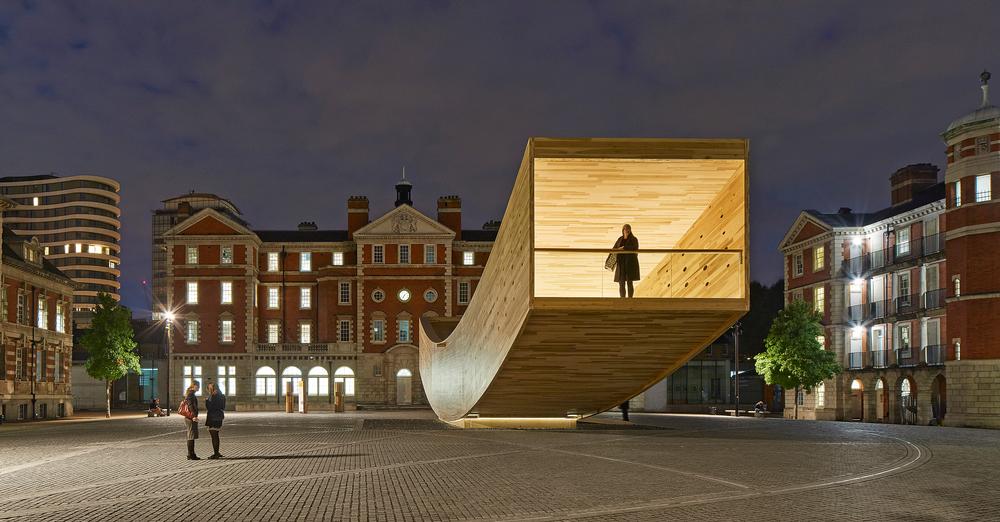
The 34m-long installation was developed in collaboration with Arup, the American Hardwood Export Council and the London Design Festival, and was described as the “first project in the world to use large hardwood CLT panels” (as opposed to the more commonly used softwood CLT).
It’s a project Brooks is very proud of; which she saw as an opportunity to make experimental design accessible to the general public and perhaps break down a little of the barrier between architects and the public.
“The Smile was in a public space; it was open, it was free,” she says. “It was designed with the thought in mind that many, many people would pass through the space who weren’t necessarily coming for the London Design Festival. They could visit it and enjoy it and maybe have their eyes opened as to what design can bring to a traditional urban space, and how daring a timber structure can actually be.”
2017 was a great year for Brooks, which culminated with her being given Royal Designer for Industry status in December, when she was recognised for design excellence and innovation in urban regeneration and masterplanning, and public for the arts, higher education and housing.
Now Brooks is working on a range of projects, including a cluster of four residential towers with leisure space for the Greenwich Peninsula scheme in south east London; a high rise urban block in King’s Cross, London; a Maggie’s Center in Taunton, Somerset; and a range of housing projects in Oxford, Cambridge and London.
In June 2017, Sadiq Khan appointed Brooks as a design advocate for London, along with 49 other architects. The group, which also includes White Arkitekter’s Monica von Schmalensee and David Adjaye, was asked to work with local councils to improve the quality of the built environment across the capital as part of the Good Growth by Design programme.
STARTING OUT
After graduating from the University of Waterloo in Ontario, Canada, Brooks moved to London in 1988 armed with her portfolio and £500 in her bank account. She joined Ron Arad Associates, working on a range of projects including the Belgo Noord and Belgo Centraal restaurants in London and the Tel Aviv Opera Foyer, before launching her practice in London in 1996.
Brooks’ star rose fast. In 1999 she came third in the Young Architect of the Year competition. Her first large scale commission, the Atoll Spa Hotel in Helgoland, Germany, opened in 2000 and won several industry awards including Best Interior Design and Best Guestroom Design at the European Hotel Design & Development Awards the same year. In 2008, ABA were joint winners of the RIBA Stirling Prize for their role in the design of the high density housing project Accordia in Cambridge, and in 2013, Brooks was awarded AJ Woman Architect of the Year, with one of the judges, Paul Monaghan, saying: “Her mixture of sculpture, architecture and detail is what has made her such a powerful force in British architecture.”
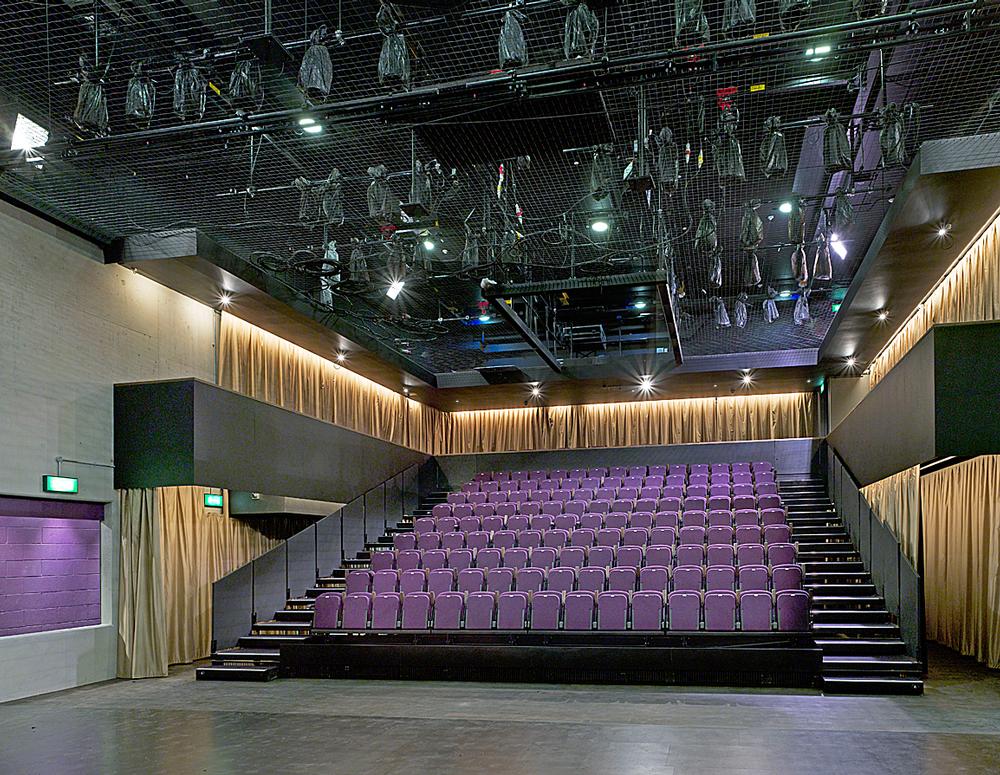
Brooks’ first major cultural project, the Quarterhouse Performing Arts Centre in Folkestone, opened in 2009. It houses a multipurpose auditorium for dance, theatre and film performances, a ground floor foyer and exhibition space, a cafe and a business enterprise centre.
The centre’s distinctive cladding is made from a metal mesh which is bent into curved pillars, and is illuminated from behind at night. “The building glows at night,” says Brooks. “It’s literally a beacon of the arts in one of the roughest parts of Folkestone. It completes an urban block in a modest way, but its cladding is very animated, so it signals an important change in Folkestone.
“We’ve been asked to look at expanding the Quarterhouse; building on the roof and extending onto the back,” she adds. “It’s not an active project at the moment, but we’re in dialogue with the Creative Foundation about the next step for that building.”
THE SMILE
“The Smile represented an opportunity that comes very rarely in the life of an architect, to design something very experimental,” says Brooks. “It was radical in terms of its material, and it had to operate as a public event, a phenomenon that would attract people to come out and visit the various installations and exhibitions of the London Design Festival.
The installation used hardwood cross laminated timber, and was engineered by Arup. It was described by Arup engineer Andrew Lawrence, who worked on the project, as “the most complex CLT structure that has ever been built.” As well as being an interesting installation for the public to visit, the project aimed to showcase the possibilities of building with hardwood CLT, and to change the way architects and engineers approach timber construction.
So what are Brooks’ thoughts on the future for hardwood and CLT? “It still needs certification and to go through a whole series of testing, but timber has huge potential as a building material,” she says. “It’s practically the only way to build in a zero carbon way, to reduce our carbon footprint and to make construction more precise and quicker on site. There are almost no down sides to building with timber CLT.
“Timber buildings are always well loved by their users. When you complete a CLT building everybody enjoys the authenticity of the material. People connect to timber emotionally, spiritually and intellectually in a different way from how they do to a high intensity manufactured material like concrete.”
GREENWICH PENINSULA
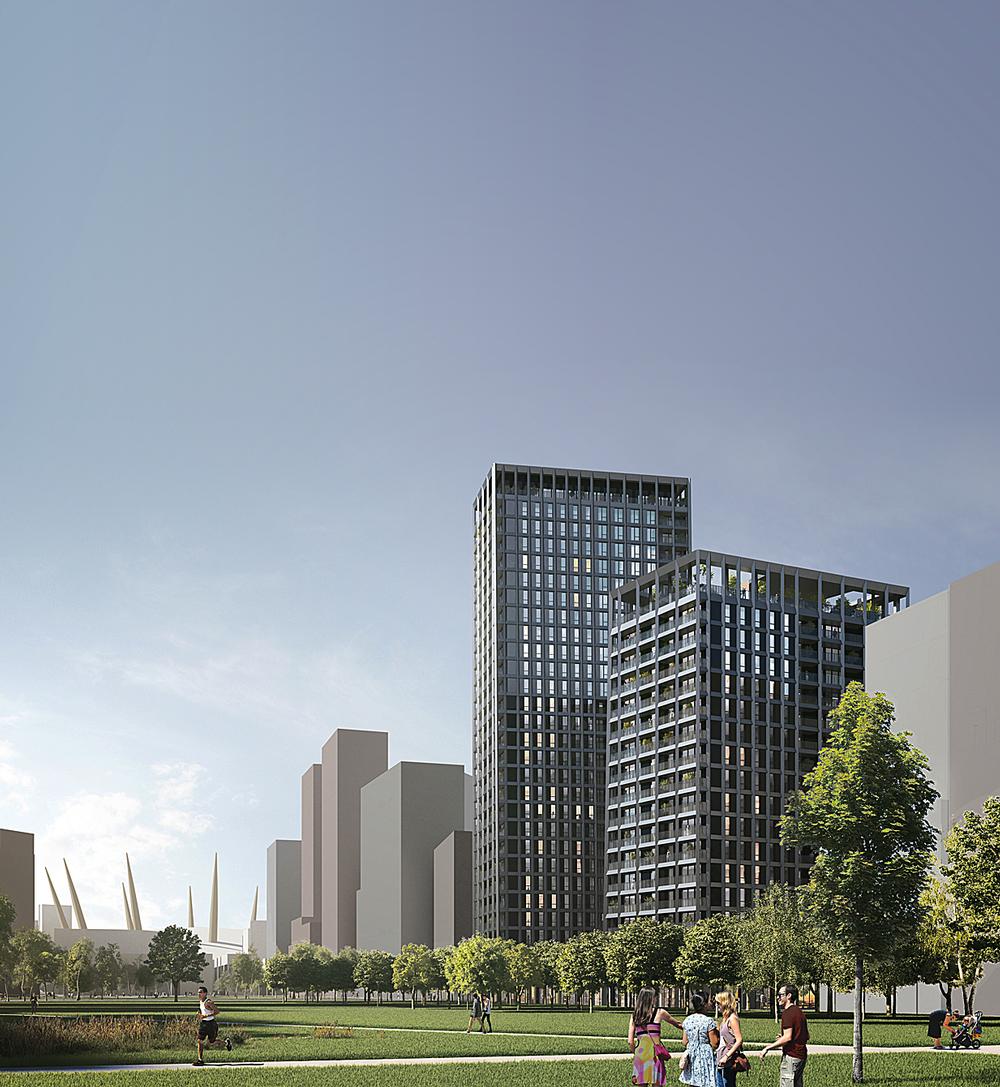
Brooks has designed a cluster of four residential towers with leisure and co-working space at the ground floor and podium levels for Greenwich Peninsula in south east London.
The 150 acre, £8.4bn Greenwich Peninsula scheme is one of the UK’s largest regeneration projects. It has been masterplanned by Allies and Morrison and is being overseen by developer Knight Dragon. It will feature seven new neighbourhoods, with a £1bn mixed use development designed by Santiago Calatrava featuring new tube and bus stations, a new leisure hub and a winter gardens surrounded by three towers, unified by swooping curves.
“Allies and Morrison and Knight Dragon have put together a really good, very interesting masterplan,” says Brooks. “The density of the scheme is quite extreme, and there are very tough economic demands on the projects to make them cost-effective, so we tried to work within those constraints, but also to draw on the history of the place.
ABA’s residential towers house 400 units and sit along the eastern edge of the site’s Central Park. Their design was inspired by the industrial history of Greenwich, says Brooks.
“We were inspired by the slightly sombre monumentality of the power station, the brick chimneys and the black cast iron structures,” she says. “There’s a kind of seriousness to that infrastructure that I wanted to reflect in our buildings.”
Brooks acknowledges that the scheme’s residential buildings are “the workhorses that have to pay for the Design District,” which is at the heart of the Greenwich Peninsula development.”
The Design District will include buildings by eight architecture studios, including David Kohn Architects, SelgasCano and 6a Architects. Each practice was asked to design their buildings ‘blind’, without knowing what the others were doing, with the aim of creating a “provocative diversity of colour and form.”
“It’s a brave, open-minded approach,” says Brooks.
A CHANGING PROFESSION
At the end of the interview, we return to the question of the public’s perception of architects.
“It’s a lot to do with the media,” says Brooks. “The media needs to talk less about the image of a building and more about how a project is so much bigger than what you see at the end.
“It’s a hard story to tell, the complexity around delivering architecture. It spans helping the client write the brief and raise money for the project, working with user groups and engineers, responding to iconography and history and culture and instincts. It’s a kind of giant tangle of inputs that we have to untangle to create something that helps people identify with a place.”
It’s a huge task, admits Brooks, but she is optimistic about the ability of architects to rise to the challenge.
“As architects, we’re driven to respond to it,” she says.
“The profession is changing; we’re no longer imposing our narrative of modernism, or some kind of an authoritarian aesthetic vision onto populations. We’re now much more empathetic and open and responsive as a profession than we were.”
This openness is also changing the way architects relate to one another, Brooks continues.
“Architects today are much more mutually supportive of each other than they used to be,” she says. “There’s not such aggressive competitiveness – we see ourselves as a collaborative profession and we’re friends with the people we design for and the architects we compete with.
“It’s a much kinder profession.”
Alison Brooks in her own words
You’ve spoken about how spaces are becoming more flexible. What does this mean for architects?
The way we use space and technology and the way we engage with each other is shifting massively. I think and hope that boundaries will be broken and blurred between different building uses, and that the distinctive and personal way architects express their art will become more important.
If you’re producing work that can operate in many different ways, then you really have to think about what you can add to make it meaningful and identifiable and remarkable in its place and in its time. That’s where our mysterious creative instincts come in.
What unites all of your projects?
We always search for a specific response to a place, not only relating to the physical site, but also to the social and cultural conditions surrounding that place. We try to draw on all of the specifics to create a dialogue with the communities and the audiences who’ll use that building.
At the same time, we strive for a kind of purism. I’m interested in reducing the number of materials that you have to work with to as few as possible, so you have a sense of essentialness to everything.
Finally, we try to treat every work of architecture that we produce as a piece of civic building. We try to build generosity, adaptability and resilience into our projects, so that they have a life and an impact beyond the building itself.
Which other architects do you admire?
I admire any architect doing good work today, because producing quality architecture is a very, very hard thing to do.
Looking back, I admire Louis Sullivan and Hans Scharoun. They came from different cultures, but they both stood up for what they believed in, in the face of immense criticism.
Neither of them ended their career with fireworks, but their work has proven to be incredibly groundbreaking, not just in terms of form, technology and technique, but also in terms of artistic expression and craftsmanship.
What would be your dream future project?
I’d love to do a museum or a library; a civic building that’s completely public, that’s about creating that kind of cultural infrastructure that’s very open, democratic and inclusive.
"I’m interested in reducing the number of materials to as few as possible, so you have a sense of essentialness to everything"