CIMSPA
Tara Dillon - A profession in motion
As new standards and training are introduced in order to raise professional levels in the sport and physical activity sector, CIMSPA CEO Tara Dillon talks to Rob Gibson about changes which are afoot



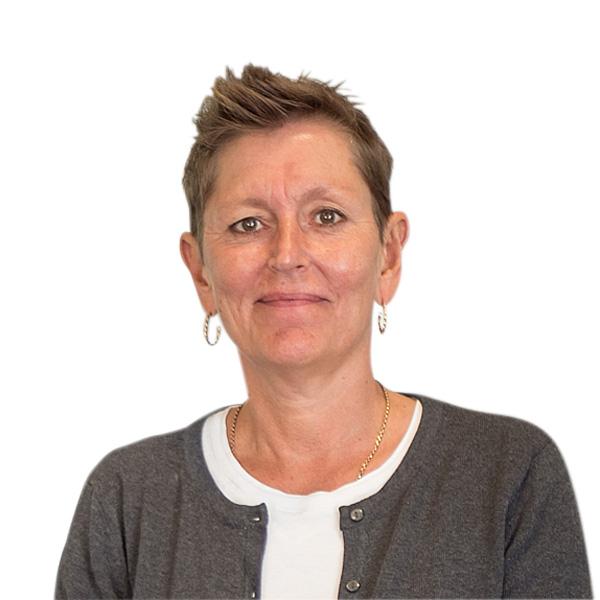
The sport and physical activity sector has come a long way in recent years, with plenty to celebrate in areas such as access, affordability and diversity. However, professional standards have long caused confusion, with employers and staff both losing out as a result – not to mention the impact on consumers.
The Chartered Institute for the Management of Sport and Physical Activity (CIMSPA) received its chartered status in 2012 – meaning it is recognised by the Privy Council as the professional development body for the sector. It has two long-term strategic priorities: to provide opportunities for young leaders to develop and succeed; and to provide leadership on the development and management of career pathways.
But with so much at stake, and an array of opportunities, risks and politics to tackle, how much progress has been made in the quest for improvement and, ultimately, a better profession for everyone?
Land of opportunity
“There’s never been a more exciting time to enter the sport and physical activity sector – and I’ve been in it for 30 years,” says Tara Dillon, CEO of CIMSPA, who started out as a lifeguard. “It used to be solely focused on sport: you would teach a sport or lifeguard at a swimming pool, whereas now you could be treating patients referred by a doctor, improving an athlete’s performance or improving the life skills and physical literacy of children. The sector used to be very narrow but in the past 10 to 15 years it’s become so exciting and empowering.”
Dillon admits that the widening of the sector has brought its challenges. “We should be pulling together more to create a coordinated plan for the health and wellbeing of the nation, as this is the very thing that makes the sector sustainable,” she says.
She believes the profession has established all the core capabilities required to deliver sport and physical activity to communities – from kit to training, from boutique to budget – but now must focus collective strategies on the bigger picture: the health of the nation.
The health agenda has dominated reports and events in the sector over recent months, including the release of the Moving More, Ageing Well report in November 2017. This report included evidence that supporting over-65-year-olds to meet recommended exercise guidelines could save the NHS more than £12bn in treatment costs and prevent up to 600,000 incidences of disease.
Clearly, health and physical activity is a priority shared by others in the sector, but the question remains: how can improvement in this area be achieved? Dillon believes partnerships such as that established between CIMSPA and ukactive will be crucial to develop a workforce that meets the needs of the health agenda.
“Through the work of CIMSPA, ukactive, the Sport and Recreation Alliance and Sport England, there’s a drive from employers and government to bring physical activity and health closer together,” says Dillon.
“Medical organisations, such as Public Health England and the Royal College of General Practitioners, are working with our sector. We want to get physical activity practitioners on an equal footing with a nurse practitioner who might refer someone for physical activity.
“Ideally, GPs would like a register showing the number of chartered practitioners of CIMSPA within a 10-mile radius to whom they can refer someone who, for example, is showing signs of developing type 2 diabetes. GPs want to be confident that that person has the ability to treat or train the individual referred to them. People in our sector have an opportunity to shine a light on themselves and show that credibility.”
Setting the standard
While ambitions to establish such health partnerships and systems may seem a little way off, CIMSPA has just released six new professional standards – the first step to improving recognition and career pathways within the sector. Created following a year’s consultation with employers, awarding organisations, higher education institutes and training providers, there are now CIMSPA standards for the roles of personal trainer, swimming teacher, core group exercise instructor, gym instructor, recreation assistant and lifeguard. Further standards will be delivered by March 2018 for the roles of coach and coaching assistant, as well as standards for management roles and specialisms.
The CIMPSA Professional Standards Matrix captures each occupation in the sector – rather than specific job roles, which are far greater in number – and plots them against the required levels of knowledge, skills and behaviours necessary to be successful in that occupation.
Dillon explains: “It puts down a marker for people entering into the sector and allows them to identify the direction they want their career to take, as well as the training that needs to accompany it.”
The idea of a career pathway and training guide for occupations is a hugely attractive proposition to both graduates and those who might feel that they have lost their way in the sector. Happy, satisfied practitioners who feel they are in control of their career and progressing are far more likely to deliver happy, satisfied customers.
Fork in the road
But while standards and accredited training provision begin to take shape, leading to “between 300 and 700 new CIMSPA members a month” according to Dillon, and CIMSPA’s accredited training ‘kitemark’ appearing in more places, there are still two major challenges to overcome. Many practitioners in the sector are unaware of the support available, while others are confused about which body to join – CIMPSA or REPs (the Register of Exercise Professionals).
Dillon addresses the elephant in the room. “In its day, REPS was the best thing that happened to this sector in terms of forging a professional pathway and giving our sector credibility. But feedback from many employers in the industry, shared at a seminar which was hosted by CIMSPA and Skills Active in 2015, suggested that REPS is seen to have lost its way. Since REPS was sold, there’s been further confusion within the sector.
“Through the Skills Protocol Employer Led Group, employers have asked CIMSPA to provide everything under one roof – they don’t want different registers for exercise professionals, aquatic professionals and pool plant operators, for example.”
But what of the apparent impasse between REPs and CIMSPA as each continues to compete for members? Dillon says she is actively pursuing a solution with REPs. “In an ideal world, I’d like to find a way for our memberships to work together or be amalgamated – I’m certain that we can find a way of merging those two registers,” she says.
“If we don’t find a solution to this quickly then we’re disenfranchising a large portion of self-employed people within this sector. I would guess there are about 15,000 to 20,000 self-employed personal trainers out there who don’t understand what’s going on.”
The pay issue
Putting party politics aside, arguably the biggest issue facing the profession is poor pay. While other sectors make progress to bridge the gap between entry level and senior positions, sport and physical activity has lagged behind. While the sector remains attractive as a vocation, Dillon has no doubt it’s not currently doing enough to attract and retain talent.
“There’s a huge challenge for the sector to work as a whole to resolve the pay issue,” says Dillon. “We’re a very low-paid sector and we have a massive skills shortage – some 20,000 skills shortages at technical and entry level, from lifeguards to fitness instructors and front-of-house staff. These are arguably the most important roles and yet we’re still paying minimum wage to some very hard-working people.”
While entry-level jobs in other careers require little or no formal training to achieve a similar salary, roles such as lifeguards require continued investment and training to meet the required professional standard.
“The sector spends an awful lot of money on recruitment and retraining staff. The training bill is about £1.1bn, we spend about £112m on apprenticeships and £600m in universities. But then we put people on minimum wage and spend another £400m to retrain them. If we can start to spend that money retaining people we’ll start breaking new ground.”
And therein lies the thread that runs through everything Dillon says. There is a vision and determination to improve the industry. While obstacles undoubtedly remain, CIMSPA and other bodies in the sector are steadily making progress. History has shown us that a lot can change in 10 years – professionals across the sector are depending on it.












Designed to restore neglected land and renew the identity of Iraq’s capital city, Baghdad Sustainable Forests promises a new way of living surrounded by nature. Gensler’s Ian Mulcahay tells us why he thinks the project could become a model for the repair and enhancement of urban centres