Women In Sport
Building a pipeline
The government’s requirement for sports boards to be 30 per cent female has been encouraging for charity Women in Sport, but its latest report highlights challenges that need to be overcome to avoid financial penalties. Matthew Campelli reports



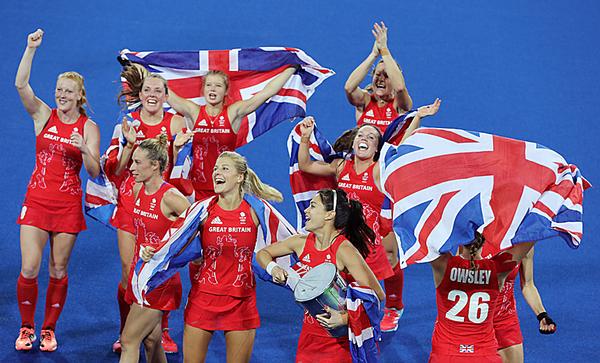
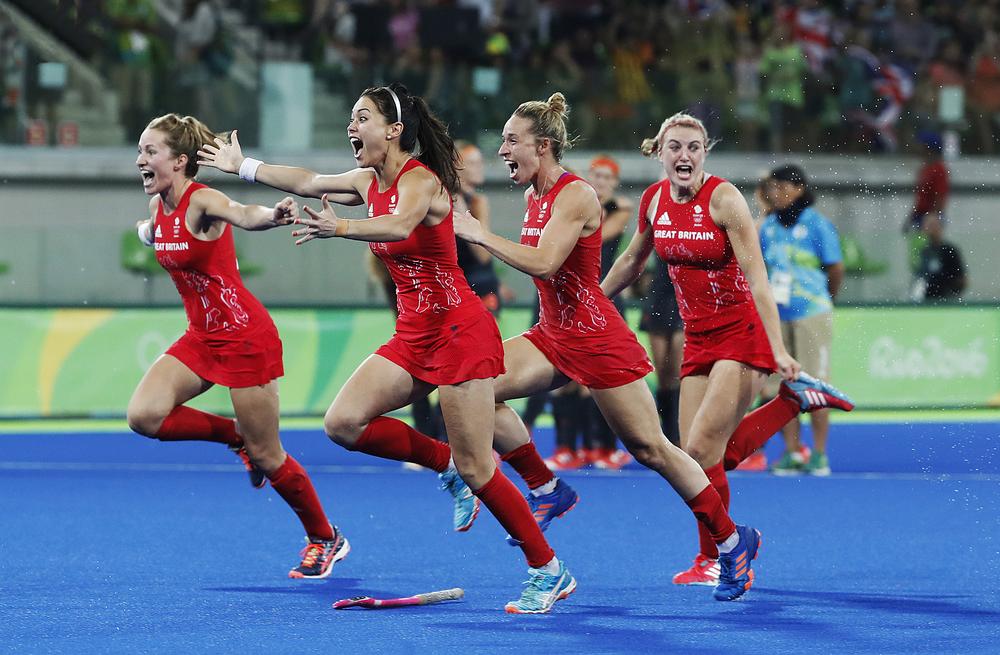
For those ardently following Team GB during the Olympic Games in Rio last summer, few could argue that the women’s hockey team winning the gold medal against the odds was one of the enduring memories of the event.
Not only was the victory a snapshot of Great Britain’s increasing sporting prowess on the world stage, but a valuable demonstration of the immense quality of female athletes the country has to offer.
However, while the women’s team outshone their male counterparts on the field, at board and executive level, women are vastly outnumbered by men in one of the sport’s main governing bodies, England Hockey.
According to new statistics published by equality charity Women in Sport, 20 per cent of the governing body’s board is female – compared to a sport sector average of 30 per cent. In addition, it had zero per cent representation of women in senior leadership roles (apart from the CEO position where Sally Munday is in post).
England Hockey isn’t the only culprit, as similar statistics were quite commonplace in the report, Beyond 30 Per Cent.
The Football Association (FA), the Rugby Football Union (RFU), the Rugby Football League (RFL), Badminton England and the British Basketball Association were among the bodies with less than 30 per cent representation on their respective boards.
Meanwhile, the British Bobsleigh and Skeleton Association, Volleyball England, GB Taekwondo and BaseballSoftballUK currently have zero per cent female representation in senior leadership roles.
Governance code
Why does this matter? Well there’s a moral argument that women who watch and take part in sport should have more equitable representation in the upper echelons of sporting bodies, many of which rely on public funding.
There’s also the business case, says Women in Sport chief executive Ruth Holdaway, pointing to studies that demonstrate “better decision-making” by boards that have more diversity.
“The argument has been won,” she tells Sports Management. “Many sports organisations have made changes and are seeing the benefits of having lots of different viewpoints around the table.
“The evidence from the business world is that when you achieve 30 per cent female representation, you start to see more sustainable change and better decision making. The evidence is well-established and well-understood.”
The crucial factor for the majority of governing bodies will be the requirement to hit 30 per cent gender representation – which Women in Sport successfully agitated for – by April, or be at risk of losing public money distributed by UK Sport and Sport England.
At time of writing it appears extremely likely that a number of governing bodies will fail to hit that government requirement, although Holdaway does confirm that many are making the right noises about getting their house in order.
Even the FA – which recently suffered the ignominy of receiving a parliamentary vote of no confidence for its lack of boardroom and Council diversity – has revealed a package of measures to increase representation, one of which will ensure at least three women are appointed to a 10-strong board.
While many organisations may have the desire to push ahead with the diversity agenda, the statistics show that in some instances there is little of substance being done. For example, there has been a significant fall in the percentage of women in senior leadership roles over the past three years, from 42 per cent in 2014 to 36 per cent currently. Women also continue to be under-represented in the performance director role.
Middle-management gap
And that is the crux of the problem, says Holdaway. While there is undoubtedly institutional sexism within some sections of sport keeping women away from plum board roles, the chief executive says an even bigger issue is the fact that the pipeline for these positions is limited because of few women in middle-management roles.
Holdaway says that the opportunity for women to forge successful careers in the sport sector away from the field of play should be made apparent as young as possible.
“We’ve got to start talking about it in schools,” she explains. “We have to talk to girls about the careers available in sport.
“We know from the work we’ve done in schools that boys who might want to be professional sports people might start thinking about other careers in sport if they realise that isn’t going to be their career.”
She adds: “Girls don’t generally do that. We need to change that so girls from a young age understand sport is something they can work in, whether they’re interested in communication, finance, medicine. It’s about opening girl’s eyes to the possibility.”
Further down the line, Women in Sport has developed its Checklist for Change, a resource that gives national governing bodies a practical framework to enable it to reach out to women with more finesse and with an offer that truly resonates with them.
The first recommendation is around recruitment and retention. Worryingly, the report states that a number of women interviewees complained that there was a “less-defined career path” for them in sport than other sectors, while the male-dominated environment in sport knocked their confidence.
Holdaway says it is important to provide additional peer support and to not gender stereotype when thinking about roles for women in sport. She adds that it is important to “not make assumptions about how women live their lives and about what’s important to them”.
Governing bodies with less resources may find it more difficult to provide the support, but Holdaway suggests that initiatives like role shadowing or mentoring would require very little money and could change the perception that women have of the environment and the perception of what women could do for the governing bodies.
Other recommendations for governing bodies included a focus on flexible working to avoid disadvantages for those going away on maternity leave or in part-time roles, and finding men in the organisation who can champion the case for equality.
Modernise structures
“We want to make sure we get men on board with this as well, so this is a movement for change across the sector,” says Holdaway. “It shouldn’t just be women focusing on bringing more women into the sector.”
Perhaps the most difficult recommendation to implement is that of “modernising structures and practices” within some of these organisations. It has been well documented that bodies, like the FA Council for example, have resisted structural change. But this is crucial to achieve equality, according to the report.
A number of governing bodies have had to make constitutional change in order to satisfy the government’s requirements, which were laid out in the Code for Sports Governance. Women in Sport has also called for changes to board structures and personnel before vacancies arise, which could prove to be extremely controversial.
“We want organisations to move quickly, we want them to keep the pace,” says Holdaway. “But,” she caveats, “what we’re keen to do is say it’s really important not just to focus on that number of 30 per cent and that board level requirement, but governing bodies must really invest in their entire workforce and the volunteer base so that they’re developing a pool of talent that will naturally move through into those leadership roles.”









Designed to restore neglected land and renew the identity of Iraq’s capital city, Baghdad Sustainable Forests promises a new way of living surrounded by nature. Gensler’s Ian Mulcahay tells us why he thinks the project could become a model for the repair and enhancement of urban centres