Architects In Film
Character building
The way architects are portrayed in film runs the gamut of personality types, from idealistic dreamers to harried workaholics. Gordon Grice delves into the psychology of the big-screen hero



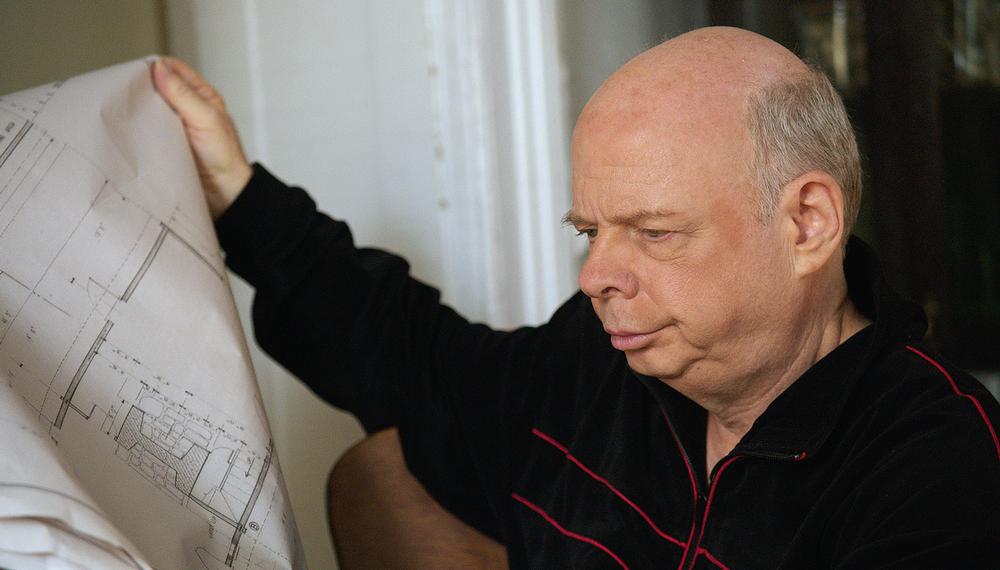
Architecture is complicated, which is one reason why hardly any of the movies and television shows that feature architects show them doing any actual architectural work – or spending time in a studio that’s even remotely authentic. The other reason is that architectural practice, although endlessly fascinating to architects, can be deadly boring for everyone else.
And yet movies continue to feature architects in lead roles. On my Architects on the Big Screen Master List – which I have spent many years compiling (100 + 25 Years: OAA Perspectives on a Quarter-Century, Ian Ellingham and Gordon Grice eds.) – there are more than 100 movies. If architecture is so complicated and boring, why are movie architects so popular?
The answer to this question is not in what an architect does, but rather in what an architect is – or is imagined to be. And here, things get even more complicated, although thankfully, more interesting.
Screenwriters employ stereotypes to establish mood and character. After all, time is short: a film typically allows barely 90 minutes to tell a story. So by introducing a puppy dog (unconditionally affectionate), a Tyrannosaurus rex (relentlessly dangerous), a private detective (clever and devious), some necessary storytelling information has already been done. The writer can then build on perceived characteristics.
But when an architect is introduced, what information is conveyed? What exactly is a stereotypical architect?
Evolving stereotypes
Way back in 1926, in the silent film The Temptress, we get our first glimpse of a fictional architect as a leading character: a swashbuckling Argentinian architect-engineer played by Antonio Moreno, who steals the heart of a beautiful woman (Greta Garbo). In these early days, leading characters were virtually required to be handsome and swashbuckling, and the international architect filled the bill perfectly. Movie architects would henceforth be romantic and dashing.
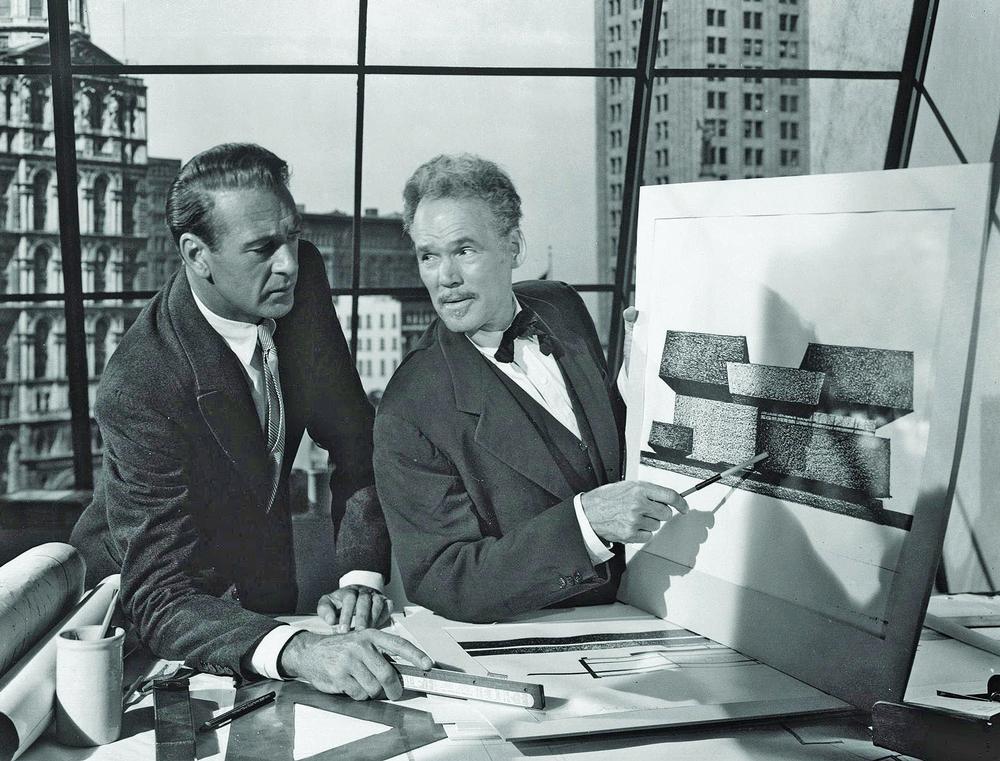
In the 1934 film Peter Ibbetson, based on George du Maurier’s novel, Gary Cooper took on his first role as an architect, playing the film’s romantic, impulsive and idealistic title character. In this morose fantasy, nothing ends well, but the architect remains a quixotic dreamer until the very end.
Fifteen years later, Cooper assumed his second architect role as Howard Roarke, hero of The Fountainhead, based on Ayn Rand’s 1943 novel. Once again the architect was a dashing romantic dreamer, but this time, with an arrogance that aligned more closely with the popular perception of the architectural genius – generously supported by such public personalities as Frank Lloyd Wright. This revised architectural stereotype proved so amazingly successful that even today the profession is often viewed as aloof and insensitive, even by its own members.
Then, in the postwar era, almost unnoticed, a new and far more appealing movie architect began to emerge.
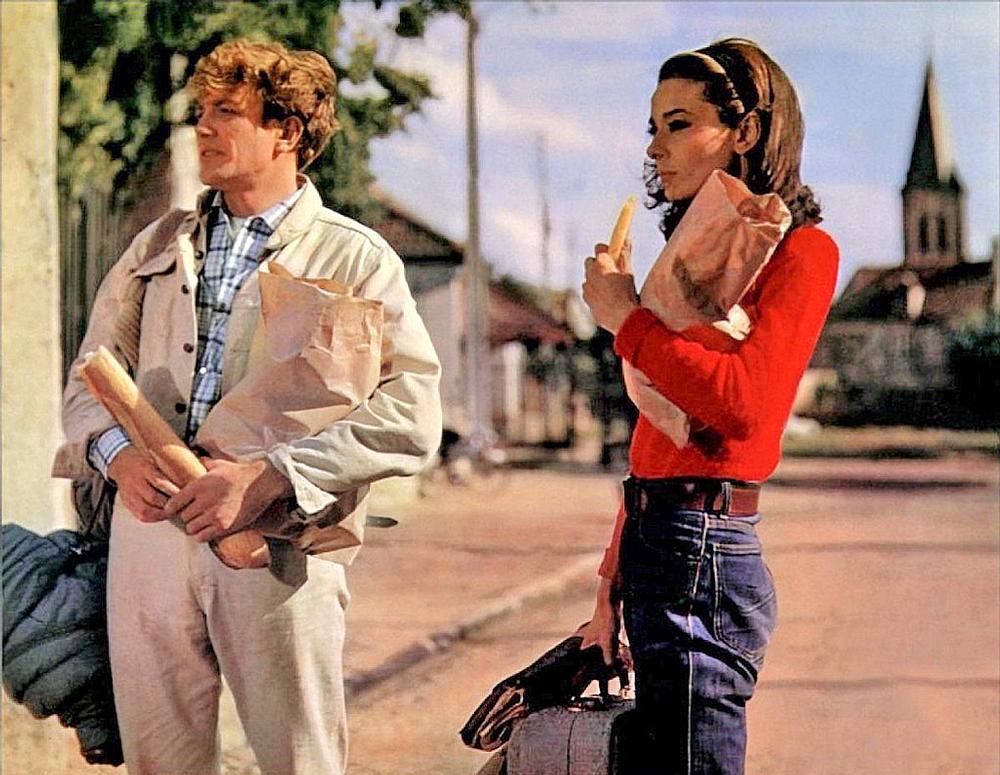
In Stanley Donen’s 1967 film Two for the Road, the new architect-hero is cast as a family man (Albert Finney as Mark Wallace) whose demanding career threatens to alienate his wife (Audrey Hepburn as Joanna Wallace) and damage his family. The film follows a journey of trial and discovery. There’s a demanding client, a rift with old friends and marital infidelity. Just when the marriage seems doomed, the wisdom of the architect and his understanding wife prevails and the family is saved.
The lovable architect
In many later films, this plot is adapted to suit a wide range of actors and stories. There is, for example, the sensitive dreamer (Tom Hanks, Sleepless in Seattle, 1993; Keanu Reeves, The Lake House, 2006); the harried, workaholic parent (Michelle Pfeiffer, One Fine Day, 1996; Adam Sandler, Click, 2006); the charming wit (Jon Stewart, Playing by Heart, 1998); the romantic optimist (Mira Sorvino, At First Sight, 1999; Zach Braff, The Last Kiss, 2006; Joseph Gordon-Levitt, 500 Days of Summer, 2009); and the working class superhero (Luke Wilson, My Super Ex-Girlfriend, 2006).
In every case, the character of the architect – a contemplative, lovable romantic – faces a crisis involving family and friends. Often, it’s the demanding career or the unreasonable client that provokes the crisis. In the story’s pivotal moment, the architect must act decisively to right the wrong, possibly at the expense of his or her career. Finally, the architect emerges as a wise decisionmaker – aware that the sanctity of family and friendship is more important than career – and, predictably, lives to design another day.
People of all professions have often complained about being inaccurately represented in popular fiction and film. “People get the wrong impression about us,” they invariably say. But, for architects, the creators of popular fiction have really come to the rescue, pointing us in the direction of what an architectural identity might actually be and, by extension, what an architect might realistically hope to accomplish in this world.
Maybe the lesson we’ve learned is that it’s not so complicated after all. Architecture is a collaborative profession that brings people together to solve important problems; wisdom and experience can overcome great odds; people are more important than things. Well, that’s what we’ve been trying to say all along.
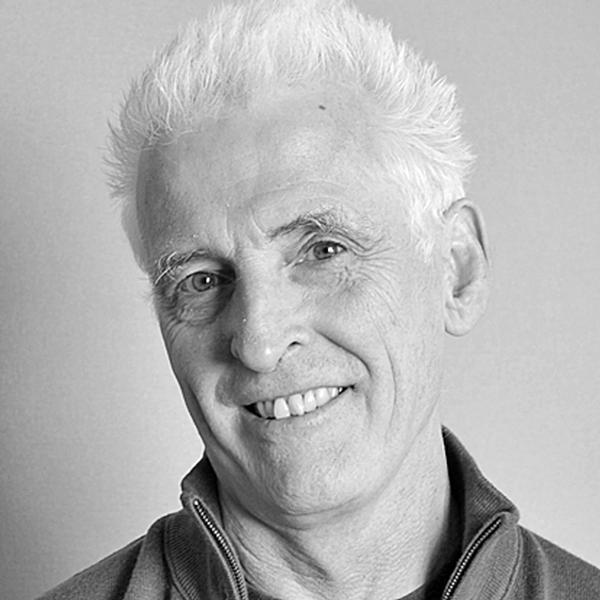
Gordon S. Grice is a creative director at FORREC, an entertainment design company in Toronto, Canada. Grice is also an architect and editor of the quarterly journal OAA Perspectives. Much of his writing seeks to discover what it means to call yourself an architect in the 21st century.


















Designed to restore neglected land and renew the identity of Iraq’s capital city, Baghdad Sustainable Forests promises a new way of living surrounded by nature. Gensler’s Ian Mulcahay tells us why he thinks the project could become a model for the repair and enhancement of urban centres