Interview
Andrew James
China’s ambition to become a world football power is coming to fruition. Andrew James from Populous talks to Matthew Campelli about a new deal with Alisport which will turbocharge the nation’s infrastructure




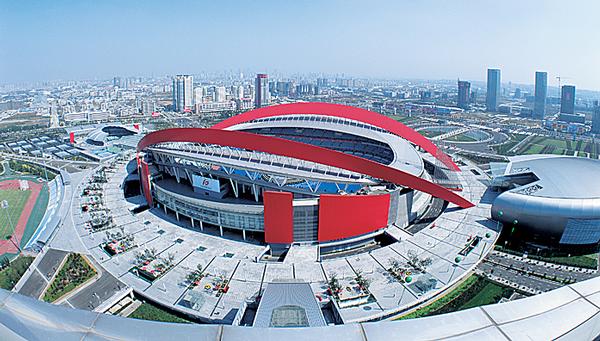
Fifteen years ago, architecture studio Populous dipped its toe into the Chinese sports market to work on the design of the Nanjing Sports Park, which would go on to host the China National Games in 2005 and the IOC Youth Olympic Games in 2014.
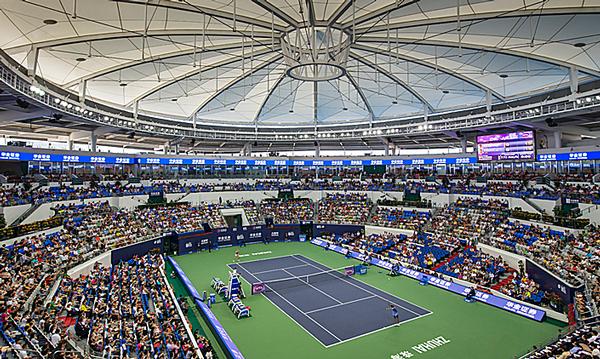
The practice has had an interest in the vast nation ever since, designing structures such as Zhuhai’s International Tennis Centre.
Populous now finds itself at the centre of the Chinese government’s aggressive drive towards footballing dominance and may create the blueprint for the way football facilities are designed and renovated across the country.
In June this year, Populous signed a deal with Alisports – the sports arm of Chinese global trade platform Alibaba – which has set its sights on operating “50,000 sports venues in China over the next 10 years” to build a connection with its 470 million subscribers.
As part of the deal Populous will consult on how to transform a number of ‘white elephant’ arenas into functioning stadiums, with a focus on fan engagement and experience. The studio is also keen to pick up several projects itself to speed up the nation’s desire to create a landscape of world-class sporting facilities.
Football superpower
Andrew James, Populous’ Asian and Australian director, is overseeing the strategic partnership, and he is certain about what’s driving China’s ambitions: “There is a lot of money going into China’s football Super League,” he says. “There’s no doubt it will rise rapidly over the next five years – when the Chinese decide to do something, they don’t hold back, they really do it.”
China has been unflinching in making clear its desire to become a world football superpower, with its domestic football teams spending millions on established foreign football stars and President Xi Jinping making the bold statement that he wants the nation to host – and then win – the FIFA World Cup.
While the government is driving the ambition, private companies such as Alisports are taking control, with an eye on the economic benefits a healthy football industry can bring.
“In a lot of Asian countries, not just China, government and large private businesses seem to work hand in glove,” says James. “Businesses will want to sit at the top table and they will help out on the policies the government wants to drive.”
Aside from relationships with the government, an organisation such as Alisports may see large public venues as a way to get their advertising message across or exploit sponsorship capabilities.
To emphasise the size of the market, James says that Guangzhou Evergrande – one of China’s most successful football clubs – regularly sells out its stadium despite the fact the pitch is surrounded by an athletics track and “people can hardly see”.
James adds: “There are so many areas they can professionalise the sport, in terms of the venues, and commercialisation. Right now money is being spent on recruiting the best players, but I expect money to be spent on coaches, and then clubs will start to be thinking about their venues and their training centres.”
According to James, there are around 100,000 sporting venues in China, with a number of them not being used at all. He expects that “99 per cent of the work” will come from renovating existing stadiums, although there has been an opportunity to design one or two venues from scratch.
One of the few big arenas that has had a “legacy project” benefiting the community is the Populous-designed Nanjing Sports Park, where local people regularly use the football, swimming and ice rink facilities – a factor which helped Populous win the deal.
Populous have already won stadium renovation commissions from two clients in the industrial north of China who want their football teams to represent the communities which surround the stadiums – in the mould of Manchester United or Liverpool. They’re also working on a number of training facilities and have the aim of being involved in 10 projects in “each of the major cities” over the next five years.
Creating experience and demand
However, there are a number of challenges working in the Chinese market. While in ‘Western cultures’ decisions about stadiums and training centres are usually taken by committee, in China “decisions are still generally made by just one person”.
This, says James, has contributed to a focus on the “iconic qualities” of stadiums, instead of their fan engagement and experience capabilities.
“Everyone wants a Wembley,” he explains. “Not many people want that low-profile stadium that sits quietly and fits in with its neighbours. Not yet.
“We’re not monument builders; we focus on the experiential side of design, so lots of pictures of people with smiling faces really gets us going.”
James also highlights a need to shift mentality in terms of stadium size and the overall functions of a stadium. In a country as heavily populated as China (1.4bn and counting), it’s tempting to build 120,000-capacity stadiums, whereas James is keen to recommend an upper limit of 60,000 to keep experiences high quality and sustainable and also to drive up demand.
Community hub
“You have to offer a great experience, particularly if you’re a football club,” explains James. “People will come back week after week. Every seat has to be great. Above 60,000 seats you have infrastructure issues to deal with. Also, if not everyone can get a ticket then that raises demand and will be good for the bottom line.”
China’s emphasis on multi-use stadiums, with athletics tracks around the pitch, was something which had to be eradicated to create a better experience and commercial opportunities. Although, James believes community-focused training centres could be even more lucrative than stadiums.
China has laid out plans to build 70,000 training centres by 2030 to create a thriving grassroots football landscape, as well as a technically proficient elite level game. These centres, says James, have the opportunity to become hubs for their respective communities, with educational facilities such as schools and universities, as well as medical facilities. “We see more opportunities for training facilities to become commercial, profitable centres in the long-term than the main sport stadiums,” he explains.
The bigger picture
Aside from the development of facilities for football, James sees opportunities to design entertainment arenas and for Populous to expand its tennis stadium portfolio. But the ‘beautiful game’ is undoubtedly where it’s all happening for China, says James, and Populous is now in a good position to set the agenda.
“We’ve always known China would happen one day,” he explains. “It’s a fantastic market for us because we can speak the language we’ve been speaking in Europe for the last decade or two and because we already have a reputation there.”



















Designed to restore neglected land and renew the identity of Iraq’s capital city, Baghdad Sustainable Forests promises a new way of living surrounded by nature. Gensler’s Ian Mulcahay tells us why he thinks the project could become a model for the repair and enhancement of urban centres