Science Centres
Diversify + Unify Ecsite Annual Conference 2016
Attendees at this year’s Ecsite Annual Conference – held in Graz, Austria – heard how science centres can promote inclusion to help combat fear and ignorance, and how efforts are needed to make the community more diverse



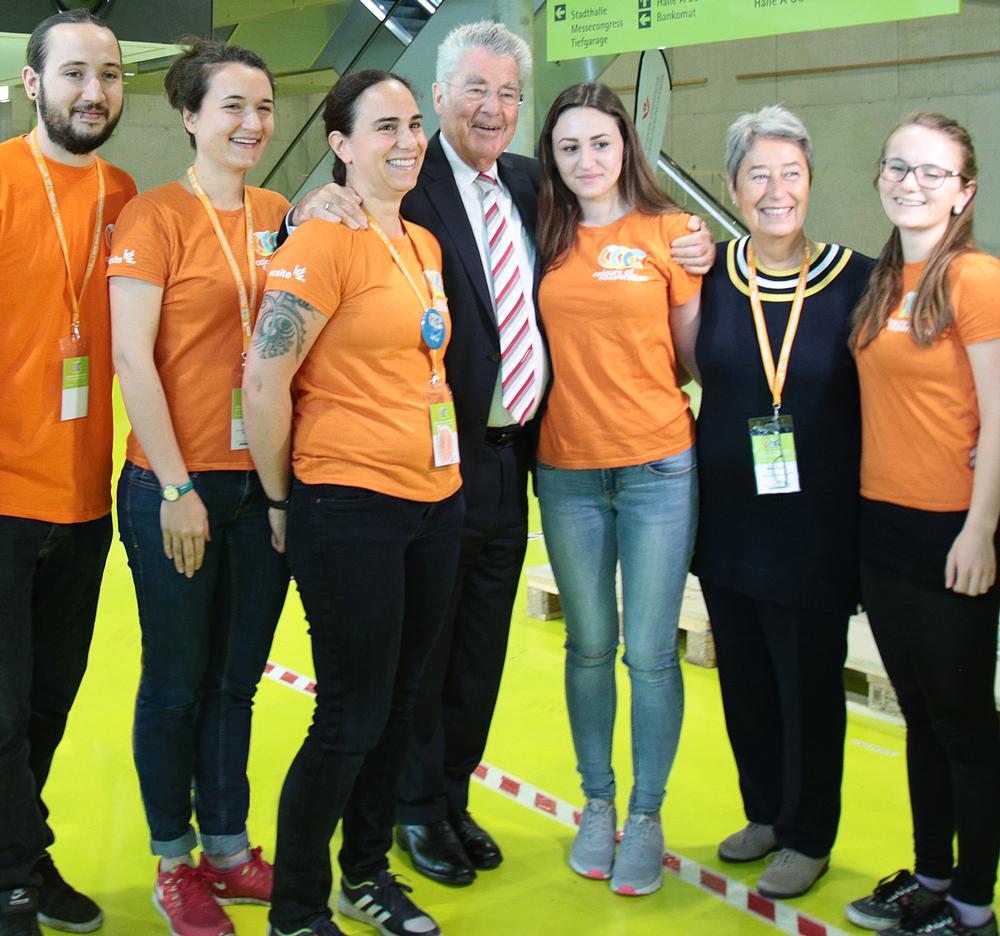
When the president of the host country’s wife is one of the people responsible for an event, you expect something special.
And that’s exactly what 1,000 delegates were treated to at this year’s Ecsite Annual Conference in Graz, Austria. A serious note was brought to proceedings, however, when the conference theme of “colours of cooperation” resonated through a stunned audience following a keynote address on diversity in the science centre community.
A presidential address
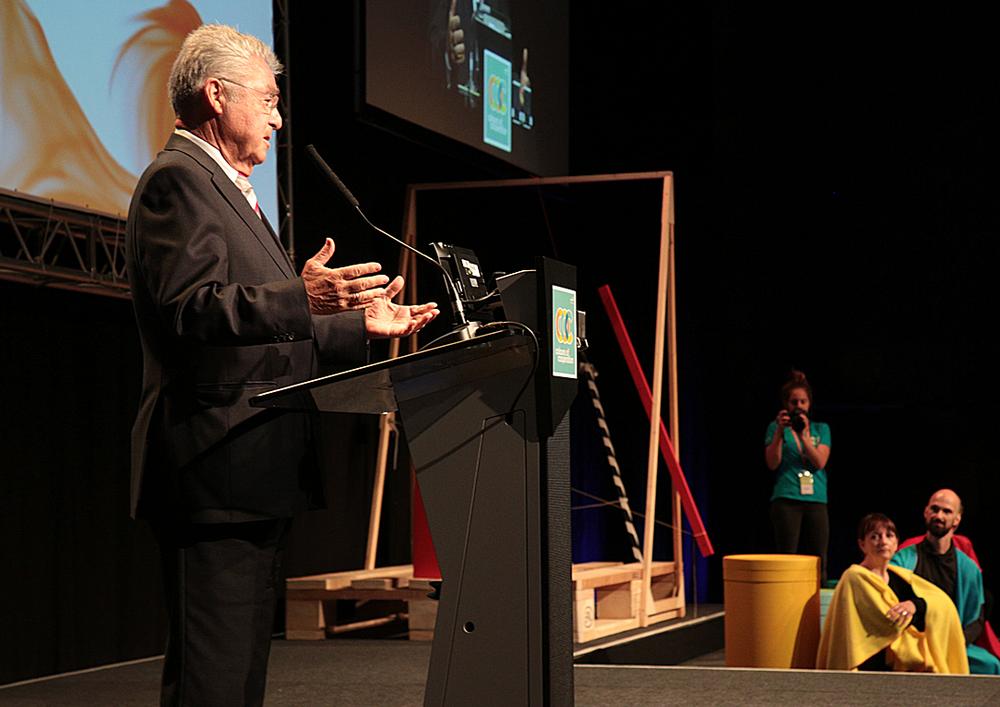
Austria’s then-president Heinz Fischer opened the event, praising the work of the team that put the 9 to 11 June conference together under the supervision of his wife, Margit Fischer, president of the ScienceCenter-Network.
“This is the first time Ecsite has come to Austria,” says the president. “Thanks to my wife, I know a little bit about the hard work that’s been put in by the organisers to make this happen. There are many who are really devoted to the idea of Ecsite and to the idea of the ScienceCentre-Network.”
Fischer praised science centres and museums worldwide, calling them an “essential extra layer” in the school system that marries young people with science.
“Science centres add to both our school and university system, bringing people closer to science, making it easy for them to understand and allowing them to gain pleasure from learning,” he says. “Science centres also enable young people to build a personal relationship with science, technology and innovation.”
Eurocentric bias
The keynote address was certainly impactful, where a room full of mainly white Europeans did nothing but emphasise the serious issue of ongoing racial disparity in the science community.
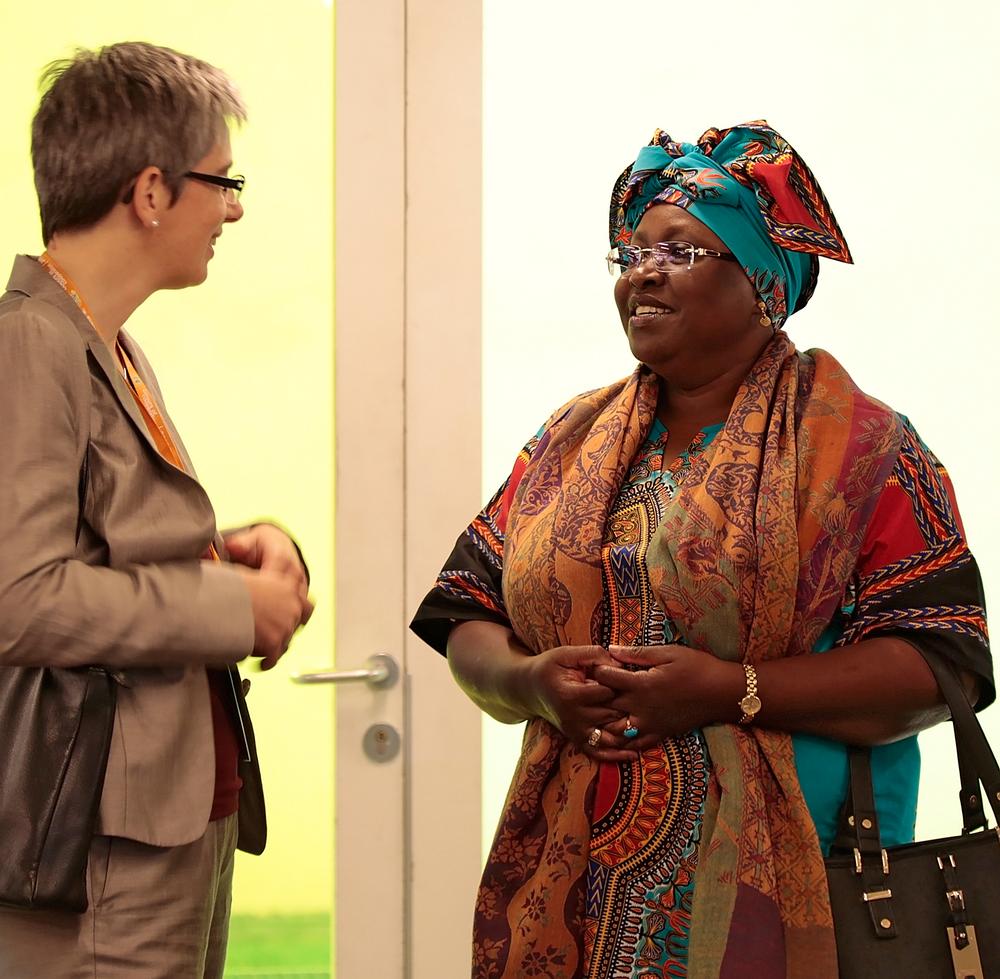
Recounting her first Ecsite in 1995 – when just a handful of people attended the event – Dr Elizabeth Rasekoala highlighted the issue that science’s Eurocentric model has been, and still is, excluding young black people from pursuing interests and potential careers in STEM subjects.
“We barely filled a room in King’s College in London in 1995,” says Rasekoala, who is president of the Pan-African Network for the Popularisation of Science and Technology (Gong). “Those were days full of excitement. I remember that conference and I remember asking myself two questions. First, I asked how long it would take before we had more women in the room – and it is good to see that the question has been answered well.
“The second question was how long it would be before I am no longer the only black person in the room. That question has still not been answered. That is on your major to-do list.”
Rasekoala went on to share global science centre and science museum visitor statistics. She says one in every 1,900 people in Africa had visited such an institution and then compared that to the UK, where the figure was one in four. According to Rasekoala, the European education system tells a similar story.
“We see European STEM education welcoming graduates from developing countries, yet they cannot deliver the same progression for local students from those same backgrounds,” she says. “I found myself as a postgraduate African student dealing with a perverse dichotomy of a university department that supported me and my aspirations and yet at a children’s primary school, they are deemed to be underachieving black youths who can only excel in sports and music. You are living with this sort of schizophrenia in society. How do we explain that?”
She says European science centres had failed to deliver a socially inclusive model and that was having a trickle-down effect in Africa and creating a cycle of inequality that is being replicated around the world.
“Within the African context we can see the global footprint of these inequalities,” Rasekoala says. “Somewhat ironically, the contamination of this Eurocentric approach means that in Africa we have African scientists marginalised and so aware of being marginalised that when they go back home they perpetuate the same inequalities. It’s like children who’ve been abused who grow up and become abusers. That’s what we are creating: we are exporting Eurocentrism.”
STANDING OVATION
Concluding her keynote by urging Ecsite and the network of global science centres to urgently address the issue, reshaping science to educate with a truly global approach that encourages all to take up science and STEM subjects, Rasekoala received a standing ovation from her peers.
When the following Q&A session occurred, not a single person raised their hand to ask a question for several minutes, telling the story of a room that didn’t know how to address such a sensitive topic. The first person brave enough to comment in front of their peers acknowledged it was still a challenging subject that needed to be addressed.
Speaking on the tackling the Eurocentric approach, Rasekoala added: “What are the parameters that should be included in making these changes? It’s up to you to work out,” she says. “In my country we have a saying. This is a place where the dead bodies are buried and this is where we’re going to have to dig them up if we want to make change.”
Fight fear with inclusion
Elsewhere at the conference, Ecsite president Michiel Buchel addressed the delegates urging them to take a stand against fear and show Europe that inclusion can be far stronger a force than “looking for enemies that are often not really there.”
“We represent Europe and progress, and we all know there is a cold, dark wind blowing through Europe right now,” he says. “We need Europe and Europe needs us.”
Buchel continued: “We’re undergoing a rather difficult and sometimes uncertain phase. Immigration, refugees, terrorism – these things can make people scared, but as a truly European network we must represent its values. We can show that inclusion is so much better than looking for enemies that are often not really there.”
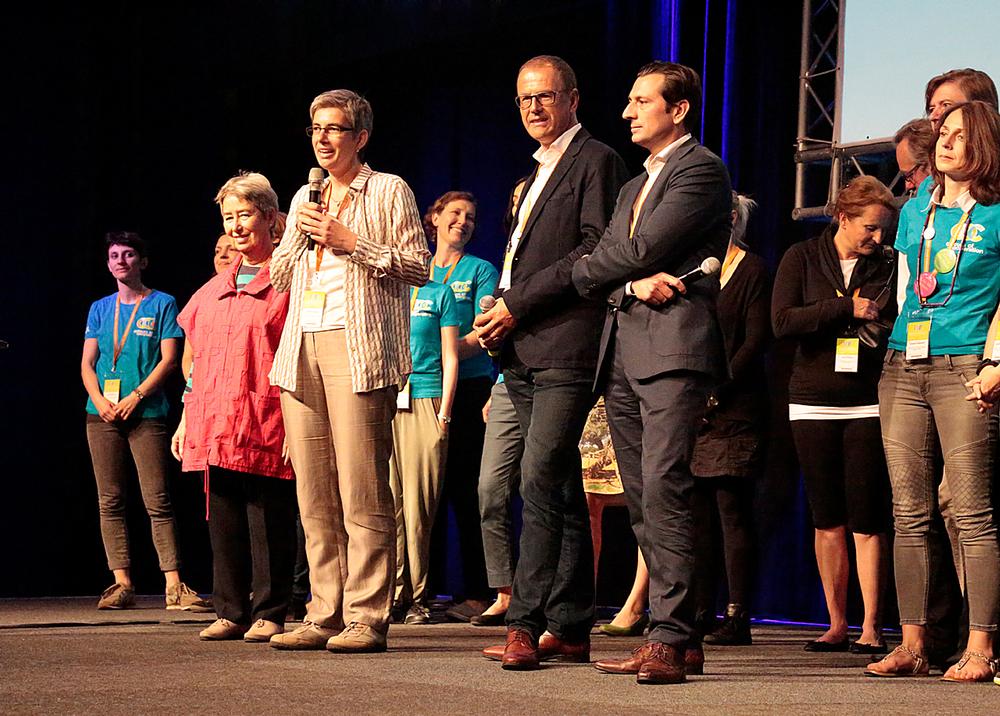
Using the conference itself as an example of cooperation, Buchel noted that nearly half of the participants at the conference had also been actively involved in some way in creating the show’s content. Buchel added that each member of Ecsite could use their sphere of influence to address some of the problems Europe is facing, using science as a catalyst to start a debate on those issues.
“We stand for solutions, for the belief that science and technology can help us and help people to tell the difference between fact and fiction,” he says. “I think science can be and is a really strong weapon against ignorance and stupidity.”
Out of this world
Space was another theme at Ecsite, with Danish scientist Tina Ibsen calling for planetariums and science museums to harness the surging interest in space to draw young people into STEM careers.
Ibsen, head of science and outreach at Copenhagen’s Tycho Brahe Planetarium, says it is essential for scientific institutions to encourage children to head towards a career in STEM as the need for skilled workers in the field increases.
“By 2020, Denmark will need more than 35,000 engineers and people with a master’s degree in science,” says Ibsen. “We’re a small country of 5 million people so there is this problem of not enough kids going into STEM studies.”
Ibsen detailed how Denmark tried to achieve this goal – using homegrown astronaut Andreas Mogensen as a spark to ignite youth interest in STEM. Mogensen, who was given a mission to the International Space Station (ISS) in 2015, was at the centre of a project called 2015: Space Odyssey, named as an homage Stanley Kubrick’s famous film.
“We don’t have a space agency in Denmark, so we went ahead ourselves and used Mogensen as a way of engaging more kids in STEM careers,” says Ibsen.
“We came together with 15 partners across Denmark – science centres, museums, universities and even the Danish version of the BBC – to create the largest outreach project ever to happen in Denmark. And we had five main focus areas – events, educational material, competitions, teacher training courses and general outreach,” she says.
The effort proved a success, with more than 140,000 people in the country taking part in a number of events on 2 September 2015, the day Mogensen embarked on his mission to the ISS. As a result of the programme’s success, Ibsen says these partners have continued to collaborate on new projects together.