Research
Work it out
A new study predicts what the future of wellness at work will look like and how spas can help. Research co-author Opheila Yeung gives Spa Business a sneak preview




People spend at least half of their waking hours at work. It’s inextricably linked to our wellness, affecting our finances, psyche, health and relationships. And yet, there’s a rising epidemic of an unwell population and an unwell workforce, which our global economy and local communities can scarcely afford.
The Future of Wellness At Work, a new study which will be released by the Global Wellness Institute (GWI) later this month, examines the state of wellness of the global workforce, predicts what the future of work will look like and makes the case for why wellness matters. As more employers wake up to the reality that wellness is not only critical to their employees’ health but also to the survival of their company, there will be increasing opportunities for wellness businesses to partner with employers to infuse wellness into work.
Unwell workforce
Ageing populations, urbanisation and unhealthy lifestyles are all driving a global rise in chronic disease. Work is often part of this problem. As our labour has shifted from manual to sedentary activities, more people are sitting and staring at digital displays, often with bad postures. Despite regulatory changes to protect workers, many people still work in unhealthy and even dangerous environments – from garment workers locked in factories, to office workers developing carpal tunnel syndrome, to nurses who are injured lifting heavy patients.
Work can also create mental and emotional distress – from the financial challenges of low wages, to long working hours and the inability to unplug and difficult relationships with bosses and coworkers. These stressors can lead to a negative work life balance and physical illness. In a recent survey carried out by the GWI and Everyday Health, US respondents reported that when their job or workplace environment causes them to feel unwell, many other aspects of their lives are also affected, including mental/emotional health (69 per cent), physical health (50 per cent), family life (36 per cent), relationships (35 per cent) and overall happiness (66 per cent). The costs of work-related stress (including both medical costs and lost productivity) are enormous, estimated by various research studies at US$650bn (€594.6bn, £459bn) in Europe, US$3.9bn (€3.6bn, £2.8bn) in Australia, US$2bn-US$8bn (€1.8bn-€7.3bn, £1.4bn-£5.6bn) in Canada and US$300bn (€274.4bn, £211.9bn) in the US.
Another manifestation of an unwell workforce is the widespread disengagement observed around the world – that is, employees who are unmotivated. Gallup’s 2013 State of the Global Workplace study found that 87 per cent of workers worldwide are not engaged at work. Such employees are less productive, more likely to steal from their company, negatively influence their coworkers, miss more workdays and drive customers away. Taken together, the cost of unwell workers – including healthcare costs, compensation for sick and injured workers and lost productivity from stress and disengagement – could amount to 10-15 per cent in lost global economic output, according to our estimates.
Demand for wellness
Employers are becoming aware of this problem and have consistently increased spending on workplace wellness in the last five to 10 years, generating many related business opportunities. According to SRI International’s Global Spa and Wellness Economy Monitor 2014, workplace wellness is now a US$40.7bn (€37.2bn, £28.7bn) global industry (see SB14/4 p94). That includes third-party providers of services, products and platforms that serve a wide range of employee wellness needs from exercise and healthy eating programmes to smoking cessation and stress reduction.
However, current initiatives only address a sliver of the global workforce. We estimate that less than 9 per cent of the world’s 3.2 billion workers have access to any kind of workplace wellness programmes (see Diagram 1). What’s more, the workers who do benefit from these kinds of services mainly live in high-income countries and work for large or multinational employers
Judging from the low take up in workplace wellness programmes – various studies show participation rates ranging from 5 to 46 per cent – those who do have access to these services do not seem particularly keen. Many people are sceptical of their employers’ intentions – believing they only want to save healthcare costs or squeeze more productivity out of them – and the effectiveness of interventions. Indeed, most programmes run on the premise that employees need help ‘fixing’ existing lifestyle problems such as poor health, unhealthy habits and stress; as a result, many are implemented in a fragmented fashion, sometimes as part of an off-the-shelf benefits package. Seldom is employee health and wellness treated as a corporate priority and integrated into the day-to-day operation of organisations.
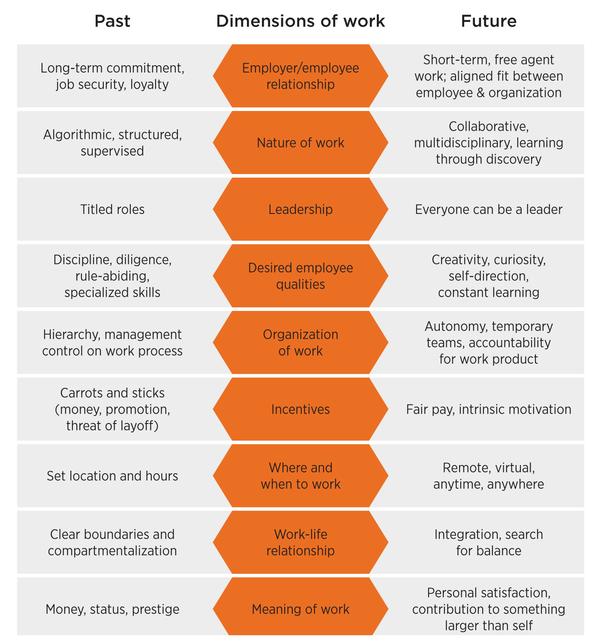
Yet, employee wellness is increasingly important. In The Future of Wellness At Work we predict what the future of work looks like (see Diagram 2). As more of our tasks are replaced by computers and machines, people will have to add value by harnessing their unique human qualities – by being creative, innovative, perceptive, intuitive, empathetic and adaptable. We need to be in a heightened state of wellness – physical, mental and emotional – to be able to bring these qualities to work. Therefore, it’s essential that businesses nourish and cultivate human energy and support the wellness of their employees if they are to survive and thrive in the future economy.
What about spas?
The most obvious role for spa businesses in an expanding workplace wellness market is on the fulfilment side, to be the providers of wellness for employees, such as offering body work, assessments, counselling/coaching, classes, getaways and so on. Employers are just beginning to understand the differentiated needs of workers and the importance of letting employees choose what they need to improve their own wellness. Because workplace wellness services are usually localised, there are opportunities for all types of spas – large or small, chain or independent, day or destination – to partner with employers of all sizes and industries to deliver services and to market to consumers who are armed with employer-sponsored wellness dollars.
Spas can also play a deeper role in workplace wellness. Because practitioners have a deep understanding of the multidimensional nature of wellness, spa businesses are in a unique position to educate organisations, employers and managers about wellness within the context of work. The existing workplace wellness market has largely been driven by human resource leaders who are grappling with the best approaches to reduce healthcare costs and to increase employee engagement. Spa business and practitioners can bring their knowledge of healthy lifestyles and wellness modules to help these leaders develop more effective and holistic programmes and approaches to workplace wellness.
Finally, as employers in the wellness industry, spa businesses have an opportunity and a responsibility to establish themselves as models and examples of healthy workplaces. If we all work to promote a sense of caring and infuse wellness in our workplaces, we will inspire others to do the same.
Diagram 1
Percentage of employed workers who have access to workplace wellness programs & services*
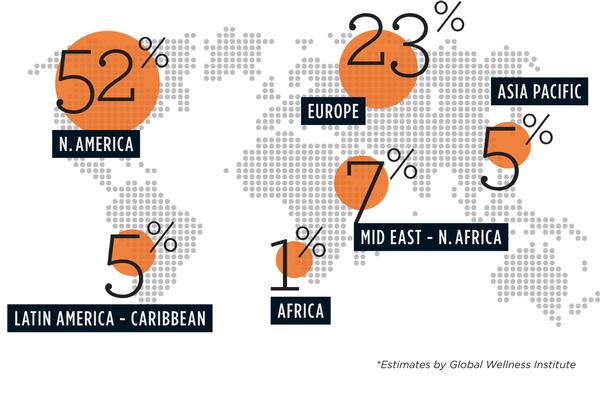
Diagram 2
The Future of Work*
*The Future of Wellness at Work 2016, Global Wellness Institute
Ophelia Yeung is a senior fellow researcher at GWI
Email:[email protected]


















Designed to restore neglected land and renew the identity of Iraq’s capital city, Baghdad Sustainable Forests promises a new way of living surrounded by nature. Gensler’s Ian Mulcahay tells us why he thinks the project could become a model for the repair and enhancement of urban centres