Talking point
Women's World Cup on artificial grass
The decision to play the most prestigious tournament in women's football on artificial surfaces has divided opinion – for some it's evidence of inequality, for others a step in the right direction



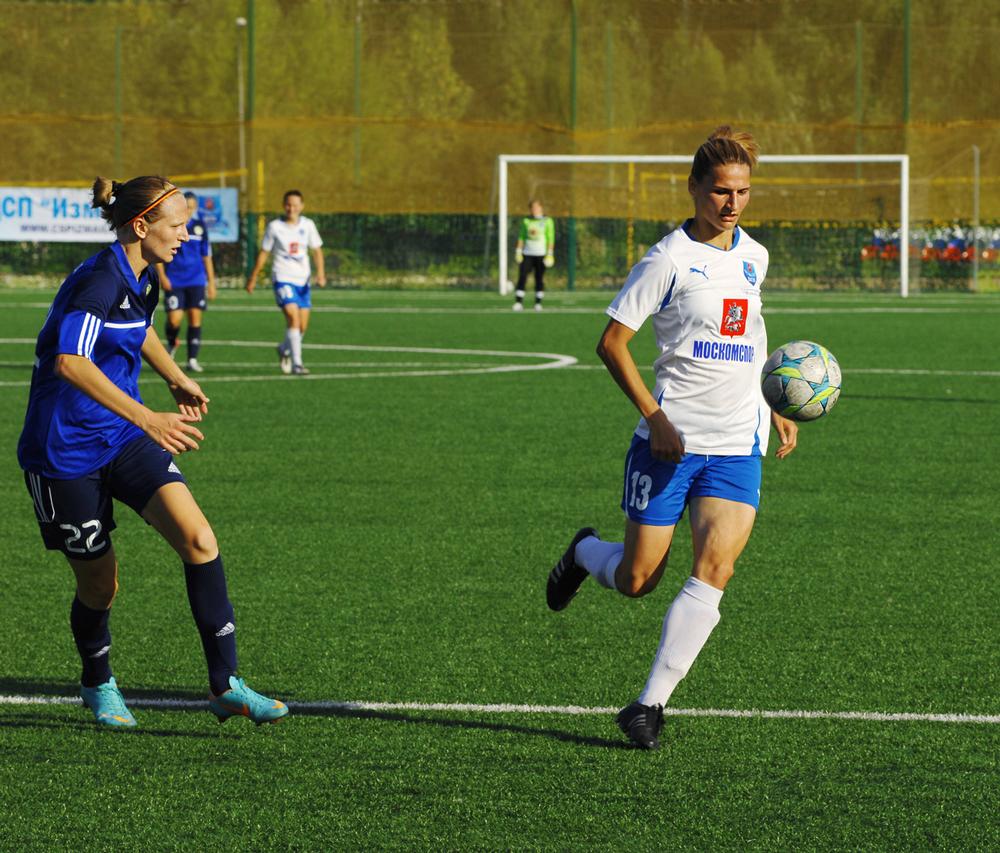
The 2015 FIFA Women’s World Cup in Edmonton, Canada will be the first senior FIFA tournament to be played entirely on artificial turf. While some see FIFA’s decision to use artificial turf a step in the right direction, others – including those working in women's football – claim that female footballers are being used as guinea pigs to test the viability of having the men’s World Cup played on artificial turf in the future.
A group of leading female players saw the decision to not use grass pitches as something more sinister – a case of discrimination and sexism.
A total of 84 players from 13 countries launched a legal challenge against FIFA and the tournament’s host, the Canadian Soccer Association. They argued that the women's tournament should be played on similar surfaces to the men, and that synthetic pitches would increase the danger of injuries.
While the legal case was dropped at the end of January 2015, the debate still rumbles on. The players believe that, while the challenge was dropped, it will have had a positive impact on women's sport and acted as an instigator for discussions about inequality. For others, the resistance to artificial pitches is misinformed. Their argument is that artificial turf performs just as well as natural grass and is just as safe. We asked industry experts for their views.
Eric O'Donnell,
Managing director,
Sports Labs

S ome see the decision to use artificial surfaces as discriminatory and point the finger firmly at FIFA. Is that fair? Shouldn't critics be looking closer at the surfaces women already play on regularly?
The top five ranked nations in women's football – the USA, Germany, Japan, France and Sweden – along with Scotland and England, have senior women’s teams playing on artificial turf regularly within their national league systems. Within those seven nations, there are 25 top flight teams playing at 23 different stadia which have artificial surfaces.
The real discrimination is that out of those 23 stadia which regularly host top flight women’s games on artifical surfaces, only 40 per cent are checked and approved by FIFA – and only 32 per cent are checked annually to comply with FIFA’s top quality mark, FIFA 2 Star. Clearly there have been no headlines about how the national leagues are being sued for discrimination as a result of playing on these artificial pitches.
Some of the players who feel so strongly about being “forced” to play on FIFA approved pitches during Canada 2015 are, it seems, happy to ply their trade on untested, unregulated artificial pitches during their regular season.
Jerome Valcke ,
Secretary Genera,
FIFA

It's completely crazy to say that the decision to play on artificial surfaces somehow amounts to discrimination – it has nothing to do with inequity and at FIFA we work every day to develop women's football around the world. Frankly I'm amazed by the size and the scale of the discussion.
It is FIFA's right to stage tournaments on synthetic surfaces as a matter of principle.
We have decided at FIFA – and it's part of our statutes and regulations – that artificial pitches can be used, just as natural grass can, to make sure we can play football everywhere around the world.
When you're going into a country and the country is using artificial pitches, the executive committee can make the decision to authorise the use of artificial pitches.
For example. looking ahead, I can tell you that for the 2019 Women's World Cup we have two candidates – France and South Korea – both of which are set to use natural grass for the tournament – and that's it, there are no discussions. If anyone is saying the use of artificial pitches is a question of discrimination, it's nonsense.
Kit Campbell,
Kit Campbell Associates

The world of football must be in a state of shock: FIFA has actually made a decision that is in the best long term interests of the game. Let’s hope it's abandoning its apparent long-standing policy of attempting to hold back technological advances.
I wonder how many lawyers refused to take on the claim that FIFA is discriminating against women, before the complainants found one who'd represent them.
Just as well American lawyers weren't around when Gutenberg invented the printing press (thereby discriminating against scribes). Other sports have been transformed for the better by technological progress – artificial surfaces for tennis, hockey and increasingly rugby; synthetic tracks for athletics; graphite racquets and golf shafts and so on.
Playing the Women's World Cup on artificial surfaces should prove hugely positive – especially in countries where grass pitches are normally pretty awful and/or ludicrously expensive to maintain. Let’s have matches decided by players’ skills, not uneven bounces or slippery grass. Would Beckham have skied his famous 2003 penalty against Turkey into the stands if he’d taken it on an artificial pitch rather than a patch of mud?
Geoff Webb,
CEO,
Institute of Groundsmanship
The reality is that since July of 2004, FIFA recommended fields were first authorised for international match play – according to the laws of the game. There have been FIFA-sanctioned tournaments already, albeit at lower age group levels, that have been played out on artificial grass by male as well as female players. This, it would seem, is the precursor to a more high-profile trial of artificial turf, using the women players and the excuse that it is too cold to grow grass in Canada!
Former Scottish International and Chelsea FC player – Craig Burley’s recent comment for the ESPN news network: “are you telling me they can’t grow grass in Canada, even in winter?” encapsulates what many people think about the direction both Canada and FIFA have taken. Alluding to the amazing grass-growing technologies available to modern groundsman at stadia throughout the world, he continued: “How can you not grow grass in this modern day?” Craig has a point.
The reality is that artificial turf suits the business model of FIFA. It's no longer about the players’ opinion, the fans’ opinion or that natural turf is not a good enough surface. It's a business decision and it's good for FIFA. But is it good for the game?

















Designed to restore neglected land and renew the identity of Iraq’s capital city, Baghdad Sustainable Forests promises a new way of living surrounded by nature. Gensler’s Ian Mulcahay tells us why he thinks the project could become a model for the repair and enhancement of urban centres