Fitness in sport
Prehab workouts
Fitness journalist Sam Murphy reports on the value of prehabilitation, not only to prevent injury among elite athletes, but also to help sports centres ensure their gym members stick to their programmes and feel looked after



Recent industry figures on retention show that just 52 per cent of people maintain their gym membership for 12 months. Fewer than a quarter maintain it for one or two years. The reasons are many, but it’s likely that at least some of those abandoning the gym have been laid low by injuries. Or – says Gareth Cole, head of education at The Third Space, a health club operator with two central London sites – because they aren’t getting the benefits they expected.
The Third Space launched its screening service ‘Prehab, Rehab, Performance’ (PRP) last year. “It’s designed to assess readiness for the task in hand, be it running a marathon or regaining strength following an injury,” explains Cole. “We’re not looking at how a body should move – it’s individual. We’re fitting the client to their goal, not the other way round.”
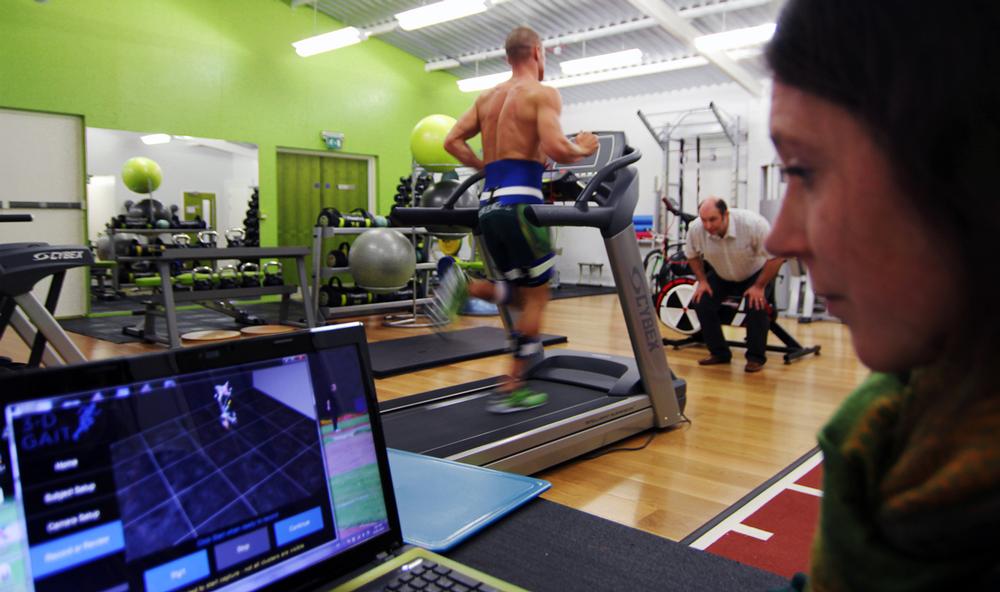
PRP involves four main assessments: gait (walking and running), bilateral and unilateral squatting and shoulder mobility. “This establishes a start point and signposts where we need to investigate further,” says Cole. After the 60-minute screening, clients receive a video report outlining the trainer’s findings and recommendations. They are then encouraged to work with a personal trainer (PT) within the club to address any limitations or weaknesses.
Meanwhile, at 37° – a group of three health clubs in Surrey and London – a LifeScore screen is free to members (£150 to non-members). This one-to-one assessment, described as a ‘total body-mapping tool’, looks at posture and gait, strength, body composition, nutrition and hydration. A DNAFit test is offered as an option, to ensure diet and training are optimal for the member's genetic make-up.
Independent operators are at the helm of the prehab trend – typically high-end gyms with specialist staff. But according to Michael Goulden, director of Integra, an independent gym based in east London, any club could benefit from offering similar services. “Whether you’re a PT or a large health club, if someone gets injured on your watch, you lose them as a customer,” he says. “It’s in everyone’s interests – the club and the user – to minimise the risk of injuries by introducing initial screening and regularly monitoring exercise performance.”
MEMBER SUPPORT
Cole and Goulden both have extensive specialist knowledge of movement – including neuroscience and motor learning theory – so are well-positioned to offer in-depth musculoskeletal screening. The average gym instructor, however, isn’t likely to have the necessary level of education or experience. That means further training, or taking on specialist staff.
“Whether these services add value depends on how well they are delivered,” says Dr Paul Bedford, a specialist in member retention. “Research suggests they can contribute to retention, but unfortunately most operators are not prepared to invest in the training required to make them work.”
Goulden agrees, but believes that trainers and clubs need to take more responsibility for ongoing training and development. “Too often, the approach is ‘I’ve done my training course – now I know everything I need to know’,” he says. To encourage and facilitate learning, Goulden runs regular study groups and courses at Integra, which are open to all health and fitness professionals. Bedford isn’t convinced a significant number of memberships fall by the wayside due to injury, but believes there’s an issue with discomfort in the early days of exercise. “A high heart rate, profuse sweating and burning muscles signal progress to the experienced exerciser, but to a beginner they can feel more like a medical emergency,” he says. “Having some guidance and reassurance through that period could be beneficial.”
Goulden supports the idea of more ‘hand-holding’ and monitoring early on. “Instead of a bog-standard induction, why not offer a six-week ‘way in to exercise’? It could focus on finding out what the client’s needs are and educating them about movement. This would help ease them into exercise and build a stronger relationship between club and client.”
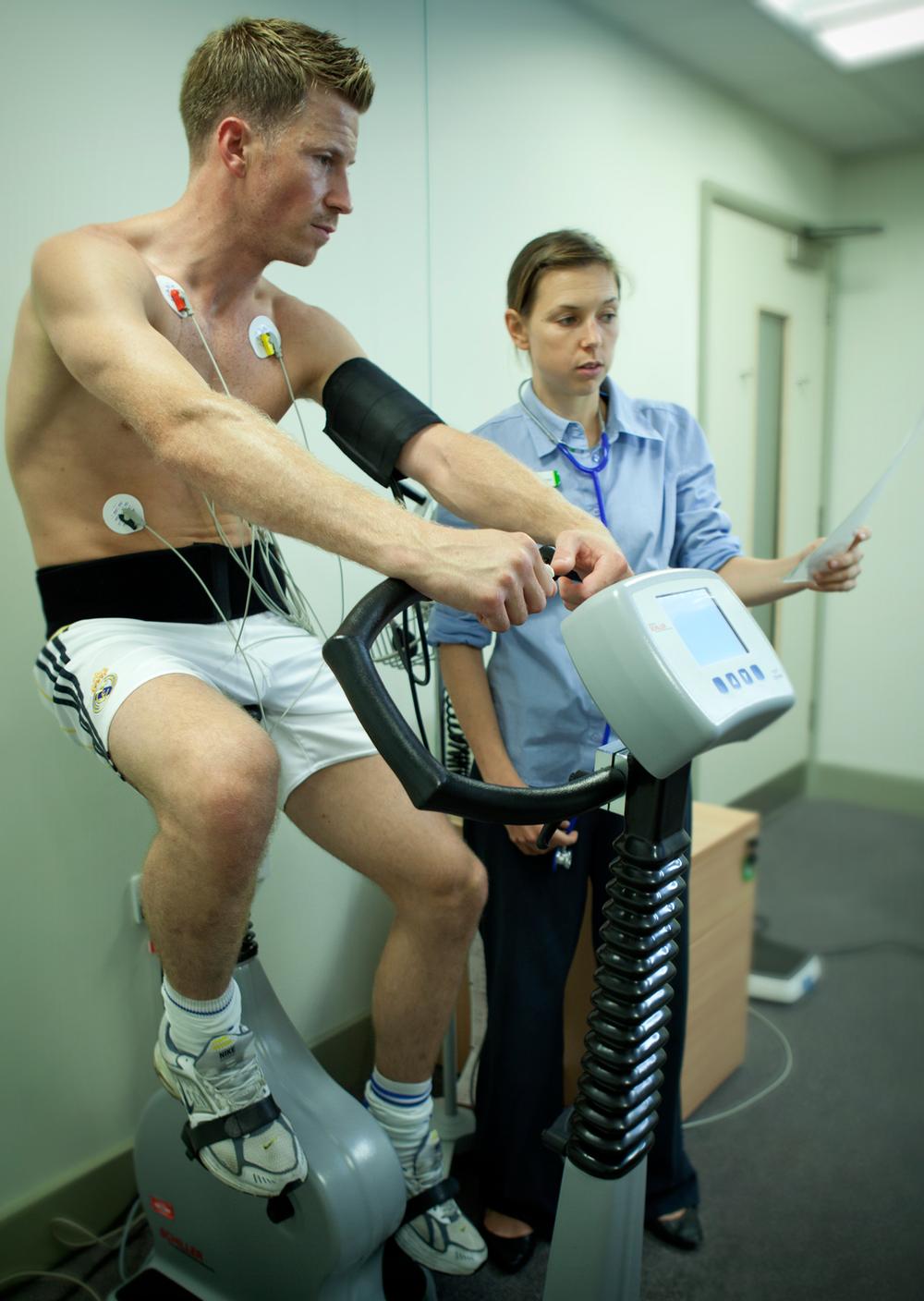
Nuffield Health is already offering this. All new members get a Health MOT – a clinical assessment of overall health, including blood pressure, cholesterol, blood glucose, aerobic fitness and resting heart rate. Nuffield’s recently introduced Wellbeing membership also provides ongoing individual support and monitoring. Wellbeing members get four one-to-one appointments with an expert of their choice – a physiologist, physiotherapist, nutritionist or personal trainer – as well as a free physiotherapy session (which can be used as a pre-exercise musculoskeletal MOT) and sessions with a health mentor.
“Our health mentors are educated by our Fitness Academy to a significantly higher standard than the average personal trainer,” says Natalie Cornish, the company’s fitness and wellbeing director. “We educate them not only on how to deliver exercise prescription, but also on nutrition, sleep and stress. All of our training is underpinned by an understanding of how we can help our members achieve behavioural change.”
How has the membership been received? “The comments have been incredibly positive,” says Cornish. “We run feedback surveys twice a year and our members feel more supported, find our health clubs less intimidating and are more confident about achieving their goals. We’re also getting feedback that, in some cases, members are specifically choosing our clubs because we provide a more supportive membership option.”
THIRD PARTY EXPERTISE
But if you’re not in the market for to provide such a service, the other option is to find a partner who is.
Six Physio is a London-based chain of 10 physiotherapy clinics that offers a range of assessment services. “These reflect Six Physio’s company mantra ‘to cure, not treat’ and differentiate us from many other physiotherapists by identifying problem areas even before symptoms present themselves,” says Robert Crowfoot, director of Six Physio. “From a business perspective, assessments have proved a big pull for many new clients. We’ve also seen increased demand from existing clients who, following treatment by Six Physio’s rehab specialists, have signed up for assessment services for injury prevention.”
Take-up of running assessments has grown more than threefold since November 2012, and cycling assessments almost twofold.
While there are no official partnerships, individual clinics within the chain have built strong links with the gyms and PTs that they rate highly in their area, so that they can work together to meet a client’s needs. Six physio movement assessments use an iPad set-up to video clients performing their chosen activity. “We can identify areas that may need a little more work, either because they’re not moving well or not stabilising well,” explains Carla Lodweijks, clinic director at the company's Fleet Street branch. Real-time ultrasound is also used to monitor different muscles during movement. “Our aim is to provide a comprehensive assessment and ensure that the client goes away with a clear idea of the exercises they need to do to prevent injury,” she adds.
Meanwhile, Run 3D is a specialist within the running arena and claims to be the UK’s first company to offer a three-dimensional motion analysis service. “We assess running technique from above, to the side and behind, comparing the results to our database of thousands of runners to advise on what injuries a runner may be vulnerable to and how to prevent them,” explains director Dr Jessica Leitch.
Run 3D’s flagship clinic is in Oxford, but it also franchises the Run 3D service to sports injury clinics, podiatrists and physiotherapists. “Clinics lease the equipment from us and we train them in how to use it,” says Leitch. “They then make revenue by selling the service to their clients.”
Due to the specialist nature of the analysis, a healthcare professional (such as a physio, biomechanist, sports therapist or sports massage therapist) is needed on-site to interpret the data in a meaningful way. “Thus far, we’ve been approached by healthcare professionals who want to make their clinics stand out from the crowd,” says Leitch. “But that’s not to say we wouldn’t be open to gyms and health clubs taking on the system, as many now have such specialists on-board anyway.”
Bedford agrees that forging links with external experts could be a good way of offering specialist services to club members. But he has a caveat: choose carefully. “Complex terminology that might be acceptable within a specialist clinic won’t put your members at ease,” he says. “And you don’t want people to leave an assessment with the feeling that they are ‘broken’ and need to be ‘fixed’.”
PERCEIVED VALUE
There’s no doubt that there’s a growing demand for prehab services – particularly in areas like the City of London, where hardcore exercisers are cash-rich but time-poor and want to maximise every workout. But can prehab earn its keep? While Bedford says it’s difficult to quantify the impact such services have on member retention and exercise adherence without data, Nuffield’s experience suggests investing in pre-exercise assessment and early-days support adds value when it’s included within a membership cost.