Future parks
The future for our public spaces
From edible gardens and underground parks to cycle routes in the sky, Kath Hudson looks at the future for our public spaces



Don’t underestimate the importance of parks – living near a green space has a more sustained positive effect on people’s mental wellbeing than a lottery win, according to new research from the European Centre for Environment and Human Health at the University of Exeter.
“People do all sorts of things to make themselves happier: they strive for promotions and pay rises, they even get married. But the trouble with all those things is that within six months to a year, they’re back to their original baseline levels of wellbeing,” says the report’s co-author, Matthew White. Living near green space gives a more sustainable sense of wellbeing.
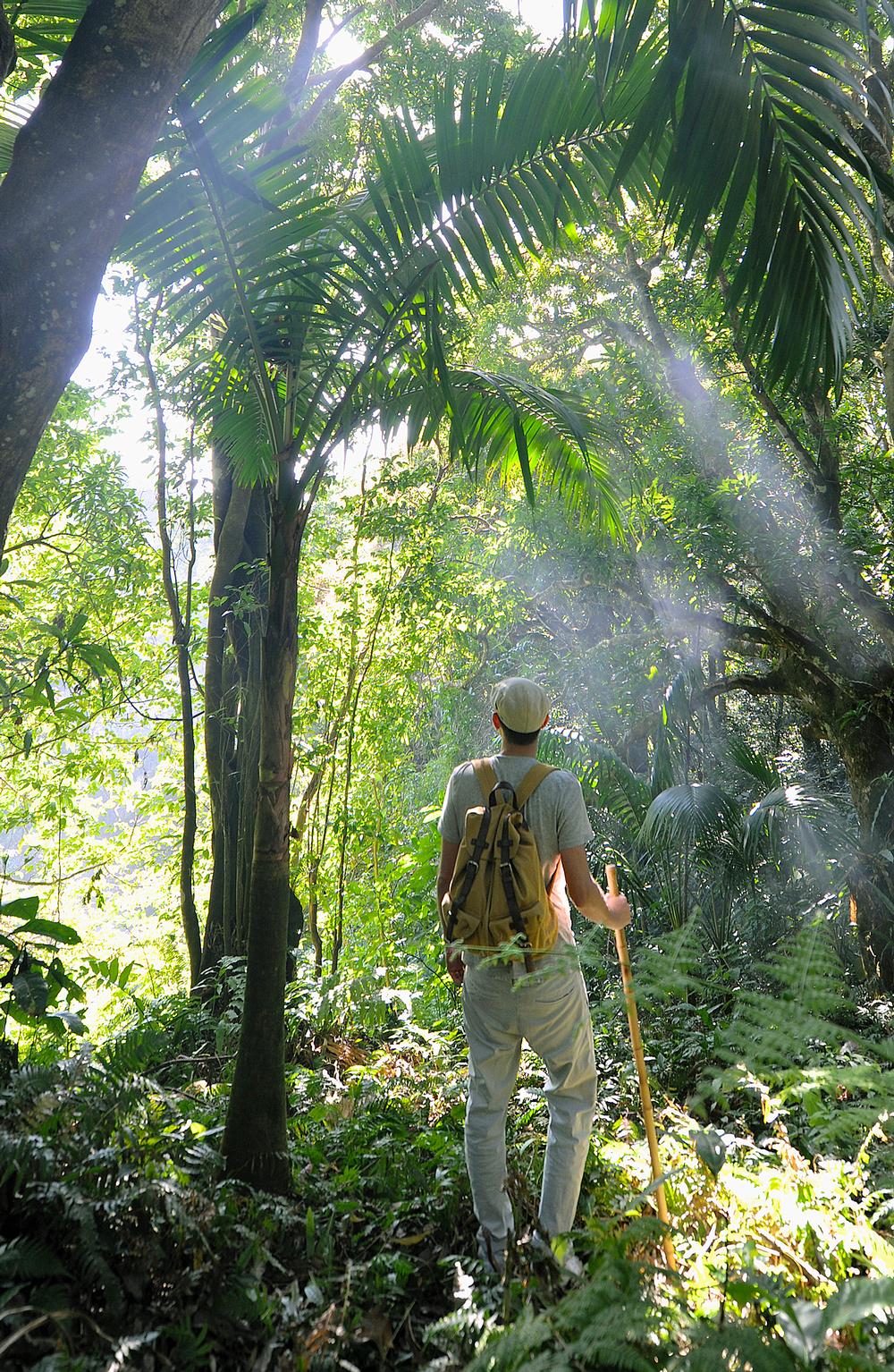
This is because of humans’ innate need for nature, according to Dr William Bird, founder of Intelligent Health and co-editor of the Oxford Textbook of Nature and Public Health, which explores the science behind nature’s effect on people. “People need nature. An absence of it causes people to be stressed which then leads to inflammation of the brain, which makes the body feel under attack and is the cause of all long term Western diseases,” he says. “Nature has a physical impact on us to reduce stress: blood pressure drops, there are changes in the brain. Contact with the earth and soil is very therapeutic and people want that connection.”
UK government body Public Health England is using research from advisor Natural England to help local government identify priorities for greening communities. The studies show that visits to green spaces can boost self esteem, benefit those suffering from dementia and make people feel calm, relaxed, refreshed and revitalised. Those living in cities, without access to green space, show more signs of depression and anxiety.
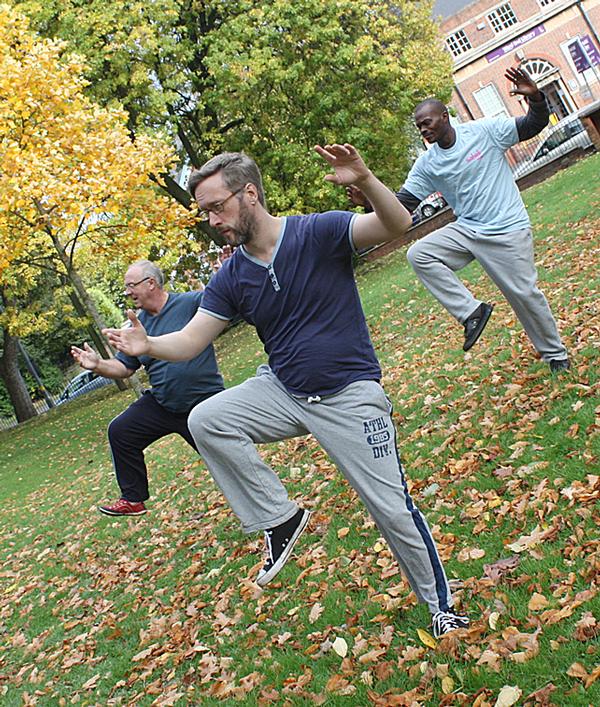
Natural England’s research also shows that an increasing number of people are using the outdoors at least once a week for health and exercise. And 44 per cent make at least one leisure visit a week to the outdoors, compared to 34 per cent in 2009.
Birmingham City Council in the UK is working with Dr William Bird to calculate how many people use its parks for health and fitness, in order to get funds from the National Health Service towards the upkeep of parks and also evidence the value of parks to state their case when it comes to budgets.
Card readers have been installed in some of the city’s parks, allowing people to swipe if they have used them for exercise. The council is looking into other ways of capturing usage, such as an app, or introducing a reward scheme to incentivise people to tell them if they have been to the park.
Does this mean that urban planners and developers will start to take more notice of our need for green spaces and the research backing up its value? Interestingly, the artist Damien Hirst has submitted plans for a 750-home development in Ilfracombe, Devon, UK, which includes open space and parkland among its community facilities.
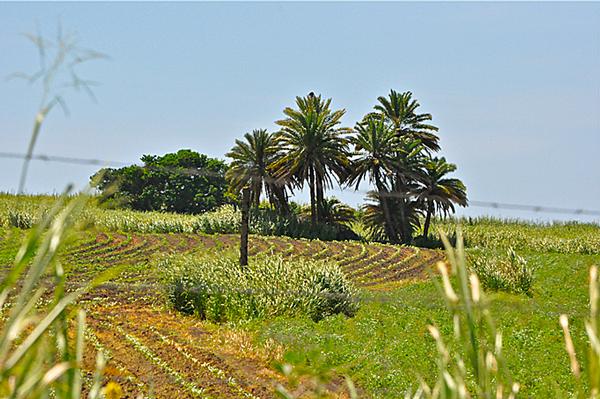
The US is further ahead of the UK; there the trend for community supported agriculture is gathering pace. The Urban Land Institute estimates there are now around 200 operations in progress where developers have added a farm, community garden, orchard and/or edible park to developments in order to attract buyers, increase home values and nurture a feeling of community.
The Bucking Horse development in Fort Collins, Colorado is one example. It has 1,000 homes, a 3.6 acre community supported agriculture farm, a plaza with a farmers’ market and an educational centre where homeowners can take canning classes. The public toilets are in an old chicken coop, along with a few chickens. Values of existing homes have jumped 25 per cent since construction began on the agricultural amenities.
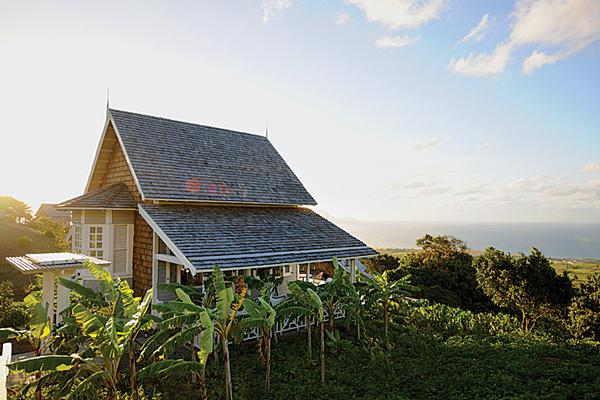
If Caribbean leisure development Kittitian Hills on the island of St Kitts is anything to go by, we can expect to see more leisure developments fostering the growing interest in community agriculture. This resort, which features a boutique hotel, private villas and restaurants, will open an edible golf course in the summer, believed to be the first in the world.
“The largest environmental impact of a normal golf course is the acreage wasted to accommodate the course,” says developer, Val Kempadoo. “The course is built into a farm, so any areas which aren’t tee boxes, greens or fairways are cultivated, planted and harvested, eliminating the wasted space of a normal golf course.”
The course is grown and maintained organically and the food harvested will be used for the restaurants. Pick me signs will give golfers the opportunity to sample produce and caddies will explain the different produce being grown. The hotel is designing programmes to allow guests to participate in the planting, harvesting and propagation of tropical fruits and vegetables.
As the pressure on space in our cities increases, we can expect to see more creativity and increased use of technology in order to bring disused or redundant spaces into public use.
This is partly thanks to the ongoing influence of New York’s High Line (see LM 2012 Q1) which transformed an abandoned 1930s elevated railway into a linear park. This project was a game changer, sparking thinking across the world about how to revitalise forgotten spaces and providing the inspiration for the High Line for London competition last year.
In the future, more is likely to be made of smaller areas of land, enlisting the help of the community to make them into usable spaces. Pocket parks are part of the Mayor of London’s Great Outdoors programme to improve streets, squares, parks, canal and riverside spaces to provide oases of calm from the hustle and bustle of the city. The programme is offering grants of between £5,000 and £20,000 to communities who want to create their own pocket parks. So far 60 projects have been offered funding.
The parks of the future might look different from the ones we’re used to, but they’ll hopefully continue to play a vital role in our communities.
UP IN THE SKY
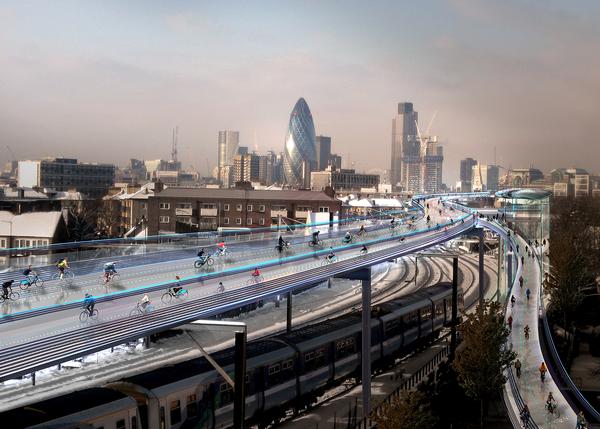
Eminent UK architect, Lord Norman Foster, unveiled plans at Christmas to create a network of elevated bike paths above railway lines to allow commuters to zip around the capital on their bikes. Lord Foster describes it as a “lateral approach to finding space in a congested city.”
SkyCycle has the backing of Network Rail and Transport for London and aims to create 220km of car free routes on pylons above the tracks, with 200 entrance points.
Foster + Partners are working with Exterior Architecture and Space Syntax on the scheme. After meeting with Network Rail last year, the design team has focused on a 6.5km trial route from Stratford to Liverpool Street Station following the paths of the overground line, which will cost around £220m ($365m, E269m).
EDIBLE PARK
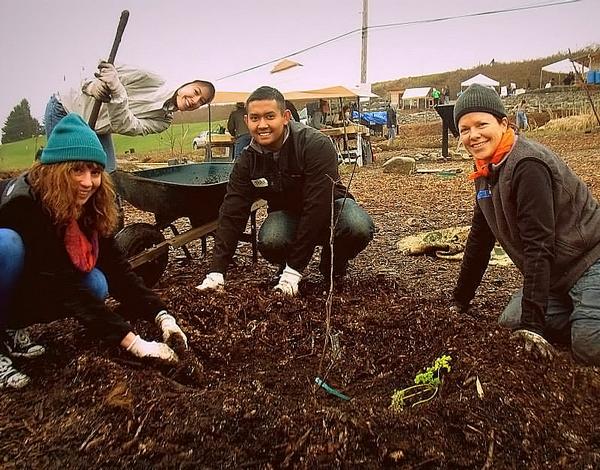
Seattle’s Beacon Food Forest Permaculture Project is designing, planting and growing an edible urban forest garden, which will then inspire the community to gather, grow food and rehabilitate the local ecosystem. A food forest is a gardening technique which mimics a woodland ecosystem by substituting edible trees, shrubs, perennials and annuals.
Phase one of this project got underway earlier this year. When complete, the site will include a mix of individual plots (p-patches); crofts for community groups; open harvest for everyone to share; educational land; and wilderness. Funding has come from grants, donations and going forward, dues people will pay for their plots – about $40, (£24, E29) a year for a 10m x 10m plot.
“We’re teaching people to come, share, take only what they need and respect the land, plants and community. Education is a large part of this,” says spokesperson Glenn Herlihy.
Although there are 90 p-patch programmes in Seattle, this project has attracted interest from all over the US.
“I think we’ll see more of these types of projects,” says Herlihy. “There’s a lot of interest in local food and growing organic, and a backlash against pollutant farming and distribution methods. It’s an enjoyable community act which relieves the pressure on the planet and climate.”
LINEAR PARKS
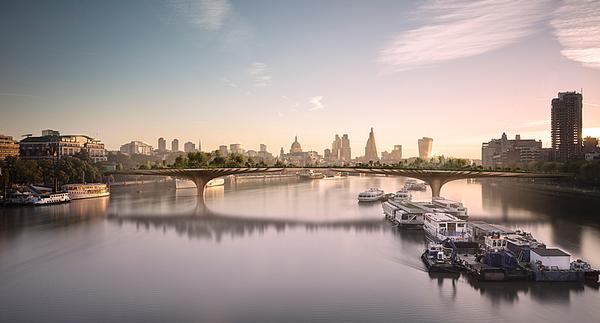
Created by Olympic Cauldron designers and with the support of actress Joanna Lumley, the Garden Bridge already has a high profile.
Linking the theatre district of London’s North Bank with the galleries of the South Bank, it will feature plants, trees, woodland and walkways, providing a tourist landmark, a pleasant commuter route and a new public space for the city. “A tiara on the head of our fabulous city,” says Joanna Lumley.
The structure widens and narrows across its span and there will be places along the way for pedestrians to stop and enjoy the views.
London-based designers Heatherwick Studio are working with Transport for London and engineering consultant, Arup, to develop the scheme.
Another linear park concept was submitted for the High Line for London competition by HTA. Bridge-IT would create a continuous linear park from suburban to central London through the rail network and disused sidings, using previously inaccessible or degraded land.
UNDERGROUND
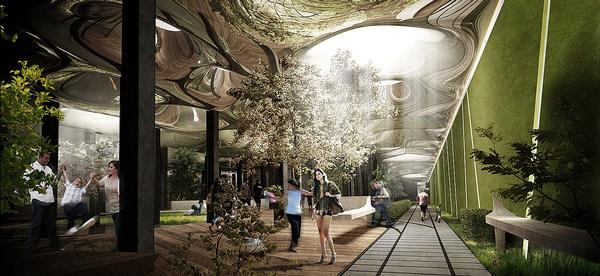
The New York Lowline project is the brainchild of NASA engineer James Ramsey and Google marketing executive Dan Barasch.
It aims to create an underground park out of a Manhattan trolley terminal which has been abandoned since 1948. If this sounds gloomy, think again, because solar technology will be used to transmit sunlight underground and will even allow plants and trees to thrive.
A pilot park has already been created, funded by a Kickstarter campaign which received the most money ever for an urban design project. During its two week lifespan, 11,000 people came to visit.
The team would like to get the project up and running by 2018.









Designed to restore neglected land and renew the identity of Iraq’s capital city, Baghdad Sustainable Forests promises a new way of living surrounded by nature. Gensler’s Ian Mulcahay tells us why he thinks the project could become a model for the repair and enhancement of urban centres