Ageing research
Entering the telo-age
In the last three years, telomeres – an indication of cellular ageing – have galvanised medical interest. Jay Williams explains the science behind telomere health and how it can be used in spas and health clubs



Studies into telomeres – DNA structures linked to the ageing of cells – date back eight decades. But since telomeres were the focus of the 2009 Nobel Prize in Physiology or Medicine, they’ve become the centre of attention in scientific communities and are already being used as health biomarkers in spa lifestyle programmes.
Telomeres are caps at the ends of our chromosomes which prevent them from fraying as our cells replicate. As a cell ages, its telomeres become shorter; when they fall below a certain length, the cell can no longer divide and it dies. This cell loss causes ageing in the body.
However, the ageing of our cells doesn’t always match our chronological ageing because, in addition to normal ageing, telomeres can be worn down through an unhealthy and stressful lifestyle. Conversely, it’s also been found that telomerase – an enzyme stimulated by healthy lifestyle changes including enhancing wellbeing – can protect telomeres from shortening and may even lengthen them, effectively reversing the ageing process.
A telomere test can analyse the length of your telomeres to accurately measure your biological age and provide an evaluation of health – ie the longer your telomeres are, the healthier both you and your cells are. It can even show disease risk: cells with shortened telomeres may function poorly and have been linked to age-associated diseases such as osteoporosis and dementia.
Until now, the ability to measure telomere length has only been available through blood tests, but US company Telome Health has now developed the saliva-based TeloTest™. Telome Health has been founded by leading telomere experts (more on that shortly) and the test is exciting news for the health, fitness and wellbeing industry because saliva samples can be easily collected in a test tube at the club or at home. This single test might soon become the gold standard for gauging overall wellbeing, and an opportunity for operators to provide a wellness diagnostic tool.
The power of knowing
Sha Wellness Clinic in Spain is one of the most recent examples of a spa taking advantage of advances in the study of telomeres. In January, it launched a seven-day Anti-Ageing Programme – costing €7,000 (US$9,350, £5,850) – that includes telomere analysis, via blood samples, to diagnose a person’s biological age. This information is then used in lifestyle and nutrition consultations specifically designed to improve the guest’s state of overall health.
Indeed, telomere length is one of the best biomarkers of overall health status, indicating the impact of diet, fitness, toxins and chronic stress. Telome Health, for example, will offer a TeloAge report in which your personal telomere length is presented compared to a healthy control population in your age and gender group, to gauge how you measure up to the healthy average. Repeating the tests over time gives you the best view into how your cells are ageing, and whether your current lifestyle is working for or against you.
At ReNove Med Spa in Delaware, US, Dr Michelle Parsons uses telomere testing to optimise recommendations to clients. She says: “When a test reveals an older physiological age [than their chronological age], clients are relieved to discover there are ways of slowing telomere shortening through lifestyle changes. In this respect it’s not merely a static test, but a useful tool to measure positive change in their health.”
But how do we know all this? And what lifestyle aspects in particular – bad or good – have been proven to have an impact on telomeres?
Landmark research
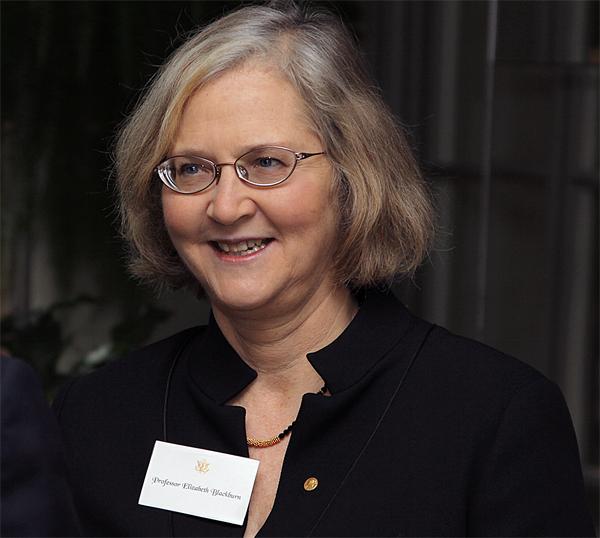
In 1978, Dr Elizabeth Blackburn, an American biological researcher, first described telomeres’ molecular DNA structure. Then, in 1985, she discovered the telomerase enzyme. Blackburn and two colleagues received the 2009 Nobel Prize in Physiology or Medicine for “the discovery of how chromosomes are protected by telomeres and the enzyme telomerase”.
In 1990, renowned biochemist Calvin Harley showed that telomeres shorten progressively in human cells. He was instrumental in demonstrating that this is a cause of cellular ageing, and that telomerase can prevent this action.
In 2004, Elissa Epel – a leader in health psychology and behavioural medicine at the University of California, San Francisco, US – pioneered research that linked stress to immune cell ageing. Epel showed that the perception of stress, as well as actual stressful events or thoughts, is related to telomere shortness and reduced telomerase activity. In plain words, she proved that stress ages you at a cellular level. And in a 2008 study, published in scientific journal The Lancet Oncology, Epel, Blackburn and physician Dr Dean Ornish showed that “lifestyle changes can significantly increase telomerase activity”, with positive changes taking place in just 90 days.
In November 2010, a group of Harvard University researchers published results from a study in Nature. The experiment involved mice that were genetically engineered to lack telomerase, so they aged prematurely and died. In a second group of mice, they turned on the telomerase gene with shocking results. For the first time ever, an aged state of an animal was reversed and the mice effectively became young again.
In the same year, Blackburn, Harley, Epel and molecular biologist Jue Lin co-founded Telome Health in an attempt to widen the reach of telomere testing.
Fast-forward to today’s breaking news. In a large clinical study, the average telomere length was measured in 100,000 patients from Kaiser Permanente, one of America’s biggest care organisations. Using the saliva-based TeloTest, it was found that individuals who had short telomeres had an increased risk of death in a three-year follow-up period. Smoking, heavy alcohol consumption, lower education and poor environment were found to be associated with short telomeres, while moderate exercise was associated with longer telomeres.
The size of the Kaiser study goes a long way towards validating previous findings. There are more than 10,000 peer-reviewed scientific publications already in existence which show that factors such as exercise, more and better sleep, healthy food choices and meditation are linked to preventing telomere shortening. So what does all of this mean for the wellness industry?
Turn back the clock?
Scientific research has revealed that stress is high on the list of factors that can prematurely shorten telomere length. The relaxing nature of spas and the stress-busting benefits of a gym workout make these important elements to improve one’s ageing status – and even reverse the negative effects of premature ageing. Telomere testing – telomere molecular measurement – could be used by operators to demonstrate the impact of their restorative, stress-reducing offering.
Although there are no large, controlled clinical trials published yet, given the multitude of existing studies, it’s possible that the following may be helpful for maintaining or even lengthening telomeres:
- Increasing exercise: Incorporating four to five training sessions each week
- Improving nutrition: Implementing a low-fat diet, with less red and processed meat, and talking to a nutritionist about dietary supplements
- Improving metabolism: Starting a weight-loss programme
- Enhancing wellbeing: Reducing psychological stress and depression and increasing feelings of personal control and purpose in life
- Decreasing stress: Adding yoga and meditation to lifestyle programmes
Opportunities for operators
In June 2012, Epel outlined the potential of telomere health to a host of spa leaders at the annual Global Spa & Wellness Summit (GSWS). She said that “telomere science is just the tip of the iceberg” and that, as the connection between healthy behaviour and the measurable forestalling of disease and cellular ageing grows stronger, “the implications for the spa and wellness industry is profound”.
There are two clear opportunities for health club operators to use telomere diagnostics. Firstly, the technique could be used to help prove the effectiveness of corporate wellness programmes – as well as standard gym memberships in higher-end clubs – as stress-reduction in staff is one of the key goals for corporate employers worldwide. Health clubs and spas have a huge opportunity to tap into the workplace wellness industry which, according to the World Economic Forum, is worth US$30bn-plus (€22.5bn, £18.9bn). Health club operators could, for example, provide TeloAge diagnostic information about employees’ health, with tailored workout, relaxation and nutrition plans for individuals, then repeating the tests to monitor health improvements.
Secondly, operators can latch onto the personalised wellness movement that’s gaining momentum. The World’s Youngest Populations study by Euromonitor showed that, at the beginning of 2012, half of the world’s population was aged over 30 – and a growing number of this demographic have an interest in actively managing their health (see HCM April 13, p39). Knowledge about your health status is empowering, and can lead to a shift towards healthy lifestyle behaviours.
In the Boomers Value Realignment Study, conducted in 2011 by US real estate advisory firm Civano Living, it was reported that 84 per cent of baby boomers in the US are “somewhat to very interested” in health and fitness plans designed for them. Measuring telomere length as an overall health barometer will be a key component in this personalised wellness revolution.
John Kao, chair of the US Institute for Large Scale Innovation, who also spoke at last year’s GSWS, highlighted the fitness and wellness industries’ need to “move from the event-driven model and create much more sustainable connections and experiences”. The ability to benchmark people’s health through telomere testing, followed by a personalised programme – both for workouts within the club and lifestyle choices beyond – with a six-month re-test is an opportune way to stay connected to members. With a simple saliva telomere test, tracking the impact of various fitness and wellness therapies on telomere health is a reality.
As the evidence mounts that health clubs’ wellness approaches can modify telomeres – one of the few changeable parts of the human genome – a natural, major industry opportunity arises.
Jay Williams
spa consultant, Telome Health
Email [email protected]
Phone +1 808 895 8080