Interview
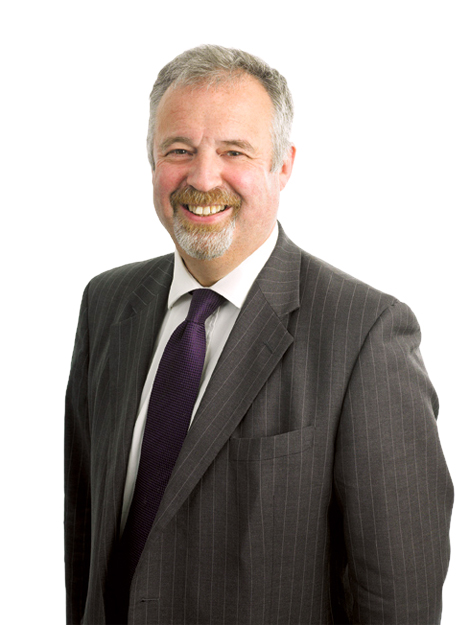
Steve Philpott & David Cowans
By acquiring DC Leisure in December 2012, housing giant Places for People became a new player in the leisure arena. Julie Cramer talks to the heads of both companies about what the future holds



The health and fitness industry has seen its fair share of mergers and acquisitions over the years. The majority of those deals have been between fitness groups, or between fitness operators and larger leisure plcs eyeing a more diverse portfolio – but one recent business deal appears to mark a new departure for the sector.
Leisure management company DC Leisure, which operates leisure facilities for almost 30 local authorities across the country, was taken over by housing giant Places for People in December 2012, for an undisclosed sum.
As one of the largest property management, development and regeneration companies in the UK, Places for People – a not-for-dividend organisation with over £3bn in assets – currently owns or manages over 80,000 homes in 230 local authorities (see briefing, p32).
It’s believed to be the first time – in the UK at least – that a housing provider has taken over a leisure company. However, given the way the market is moving, with fitness facilities reaching out from their sealed boxes and into the local community, perhaps it’s a sign of things to come.
Adding value
The chief executive of DC Leisure, Steve Philpott, and his new boss David Cowans, chief executive of Places for People (PfP), certainly see it as a mutually beneficial deal.
“Places for People is an owner that understands local government and community development – and that’s essentially what we’re about too,” says Philpott. “However, it had no leisure provision and no understanding of leisure, and that’s what’s exciting both for them and us. They’ve taken us over to deliver that for them and to expand, which is a very positive situation for everyone in the organisation.”
Meanwhile Cowans sees the deal as an opportunity to enhance and add value to the PfP portfolio, which he says is both “socially and commercially” driven. He explains: “We’re a place-making business. Whether we’re involved in creating a new community or regenerating an existing neighbourhood, our focus is on making places work. We have a long-term interest in adding value to places and providing people with facilities such as new schools, shops, leisure and job opportunities.
“For example, we established a chain of nurseries alongside some of our housing developments. It wasn’t that we particularly wanted to go into the nursery business, but we’d listened to what people were telling us they wanted. More and more, it’s about the life experience of a place – a sense of community, feeling safe, family facilities and so on.”
At this stage, says Philpott, it’s hard to be specific about how joint projects might look, as this will depend not only on the objectives of the two companies but also the requirements of the local council – how the development sits within its property and asset portfolio. “However, it does make financial sense to build more than one type of facility in a location,” he says. “DC Leisure has already developed sites such as Maltby, which includes a GP surgery, chemist, meeting spaces and council offices, while PfP offers facilities such as adult social care at some of its sites.
“Combining leisure facilities with housing makes good sense, and on future projects we’ll be able to work together from the outset to deliver the best possible facilities.”
Bigger pond
It may be natural to assume that the bigger organisation approached the smaller one, but in fact, says Philpott, the deal came about because DC Leisure was actively looking for a company to take it over. “We were looking for the right kind of buyer and approached PfP. When we started to talk to them about it, they absolutely understood the fit and were extremely excited about what we could do together,” he says.
“For PfP, it’s about introducing more activities into its developments to improve the community. Its focus is on developing inspirational places in which people can live and spend their time. We spoke to them about the impact of leisure on a community, with the leisure centre as a real hub, and they realised the value this could bring to their developments.”
So are there big changes afoot at DC Leisure? According to Philpott, yes and no. It may be some time before we see leisure integrated into PfP developments – for now, joint projects with PfP will amount to “perhaps a couple of gyms a year” – but going forward there will certainly be scope for new ventures. DC Leisure is keen to develop a community budget club concept, for example – “a smaller-scale offering that can work financially thanks to the new partnership,” says Philpott. PfP’s backing will also mean access to additional capital that will allow DC Leisure to explore other new opportunities, and there is likely to be a rebrand.
However, says Philpott: “We’re very comfortable with what we offer. Although we’re constantly innovating, we don’t need to change what we do to deliver the expansion of the business. Our fitness business is performing well, with like-for-like sales up 4 per cent in the last 11 months. Swimming has been particularly strong, up 7 per cent.”
He continues: “In terms of our organisation and the way we’re structured, as well as everyone’s individual roles, it’s pretty much business as usual.” Indeed, the only visible changes following the acquisition have been the replacement of two of DC Leisure’s non-executive board members – a part-time chair and a representative of the company’s previous owners – with the PfP group chief executive Cowans and group chair Chris Philips.
The main change is, and will be, the significant growth opportunities that come from DC Leisure’s new status as a subsidiary of PfP. Philpott explains: “Because we’re now owned by a not-for-dividend organisation, with no shareholders, it means we will be competing for contracts on a level playing field with the leisure trusts.
“Not being able to do that was, without doubt, a serious handicap to our growth over the last four to five years – we were operating with a significant tax disadvantage. It meant we were treading water, remaining static in terms of the number of councils we worked with and the number of sites we managed.
“With immediate effect we can be much more proactive, going out and bidding for more contracts.” Indeed, DC Leisure is already expanding its business development department, bringing in the required capacity to cope with the expected new flurry of tenders (see p20).
Says Cowans: “We’re very keen to see DC Leisure thrive and succeed as it bids for contracts, and it now has the strength of the whole group behind it.”
Health agenda
DC Leisure’s other immediate focus is on further developing its healthy living proposition. “We’ve already been delivering this through physical activity, nutrition and so on – our Gugafit programme for kids is a great example,” says Philpott (see briefing, p34). “Now, working with PfP, we can extend that offering into the community – into the places people live.
“Today’s focus on healthy living has put the spotlight on housing conditions as much as on leisure. It’s about creating a whole ‘place’ – from housing to adult social care, leisure and outdoor spaces to childcare – where people can live better, healthier lives.”
And things are, as Philpott says, moving fast in this area, not only within the realm of the DC Leisure-PfP deal but across the UK as a whole. While both companies are well aware they’re not going to change the housing and leisure development landscape overnight, the acquisition did come just ahead of rather auspicious times. The beginning of April 2013 saw the official launch of the new Health and Wellbeing Boards (see HCM April 13, p26 and p30) – a move that sees local authorities taking charge of NHS funds and directly delivering healthcare initiatives in the community. With no fixed rules, each board will develop its own methods of operation and delivery – making it a blank canvas for companies like DC Leisure and PfP to play their part in community wellbeing in the future.
Philpott says it’s a major change and a major challenge – not least because, as it works with almost 30 councils, DC Leisure now has almost the same number of H&W boards with which it must forge a relationship. He feels it’s a challenge the newly reinforced DC Leisure is well equipped to take on, and the company is already well ahead of the game, creating a dedicated liaison role four years ago, with Susan Rossetto – previously in a public health role at Weight Watchers – currently in the post.
DC Leisure also has plenty of experience already in community-focused initiatives. “We’re not just about sport and physical activity,” says Philpott. “We already do a lot of work around community and cohesion – keeping kids active and off the streets, for example, which has a crime prevention element. Any leisure offering is an important part of community health and wellbeing, happiness and social cohesion.”
He continues: “What’s happening with healthy living is really exciting, and the leisure industry is increasingly being seen as a legitimate part of the public health and sickness prevention programme. We’re now need to convince people that the money is well spent. Can we prove to them that a £1,000 investment in us is better than £1,000 invested in something else that might also have a health outcome?”
Building change
For PfP, all this represents new ground, but the organisation seems receptive to new ideas and paths. “We’re always looking for the next idea, the next thing to add value to what we do. We can learn as much from the bad examples as the good,” says Cowans. “For example, the way US home-owner associations run leisure facilities in their communities. Is that a good idea? Yes. Would it work in the UK? I don’t know. But these things are always worth exploring.
“Now we have DC Leisure, we have the expertise to look at possibilities that we haven’t touched on before now.”
Future plans are very much pre-drawing board, with neither side being able to go into specifics about how the housing/leisure mix might develop, but it’s clear the union will be even stronger than the sum of its parts. “Every individual part of the group is strong in its own right, and when you bring all these strands together you have something really unique,” says Cowans.
For DC Leisure, it’s business as usual, although going forward that business looks set to expand and operate on a grander scale. Philpott says: “We can’t change things overnight in terms of housing and leisure coming together, but the future has enormous possibilities.”
Meet the CEOs
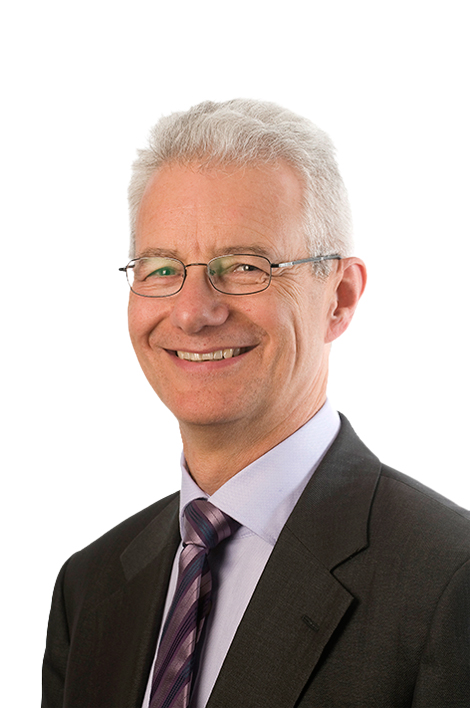
Steve Philpott is no stranger to acquisitions. In the 1990s, he was marketing director for Whitbread, where he was charged with looking into the broader leisure market. It was Philpott who persuaded Whitbread to buy David Lloyd Leisure. He led the acquisition of DLL in 1995, running the health and fitness operation for five years before joining DC Leisure as chief executive in 2003 as part of a management buyout from the original owners.
He also created énergie Global Fitness Management with Jan Spaticchia (Philpott is a shareholder).
David Cowans has solid experience in the housing and community sector, having been housing director and also director of public affairs for Birmingham City Council before joining Places for People in 1997.
Places for People – snapshot
Property management and development group Places for People (PfP) started life as a housing association in 1965 and is now one of the UK’s largest property groups. It works in 230 local authorities, owning or managing 82,000 properties.
While it still has a housing association in the group, the organisation now builds and runs large-scale developments in areas of need, involving the regeneration of existing sites and the building of new ones. Developments are usually a mix of commercial and social housing – some offered on affordable rents – alongside other key facilities such as retail, social care, new infrastructure and new schools. With the acquisition of DC Leisure, it will now introduce leisure into its projects.
The watchword at PfP is “creating aspirational homes and inspirational places”. The environment is a key focus within this: PfP invests millions into the research and development of low carbon technologies for both its new and existing homes each year, and in 2010 it became one of the few organisations in its sector to be awarded ISO14001. The creation of green spaces for all residents has also been a key priority: last year PfP completed a £15.6m project to turn more than 80 acres of redundant land into 84 new green community spaces.
But its achievements extend well beyond bricks and mortar. The group is a strong proponent of young people, for example, offering a variety of support schemes across some of the 600 neighbourhoods it manages. It has helped thousands of youngsters develop their skills and confidence by accessing training, education and employment opportunities in the past year.

DC Leisure – snapshot
DC Leisure currently manages 95 leisure facilities for almost 30 local authorities, handling 25 million leisure visits a year. It has built 11 new facilities in the past six years, with £110m of investment through public-private partnerships and the Private Finance Initiative.
It offers a range of programming designed to create community engagement, social interaction and healthy lifestyles, and has made particular strides in getting more people involved in swimming. In 2011, its Swim4Health programme won the first Spark of Innovation Award in the FIA (now rebranded ukactive) FLAME Awards – a programme that brought fitness for adults into the pool.
Expanding its offering in the area of healthy living is a key priority. It has successfully trialled the Gugafit (Get Up Get Active) programme for children and families, which has now been rolled out in most of its centres. For a small monthly fee, families record their eating and activity habits on a website and earn awards when weekly targets are met.