Interview
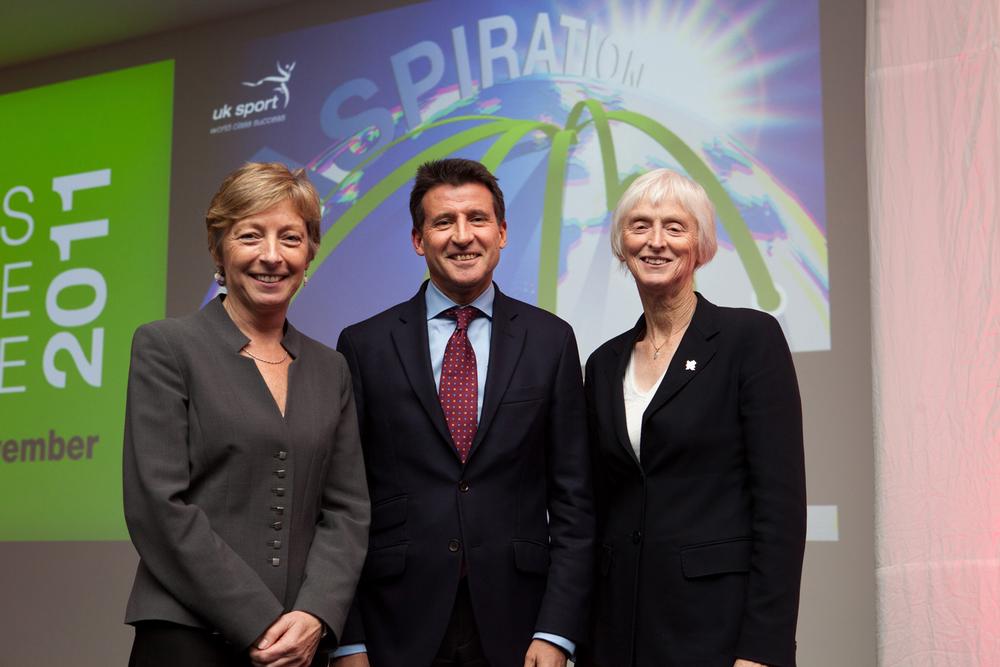
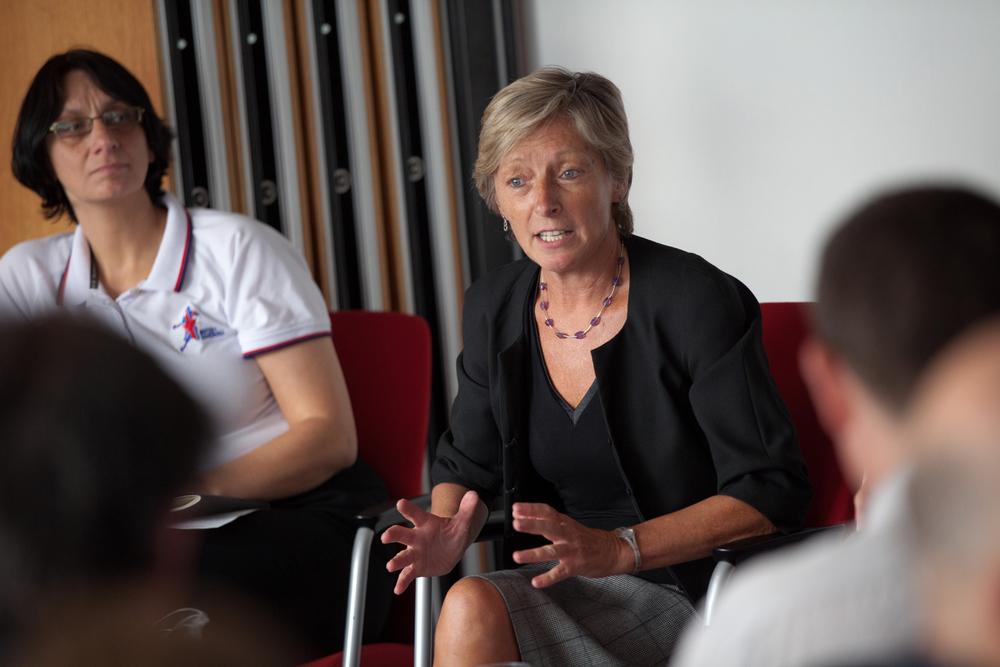
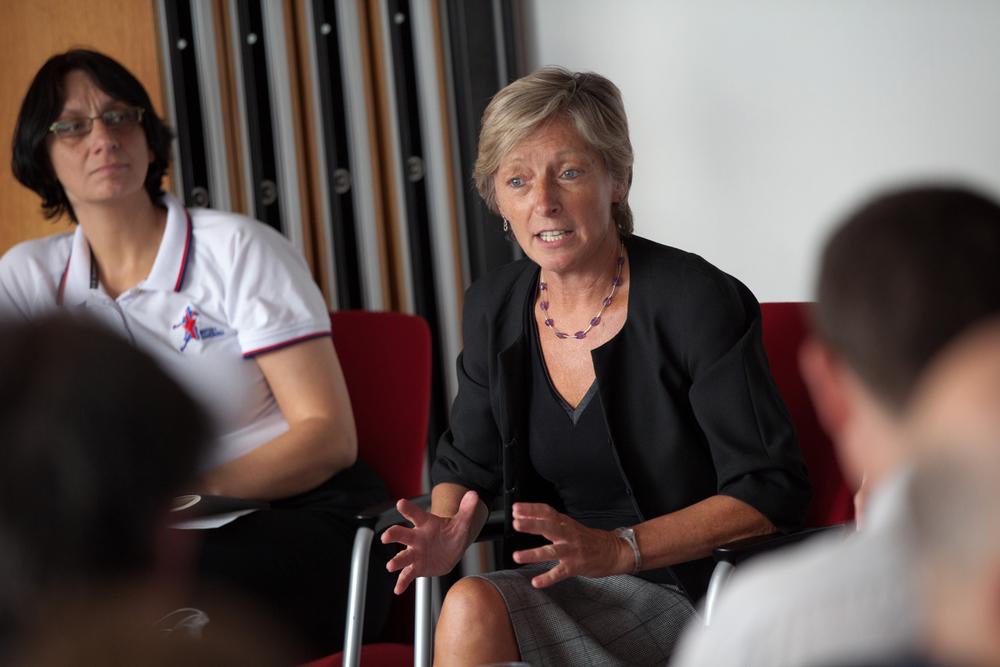
Liz Nicholl OBE
The CEO of UK Sport talks to Karen Maxwell about the organisation’s role in improving performance and providing quality support in the lead up to the London 2012 Games



This is it – 2012 – the year we’ve all been waiting and preparing for. The athletes, the coaches, the volunteers, the event organisers and suppliers – in fact everyone involved with British sport is poised to make the most out of this ‘once-in- a-lifetime’ opportunity.
So my obvious question to Liz Nicholl OBE, the CEO of UK Sport – the nation’s high performance sports agency that’s investing £100m a year to ensure our athletes’ success – is: “Are we ready?”
“It’s going to be a real test of our investment, but yes we’re definitely on track,” she says. “Every sport has agreed a key performance indicator in every year on its journey through to the Games and if we look at the collective performances in 2011, we’re in a better place than we were prior to Beijing 2008.”
Four years ago, TeamGB reached the goal set for London 2012 by achieving fourth place in the Olympic and second place in the Paralympic medal tables.
With less than 150 days before the London Games begin, our high performance sport system is prospering – with a record 23 Olympic and Paralympic sports achieving their targets – thanks to record levels of targeted investment.
“We aim to win more medals across Olympic and Paralympic sports this year – bearing in mind that we won 47 medals across Olympic sports in Beijing and we’re currently in a good place,” Nicholl says.
However, she warns that there are no guarantees in performance sport. “The athletes are doing well, the coaches are committed, the support teams are committed – so really now it’s a matter of continuing to work hard between now and the Games and not getting complacent. It’s not easy, our athletes are competing with the world’s best, although many of ours are also the world’s best. If everything goes according to plan we’ll keep that fourth and second position.”
Overseeing excellence
A former international netball player and championship director of the 1995 World Championships, Nicholl was CEO of England Netball before joining UK Sport in 1999. She started out as director of elite sport before progressing to COO in 2009, then took the CEO reins from John Steele – when he left the organisation to join the Rugby Football Union – in 2010. (Steele has since moved to the Youth Sport Trust.)
During her time at England Netball, Nicholl was credited with steering the sport through a period of successful change, while also holding the roles of vice chair of the CCPR – now the Sport and Recreation Alliance (SRA) – and chair of the Commonwealth Games England.
Looking back, she’s quick to point out that it was thanks to a huge team effort. “We all had clear objectives to increase participation in netball, improve performance and provide quality support – and this is still the case today,” Nicholl explains.
“We introduced a world-class performance programme, we accessed lottery funding, we recruited a performance director from overseas and the year before I left there was a bronze medal at the Commonwealth Games. Today, England’s still up there at number three in the world and vying for second place, potentially first at some point in the future.”
Funding facts
At UK Sport, Nicholl has overseen a similar model to raise the standards set for other sports to achieve success at World, Olympic and Paralympic level, by steering key changes in the performance, investment and governance of the organisation. She says the same team work ethos and the “significant contribution from every individual” – particularly with reference to the creation and implementation of UK Sport’s world-class performance system – was vital to its success.
“The performance system has evolved because of the good coaches that we’ve been able to attract, the enhanced funding we’ve had to develop the athletes and the performance expertise that we’ve aligned with the needs of sports,” she says.
According to Nicholl, the funding cycle was key to the system’s implementation. After Sydney 2000, the organisation introduced four-year funding rounds, which gave more stability to the performance system. This meant that in the lead up to Athens 2004, sports were able to recruit and retain good coaches and support staff, which Nicholl says “was a crucial part of the sport system development”.
“There wasn’t much difference between our athletes’ performance in Sydney and Athens, where we came 10th on the medal table for Olympics and second for Parlaympics on both counts,” she explains. “However, by the time we won the bid to host the Games in 2005, the government had more confidence in what we were doing and gave us more responsibility, some of which was transferred from Sport England, alongside an increase in our share of National Lottery money. We then had responsibility for an eight-year investment, instead of four – from talent ID right through to podium.
“UK Sport was then given more exchequer funding in the budget of 2006, to support success in 2012 and investment in every Olympic and Paralympic sport. ”
Mission 2012
Nicholl gives particular credit to UK Sport’s director of performance, Peter Keen, who is the architect of the organisation’s ‘Mission 2012’ approach to world-class system development. This, she says, has “led to significant impact on the way we work and the way sports work with us while reviewing their own world-class programmes on a regular basis”.
“Our no compromise approach to funding, which sports’ national governing bodies (NGBs) now understand, is about them getting the right support to the right athletes for the right reasons,” she says. “We require the NGBs to update us with information about their programmes as well as progress against agreed targets three times a year via a rating system of red, amber, green or gold.
“Gold means the sport is excelling and there is good practice going on there that could be shared with other sports. Green means they’re on track and don’t need our help. Amber means they know where they are and are working at it, and red means they need our help.
“The principle is that good practice can address the issues that need help. Between the gold and red we probably have about 1,000 pieces of information submitted to us, which our team focuses on to inform their priorities. This really brings to life the benefit of sports working together.
According to Nicholl, this approach allows the organisation to see recurring themes, some of which may reinforce the need for research and innovation work, and helps to extend the expertise of specialist coaching development.
“Some issues can be resolved quickly, others may need more work from one of our designated team members – who have responsibility for each potential element where a sport may need help – or maybe from our research and innovation team,” she explains.
“We can then offer to add value to their work to help improve athlete performance, as well as their health and wellbeing, expanding the sport’s system support or improving the climate and culture of their organisation so they can get the very best from their athletes.
“Everybody understands the Mission 2012 process and can see that they are all part of one team, with one mission and that it’s within everybody’s interests to have an open and honest dialogue with us,” she says.
Sustainable administration
A recurring theme that’s currently being addressed is the upskilling of the people working within the NGBs.
“We’re aware that one of the weakness within NGBs is that generally their focus is much more about delivery rather than personal development,” says Nicholl. “We have an International Leadership Development programme – the Elite Coaching Apprenticeship Programme. For example, over the past 12-18 months we’ve been running a leadership programme to support performance directors and will be providing similar programmes for CEOs and chairs.” She adds that UK Sport also previously worked with the British Olympic Association (BOA) and the SRA in the setting up of a four-year Women in Leadership programme, to ensure that women were also given the right opportunity within that structure.
Thanks to sports’ higher media profile however, Nicholl has noticed that good business people, with a passion for sport, are coming into the boards of sports as independent chairs, which she says could make a real difference to the NGBs sustainability administration post-2012.
This increased media attention is also attracting sponsors, many of which have created a partnership role that could also benefit the sport post-Games.
Sky’s relationship with British Cycling, British Gas’ link with British Swimming and Siemens’ tie-up with British Rowing is testament to this trend. Nicholl also highlights the FSTE 100 companies partnership the BOA has initiated, which she says can offer fantastic business expertise to Olympic and Paralympic sports.
2012 and beyond
Looking ahead, Nicholl says the Mission 2012 model has already been introduced for the Winter Games, so the relationship with the four Olympic and two Paralympic-funded sports for Sochi 2014 is exactly the same as the Summer Olympic and Paralympic Games. And this process will also continue towards Rio 2016.
“We’re in a fantastic position for Rio 2016 because we’re likely to have about the same amount of money in this funding cycle,” says Nicholl. Although she says that there are still some risks because of the 65 per cent reliance of National Lottery funding and exchequer funding is as yet only confirmed to 2015 – in line with government policy.
“You need a compelling goal to continue that ‘one team one mission’ feel on the journey from London to Rio,” she says. “Our ambition is that we’ll do what no Summer Olympic and Paralympic host nation has done before, which is maintain some of the great performances achieved at our home Games right through to the next Summer Games in 2016.”