Ask an expert
Crisis control
What are the key things to consider when facing and handling a crisis? We investigate



Protests in Egypt in December are a sign that there’s still political unrest in the Middle East. It is by no means the only country in the region that’s fighting for democracy in the movement that’s become known as the Arab Spring. Troubles first started in Tunisia in early 2011 and spread to Bahrain, Syria – where unrest came to a head again at the end of 2011 – Yemen, Iran and, most notably, Libya.
Yet as Egypt is one of the most popular Middle East tourist destinations, how is this unsettlement impacting on the hospitality industry? Have spas seen a dramatic downturn in custom and – if so – how are they counteracting this? Or, is it still business as usual despite what outsiders are seeing?
How spas communicate their message to the outside world – that it’s still safe to visit or that circumstances may not be as bad as reported – is crucial when a crisis strikes. Hoshinoya Karuizawa, a wellness resort in Japan which lost its international audience after the March 2011 earthquake, tsunami and radiation leaks, can testify to this.
But it’s not just about handling the media – how you deal with staff is important too. Making sure therapists are looked after and boosting staff morale will reflect on a company as a whole as well as the service on offer, says Samir Patel, managing director of Six Senses Spas, who’s businesses are being directly affected by the Arab Spring.
It may be impossible, and unnecessary, to plan for every eventuality in a crisis, but what procedures can be put in place to minimise the damage to the facility, the staff and reputation? Forward thinking will ensure operators have the tools to cope better under pressure.
We ask operators who have been hit by a crisis about what happened, how they handled the situation and if it’s really possible to turn a negative into a positive?
Samir Patel,
Managing director,
Six Senses Spas

I’ve had my fair share of crises. I was close to the Al-Qaeda bombing of the US Embassy in Nairobi, Kenya in 1998. And in 2003 and 2008, I dealt with the aftermath of bombs that hit the Taj hotel [as vice-president of spa operations and development] in Mumbai, India. The one thing that comes up time and again is the importance of looking after people and your staff.
This is one of our core values at Six Senses Spas and something I’ve tried to stay true to during the Arab Spring in which six of my spas – one each in Egypt, Syria, Jordan, Oman, Qatar and Kuwait – have been impacted. When things erupted in Egypt, for example, my first priority was to make sure the staff had an escape route. We monitored the flashes of violence across the country to work out which would be the safest and quickest way to get them out.
Then on the other side, we also arranged for emergency visas so they could enter Doha and arranged apartments.
Although we didn’t evacuate in the end, I had also sorted out work permits for the therapists. I can’t ever afford to take my eye off the bottom line and balancing staff is part of this. We have a spa in a Greek resort that [due to the financial crisis] laid off all of its hotel employees at the end of 2011, but as our contracts are so stringent they’ve had to keep on our spa director and therapist trainer. As the spa isn’t operating, I’ve got them working on other new openings and projects to keep them engaged. This is a win-win for us and it also demonstrates our loyalty to employees.
The key is to keep your staff energised. I start by laying down the facts without emotion so people don’t panic. Once the situation has been accepted, I’ll then focus on the human aspect and how things are going to impact on people’s lives. At this point, it’s very rare that I would make an executive decision on what to do next – I prefer to draw on group wisdom and encourage team members to come up with their own solutions. On a practical level you’re getting them to contribute ideas, to take up tasks and be responsible.
Individually, some of our spas, especially the one at the InterContinental in Egypt, have been badly affected by the political unrest in the Middle East. Yet we’ve reduced costs by relocating therapists and redirecting resources. And thanks to the exceptional performance of spas in other regions, we were above our EBITDA target in 2011.
In Egypt, we’re now launching wellbeing retreats to raise the profile of the hotel. We’re using the spa and wellness offering as the face of positive PR messaging and that’s our way of dealing with the press. We would never put out a message to reassure customers that we’re doing OK in a time of crisis as that would be counter-productive. As a global brand it’s expected that we would provide the same high-level of service that we always do as long as the resort remains open.
Six Senses, an Asia-based resort and spa development and management company, currently has 14 resorts and 30 spas across the globe. Details: www.sixsensesspas.com
Some of our spas have been badly affected by the political unrest in the Middle East. Yet we’ve reduced costs by relocating therapists and redirecting resources
Kyoko Tanzawa,
PR Manager,
Hoshinoya flagship resorts, Japan

Our Hoshinoya Karuizawa resort has 77 villas and is situated north of Toyko next to the Hoshino Hot Springs – the source of water we use in our onsen [traditional Japanese hot baths]. We opened in 2005 and in early 2011 were on target to double our number of international guests from 15 per cent in 2010 to 30 per cent.
But then the devastating earthquake and tsunami hit Japan in March and changed everything. Fortunately, we weren’t directly hit, but our business was greatly affected – almost all reservations from abroad were cancelled and in just one month we lost jpy100m (us$1.2m, €1m, £836,750) and our occupancy, which averages 82 per cent a year, dropped by 50 per cent.
Our immediate response was to shift our focus to the national market and as we’re only one hour from Tokyo, people who were exhausted from dealing with the aftermath saw our resort as a place to escape to. We are surrounded by nature, have an abundance of ‘curing waters’ and unlike in the city we didn’t have any electrical problems.
Luxury was a taboo following a disaster of such magnitude, so we were modest with our publicity and promoted the fact that our resort was untouched and safe rather than pushing the pampering aspect. We based this on the official report of Karuizawa – the nearest town – which showed that radiation levels were low risk. We posted these details on our website, emailed them out on our newsletter and our travel agents helped to get this message across to our international guests.
We run another ryokan [a resort with onsen] near Fukushima and although it wasn’t badly affected by radiation, we had to shut it down to provide a shelter for survivors. We’ve since set up a Save the Children campaign and for every guest who stays in our hotel we donate jpy1,000 (us$13, €10, £8) to help the children affected by the tsunami.
We kept updating people on the situation in Japan until the end of May. In June, we started promoting the resort properly once more. We’ve been sending out direct marketing, with an emphasis on social network sites, and putting together attractive promotions for the resort. With the help of the Japanese National Tourism Office, we’ve also been hosting as many international media as possible on familiarisation trips.
Today, the number of our local guests has almost recovered, but there’s still some way to go with the international market. We’re hopeful that our marketing efforts together with word of mouth recommendations will help us to recover this lost business.
Hoshinoya Karuizawa (see sb10/3 p34) is one of three flagship sites for Hoshino Resorts, which manages 28 properties across Japan. Details: http://en.hoshinoresort.com
Jeff Matthews,
President and COO,
Mandara Spa
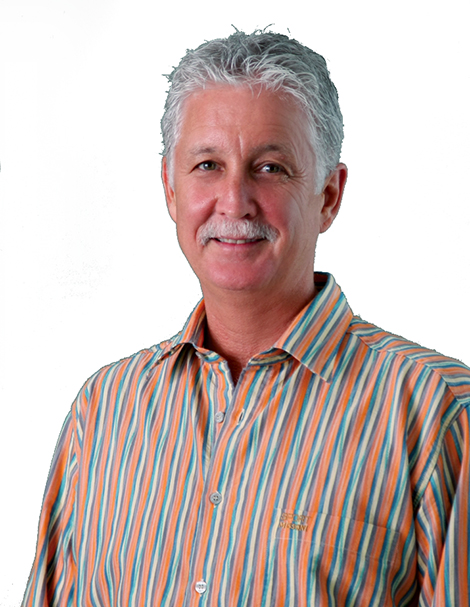
The 2002 Bali bombing was devastating to us – within three days everyone had left the island and hotels went down to 3 per cent occupancy. It took Mandara Spa about a year to recover and we lost us$1m (€781,000, £645,300).
There’s no rule book on how to react to this situation. People say they advertise more, embrace staff and create incentives, but I’m not convinced they do this in reality. We certainly didn’t create any special deals because there wasn’t anyone to offer them to!
Our first action was to save costs. We trimmed back on expenses and cut about 20 per cent of our employees: those who hadn’t been performing. Where we could, we sent staff oversees – it was a cost to get them there, but once they were there, they were off our books and generating money again.
As we were able to diversify, we weathered the storm well and although we didn’t make money we broke even and no one’s going to complain about that faced with the situation we were in. Apart from the 2005 bombing in Kuta (which was no where near as bad) our business has gone from strength to strength in Bali, as well as in Asia and around the world.
We didn’t have any procedures in place on how to handle the bombing because we just didn’t think it would happen to us. And we faced the same scenario when we were hit by the tsunami in 2004 when nine of our employees lost their lives and five of our spas in Thailand and the Maldives were completely destroyed.
This time, our main priority was to take care of the employees’ families who rely on the money their children send home. When our other spas [worldwide] heard about what had happened, we received an incredible us$35,000 (€27,350, £22,600) worth of donations. I was proud to tell this story to the press and that’s how we turned the negative into a positive. From Bali, I also learned to be more forthcoming with the media by openly explaining what had happened rather than just saying ‘no comment’.
If you’re a well-known brand, then you’ll be judged on how you react. Yet as these are freak occurrences, it’s impossible to plan for them. But from our experience we know what to do. Firstly, it’s not to panic and to also ensure that the people who are in leadership roles, such as spa managers, have the ability to keep a level head and to make important decisions.
Secondly, it’s to make sure your people are safe. To give employees an extra sense of security we might follow the example of other companies which after the 2002 bomb, flew their employees to Singapore so they spent a week in the real world to show they weren’t in danger.
Thirdly, it’s not to completely shut down the business because there are things you can do to diversify your costs.
Mandara Spa, the Balinese-themed spa brand, is a subsidiary of Steiner Leisure Ltd. Today, there are 80 Mandara Spas worldwide. Details: www.mandaraspa.com
There’s no rule book on how to react to a crisis. People say they advertise more, embrace staff and create incentives, but I’m not convinced they do this in reality
Wipawadee Sirimongkolkasem,
Managing director,
Devarana Spa

The major floods in Thailand last year [from July to December] covered around six million hectares (14 million acres) and caused around thb1.4bn (us$44m, €35m, £29m) worth of damage.
Devarana is the signature spa brand for Dusit International which has 14 hotels in Thailand. Although none of the Dusit hotels were directly hit, the properties in Bangkok and Hua Hin suffered the most in terms of revenue. They experienced huge cancellations from international guests and most occupancy came from Thai residents made homeless from the floods who received a special rate. Normally half of our spa customers are hotel/resort guests, so the drop in hotel occupancy had a big impact – in November our business dropped by 50 per cent.
Yet as Devarana has been operating in Thailand since 2000 and Dusit has been present since 1948, we have a good connection with the local community and this helped our spa business a lot.
We normally run a yearly marketing plan in our spas that’s based around seasonal treatments. We decided to stick to this plan during the crisis rather than run discount promotions as we believe special rates are not the main factor when in comes to purchasing decisions. On the other hand, we felt that running hard discounts would affect our pricing strategy in the long run.
Dusit took this same stance when it launched a media campaign ‘Reemerged, Renewed and Return’ to encourage visitors to return to Thailand. And any campaign that’s expected to help the hotel, will hopefully benefit our spas in the long-run too.
The month-long campaign which ran throughout December offered guests a food and beverage credit valued at 50 per cent of the room rates, but wasn’t a direct discount. It was communicated via press releases and online and got exposure in major publications such as the The International Herald Tribune [the global edition of the New York Times] as well as on TravelDailyNews.com and FT.com. Dusit also reached 221,000 recipients via a direct marketing email blast.
Overall, Devarana has seen a positive impact on our business since the second half of December and it was even better in the first week of January. And, of course, part of this was directly related to hotel occupancy. The Asian market should come back just in time for the Chinese New Year on 23 January but I expect it will take longer to recover business from Europe and the US.
Devarana Spa was created as a luxury Thai-inspired spa chain for select five-star hotels within the Dusit portfolio. It currently has four facilities open in Thailand, one in the Philippines and another is due to launch in the Maldives in 2012.
Details: www.devaranaspa.com