Design
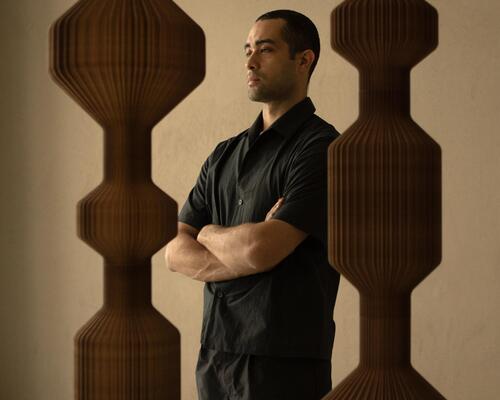
Yinka Ilori
As the ‘architect of joy’ launches a new foundation dedicated to play, he speaks to Magali Robathan about colour, connection and co-creation



Can you sum up your philosophy when it comes to design?
My philosophy is about making design a global language – a tool for everyone. Whether I’m designing public play spaces or collections for brands, I’m always asking: How can design bring joy to our lives and create impact for communities that may not yet recognize its value? For me, design is about fostering belonging, celebrating self-expression, and using creativity as a force for connection and joy.
Why is it important that our leisure and public spaces are well designed?
Much of my work focuses on the public realm – collaborating with institutions, commissioners, and local authorities. I believe that public spaces like playgrounds and parks can be used to amplify voices and celebrate the diversity of our communities.
Too often, these spaces are designed without real community input. For me, every step – from ideation to installation – must include the community.
My aim has always been to make design inclusive and accessible for all, creating environments that reflect and uplift the people who use them.
Play was always my escape and inspiration
What are you working on now?
I’m working on several solo projects at the moment. Over the past few months, I’ve collaborated with watch brands, charities, and on large-scale public commissions across Europe – including the Transparent Happiness pavilion outside the Amos Rex contemporary art museum in Helsinki, Finland and the Walk With Your Dreams public artwork at Milton Keynes railway station in the UK.
Two projects in particular excite me right now. The first is the Yinka Ilori Foundation, which I announced recently.
The second is a pair of solo exhibitions planned for 2026. One of these will explore my early work – primarily my chair designs – tracing the foundations of my creative journey. It will be a major, self-funded exhibition opening around September or October, coinciding with the Frieze art fair. I can’t share much detail about the other exhibition yet, but earlier in 2026, I’ll present my first immersive solo show, looking at the power of joy in communities.
What was the inspiration for the Transparent Happiness pavilion that you designed for the Amox Rex museum in Helsinki?
That project was born from a desire to explore what happiness really means – and how it’s experienced in public spaces.
Finland is often called the happiest country in the world, but during my research, I discovered that not all communities there share that happiness equally, particularly people from ethnic minority backgrounds. The pavilion invited people to question this narrative and start honest conversations about happiness.
Through play – basketball courts, tennis courts, open spaces – we created a setting for dialogue and connection across cultures. There was an influx of skateboarders and young people coming into the place and making it their own, which was a great joy to see. The project challenged the idea of happiness as universal and encouraged people to think about how joy is expressed differently by everyone, and what we need to do to address that disparity.
What was your aim with the creation of 100 Found Objects at Fulham Pier?
When building new developments, we often forget the history of the places we’re transforming. 100 Found Objects was about celebrating the past of Fulham Pier by looking to the River Thames – a site rich with cultural and historical treasures. Many of these stories were lost or hidden, but some have been rediscovered by mudlarkers. The project turned the pier into an open-air educational gallery – a place where art and history intertwine. Through these 100 Objects, we’re not rewriting history but retelling it for new generations and reconnecting people to their environment.
My aim is always to make design inclusive and accessible for all
What is the aim of the Yinka Ilori Foundation?
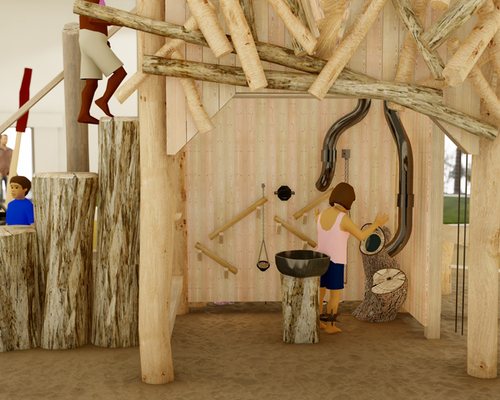
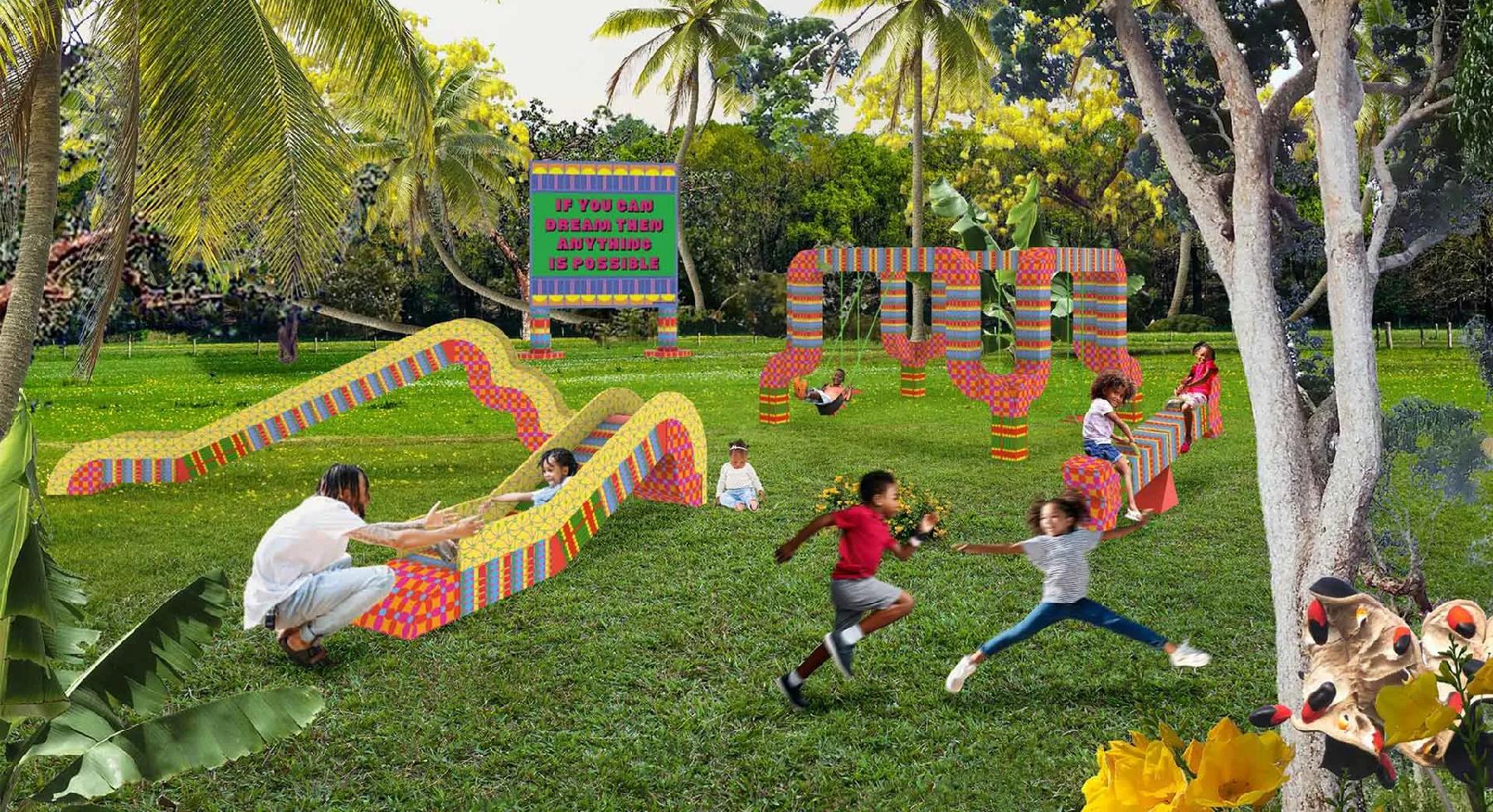
The Yinka Ilori Foundation is a non-profit organisation dedicated to bringing joy, creativity, and opportunity to communities worldwide. We design permanent, inclusive, and sustainable playgrounds and community spaces that empower young people, celebrate local identity, and encourage self-sufficiency.
Throughout my career, I’ve seen how art and design can unite people. The Foundation is my way of using design for social change. Play was always my escape and inspiration – a swing could be a spaceship, a seesaw a stage. That sense of freedom and imagination is central to everything we do.
My mother inspired much of this. Her generosity and care taught me that true community building is about creating dignity and access for everyone.
The Foundation’s first project is a playscape in Nigeria. What can you tell us about that?
Our first flagship site will open in Nigeria in 2026 – my ancestral home, which makes it incredibly meaningful. We’re still finalising details with partners, but it will include modular play structures – swings, seesaws, slides, and courts – designed for play, storytelling, and community gathering.
The project will also feature a year-long program of free workshops in music, crafts, entrepreneurship, and fabrication. The aim is to empower local residents with creative and practical skills while ensuring the site remains sustainable and community-led.
After launching in Nigeria, we plan to expand across Africa, as well as into the US, UK, Middle East, and Asia.
The project challenged the idea of happiness as universal
Your work is joyous, but also explores important themes. Can you give some examples of this?
My project Flamboyance of Flamingos looked at the community of Barking in East London and its century-old estate. We explored its heritage through play – reimagining playground objects from 50–60 years ago with a contemporary twist. By combining past and present, we created a joyful space where children and adults interact, exchange ideas, and rediscover play. It’s one of the projects I’m most proud of – seeing people engage with joy in that environment is truly humbling.
What is inspiring and obsessing you right now?
I’m fascinated by musical instruments – the power of sound and how music can transform public and communal spaces. I’m exploring how instruments can act as mediums for joy, communication, and togetherness.
I’m deeply interested in their materials and construction – especially percussion instruments from Nigeria like congas and shekere. These tools of rhythm and celebration are central to my new projects.
Music has always been a big part of my life. My parents played African music constantly when I was growing up – I didn’t appreciate it at the time, but now I love it. That music is a core part of who I am.
Which colours do you love and why? Are there colours that you steer away from in your work?
I often use purple, pink, lilac and orange – colours that radiate warmth and joy. Pink, in particular, runs through all my work. Although it’s seen as a feminine colour in some cultures, for me it represents celebration.
Growing up, I saw my parents and their friends wearing pink to weddings, church, and parties – it was a colour of happiness. I tend to avoid colours like red or black, which my parents associated with danger or darkness. At home, we surrounded ourselves with bright tones – oranges, yellows, pinks – colours that made us smile. I remember I bought my mum a red suitcase and sent it to her, and she refused to use it because it was red but my dad uses it now.
Who do you admire?
I really admire the architect Diébédo Francis Kéré [see People News for more on Kéré]. I’ve always been inspired by how he designs with and for communities. His use of local materials and his deep engagement with people resonate with me. There’s a real synergy between his approach and the work I’m doing with the Foundation.
How does your heritage influence your work?
My work is deeply shaped by my Nigerian heritage and my upbringing in London. I use colour, pattern and storytelling to merge these two worlds.
My background in product design and furniture-making began at London Metropolitan University, and an internship with British designer Lee Broom made me realize I needed to create work that reflected my own identity. That’s when I began merging my British and Nigerian influences – starting with my work designing and upcycling chairs. They became a symbol of dialogue and connection. A chair can make you smile, and then make you think.
Growing up I was fascinated by my parents' pride in their culture
Growing up, I was fascinated by my parents’ pride in their culture – their colourful clothes, their jewellery and their traditions. I really wanted to understand that identity and bring it into my work. Now, it has become the foundation of my creative voice.
Where is your favourite place on earth?
If it could be an imaginary place, I would choose a beautiful botanical garden filled with the most vibrant, fragrant flowers from all around the world — a true international garden of colour and joy.
Launched in October 2025, the Yinka Ilori Foundation is a non-profit organisation committed to reimagining how communities across the globe access joy, creativity, and opportunity. With a mission rooted in co-creation, inclusivity, and sustainability, the Foundation will develop permanent community spaces that ‘empower young people, celebrate local identity and foster long-term self-sufficiency.’
The Foundation’s first flagship site will open in Nigeria, where Ilori will launch a permanent playscape created with and for local residents. This space will feature modular play structures that are co-built with the community, and will be supported by a year of free cultural and skills-based programming. Workshops in music, craft, storytelling, entrepreneurship and fabrication will be offered alongside training in maintenance and caretaking, to ensure that each site remains sustainable and locally stewarded.
The Yinka Ilori Foundation will establish sites across the globe, with a focus on communities in Africa, the United States, United Kingdom, the Middle East, and Asia.
“I want to create spaces that aren’t just for communities, but with them,” said Yinka Ilori. “Spaces that empower, connect, and inspire. We’re starting in Nigeria, but this is just the beginning.”

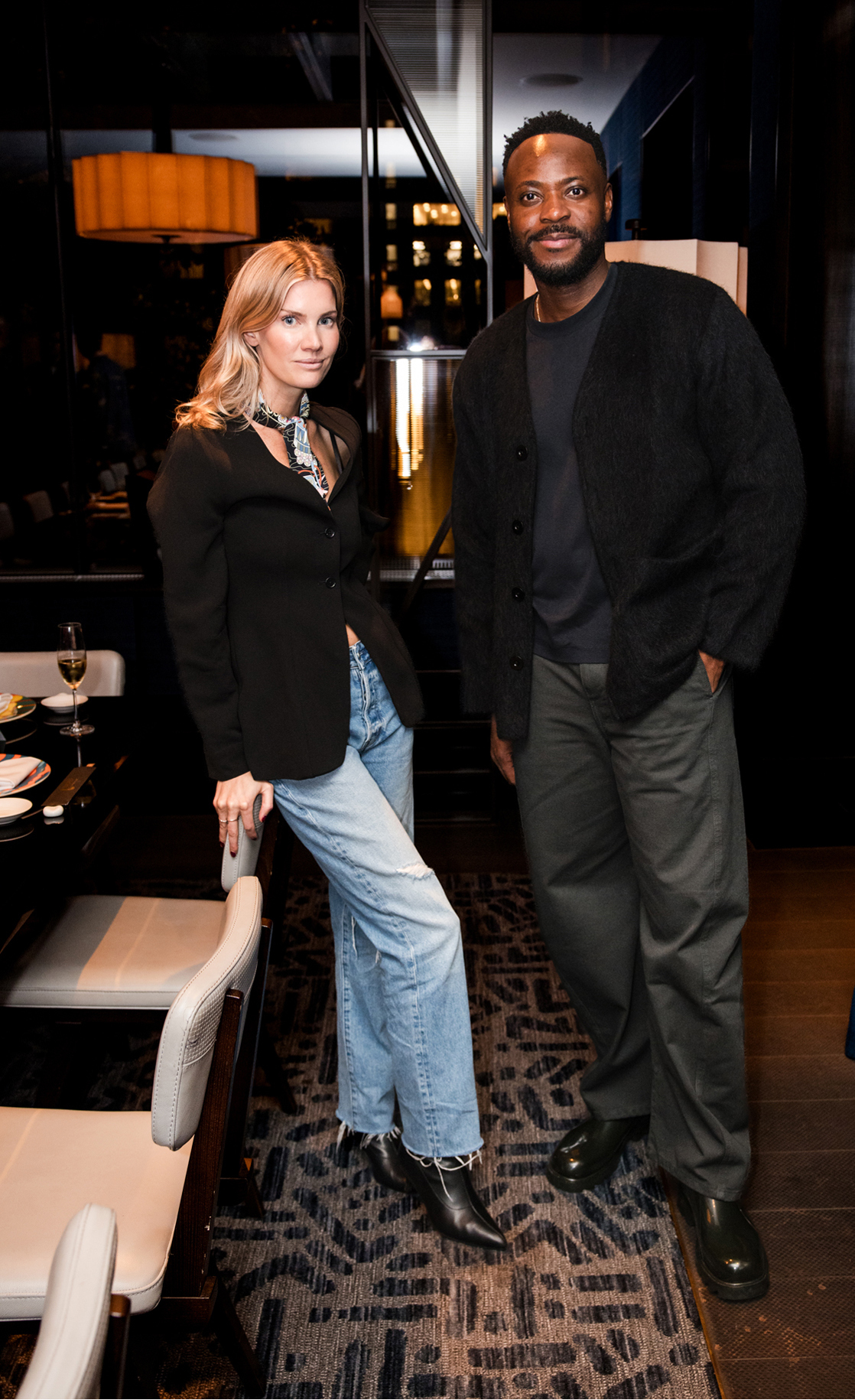



















Designed to restore neglected land and renew the identity of Iraq’s capital city, Baghdad Sustainable Forests promises a new way of living surrounded by nature. Gensler’s Ian Mulcahay tells us why he thinks the project could become a model for the repair and enhancement of urban centres